2027 Improving the Governance of a Community Data Collaborative: A DrPH Applied Project Planning Guide

Co-Founder and Chief Data Scientist
A community data collaborative may have willing partners and useful datasets yet still lack clear rules for who can request data, approve analyses, or decide what gets published. For an experienced public health practitioner, those gaps can form a focused DrPH applied project - if partners have the authority and time to change the process.
This guide shows how to scope a governance improvement, secure appropriate approvals, measure whether it works, and decide whether a DrPH is the right route for doing the work.
Key Things You Should Know
- Choose one consequential governance decision - such as approving a cross-agency data request - rather than attempting to redesign the entire collaborative.
- Build the project around three distinct outputs: an agreed decision process, a usable governance tool, and evidence that partners can apply the process.
- Confirm the DrPH program's project rules, partner authority, data permissions, and review requirements before promising access to records or an implemented change.
What is a DrPH applied project for a community data collaborative?
A community data collaborative is a partnership - often involving public agencies, healthcare organizations, and community groups - that uses shared information to support population-health decisions. Its governance is the set of people, rules, and processes that determine what data may be used, for what purpose, by whom, and with whose approval.
A suitable DrPH applied project improves a real practice process. For example, a practitioner might work with an authorized collaborative to clarify how proposed analyses are reviewed, how community representatives participate, and how findings are released. The output could include a decision-rights charter, request-and-review workflow, and pilot evaluation. Those are proposed deliverables, not evidence that any particular collaborative has a governance problem or has approved the work.
The DrPH is most appropriate when the candidate must lead cross-organizational change and evaluate its use. If the immediate goal is to learn data-management basics or produce a smaller workplace tool, efficient public health degree pathways and earnings may be worth comparing with targeted training or supervised practice before committing to doctoral study.
How does CEPH accreditation shape DrPH applied project requirements?
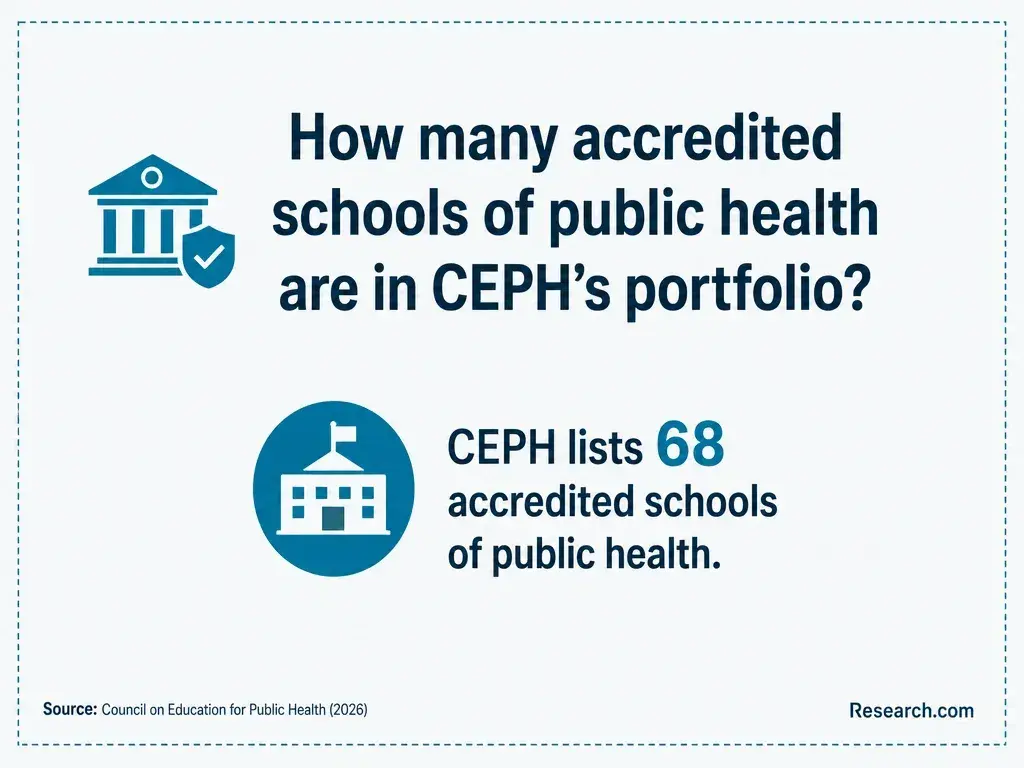
The Council on Education for Public Health (CEPH) sets accreditation criteria for the schools and programs within its scope. Its DrPH expectations emphasize advanced practice competencies and applied learning, but CEPH does not approve an individual student's partner, dataset, or proposed governance charter. The university determines how its curriculum, applied experience, culminating work, supervision, and assessment satisfy applicable criteria.
Before enrolling or proposing a project, check the accreditor's listing for the exact school or program and degree, then ask the DrPH director whether the governance work can meet required milestones. Obtain the current handbook's rules on project-site eligibility, competency mapping, faculty and practice supervision, deliverable format, and approval timing. Institutional accreditation alone does not establish CEPH coverage of a particular DrPH.
Accreditation also does not standardize admissions paperwork across degrees. For instance, MPH programs with no recommendation letter requirement illustrate an application-policy distinction, not a CEPH rule or evidence that a DrPH will waive letters.
What governance challenges can a community data collaborative address?
The strongest project target is a decision that partners repeatedly face and can realistically change. A slow approval process, unclear authority to publish neighborhood-level results, or inconsistent handling of community requests may each be suitable. The candidate should establish a baseline through authorized document review, process mapping, and partner input - not assume that disagreement or delay proves a failure.
The table distinguishes governance problems from technical fixes so the proposed work stays within the collaborative's authority.
| Potential issue | Governance decision to clarify | Possible evidence of improvement |
| Requests move between organizations without an owner | Who receives, screens, and decides each request? | Request records show named owners and documented decisions. |
| Partners disagree about releasing small-area findings | Who reviews disclosure risk and approves public communication? | Review records show use of an agreed release process. |
| Community members see findings only after publication | When and how can representatives influence priorities and interpretation? | Meeting records document input and the disposition of recommendations. |
| A dataset's permitted uses are unclear | Who verifies agreements and authorizes a proposed use? | Requests include a documented permissions check before analysis. |
If the central aim is instead to develop new statistical knowledge, a research-focused doctorate may fit better; cost-conscious public health PhD planning is a separate decision from leading an organizational governance change. Either route still requires legitimate data access and appropriate oversight.
Start with the program's actual competency assessment, then select competencies the project can demonstrate through observable work. For this topic, the strongest alignment is usually leadership and organizational change, partnership building, ethical decision-making, equity, and evaluation. Data literacy matters because a governance leader must understand the consequences of access rules and data limitations; advanced modeling is not automatically the project's purpose.
A charter can demonstrate negotiated decision rights, but not whether anyone uses them. Pair each chosen competency with an artifact and a test: a facilitated agreement for partnership leadership, documented review criteria for ethical practice, and a small workflow pilot for implementation and evaluation. Ask faculty whether these artifacts satisfy the program's standard rather than treating a promising workplace document as automatically credit-bearing.
For a nonprofit professional whose main gap is operational data literacy rather than doctoral leadership, online public health degrees for budget-conscious students can provide a comparison point. A short course and mentored project may be still more direct if no additional degree is required.
Plan backward from a decision the collaborative can make within the academic timeline. The sequence below separates permission to explore a problem from authority to access data, change policy, or report results.
- Define the decision and sponsor. Identify the governance decision to improve, the organization empowered to act, and a practice supervisor who can support the work.
- Confirm academic fit. Map the proposed scope and outputs to DrPH competencies, milestones, faculty supervision, and any site agreement before committing the partner.
- Document the baseline. With permission, examine existing policies and request records, then ask affected partners how decisions currently move. Record whose perspectives are missing.
- Set boundaries and approvals. Establish what information may be accessed, whether interviews or a pilot require institutional or community review, and who may see working documents.
- Co-design a limited change. Agree on decision rights, escalation rules, community participation, and a tool such as a request form or review checklist.
- Test and evaluate use. Where authorized, pilot the process with eligible requests; document whether required reviewers participated, decisions were recorded, and users understood the rules.
- Hand off and report. Revise the tool, name its long-term owner, and present findings with limitations and confidential details removed as required.
Use process evaluation for the first test: it can show whether the workflow is usable and followed, not whether it caused better population-health outcomes. A delayed agreement, lack of usable records, or leadership turnover may require a narrower deliverable. If doctoral study is unaffordable for the intended improvement, reducing MPH tuition with institutional awards may be relevant to a practitioner considering a master's-level alternative; awards and eligibility must be verified with each school.
No single framework replaces the collaborative's legal agreements and relationships. A useful project combines a decision-rights model - who proposes, advises, approves, and appeals - with a data lifecycle model covering collection, permitted use, access, retention, release, and disposal. Add a community-accountability process that gives affected partners a meaningful role before priorities and public interpretations are finalized.
Adapt those models to the actual data. Public summaries, deidentified files, restricted records, identifiable information, and protected health information do not carry identical access conditions. Check applicable law, contracts, data-use agreements, security rules, and institutional policies with responsible officials. Community permission and an organizational data agreement serve different purposes; neither substitutes for an institutional review or research determination when one is required.
A practical test is whether someone new to the collaborative can trace a request from submission to decision and identify who may challenge it. If the project instead centers on selecting software or learning analysis, compare the cost of that preparation - including reviewing tuition across online MPH degrees - with focused methods training. A dashboard cannot resolve unclear authority.
Requirements vary by school. Programs may request graduate preparation, a record of relevant professional practice, statements, recommendations, and evidence of leadership; some specify how experience is counted or require particular prior coursework. An MPH, a managerial title, or a fixed number of years is not a universal admission rule.
For this project, competitiveness and readiness are separate questions. An applicant should document decisions they have influenced, partners they have convened, and changes they have helped implement. They should also establish whether a collaborative can host the work, who could supervise it, and what approvals would be needed. A compelling proposal does not entitle a student to confidential data or guarantee partner participation.
If an applicant worries that earlier grades obscure later professional achievement, guidance on explaining a low GPA in public health graduate admissions can help frame the record, but DrPH eligibility and any exception must be checked with the doctoral program itself.
For a community-based project, format matters less than whether the student can sustain partner meetings, faculty feedback, and implementation work. Online coursework may reduce travel while still requiring live sessions, group work, residencies, or scheduled meetings with community members. Campus study may make faculty contact easier but can be impractical when the project site and professional responsibilities are elsewhere.
Ask each program which activities are synchronous, where required visits occur, whether a student's employer can serve as the project site, and how remote practice supervision works. If the employer is a partner, clarify who can approve changes and how the student will manage conflicts between employment and academic evaluation. Compare leave and pacing policies against the collaborative's decision calendar, not just advertised course flexibility.
Practitioners considering a master's degree before doctoral work can use finding online MPH programs that fit your profile as a separate starting point. Admission accessibility does not establish that an MPH offers the governance supervision or doctoral-level project the reader needs.
Completion time depends on enrollment pace, coursework and doctoral milestones, partner approvals, and whether the governance change can be tested on schedule. Published program length is not a reliable deadline for a project that depends on multiple organizations. Ask for the program's current progression rules and what happens if the partner withdraws or data access is delayed.
For cost, compare the school's published charges with the expenses the project creates. Tuition and required fees are only part of the decision; travel, campus visits, reduced work hours, continuation charges, and unpaid time spent coordinating partners may matter more to a working practitioner. Request an individualized estimate under the intended enrollment pace and verify any employer assistance before subtracting it.
A practitioner still completing prerequisites for an alternative master's route should distinguish an application allowance from permission to begin every course. Public health graduate applications with outstanding requirements can inform that comparison, but only the institution can confirm how unfinished requirements affect start date and cost.
What careers and salaries can DrPH graduates pursue?
A DrPH can support progression toward public health leadership, program direction, evaluation oversight, or cross-sector partnership roles. This governance project offers particularly relevant evidence for positions that require convening organizations, setting accountable processes, and translating data into decisions. Hiring and promotion still depend on demonstrated responsibility, employer requirements, and available roles; the degree does not confer clinical licensure or automatic authority over partner data.
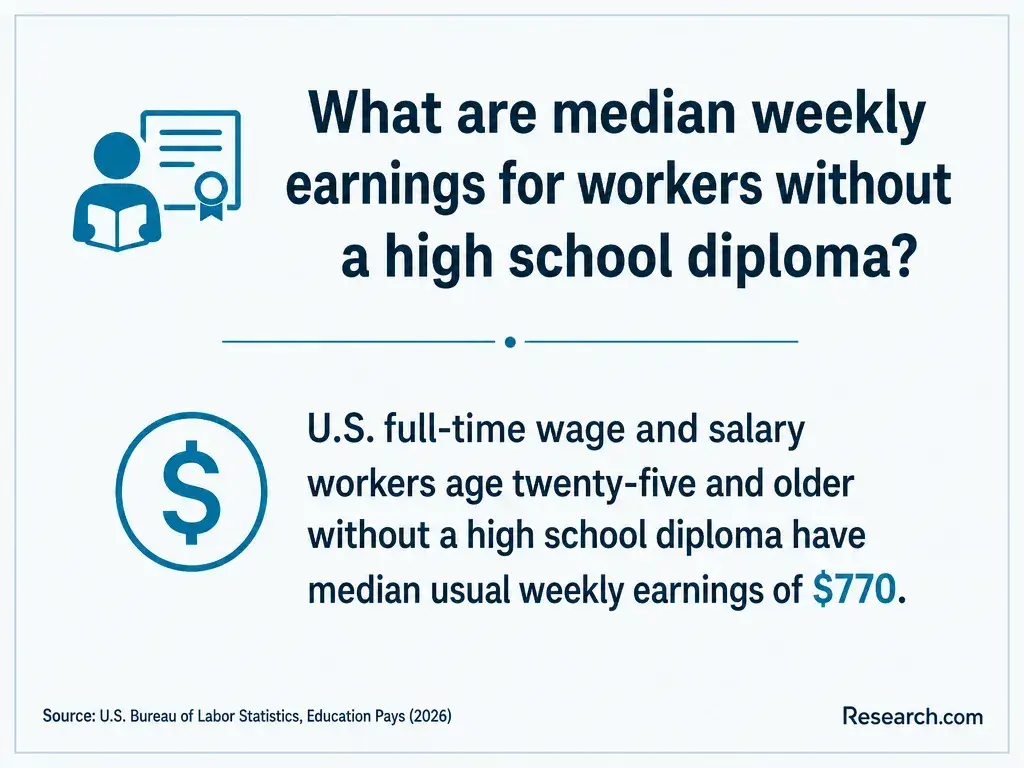
There is no single defensible "DrPH salary." A federal occupational median describes everyone classified in that occupation, not graduates of one degree or leaders of community collaboratives. For a useful estimate, compare actual postings for the target role and location, check the latest US Bureau of Labor Statistics figures for a closely matched occupation, and account for public-sector pay grades or nonprofit budgets. Comparing public health master's costs and pay may help test whether a less extensive credential meets the same career goal.
If the practitioner already has authority to convene partners and needs only a sound governance process, completing the improvement through employer-supported training may have greater immediate value than pursuing another degree.
Other Things You Should Know About Public Health
Only with the permissions required by the partner, university, and any governing agreement. A public portfolio version may need confidential details removed or replaced with a clearly labeled template.
The collaborative should assign an authorized role or body to maintain the process, train new participants, and review proposed changes. The student's graduation plan is not a substitute for ongoing ownership.
Do not treat one organization as a universal spokesperson. Document who is affected, how representatives are selected, what decisions they can influence, and how concerns can be raised or revisited.
Often, yes. Authorized policy documents, workflow records, and feedback about the decision process may be sufficient for a governance-focused project. Confirm the revised scope with faculty and partners before collecting anything.
- Data Sharing in the Context of Community-Engaged Research Partnerships - PMC https://pmc.ncbi.nlm.nih.gov/articles/PMC10308954/
- Privacy Laws, Policies and Guidance | commerce.gov https://www.commerce.gov/opog/privacy/privacy-laws-policies-and-guidance
- Data ownership | ORI - The Office of Research Integrity https://ori.hhs.gov/content/Chapter-6-Data-Management-Practices-Data-ownership
- Step 1: Define the Goals, Scope, and Institutional Home of Your Stakeholder Engagement Process https://www.ahrq.gov/policymakers/chipra/demoeval/what-we-learned/implementation-guides/implementation-guide1/impguide1step1.html
- DrPH Competencies - School of Public Health | SUNY Downstate https://www.downstate.edu/education-training/school-of-public-health/for-current-students/competencies-drph.html
- Data Stewardship | West Virginia University https://dataoffice.wvu.edu/managing-data-assets/data-stewardship
- Supporting a community-led data infrastructure to build local and equitable governance that advances policy | Brookings https://www.brookings.edu/articles/supporting-a-community-led-data-infrastructure-to-build-local-and-equitable-governance-that-advances-policy/
- Guidance: Data Security and Privacy | lehigh.edu https://research.lehigh.edu/policies-guidance-forms/guidance-data-security-and-privacy
- Data protection and privacy laws | Identification for Development https://id4d.worldbank.org/guide/data-protection-and-privacy-laws
- Decision-making that builds trust and accountability | data4sdgs.org https://www.data4sdgs.org/governing-data-benefit-people-decision-making-builds-trust-and-accountability