2027 From Corporate Employee Wellness to Public Health: Choosing a Graduate Pathway

Co-Founder and Chief Data Scientist
Running an employee wellness program can build valuable experience in prevention, communication, and evaluation. Moving into public health, however, means applying those skills beyond one employer and learning to work with communities, health systems, or government agencies.
For wellness professionals considering graduate school, the choice is not simply whether to earn an MPH: it is which target role requires which skills, experience, and credential. This guide helps you compare graduate pathways with less costly ways to make the transition.
Key Things You Should Know
- Start with the job, not the degree. Wellness program management can transfer to health promotion roles, while epidemiology and policy analysis usually require additional technical preparation.
- An MPH is often the broadest graduate route. CEPH-accredited MPH programs require at least 42 semester credit hours or the equivalent, so compare the full time and cost commitment with your target role.
- Build evidence of population-level work. A supervised community project, evaluation, or health department partnership can address a gap that coursework or corporate wellness experience alone may not fill.
What Is the Path From Corporate Wellness to Public Health?
Corporate wellness generally focuses on people connected to an employer. Public health addresses health across populations, often through community partnerships, prevention programs, surveillance, policy, and changes to the conditions that shape health. The transition is closest when your target job involves program planning, health communication, or evaluation; it is larger when the job requires independent statistical analysis or government policy experience.
Take inventory of what you have actually done. Designing outreach, coordinating vendors, managing budgets, protecting sensitive information, and reporting participation are transferable. Claims such as "improved employee health" need stronger evidence than participation counts or satisfaction surveys. A public health employer will also want to know how you would adapt a program for people who do not share an employer, insurance plan, work schedule, or access to care.
Choose two or three target job postings and compare their recurring tasks with your work samples. If the main gap is community-setting experience, seek a partnership or supervised project before committing to graduate study. If the gap is formal methods training, assess whether a degree or focused coursework is necessary. Public health program speed and career value are worth considering together: finishing quickly helps only if the program provides the preparation your target role requires.
Which Public Health Degree Best Fits Your Career Goals?
For most corporate wellness professionals seeking broader health promotion or program roles, an MPH is the first graduate degree to investigate - not an automatic requirement. The best alternative depends on whether you want to lead programs, conduct research, manage healthcare operations, or change careers without another degree.
The comparison below links each route to a distinct professional goal. Degree names alone cannot establish a program's methods depth or applied opportunities.
| Pathway | Best fit | Main limitation to check |
| MPH, especially in community health, health promotion, or policy | Population-health programs, partnerships, implementation, and evaluation | Whether coursework and fieldwork provide community experience beyond the workplace |
| Research-oriented MS in epidemiology or a related field | Substantial quantitative or research responsibilities | Prerequisites, methods depth, and opportunities to demonstrate analysis |
| MHA or MPA | Healthcare operations or public-sector administration | Less population-health training if prevention is the central goal |
| Certificate, targeted courses, or supervised experience | A defined skill gap or an adjacent career move | Whether employers require a graduate degree for the intended position |
| DrPH or PhD | Later-stage practice leadership or sustained research, respectively | Fit with prior experience, project or research readiness, and funding |
A DrPH is generally a practice-focused doctorate, while a PhD is research-focused; neither is a routine next step solely because you have managed wellness programs. If doctoral study eventually fits your goals, review public health doctorate financial planning and outcomes against the responsibilities you already hold and the work you hope to do.
Why Does CEPH Accreditation Matter for Public Health Programs?
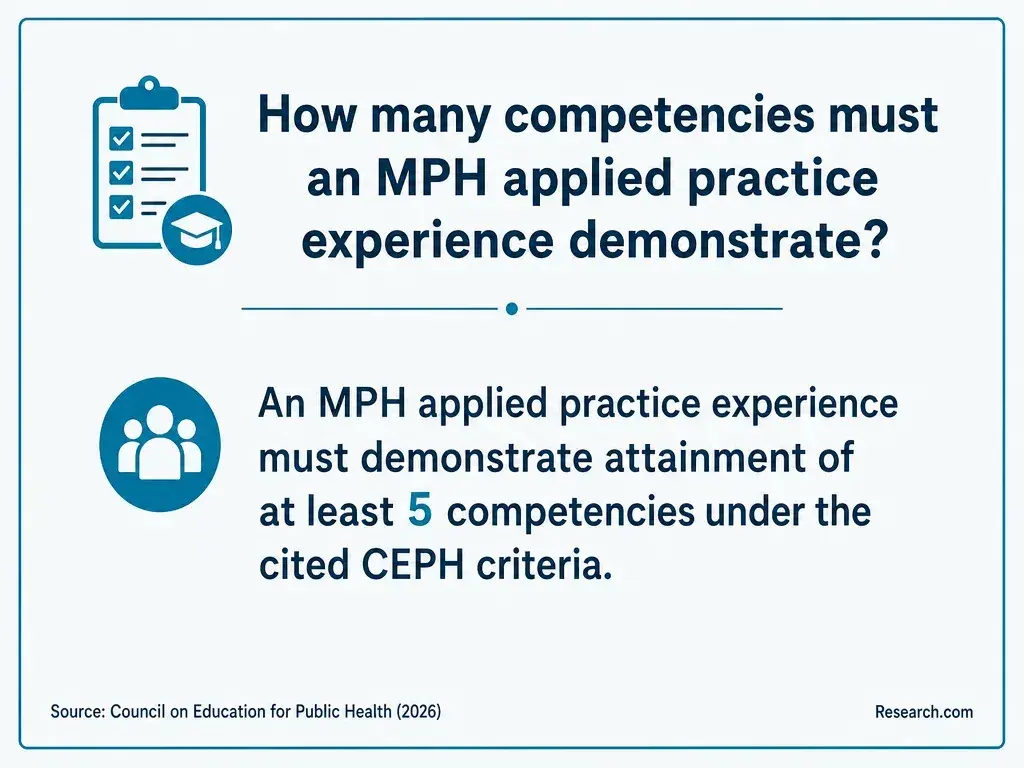
The Council on Education for Public Health (CEPH) accredits public health schools and programs against discipline-specific standards. That differs from an institution's overall accreditation. For an MPH applicant, CEPH status can signal that the curriculum is assessed against public health competencies and applied-learning expectations; it does not guarantee a job, a particular placement, or certification.
Check CEPH's directory for the exact school or program, then ask the university whether the degree and entry term you are considering fall within its accredited scope. This is particularly important when comparing an MPH with a separately offered MS or doctorate at the same institution. In cost-conscious public health PhD planning, do not treat an affordable university's MPH accreditation as proof that every other degree has the same accreditation status.
An MPH typically introduces epidemiology, biostatistics, health policy, environmental health, social and behavioral approaches, and public health practice. For a wellness professional, the most consequential shift may be learning to define a population, identify barriers beyond individual behavior, assess evidence, and evaluate a program without overstating its effects.
Look past course titles. A health communication class may sharpen outreach, but it will not by itself establish competence in statistical analysis. An evaluation course is more useful for a career change when you can apply its methods to a feasible question, interpret limitations, and produce a work sample. Ask how the program teaches community engagement, data ethics, and collaboration with partners who help set priorities rather than simply receive an intervention.
If you lack statistics or other recommended preparation, identify the gap before applying rather than assuming you need another full degree. Some flexible public health master's entry routes may allow introductory work before or alongside graduate study; confirm whether that is an official option at each program.
Online study may let you keep your wellness job, but delivery format does not determine scheduling flexibility. Compare required live sessions, group-work hours, campus visits, and fieldwork arrangements. Campus programs may make local partnerships and faculty contact easier to access, while online programs can be practical if their placement support reaches your community.
Ask who finds and approves field sites, whether your current employer can host an applied experience, and how supervision works. Employer-based work should not be assumed to qualify: the project may need new learning objectives, an eligible supervisor, school approval, and permission to use organizational data. Those questions matter at every degree level. If you are looking further ahead, compare doctoral public health study formats for their residency and project obligations rather than relying on the word "online."
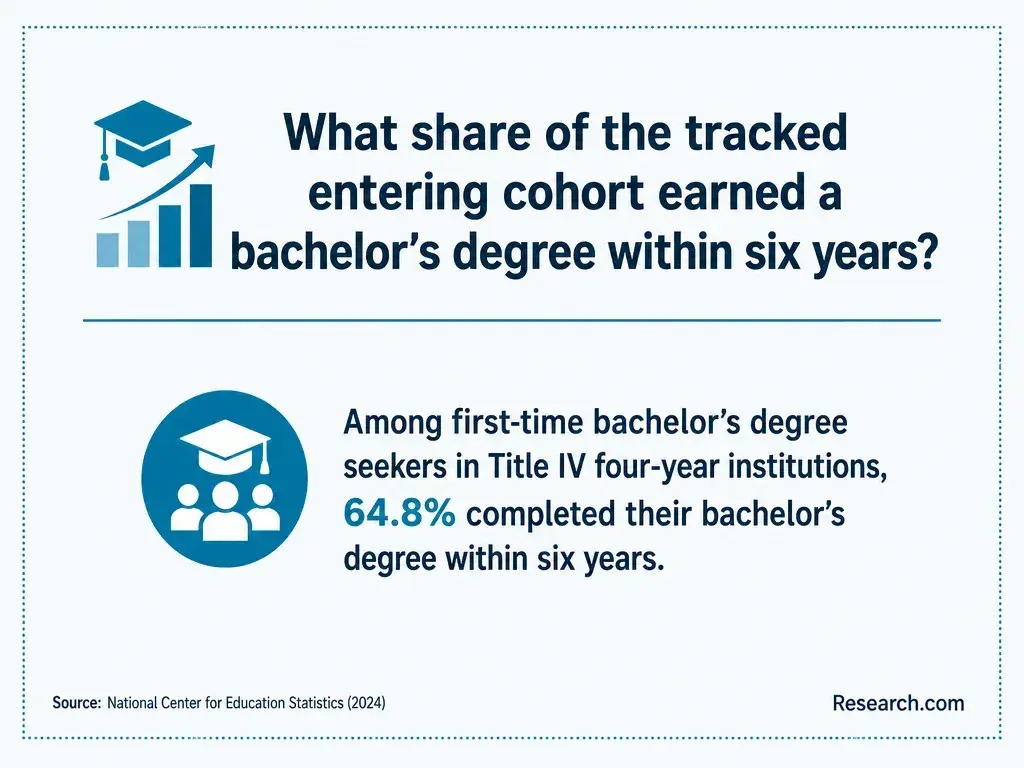
Graduate programs commonly request a bachelor's degree, transcripts, a statement of purpose, and recommendations, but prerequisites and application procedures vary. A non-public-health major does not automatically rule you out. For an MPH application, documented wellness work can demonstrate program implementation and communication; for a methods-intensive MS, quantitative preparation and research fit may carry more weight.
Before applying, separate published minimum requirements from evidence that would make you competitive. Review the program's current statistics prerequisites, test policy, work-experience expectations, deadlines, and any rules for completing missing coursework. In your statement, describe a specific public health goal and explain what your employer-based experience taught you - and what it has not yet taught you about community or population-level work.
If your transcript is a concern, examine the school's stated policy and consider recent, relevant coursework as evidence of readiness. Guidance on low-GPA eligibility for public health graduate programs can help frame questions, but only the admitting program can decide how it evaluates your record.
Completion time depends on required credits, course sequencing, enrollment pace, and the timing of applied work. CEPH's MPH criteria specify at least 42 semester credit hours or the equivalent, but a published credit total is not a promise that a working student can finish on a particular schedule.
Compare total cost using each school's current charges: required credits multiplied by the applicable tuition rate, plus mandatory fees, travel, technology, materials, and any fieldwork-related expense. Then account for reduced work hours and possible employer education assistance. Verify reimbursement conditions before relying on that assistance; some employers restrict eligible programs or require continued employment.
When reviewing online MPH degree options on a budget, ask for a program-specific cost estimate and a course plan at the pace you can sustain. A lower advertised tuition rate may not mean a lower total cost if required travel, fees, or delayed course availability change the calculation.
Your strongest initial opportunities may be roles adjacent to the work you already do: health promotion coordinator, community program specialist, health education specialist, or program evaluator working under appropriate supervision. These jobs can involve partner coordination, outreach, implementation, and reporting. Your experience may be less directly aligned with epidemiologist or research analyst positions, where employers may expect demonstrated methods and data skills.
The distinctions below help you search by responsibilities rather than assuming that similar-sounding public health titles require the same preparation.
| Target function | Relevant wellness experience | Evidence to add |
| Community health promotion | Outreach, program coordination, communication | Work with community partners and people outside an employee population |
| Program evaluation | Participation reporting, surveys, vendor assessment | Evaluation design, appropriate indicators, and careful interpretation |
| Epidemiology or advanced analysis | Data literacy and reporting, if part of your work | Statistical methods, reproducible analysis, and relevant project experience |
| Public health management | Budgets, teams, contracts, operations | Experience with public accountability, partnerships, or the target agency's requirements |
Use job postings to determine whether an MPH is expected, preferred, or unnecessary. If analytical roles are your goal, check online public health master's entry requirements alongside the curriculum: a program you can enter is useful only if it can help you build the skills employers request.
Public health does not have one salary scale. Pay differs by occupation, location, employer, responsibility, and experience. A health education specialist's wage distribution, for example, describes people in that occupation across educational backgrounds; it is not the expected pay for a new MPH graduate or someone leaving corporate wellness.
For a realistic comparison, use the latest U.S. Bureau of Labor Statistics Occupational Outlook Handbook entry for the specific occupation you want, then examine local postings with comparable responsibilities. Compare likely pay with your current compensation, benefits, education costs, and any earnings you would forgo while studying. Claims about public health master's affordability and earnings should be tested against that personal baseline, not treated as a return-on-investment guarantee.
What Certifications and Licenses Do Public Health Careers Require?
Most nonclinical public health jobs do not grant or require a single universal license. The Certified in Public Health (CPH) credential and health education credentials such as CHES or MCHES have separate eligibility and examination rules set by their certifying organizations. Employers may prefer a credential for particular roles, but an MPH does not automatically award one.
Check the actual posting and, where applicable, the current certifier or state regulator before choosing coursework around a credential. Roles involving clinical care, social work, or other regulated services can require a separate professional license that public health study does not replace. If you do not yet hold a bachelor's degree, low-cost public health bachelor's programs online may be a more appropriate first educational comparison than graduate study; a bachelor's degree alone still does not confer a professional license.
Other Things You Should Know About Public Health
Usually you can describe your own responsibilities and methods, but obtain employer permission before sharing internal materials. Remove identifiable or confidential information; do not present an internal evaluation as proof of a broader population-level effect.
Not necessarily. Staying employed can preserve income and provide a setting for skill development. Decide based on your program's schedule, fieldwork rules, finances, and whether the job leaves enough time to pursue community-facing experience.
Speak with people doing the roles you want, review their job duties, and seek a defined project or volunteer opportunity with a community organization. Use that experience to identify the skills you would need to learn formally.
Ownership and permission depend on employer policies, school rules, and any project agreement. Clarify them before using workplace data or creating a deliverable you hope to publish or show to prospective employers.
- Public Health Workforce 3.0: Recent Progress and What's on the Horizon to Achieve the 21st-Century Workforce - PMC https://pmc.ncbi.nlm.nih.gov/articles/PMC6519880/
- Strategies for Training & Professional Development | cdc.gov https://www.cdc.gov/infrastructure/training-professional-development/strategies-for-training-professional-development.html
- Social determinants of health | who.int https://www.who.int/health-topics/social-determinants-of-health
- How can I switch to a career in public health? | King's College London https://online.kcl.ac.uk/blog/how-can-i-switch-to-a-career-in-public-health
- Careers Guide: Explore Public Health Jobs | UIC Online MPH https://onlinemph.uic.edu/news-stories/public-health-careers/
- How to Choose the Right Master of Public Health Program for You | Fairfield University https://www.fairfield.edu/news/insights/nursing-health-studies/how-to-choose-the-right-public-health-mph-program-for-you.html
- Public Health Career Fields Overview | Career Services https://sph.umich.edu/careers/explore-public-health-careers/public-health-career-fields-overview.html
- M.P.H. (Master's of Public Health) | Benedictine University https://ben.edu/degree_programs/master-of-public-health/
- Health Promotion, MSc | Helen and Arthur E. Johnson Beth-El College of Nursing and Health Sciences https://johnsonbethel.uccs.edu/academics/programs/health-promotion-msc