2027 A Disability Access Assessment for Community Health Events: A Graduate Public Health Portfolio Project

Co-Founder and Chief Data Scientist
A health fair can offer valuable services and still be difficult to attend, navigate, understand, or use. For a graduate public health student, assessing those barriers can become a practical portfolio project - but only if the review is appropriately scoped and its recommendations are grounded in evidence.
This guide explains what to assess, how to work with an event partner, and what to include in a shareable deliverable. It also helps you decide whether an MPH, another course of study, or supervised experience is the best way to develop these skills.
Key Things You Should Know
- Assess the whole event journey - not just the entrance - including registration, transportation information, communication, activities, and follow-up.
- CDC analysis of 2022 survey data estimated that 28.7% of U.S. adults had a disability in at least one measured functional domain; planning for access is a core community-health concern, not a rare exception.
- A strong portfolio artifact pairs a documented assessment method with prioritized, feasible recommendations; it does not claim legal compliance, community endorsement, or measured improvement without appropriate evidence.
What Is a Disability Access Assessment in Community Health Events?
A disability access assessment examines whether people with different access needs can learn about, reach, participate in, and benefit from an event. For a vaccination clinic, screening day, or health fair, that means considering the event journey before, during, and after attendance - not merely checking whether a building has a ramp.
The assessment may review invitation formats, registration, travel and drop-off information, entrances, routes, seating, restrooms, interpreters and captioning, sensory conditions, staff assistance, and accessible follow-up. It should consider people with mobility, sensory, cognitive, and other disabilities without assuming that everyone in a category wants the same accommodation. A student can document observed barriers and proposed improvements, but a portfolio review is not a formal legal compliance determination.
An undergraduate student using public health bachelor's degree planning online may encounter access issues in community-health coursework. The graduate-level distinction is the expectation to define a decision, justify methods, assess limitations, and produce recommendations a partner could realistically use.
Why Is Disability Accessibility Important in Community Health Programs?
When an event is inaccessible, its attendance figures describe the people who could participate - not necessarily everyone the program intended to reach. A registration form that does not work with assistive technology, for example, can exclude people before staff ever see a request for assistance. This affects both equitable service delivery and the interpretation of program data.
CDC's estimate that 28.7% of U.S. adults had a disability in at least one measured functional domain, based on 2022 Behavioral Risk Factor Surveillance System data, gives planners a sense of scale. It does not predict the needs or attendance of a particular neighborhood. Local partners and people with disabilities are essential for understanding which barriers matter at a specific event.
Accessibility also has operational consequences. A low-cost change to an invitation may be possible immediately, while a venue change or contracted communication service may need advance approval and funding. Organizations comparing affordable distance learning public health degrees should likewise ask whether the program offers supervised community work: learning about access remotely is different from assessing an actual event with permission from its organizers.
What Public Health Degree Best Prepares You for This Portfolio Project?
For a student who wants to plan, assess, and improve community programs, a practice-oriented MPH is usually the most direct graduate-degree fit. Look for community engagement, program evaluation, health communication, and an approved applied project with a partner. An MPH is not necessary to make an event more accessible, however; nonprofit staff or event organizers may be better served by disability-led training, an accessibility specialist, and supervised practice.
A research-oriented MS can fit if the goal is to study access measures or evaluation methods in greater depth. It is not automatically better preparation for negotiating venue changes or coordinating accommodations. Comparing professional-friendly biostatistics master's programs makes sense if advanced analysis is the intended career skill, rather than the main requirement of this event-assessment project.
Choose by the work you expect to do: a decision-ready event improvement plan calls for community partnership and implementation skills; a study of measurement validity calls for stronger research training. Neither degree substitutes for lived-experience expertise, venue-specific technical review, or legal advice.
The intended decision-maker might be a health department event lead or nonprofit program manager deciding what to change before the next event. The finished artifact should let that person see what was reviewed, what remains unknown, who can act, and which changes warrant priority. The following sequence is an adaptable project template, not a claim that any event has been assessed.
- Define the decision and scope. Name the event type, planning stage, locations, communications, and activities under review. State what the project will not certify.
- Agree on access and responsibilities. Confirm the faculty supervisor's requirements, the organizer's permission, a site contact, and whether disability community partners will review the approach. Ask who may approve changes.
- Build an assessment tool. Include fields for each event stage, the access feature examined, the evidence source, the barrier or strength observed, uncertainty, and a proposed action. Distinguish observation from a participant's report.
- Gather only authorized information. Use approved materials, site observations, and appropriately arranged feedback. Check consent, privacy, data-use rules, and institutional review requirements before collecting identifiable responses or using protected information.
- Prioritize and hand off recommendations. Record the affected event stage, potential consequence, responsible owner, resources or approvals needed, and a way to check whether a change was made. Identify items needing a qualified accessibility or legal review.
- Prepare a safe portfolio version. Remove names and sensitive details, obtain permission to share partner materials, and retain a clear methods note, limitations, and revision history.
Quality depends on traceability. A reviewer should be able to follow a recommendation back to an authorized observation or documented source, while seeing where evidence is missing. Counting proposed fixes is not the same as showing that participants experienced better access.
A student later comparing online public health doctoral formats could build on the tool for an organizational improvement project. That would require a separate question, approvals, and evaluation plan; a graduate portfolio template is not a completed doctoral project.
Course titles vary, so examine assignments rather than assuming a concentration label guarantees relevant practice. Program planning and evaluation should teach students to define an event's intended population, map the participation process, select observable indicators, and communicate findings. Community engagement and qualitative methods help students seek feedback without treating a convenient sample as the voice of all people with disabilities.
Health communication supports accessible invitations and follow-up materials; public health ethics addresses consent, confidentiality, and respectful partnership. Introductory epidemiology or biostatistics helps students interpret attendance and response data cautiously. Disability studies, accessibility training, or a supervised placement can fill gaps that a general MPH curriculum may leave.
If you are still completing undergraduate preparation, fast-paced public health bachelor's course formats may help with scheduling, but speed is not a substitute for field feedback and revision. For this portfolio goal, an opportunity to test and improve a tool with appropriate supervision is more valuable than an additional unrelated elective.
Either format can support this project if the student can secure an approved event partner and adequate supervision. Online delivery may let a working student assess a local organization's event; campus study may make it easier to meet with faculty and community partners. Neither format guarantees access to a field site or flexible hours.
Before enrolling, ask whether required meetings are live, whether site visits can occur near home, who approves the partner, and whether travel, evening event hours, or a residency is required. Ask how faculty will review the assessment tool before data collection and how partner feedback will be handled. These obligations matter more to project feasibility than the label "online" or "on campus."
For an online MPH shortlist, online MPH program accreditation comparisons can be a starting point. Confirm the exact degree's accreditation coverage and applied-project rules directly with each program before treating it as a suitable host for this deliverable.
MPH and MS admissions policies differ by school and degree. Programs commonly request evidence of prior undergraduate study, an application statement, recommendations, and academic records; a particular program may also specify prerequisite coursework, experience, or other materials. A non-public-health major does not by itself rule out an MPH application.
For this project, applicants can make their preparation concrete: describe community-event work, disability access training, evaluation or research assignments, and the limits of their experience. If statistics or methods preparation is weak, check whether the target program requires a course before admission or simply recommends it. Ask whether a proposed event partner can be used for coursework; admission alone is not project approval.
Public health graduate programs with accessible entry may help identify options to investigate, but an admissions label cannot establish that a program teaches accessibility assessment or will approve a specific partner site.
Completion time and price depend on the program's required credits, tuition basis, enrollment pace, and fieldwork rules. For this project, compare more than the advertised tuition: include mandatory fees, travel to events, accommodation or communication-service costs that the student is expected to cover, and possible lost work time. Do not assume a community partner can fund a student's assessment.
Request a written estimate for your planned enrollment pattern and ask when the applied project can begin. A shorter schedule may be poor value if it leaves too little time for partner approval, observation, feedback, and revision. Likewise, part-time enrollment may improve weekly feasibility while extending the period over which fees or travel costs arise.
Cost-conscious online MPH program choices can help form a shortlist. Verify charges and project expenses with the school, then compare them against a targeted course or supervised workplace project if the assessment skill - not the credential - is your main objective.
These skills are useful in community health program coordination, health education, outreach, and program evaluation. An early-career employee might review event materials, document barriers, coordinate accommodation requests, or track whether approved changes occurred. Authority to set policy, approve budgets, make legal determinations, or lead an organization-wide accessibility strategy usually depends on the role and experience, not the portfolio artifact alone.
Show employers the work behind the deliverable: how you defined the decision, obtained permission, distinguished evidence from assumptions, and wrote recommendations for an operational audience. A health education specialist role may value that combination, but job titles and degree expectations vary. An assessment portfolio demonstrates a relevant skill; it is not proof that an applicant meets every posting's requirements.
A research doctorate is generally unnecessary for event-access coordination. Someone considering economical routes to a public health PhD should first decide whether their goal is original research rather than supervised program improvement.
What Accreditation and Certifications Matter for Public Health Careers?
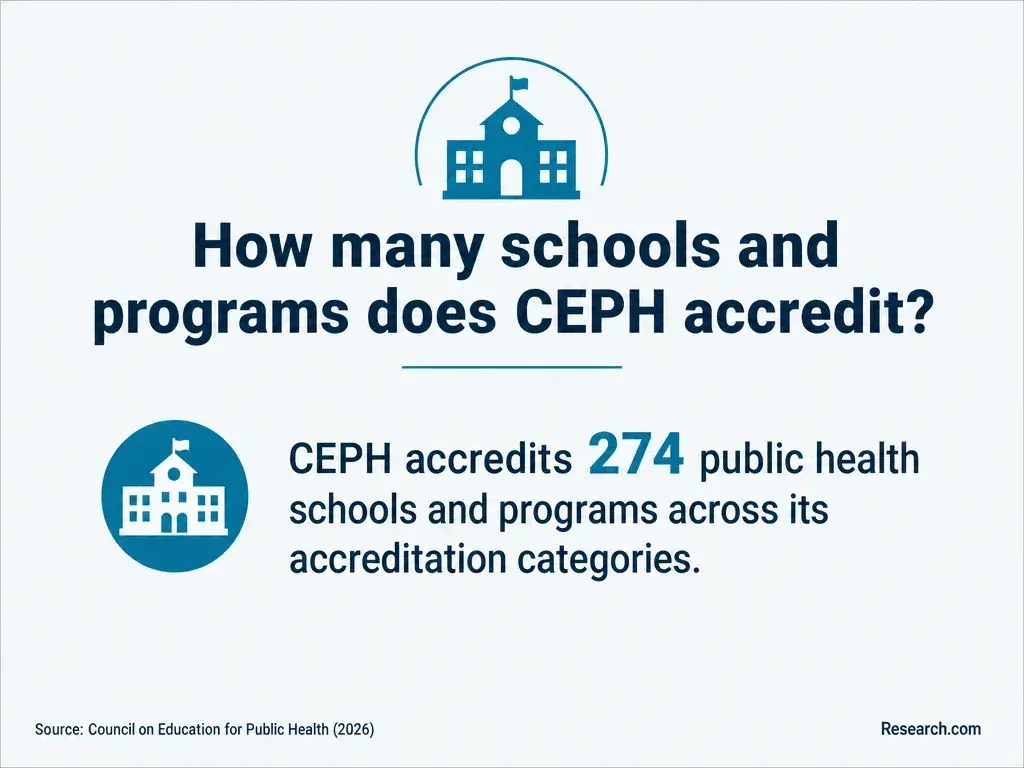
Check both institution-level accreditation and whether the exact public health school, unit, or program - and the degree you intend to earn - falls within Council on Education for Public Health accreditation. Coverage should not be inferred from a university's general accreditation or from another degree at the same institution. Ask the program to identify its current status and scope.
Credentials such as Certified in Public Health or Certified Health Education Specialist have separate eligibility and examination rules set by their respective organizations. An MPH does not automatically confer either credential, and neither makes a student a licensed clinician or a legal accessibility inspector. For an event assessment, partner permission, appropriate supervision, and demonstrated methods are more immediately relevant than collecting credentials.
When comparing public health degrees by price and completion time, verify accreditation alongside cost and scheduling. The least expensive path is only a good fit if it supports the supervised work and career requirements you actually need.
Other Things You Should Know About Public Health
Use a checklist as a starting tool, not a substitute for defining the event journey, documenting evidence, identifying gaps, and obtaining partner feedback. Record the checklist's source and any changes you make.
Not routinely. Design feedback around access experiences and improvement needs, collect only information necessary for the approved purpose, and check consent and privacy requirements before asking personal questions.
Only after checking site rules and obtaining any necessary permission. Avoid identifiable attendees, private information, and security-sensitive details; a redacted diagram or written description may be safer.
Record the evidence and the partner's operational constraints without presenting disagreement as proof of neglect. Revise the recommendation where warranted and identify unresolved decisions for the responsible event lead.
- Elements of an Evaluation Plan | Agency for Healthcare Research and Quality https://www.ahrq.gov/talkingquality/assess/evaluation-plan.html
- ADA Accessibility Standards | access-board.gov https://www.access-board.gov/ada/
- ADA Requirements: Effective Communication https://www.ada.gov/resources/effective-communication/
- Disability Inclusion Strategies | cdc.gov https://www.cdc.gov/disability-inclusion/strategies/index.html
- Accessible Event Resource Guide - Equal Opportunity Programs https://equalopportunityprograms.uchicago.edu/event-guide/
- Accessible Event Information | AccessAbility Resource Center https://accessability.utdallas.edu/accessible-event-information/
- Section 4. Ensuring Access for People with Disabilities | ku.edu https://ctb.ku.edu/fr/book/export/html/914
- Planning an Accessible Event | Georgetown University https://oeoc.georgetown.edu/ada/planning-accessible-event/
- ADA Title II Requirements | adaactionguide.org https://adaactionguide.org/ada-title-ii-requirements
- Resource Category: Community Assessment Tools | nchpad.org https://www.nchpad.org/resource-categories/community-assessment-tools/