2027 Changing From Statistics to Public Health: Major Requirement Gaps

Co-Founder and Chief Data Scientist
Statistics courses can give you a head start in public health, but they may not satisfy the courses that determine when you graduate. If you are considering a change of major - or deciding whether to finish statistics and pursue public health later - the important question is which requirements your existing work actually fulfills.
This guide identifies the likely curriculum gaps, explains how schools evaluate credits, and compares the time, cost, and career implications of each route. Use it to request a meaningful degree audit before committing to a switch.
Key Things You Should Know
- The largest curriculum gap is usually population-health coursework and applied experience, not another statistics class.
- Separate credits a school accepts from credits that satisfy its major, general education, residency, and graduation requirements; only an approved degree audit shows what remains.
- Finishing a statistics degree and adding public health training may be faster than changing majors if few upper-level courses will count toward the new degree.
What major requirements change when switching from statistics to public health?
A statistics major generally emphasizes mathematical foundations, statistical inference, modeling, and computing. A public health major applies evidence to population-level problems and usually adds epidemiology, health systems, prevention, and the social conditions that shape health. The switch is therefore not simply a change in subject matter: it may replace a sequence of upper-level math electives with a different sequence of required courses and an internship or capstone.
The critical distinction is credit accepted versus requirement satisfied. Regression might fulfill a quantitative-methods requirement, count only as a general elective, or require a department-approved substitution. Even when all credits transfer to the institution, a student can still have substantial public health coursework left. Ask for side-by-side degree audits - including courses offered only in particular terms - before dropping the statistics major.
If your aim is a graduate MPH rather than a second bachelor's degree, an undergraduate major change may be unnecessary. Programs set their own entry rules and sometimes provide introductory preparation after admission. Comparing flexible public health master's entry routes can help frame that alternative, but confirm the actual conditions and deadlines with each program.
What public health degree pathways are available after studying statistics?
The best pathway depends on whether you need a public health bachelor's credential, professional practice training, or deeper quantitative research preparation. Prior statistics study is valuable in each route, but it does not make the degrees interchangeable.
The comparison below focuses on the gap each route is most likely to leave for a statistics student.
| Pathway | Potential fit | Gap to check |
| Change to a public health BA or BS | You want undergraduate population-health training and can complete the remaining major efficiently. | Upper-level major courses, applied learning, and institutional residency requirements. |
| Finish statistics, then pursue an MPH | You want professional public health practice or an applied quantitative role. | Program-specific prerequisites, fieldwork, and the cost of graduate study. |
| Finish statistics, then pursue a relevant MS | You want specialized research or methods training. | Required mathematics, computing, research supervision, and thesis expectations. |
| Finish statistics and add targeted training or experience | A desired analyst job does not require another degree. | Domain knowledge, a relevant project, and employer-specific qualifications. |
A DrPH or public health PhD is a later, distinct decision: the former typically emphasizes advanced practice leadership, while the latter emphasizes research. Neither is the default remedy for undergraduate course gaps. If doctoral study becomes a serious goal, examine the actual curriculum and supervision model among online DrPH and public health PhD options rather than assuming they serve the same purpose.
Which public health courses are commonly required for statistics majors?
At the undergraduate level, common gaps include introductory public health, epidemiology, environmental health, health policy or systems, social and behavioral health, and program planning or evaluation. Some majors also require biology, chemistry, communication, community-based learning, or a culminating project. Exact requirements depend on whether the degree is a BA, BS, health education program, or another related major.
Biostatistics is not automatically interchangeable with every statistics course. A department may accept a prior methods course for its quantitative requirement while still requiring epidemiology to teach study design, surveillance, bias, and interpretation in population-health settings. Conversely, repeating introductory statistics may add little if your existing course meets the stated learning outcomes.
Compare course descriptions and syllabi with the catalog for your intended entry term, then request written decisions about substitutions. For MPH options, examine how required courses and applied experiences build public health competencies; CEPH-accredited MPH program selection is a starting point for that comparison, not a substitute for checking each school's current curriculum.
For an undergraduate transfer, the receiving institution decides whether a course is accepted and how it applies to the degree. Its registrar may establish general equivalency, while the public health department may decide whether a course replaces a major requirement. Admission to the university, admission to a selective major, and approval of a course substitution can be separate decisions.
A useful evaluation request should allow the school to assess content and graduation impact, not just the total number of credits. Assemble these materials before asking for an audit:
- Official transcripts and, for uncertain equivalencies, course descriptions or syllabi showing topics, assignments, and prerequisites.
- A proposed plan identifying statistics courses that might satisfy quantitative requirements, plus any completed science, writing, or general education courses.
- Questions about upper-level credit, quarter-to-semester conversion, course recency, minimum grades, residency, and the process for appealing an evaluation.
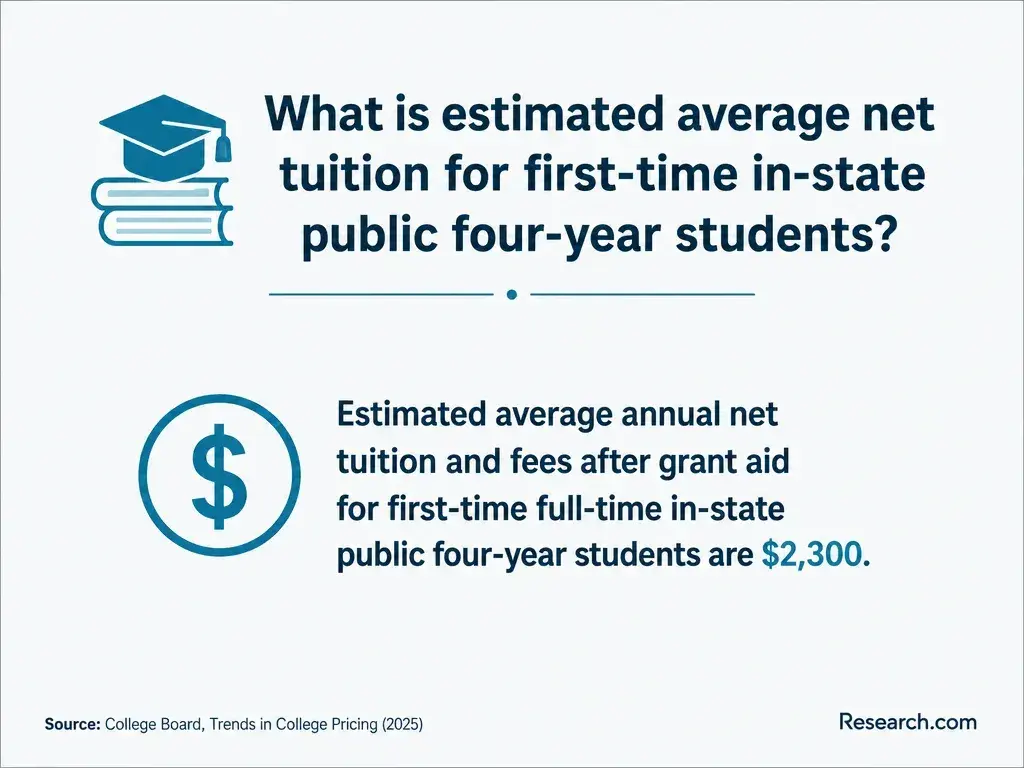
Request a written audit showing credits applied to the major, not merely transferred to the institution. Then check when remaining courses and fieldwork are offered. A lower advertised tuition rate may not save money if the program applies fewer of your credits; use public health undergraduate tuition comparisons only after establishing how much study each school would require.
For a bachelor's major, schools may require admission to the institution followed by a separate major application, minimum grades in designated courses, or completion of introductory prerequisites. A statistics background may meet a quantitative prerequisite without meeting a biology or public health prerequisite.
For an MPH, a completed bachelor's degree is generally the starting credential, but required coursework and experience vary by program. Some request prior statistics or other preparation; a quantitative MS may expect more substantial calculus, linear algebra, programming, or research experience. Distinguish a formal prerequisite from a recommended course that strengthens an application, and ask whether an outstanding requirement can be completed before enrollment.
If grades in relevant courses are uneven, check the program's published GPA policy rather than assuming a statistics degree either guarantees or rules out admission. Guidance on MPH applications after uneven undergraduate grades can help you identify evidence of recent readiness; the admissions office remains the authority on its requirements and exceptions.
For a statistics student changing to public health, delivery format matters most when a required course, group project, internship, or field placement constrains the schedule. Online coursework can remove a commute without removing live sessions, fixed deadlines, supervised practice, or visits to campus. Campus study may offer easier access to local partners and faculty-led projects, but it can also limit when a working student can take required courses.
Ask both types of program whether public health courses run every term, how placements are approved, whether remote placements are allowed, and who finds a supervisor. If you are considering graduate or eventual doctoral study, investigate residencies and research-supervision arrangements separately; listings of accessible online public health doctoral pathways do not establish that a particular program fits your schedule or research interests.
For an undergraduate switch, the strongest estimate comes from a term-by-term degree audit, not the number of credits already on your transcript. A required course offered infrequently, a prerequisite sequence, or a placement completed in a later term can extend graduation even when many statistics credits are accepted. Finishing statistics first may avoid that delay, though graduate tuition and foregone earnings can change the financial comparison.
Ask each school for the remaining required credits, tuition and mandatory fees for those credits, expected course availability, and any placement, travel, or technology expenses. Compare that remaining cost to completion with the cost of finishing your current major and pursuing an MPH, MS, certificate, or job experience afterward. Public health graduate program costs versus salaries can inform the graduate side of the comparison, but no advertised price or occupation-wide wage establishes your personal return.
Statistics preparation can support public health analyst, surveillance support, program evaluation, health services research, and biostatistics-related work. The appropriate entry point depends on the tasks and employer: an analyst may clean data and prepare reproducible reports, while an epidemiologist may also design studies, investigate disease patterns, and communicate limitations to decision-makers. Advanced research roles can require graduate training or substantial experience.
A credible transition portfolio pairs an analysis with the public health decision it informs: define the population and measure, explain data limitations, present interpretable results, and document privacy protections. Seek a supervised project, internship, or work assignment that also demonstrates collaboration with practitioners or community partners. If your target is advanced leadership or research, compare the required experience and training before assuming a doctorate is the next step; comparing doctoral public health costs and pay is most relevant after you have identified a role that actually calls for doctoral preparation.
There is no single salary or job-growth rate for "public health graduates." Federal occupational figures describe jobs, not the outcomes of people with a particular major. Epidemiologists, statisticians, health education specialists, and community health workers have different duties, typical entry requirements, and labor markets; a statistician's occupational median is not an expected wage for someone who changes to public health.
For a useful comparison, identify the exact job title and location you would pursue with each pathway. Review the latest US Bureau of Labor Statistics Occupational Outlook Handbook entry for that occupation, including its wage reference year, projection period, and typical entry education, then compare current local postings for required tools and experience. Earnings outlook for public health master's holders can provide context, but it should not replace occupation-specific evidence or a realistic assessment of the jobs you can obtain.
How do CEPH accreditation and public health certification affect careers?
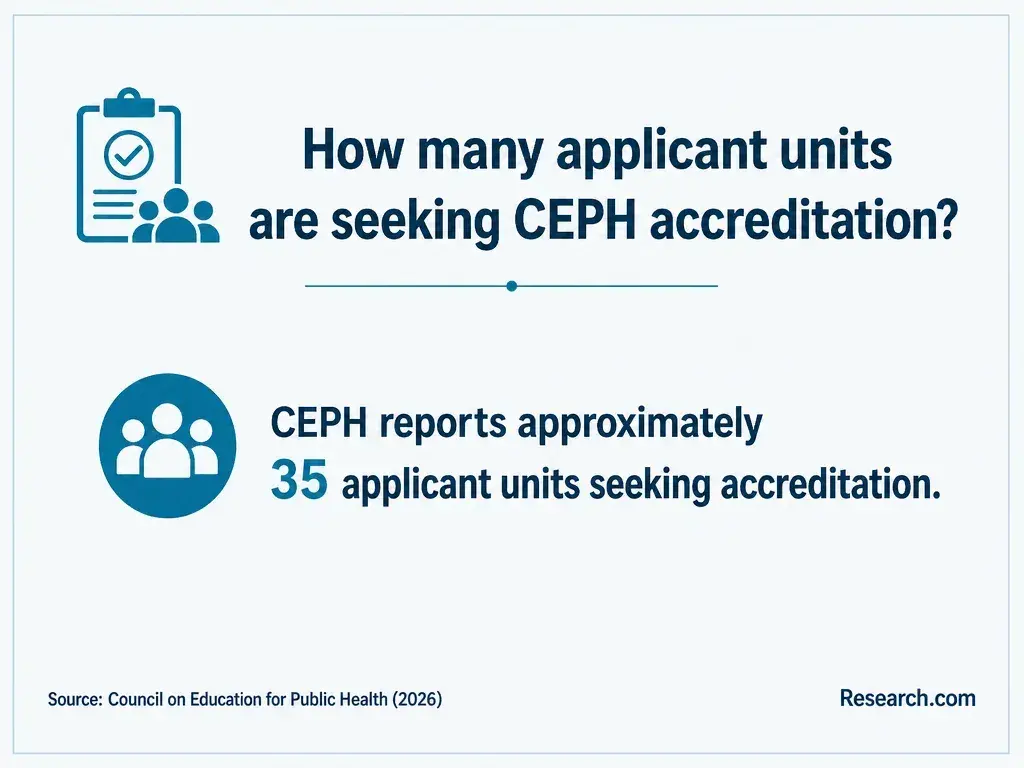
Institutional accreditation and Council on Education for Public Health (CEPH) accreditation answer different questions. Institutional accreditation concerns the college or university; CEPH accreditation has a defined public health school, unit, or program scope. Before enrolling, check CEPH's directory and the school's documentation for the exact degree and entry term you are considering. Do not assume every degree offered by an institution has the same accreditation status.
Some employers or credential pathways may value or specify particular accredited education, but CEPH accreditation does not itself confer a job, license, or certification. The Certified in Public Health (CPH) credential and health education credentials such as CHES and MCHES have separate eligibility and examination rules administered by their certifying organizations. Check the current rules against your intended degree and role; a statistics major, a public health course, or an MPH does not automatically award any of these credentials.
If you later consider a research doctorate, evaluate its funding separately from undergraduate or MPH pricing. Resources on affordable epidemiology doctoral study with aid may help identify questions about funding, but verify eligibility, renewal terms, and any required work directly with a program.
Other Things You Should Know About Public Health
Possibly. Ask whether your completed courses satisfy the minor's requirements and whether the school permits courses to count toward both credentials. A minor is worthwhile only if it fits your graduation plan.
It can be if you are close to completing statistics and the public health courses fit without substantial delay. Request a double-major audit and compare it with a single major plus relevant electives.
Keep developing the tool you can use for a well-documented analysis. Check target courses and job postings before investing heavily in another package; sound study design and interpretation matter alongside software.
Yes, if the question and data are appropriate. Explain the population-health relevance, methods, limitations, and ethical handling of data without claiming community input or access you did not have.
- The Landscape of US Undergraduate Public Health Education | nih.gov https://pmc.ncbi.nlm.nih.gov/articles/PMC6134569/
- The Future of Public Health Education - NCBI https://www.ncbi.nlm.nih.gov/books/NBK221190/
- Public Health Major Requirements Effective 2024 | ucsd.edu https://ph.ucsd.edu/undergrad/majors/effective2024/index.html
- MSPH vs. MPH: Which Public Health Degree Is Right for You? | Kent State Online https://onlinedegrees.kent.edu/college-of-public-health/community/msph-vs-mph
- What Do the Core Courses in an MPH Program Cover? | University of Bridgeport https://www.bridgeport.edu/news/what-do-mph-core-courses-cover/
- Public Health - ECU Degree Explorer - East Carolina University https://degrees.ecu.edu/degree/public-health-bs/
- Public Health Major | Presbyterian College https://www.presby.edu/programs/public-health/
- PH - Public Health | Wayne State University Academic Catalog https://bulletins.wayne.edu/courses/ph/
- Public Health (BS) | Cal Poly Academic Catalog https://catalog.calpoly.edu/science-mathematics/kinesiology-public-health/public-health-bs/
- Which MPH Program is Right For Me? | Health Systems and Population Health https://hspop.uw.edu/cophpmph/which-mph-program-is-right-for-me/