2027 Does a Public Health BS Prepare You for Sexual Health Education Program Support?

Co-Founder and Chief Data Scientist
A public health BS can provide a foundation for sexual health education, but employers also need evidence that you can work respectfully with communities, use accurate information, and help run a program. If you are considering this degree or approaching graduation, the distinction matters: classroom preparation is not the same as readiness for every educator or clinical role.
This guide shows which support tasks fit a bachelor's graduate, what experience strengthens your application, and when a different or less costly path may make more sense.
Key Things You Should Know
- Yes, for many support roles: A public health BS can prepare you to assist with outreach, educational materials, scheduling, and evaluation under appropriate supervision; it does not authorize clinical care.
- Applied experience is the differentiator: Seek a placement where you help deliver or assess age-appropriate education while following partner requirements for privacy, consent, and referrals.
- Check the job, not just the degree title: Health educator, school-based, clinical, and supervisory positions may have different experience, credential, or state-specific requirements.
Does a public health BS prepare you for sexual health education program support?
Yes—particularly for supervised, nonclinical program support. A public health BS typically introduces prevention, health communication, community engagement, and basic program evaluation. Those subjects apply when an organization needs help organizing workshops, adapting approved materials, coordinating partners, tracking participation, or connecting people with services.
Preparation is strongest when coursework is paired with relevant field experience. A graduate who has helped a supervisor review materials for accuracy and accessibility or document an outreach event can show more than familiarity with the subject. Sexual health programs may involve sensitive questions, minors, and differing community needs; staff must follow the host organization's protocols rather than improvise medical advice or promise confidentiality they cannot provide.
A bachelor's degree is not a clinical license, a guarantee of a health educator job, or necessarily the quickest route into support work. If you already have community outreach experience, targeted training and a supervised entry-level role may be more direct. If an eventual position explicitly requires graduate preparation, investigate public health graduate bridge and entry pathways after identifying the requirement—not as an assumed prerequisite for program support.
What careers can you pursue with a public health BS in sexual health education?
Job titles vary, so compare the work in a posting with your experience. The table separates plausible early-career positions from roles that often carry additional requirements:
| Role | Typical contribution | What to check |
| Program or outreach assistant | Coordinates events, materials, partners, and participation records | Community experience, scheduling demands, and data handling rules |
| Community health worker | Provides outreach, navigation, and referrals within an organization's scope | Employer training and any applicable state certification rules |
| Health education specialist | Helps plan, deliver, or evaluate health education | Whether the employer requires experience or a professional credential |
| School or clinical educator | Works in an institution with its own professional standards | Teaching, clinical, or other qualifications required for the specific post |
A nonprofit, health department, or clinic may use the same title for different responsibilities. For a first job, prioritize a posting that defines supervision and offers practice with community-facing work. A later move into program management or advanced specialist work is a separate decision; comparing online doctorate admission routes in public health is relevant only if your long-term responsibilities eventually justify doctoral study.
What coursework does a public health BS include for sexual health education?
Look for a curriculum that connects population health with practical communication. Epidemiology and introductory statistics help you interpret patterns without overstating what data proves. Behavioral science and health communication help you assess whether information is understandable and appropriate for its audience. Courses in program planning and evaluation teach you to distinguish activities delivered from outcomes achieved.
Human sexuality, reproductive health, adolescent health, health equity, or community health may be electives rather than core requirements. Check the actual catalog and course schedule: a listed elective that is rarely offered is less useful than a dependable placement with a relevant partner. A sexual health course also does not, by itself, make someone qualified to counsel patients or deliver a school's curriculum.
Choose an applied project with a concrete, reviewable output—such as an accessible resource guide or a deidentified outreach summary—and obtain site permission before using it in a portfolio. If you later need deeper training, reviewing tuition across online MPH degrees can help you compare graduate study with narrower courses or employer training.
CEPH accreditation is a useful public health-specific quality signal, but verify its scope. An institution's general accreditation and CEPH accreditation answer different questions, and a university's CEPH-accredited school does not automatically mean every bachelor's degree at that university is covered. Check the accreditor's listing and ask the program which degree is included.
Then evaluate what matters to this career goal: relevant coursework, accessible field placements, supervision, and graduate outcomes the school can substantiate. CEPH status alone cannot establish that a program offers sexual health training or meets a particular employer's hiring standard. If you later pursue an MPH, a CEPH-accredited MPH program selection requires a fresh check of the graduate program's status and fit.
Support staff need to turn approved health information into dependable operations. That includes communicating without stigma, listening to community partners, using plain language, maintaining accurate records, and recognizing when a question needs a qualified clinician or supervisor. Comfort with basic spreadsheets or survey summaries can help, but responsible interpretation matters more than making elaborate claims from small program datasets.
Before accepting a placement, ask who approves educational content, how referrals are handled, what information you may record, and what to do if a participant raises a safety concern. These procedures can differ substantially between a community workshop and a school or clinic. Practice them under supervision and describe your contribution accurately on a résumé.
Do not assume a master's degree is necessary to learn a missing task. Compare the specific skill gap with the time and expense of graduate study; public health master's fees and earning potential are relevant only if the roles you want actually reward that additional qualification.
Both formats can provide academic preparation. The more consequential question is how you will gain supervised, community-facing experience. An online student may complete coursework remotely while arranging a local placement; an on-campus student may have nearby partners but still face competitive or limited placement availability. Neither format guarantees access to a sexual health education site.
Ask each school whether classes meet live, how group work is scheduled, who finds and approves placements, whether fieldwork can occur near you, and which expenses are not covered by tuition. Shorter course blocks may help some students, but they can compress weekly workloads. Compare online public health bachelor's programs with accelerated courses against your actual work, caregiving, and placement schedule rather than the advertised calendar alone.
Requirements depend on whether you are entering as a first-year student or transferring, and whether admission to the university also admits you to the major. Schools may review prior coursework, grades, and completion of specified introductory or quantitative courses. Ask admissions and the public health department separately about their current rules.
If you have college credits, request a degree audit showing which credits satisfy general education, major, elective, and residency requirements. Acceptance of a course for transfer does not mean it replaces a required public health course. Confirm the audit before estimating your graduation date or borrowing for the program.
Graduate entry rules are a different issue. Resources on accessible admissions pathways for online MPH study should not be used to infer eligibility for a bachelor's major or to assume an MPH is needed for an assistant role.
A full-time bachelor's pathway is commonly planned around four academic years, but transfer credit, part-time enrollment, required course sequencing, and placement availability can change the timeline. Request a term-by-term plan based on your approved degree audit rather than a generic completion estimate.
For cost, compare the school's published tuition and mandatory fees with your remaining required credits. Add books or software, travel to fieldwork, and any earnings you would forgo during an unpaid placement. Ask the financial aid office how your proposed enrollment pattern affects aid eligibility; do not treat an advertised tuition rate as your total cost.
Start with affordable public health BS study options, then obtain current, individual estimates from the schools you are considering. The better-value choice is the one that lets you finish the required degree and gain relevant experience at a manageable total cost.
The Certified Health Education Specialist (CHES) credential can be relevant to health education positions, but graduation from a public health BS does not award it automatically. Check the National Commission for Health Education Credentialing's current eligibility criteria, examination process, and the coursework documentation it requests before planning around the credential. Master Certified Health Education Specialist (MCHES) is not simply the default next step for a new graduate.
Employers may instead prioritize training tied to their setting, such as approved curriculum delivery, community health worker preparation, privacy procedures, or referral protocols. Ask which credentials are required, preferred, or provided after hire. If a future employer specifically requires graduate education, investigate institutional aid pathways for public health master's students before assuming you must fund another degree yourself.
What salary and job outlook can public health graduates expect?
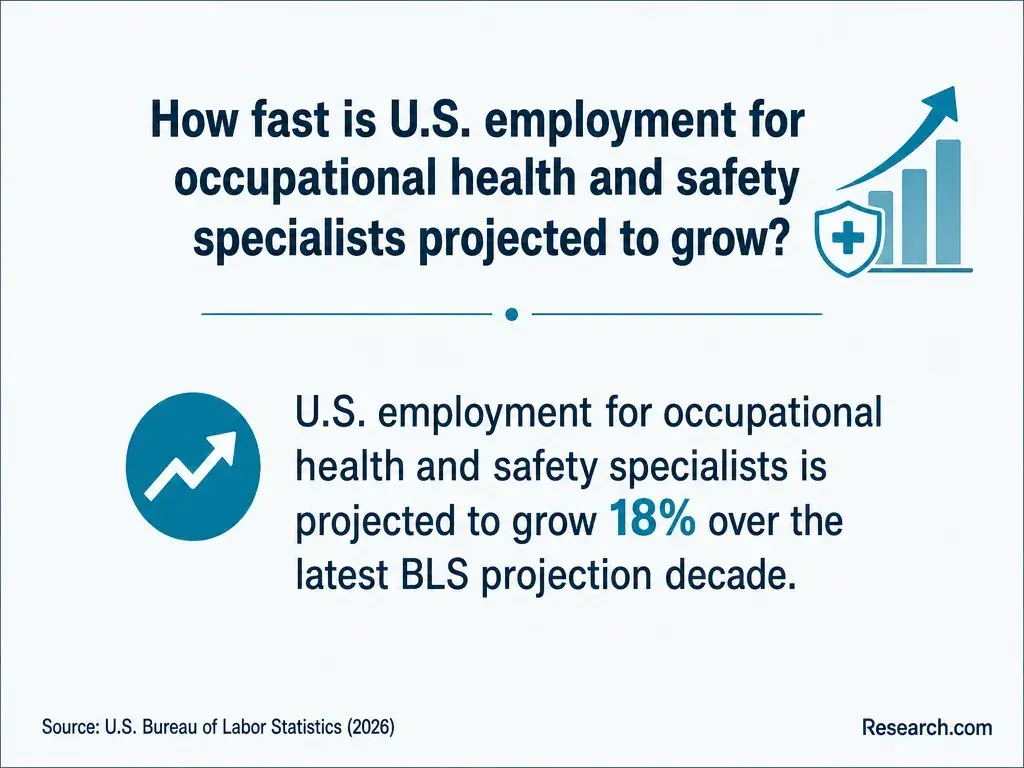
There is no single salary or job-growth figure for "public health BS graduates in sexual health education." The U.S. Bureau of Labor Statistics reports occupation-wide wages and projections for categories such as health education specialists and community health workers, not outcomes for this degree or specialty. A program assistant may also be classified differently. Use the occupation matching a particular posting, then check local vacancies, pay ranges, hours, and credential requirements.
Entry-level nonprofit and public-sector pay can differ by employer and location, while advancement often depends on demonstrated program work rather than the degree alone. Compare the likely pay for roles you could qualify for now with tuition, debt, and any unpaid fieldwork. Public health doctorate financial planning and outcomes relate to a later, separate career decision; doctoral earnings claims should not be used to justify the cost of a bachelor's degree pursued for program support roles.
Other Things You Should Know About Public Health
Possibly. Volunteer, peer education, and assistant opportunities may be open to students. Ask what training, supervision, and responsibilities the organization provides before accepting a role.
No particular personal history should be presumed necessary. What matters is respectful practice, accurate information, appropriate boundaries, and willingness to learn from the communities a program serves.
No. Explain your role, use approved information, and refer individual clinical questions to a qualified professional under your organization's procedures.
Bring a concise example of an approved project or outreach contribution. Explain your specific tasks, how you worked with a supervisor, and how you protected participant privacy.
- Undergraduate Training in Public Health Should Prepare Graduates for the Workforce - PMC https://pmc.ncbi.nlm.nih.gov/articles/PMC4283444/
- Sexual Health Education | Adolescent and School Health https://www.cdc.gov/healthy-youth/what-works-in-schools/sexual-health-education.html
- Comprehensive sexuality education | who.int https://www.who.int/news-room/fact-sheets/detail/comprehensive-sexuality-education
- Sexual and Reproductive Health Degree - IU Academic Bulletins https://bulletins.iu.edu/iub/phb/2025-2026/undergraduate/degree-programs/bsph-sexual-and-reproductive-health.shtml
- B.S. in Health Promotion - College of Public Health UGA https://publichealth.uga.edu/degree/b-s-in-health-promotion/
- Sexual Health Education | Chicago Public Schools https://www.cps.edu/sites/cps-policy-rules/policies/700/704/704-6/
- Cultural Competence in Sexual Health Education | UMN CCAPS https://ccaps.umn.edu/story/cultural-competence-sexual-health-education
- Public Health | Majors & Minors | Agnes Scott College website https://www.agnesscott.edu/academics/majors-minors/public-health/index.html
- The Ethics of Medical Sexual Health Education and Its Provision | springer.com https://link.springer.com/article/10.1007/s11930-022-00330-1
- Bachelor of Science in Health | College of Education | University of Houston https://www.uh.edu/education/degree-programs/health-bs/