2027 From Community Interpreter to Public Health: Planning a Bachelor's Pathway

Co-Founder and Chief Data Scientist
Community interpreting puts you close to the barriers people face when seeking care and services. Moving into public health, however, means learning to address those barriers across populations - not just facilitating individual conversations.
This guide is for interpreters considering a bachelor's degree as a route into community health, outreach, or program work. It explains which skills already transfer, what education adds, and how to judge whether a full degree is worth the time and cost for your target job.
Key Things You Should Know
- Interpreter experience can support community health and outreach work, but employers may also expect program planning, basic data skills, and experience beyond interpreting encounters.
- A public health bachelor's degree commonly requires about 120 semester credits in total; only a school's degree audit can establish how prior coursework applies and what remains.
- The U.S. Bureau of Labor Statistics reports a May 2024 median annual wage of $51,030 for community health workers. That occupation-wide figure is not a starting salary or a return-on-investment estimate for degree holders.
What Is a Public Health Bachelor's Degree Pathway?
For a community interpreter, a bachelor's pathway is a plan to enter or transfer into an undergraduate program, complete its remaining requirements, and use the coursework and supervised experience to qualify for a specific kind of work. Programs may award a BA, BS, or a related community health degree. Their requirements differ, so the name alone will not tell you whether a program emphasizes outreach, quantitative methods, or health education.
The career shift is from helping people communicate within an encounter to helping organizations identify needs, design services, and assess whether those services reach a population. Interpretation remains a valuable skill, but public health work adds responsibility for evidence, ethical community engagement, and program decisions. A public health BS program selection guide can help you assemble options; use each school's catalog and a written degree audit to determine what the particular degree requires.
If your immediate goal is more interpreting work rather than program responsibility, additional interpreter training or a relevant professional credential may be more direct than a bachelor's in public health.
How Can Community Interpreters Transition Into Public Health Careers?
Start with the work you want to do. Interpreters often bring language access expertise, experience navigating services, and awareness of where communication fails. Those strengths are especially relevant to outreach and community-facing programs, but they do not automatically establish competence in designing interventions or evaluating results.
The comparison below separates adjacent roles from transitions that usually require more preparation. Job titles vary by employer, so assess the duties in actual postings.
| Target work | Interpreter experience that helps | Evidence to develop |
| Community outreach or program support | Explaining services accurately and working across languages | Documented outreach, referrals, follow-up, and respectful community engagement |
| Health education support | Recognizing when materials are difficult to understand | Audience-tested materials, education planning, and evaluation skills |
| Program evaluation or data coordination | Understanding service workflows and access barriers | Statistics, careful data handling, and a supervised evaluation project |
For the closest transition, seek a supervised outreach or program-assistant assignment while studying. Ask whether you can help document service barriers or review translated materials without using confidential details from interpreting encounters. If your goal is a position that explicitly requires graduate training, first compare the duties and prerequisites with lower-cost public health master's career pathways; a bachelor's may be a necessary step if you do not already hold one, but it is not a substitute for the experience a job requires.
What Education and Training Does a Public Health Career Require?
Requirements depend on the job, not on a single definition of "public health career." Community-facing support positions may accept varied education and experience. Some health education positions seek a bachelor's and may specify a relevant major or credential. Epidemiologist roles typically require at least a master's degree; clinical work has separate licensing rules. A public health bachelor's does not confer an interpreter certification, clinical license, or automatic eligibility for a professional credential.
For an interpreter entering program work, the most useful preparation combines population-health concepts with practice: learn to define an audience and objective, communicate evidence clearly, record program activity consistently, and evaluate a modest outcome under supervision. Keep interpretation and advocacy roles distinct when an assignment requires interpreter neutrality or confidentiality.
Graduate study can be considered later if the target job calls for it. Admissions policies also differ: a guide to MPH admissions without faculty recommendations may be useful to a working interpreter planning ahead, but it does not describe bachelor's admission requirements. Do not pay for a graduate credential before checking whether a less costly course, workplace training, or supervised project closes the actual skills gap.
Online study may make it easier to keep interpreting shifts; campus study may offer more predictable access to local partners and in-person faculty support. Neither format guarantees a convenient internship. Online courses can still have live meetings, group work, proctored assessments, or field placements during business hours.
Ask each program for a sample course schedule and its rules for finding and approving a placement near you. Compare those obligations with the hours when interpreting assignments are available. Campus access is useful only if the commute and class times work; online flexibility is useful only if required activities fit your week.
Compare costs at the undergraduate level. Online MPH affordability rankings cover a different degree level and should not be used to estimate bachelor's tuition or aid. Request the bachelor's program's charges and placement requirements directly.
Expect general education alongside courses introducing population health, epidemiology, statistics, social and structural determinants of health, health systems, communication, and program planning or evaluation. Offerings and sequencing vary. An interpreter aiming for outreach should look beyond whether a catalog lists "health communication": examine whether students create materials, work with community partners, and receive feedback on their work.
Statistics and introductory epidemiology help you interpret patterns and question whether a program is reaching its intended audience. They do not, by themselves, prepare someone to lead complex epidemiologic research. An interpreter drawn to that longer-term route can compare undergraduate preparation with later grant-supported epidemiology doctoral pathways, while recognizing that doctoral admission, funding, and research readiness are separate decisions.
Before enrolling, map required courses in order. A statistics prerequisite offered infrequently or a field experience restricted to the final term can delay completion even when many credits transfer.
First determine whether you are applying as a first-year student, a transfer student, or a returning student who already has college credit. Schools may separately govern admission to the university and entry to the public health major. Common application materials include transcripts; specific GPA, prerequisite, and application requirements must be checked with the institution.
Interpreters with prior college study should request an official evaluation that shows more than the number of credits accepted. Ask which credits satisfy general education, statistics or other prerequisites, the major, and graduation residency requirements. Supply course descriptions or syllabi when an equivalency is unclear, and ask about the school's substitution or appeal process. An accepted elective credit may shorten the credit total without replacing a required course.
Advice about public health doctoral program selectivity is not a guide to undergraduate admission: the applicant pool and requirements differ. For this decision, the most valuable document is the bachelor's program's written evaluation of your own record.
A bachelor's degree commonly totals about 120 semester credits, but that is not a promise of how many credits you have left. Completion depends on credits that apply to the degree, course availability, enrollment pace, and any internship or residency requirement. For a working interpreter, reducing course load may preserve income while increasing the number of terms and associated fees.
Build a cost comparison from each school's written degree audit and published charges. Include tuition for remaining credits, mandatory fees, books, commuting or required visits, and any reduction in paid interpreting hours during fieldwork. Confirm the actual aid offer and its enrollment conditions rather than subtracting an assumed scholarship.
Comparisons of public health degrees by price and completion time can help identify programs to investigate. Your likely time and cost, however, depend on where your credits land in that program's requirements. Request a term-by-term completion plan before treating an advertised timeline as realistic.
Potential targets include community health worker, outreach coordinator, health education assistant, program assistant, and some entry-level research or data-support positions. A bachelor's may help you compete, but eligibility depends on the posting, employer, location, and your demonstrated experience. "Coordinator" can mean organizing activities under a manager's direction - not independently running a public health program.
Use your interpreting background to show concrete, permitted work: multilingual outreach you helped deliver, materials you reviewed for clarity, or a supervised project that tracked participation. Do not disclose client encounters or claim that interpreting alone constitutes program evaluation. When applying, match each job duty to coursework or a work sample and identify gaps you can fill through an internship or supervised assignment.
Research-intensive roles follow a different path. A public health PhD affordability guide is relevant if you eventually want independent research training, not if your immediate aim is an entry-level community program job. Do not take on doctoral costs to qualify for work that can be reached through experience and appropriately targeted undergraduate study.
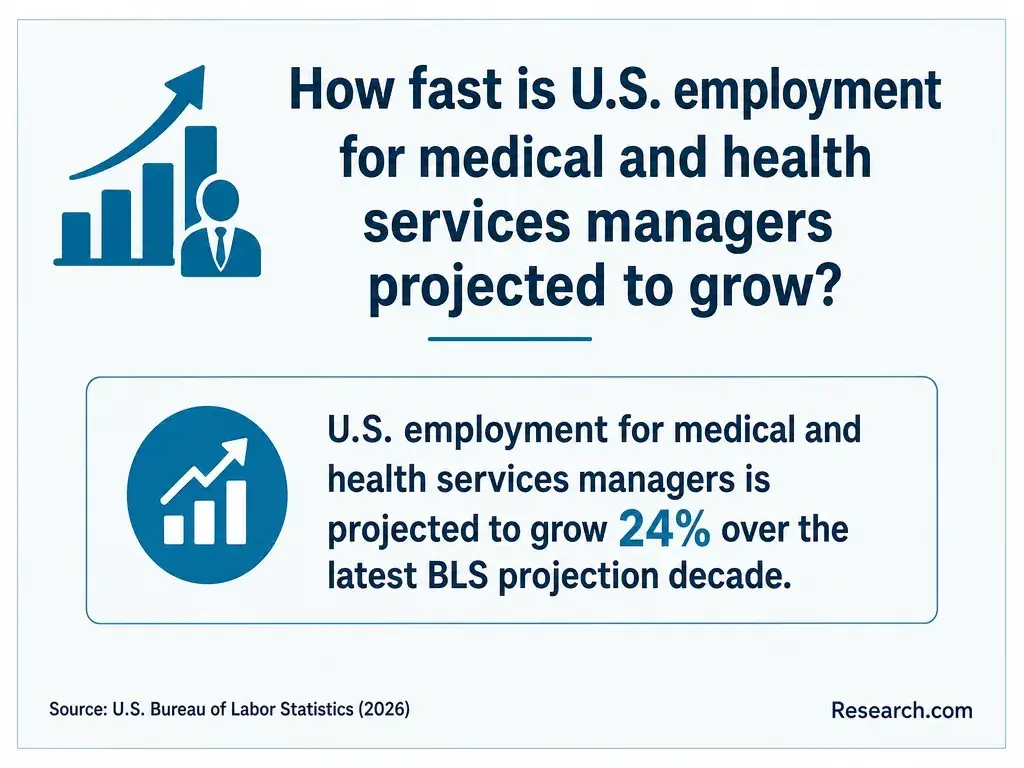
The U.S. Bureau of Labor Statistics reports a May 2024 median annual wage of $51,030 for community health workers and projects 11% employment growth from 2024 to 2034. These figures describe an occupation, not interpreter-to-public-health career changers or graduates of any bachelor's program. Entry pay, opportunities, and whether a degree is required vary by employer and location.
For a personal return-on-investment estimate, compare local postings you could plausibly qualify for with your current interpreting income, the school's estimated net cost, and any income you would forgo while studying. A comparison of public health doctorate costs and career outcomes should not be used to predict bachelor's-level earnings; it concerns a different investment and career stage.
How Can You Choose an Accredited Public Health Bachelor's Program?
Verify that the institution holds recognized institutional accreditation, then check whether the exact public health degree is covered by Council on Education for Public Health (CEPH) accreditation if that distinction matters to your goals. A university's institutional accreditation and CEPH accreditation are different, and CEPH coverage can apply to a particular school, unit, or program rather than every degree at the institution.
Make the final comparison around your target role and your constraints. Obtain a written degree audit, inspect required courses and their schedule, ask who arranges and approves field placements, and request a cost estimate for your remaining credits. Speak with career services about relevant local employers and with a program advisor about whether an interpreting employer could host suitable public health tasks; existing employment alone does not establish placement approval.
Keep financial-aid comparisons at the correct degree level. Information about online public health master's aid eligibility does not establish your undergraduate aid package. Choose the program only after its academic requirements, schedule, placement rules, and actual cost fit a plausible route to your intended work.
Other Things You Should Know About Public Health
Use only material you have permission to share. Remove identifying details, and do not assume that changing a name makes a distinctive encounter confidential. A skills-focused description of your responsibilities is usually safer than a client story.
No. Some employers advertise bilingual positions or language-differential pay; others do not. Check the posting, required proficiency assessment, and compensation policy before including a premium in your budget.
That depends on the state, employer, and position. Check the applicable state requirements and individual posting; a public health degree does not automatically award a separate certification.
Often, yes, if you continue meeting the credentialing organization's renewal rules. Check continuing education, practice, and ethics requirements, especially if a new job combines interpreting with outreach or advocacy.
- Competencies for Public Health Professionals | cdc.gov https://www.cdc.gov/infrastructure/training-professional-development/competencies-for-public-health-professionals.html
- Employer Demand and Desired Skills for Public Health Graduates: Evidence From Job Postings - PubMed https://pubmed.ncbi.nlm.nih.gov/39361905/
- Types of Financial Aid: Grants, Work-Study, and Loans | studentaid.gov https://studentaid.gov/understand-aid/types
- Community Interpreter | CT State https://ctstate.edu/programs/community-interpreter
- Careers in Public Health | School of Public Health https://uthscsa.edu/public-health/academics/careers-public-health
- Community-Based Learning | Occidental College https://www.oxy.edu/academics/areas-study/public-health/community-based-learning
- How Do Transfer Credits Work When You Go Back to School? | Whitworth Online https://online.whitworth.edu/news-articles/how-do-transfer-credits-work-when-you-go-back-to-school/
- Prerequisites | University of Michigan School of Public Health https://sph.umich.edu/undergrad/apply/prerequisites.html
- View Transfer Guide - AA - NCCU - Public Health Education (BS) - On-Campus https://coursetransfer.northcarolina.edu/guide/2024-2025/1206
- What Can You Do With a Public Health Degree? | Goodwin College of Professional Studies https://drexel.edu/dornsife/students/career-services/what-can-you-do-with-a-public-health-degree/