2027 Evaluating Conflicts of Interest in a Community Partnership for DrPH Students

Co-Founder and Chief Data Scientist
A community partner may offer a DrPH student access to a meaningful public health problem while also expecting a favorable account of its work. That tension does not necessarily make the partnership unsuitable, but it must be addressed before the project begins.
This guide is for DrPH students and experienced practitioners planning community-based projects. It explains how to recognize competing interests, establish independent oversight, protect community members, and decide whether a proposed partnership can support both credible work and a useful result for the partner.
Key Things You Should Know
- A conflict can arise from employment, funding, relationships, data control, or pressure to report favorable results; disclosure is the starting point, not the entire solution.
- Before collecting data, confirm partner permission, university requirements, data-use terms, and whether the activity needs an institutional review board determination.
- Choose projects where community members can influence the questions and use of findings without a funder or employer controlling unfavorable results.
What conflicts of interest can arise in DrPH community partnerships?
A conflict of interest exists when a secondary interest could reasonably affect - or appear to affect - a student's judgment about the project's primary purpose. The secondary interest need not be financial or evidence of misconduct. In a DrPH partnership, it may involve preserving a job, maintaining a relationship, securing future access to a site, or finishing a degree on schedule.
These common situations call for different safeguards. The examples describe risks to assess, not proof that a partner has acted improperly.
| Potential conflict | How it could affect the project | Possible safeguard |
| Student evaluates their employer's program | Staff may feel unable to criticize supervisors; the student may favor a positive assessment. | Use independent recruitment or feedback channels and an external review of conclusions. |
| Partner funds the project | Funding terms may encourage selective measures or suppress unfavorable findings. | Agree in advance on measures, analysis access, and a review process that does not grant a veto over results. |
| Partner controls participant access or data | Only favorable cases may be shared, or community members may fear that responses will affect services. | Document selection procedures and separate service decisions from participation. |
| Student has a personal or leadership relationship at the site | Decisions about consent, interpretation, or reporting may be difficult to challenge. | Disclose the relationship and assign an independent decision-maker where needed. |
A practice-focused DrPH project may address organizational improvement rather than the same goals as an MPH placement or a research-focused PhD dissertation. Students considering matching public health graduate degrees to careers should keep that distinction in mind: the degree label does not determine whether a particular relationship is free of conflicts.
How should DrPH students identify and disclose partnership conflicts?
Start with a relationship map: who pays for the work, employs whom, controls access, approves deliverables, owns the data, and benefits from the conclusions? Include community representatives, not only the university and host organization. A reasonable observer's concern matters even if the student believes they can remain objective.
Use the following sequence before agreeing to project terms, then revisit it when roles or funding change.
- List financial, employment, supervisory, family, advocacy, and publication interests held by the student, faculty supervisor, and relevant partner personnel.
- Submit disclosures through the university's applicable conflict-of-interest process and tell the faculty supervisor and partner about interests relevant to their decisions.
- Ask the responsible offices which interests require a management plan, recusal, independent oversight, or a different project.
- Record who can change methods, access identifiable information, review drafts, and decide whether findings may be shared.
- Update disclosures when a new job, grant, contract, or partner role changes the balance of interests.
A student's anticipated career benefits count as interests worth examining, even when no payment changes hands. Information about average earnings after an MPH, for example, cannot justify presenting a favorable project outcome to strengthen a résumé. Disclosure allows others to assess the risk; it does not transfer responsibility for accurate reporting away from the student.
What ethical standards govern DrPH community-based practice?
DrPH students must follow their university's policies and the requirements that apply to the particular site, data, and activity. Core principles include respect for people, fair distribution of burdens and benefits, honest reporting, protection of confidential information, and accountability to the community affected by the work. The American Public Health Association's Public Health Code of Ethics offers a professional framework, but it does not replace institutional or legal requirements.
Project classification matters. Program improvement, quality improvement, evaluation, and research can use similar interviews or datasets while having different aims and oversight obligations.
Do not decide alone that an activity is exempt from review because it is described as "practice." Ask the university's institutional review board or designated office for a determination when required. Human-subjects research may fall under the federal Common Rule, while access to protected health information may raise separate HIPAA obligations; neither framework automatically covers every partnership activity.
Ethical competence comes from supervised decisions, not a degree title alone. Someone seeking only introductory public health preparation might compare finding a lower-cost online MPH program with targeted ethics training and supervised practice. A full degree is not a substitute for obtaining the approvals this specific project requires.
Community influence is often essential: partners understand service workflows, local history, accessibility barriers, and which findings would be useful. The concern is not influence itself, but unaccountable control over whose views count or which findings can be reported. A project can be collaborative without promising the partner a favorable conclusion.
For a proposed evaluation of a community outreach program, a partner might help define a useful question, choose feasible process measures, and identify who should interpret results. The student should also seek perspectives from people affected by the program, especially if organizational leaders do not represent them.
Before results are known, it's important to settle on measure definitions, recruitment rules, and limitations. Agree on a time for the partner to check factual errors, while preserving a route to report credible unfavorable findings and protecting confidential information.
Academic deadlines can create their own pressure. Even when a host works with students in public health bachelor's programs with compressed classes, a short course calendar cannot substitute for community consultation or required approvals. DrPH students should build those steps into the project schedule rather than treating them as optional delays.
Safeguards should match the actual risks. People receiving services may reasonably worry that criticism will affect their care, employment, housing, or relationship with an organization. Separate voluntary participation from access to services, explain who will see responses, and avoid asking site staff with authority over participants to solicit sensitive feedback when an independent process is feasible.
Before gathering information, settle the following protections with the partner and the appropriate university offices.
- Use the least identifiable data that can answer the agreed question, with access limited to authorized people.
- Set clear consent or notice procedures appropriate to the activity and any applicable review determination.
- Plan secure storage, retention, deletion, and reporting rules, including how small groups will be protected from indirect identification.
- Provide a way to raise concerns that does not depend solely on the staff member or supervisor being evaluated.
- Check whether participants need language access, accessible materials, compensation, or other support that the project budget must cover.
Community organizations may need staff development to sustain these protections after a student leaves. Comparing affordable online public health degrees can be useful for longer-term workforce planning, but a shorter, site-specific training and a workable data protocol may better address an immediate safeguarding gap.
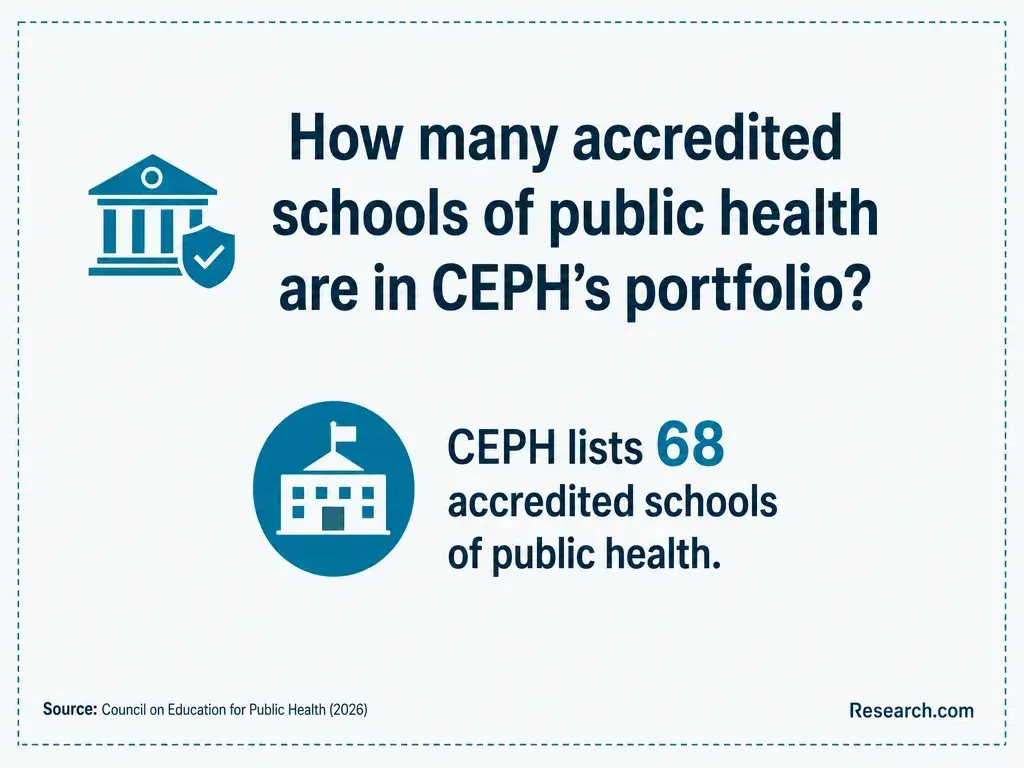
The Council on Education for Public Health (CEPH) accredits eligible public health schools and programs against published criteria. Its DrPH expectations include advanced practice preparation in leadership, communication, and work with stakeholders, alongside an applied practice experience and an integrative learning experience. Students should check the criteria and their school's current handbook for the precise competencies, deliverables, and assessment rules that apply to their cohort.
Competency language is useful only if students can demonstrate it. In a partnership project, evidence might include a documented stakeholder-engagement process, an ethical decision about data access, a negotiated change to an evaluation plan, and a clear explanation of findings and limitations to different audiences. Faculty should assess how the student handled disagreement, not merely whether a partner signed a completion form.
CEPH accreditation has a defined scope; institutional accreditation alone does not establish that a specific public health degree is covered. Guidance on CEPH-accredited MPH program selection can help readers understand that distinction, but prospective DrPH students must verify the accreditation status and scope of the exact doctoral program they are considering.
Assess the proposed project as both a public health undertaking and an achievable academic assignment. A compelling need is not enough if the student lacks permission, supervision, time, or a credible way to hear from the people affected.
Ask the faculty supervisor and prospective site contact these questions before committing:
- What practice decision will the project inform, who will use the output, and what evidence already exists?
- Who represents affected community members, and how can they disagree safely with organizational leaders?
- What authority will the student have to access data, contact participants, adjust the plan, and describe unfavorable findings?
- Which site, university, data-use, and review approvals are needed before work starts?
- Who supervises the student, resolves disputes, and keeps the project viable if a key contact leaves?
- What hours, travel, translation, compensation, software, or other resources are required - and who will provide them?
For a student paying for doctoral study, financial pressure can make an already-available site seem more attractive than a better-governed one. Comparing online MPH net tuition after scholarships may inform an earlier education decision, but neither low net tuition nor a convenient placement resolves missing approvals or an unmanageable conflict. If the site cannot permit independent reporting or safe participation, change the scope or choose another partner.
Programs can make conflict management a practiced leadership skill rather than a form completed at the end of a project. Useful preparation includes cases involving employer-sponsored evaluations, role-play with a partner who contests an unfavorable finding, instruction on data governance, and supervised review of a proposed agreement before collection begins. Faculty and site supervisors should know who can pause work and where students can seek advice outside the reporting relationship.
A strong program also makes room for a feasible alternative when a partnership fails an ethics or access check. Otherwise, a student facing a fixed graduation deadline may feel compelled to keep an unsuitable project. Assessment can focus on the student's reasoning and documentation even if an appropriate decision is to revise the question or leave a site.
Admissions access is a separate issue from this preparation. Comparing selectivity across online MPH options may help someone plan earlier study, but selectivity does not show whether a later DrPH program teaches students to negotiate conflicting partner demands. Ask to see the doctoral project handbook, example assessment criteria, and procedures for resolving site disputes.
Documentation should make decisions reviewable without creating an unnecessary archive of sensitive community information. The precise forms vary by university and site, but an effective record connects authority, ethics, methods, and reporting.
Before work begins, establish who maintains each of these records and who may access it:
- A project charter or agreement stating the practice question, deliverables, timeline, student and supervisor roles, and dispute process.
- Conflict disclosures and any approved management plan, updated as relationships or funding change.
- Written site permissions, applicable institutional review board or other oversight determinations, and any required data-use or confidentiality agreements.
- A methods and data-management plan covering recruitment, measures, access, storage, reporting, retention, and permitted reuse.
- Records of material changes, supervisory decisions, partner feedback, and how factual corrections or disagreements were resolved.
Keep approved agreements separate from public-facing deliverables. A portfolio version should remove restricted data and details that could identify participants; partner permission to perform the work is not automatically permission to post its results. The same documentation standard applies to collaborators who entered public health education through public health master's provisional admission pathways: admission status does not confer site access or waive project-specific approvals.
How can students choose a DrPH program with strong partnership practices?
Look beyond a program's promise of "community engagement." Ask how it approves sites, matches students with qualified supervisors, handles conflicts involving a student's employer, funds community participation where appropriate, and responds when a partner withdraws access.
Request the current project handbook and ask whether students can speak with recent project participants about the approval timeline and quality of supervision. Their experiences are informative, though not a guarantee that a particular site will work.
Confirm the exact degree, delivery schedule, required in-person work, project milestones, and CEPH accreditation scope with the institution. For working practitioners, also check whether an employer will permit use of work time or organizational data; neither permission should be assumed.
Compare the realistic cost and time commitment alongside partnership support. A guide to weighing tuition for a public health doctorate can frame the financial trade-off, but a lower price does not compensate for missing supervision or an unworkable project site.
The best choice is a program that can help the student complete a defensible, useful project under the constraints they actually face. If the goal is to manage conflicts in an existing role rather than undertake doctoral-level applied leadership work, employer-supported ethics training, mentorship, or a smaller supervised evaluation may be the more direct path.
Other Things You Should Know About Public Health
Possibly. Volunteer status does not automatically disqualify the site or make it eligible. The program must approve the project, and the student should disclose relationships and clarify supervision, access, and any pressure participants might feel.
Ownership and permitted use depend on university policy, contracts, employment terms, and the partner agreement. Settle those terms - including what the student may submit academically or share publicly - before work begins.
Yes. A partner can identify factual errors and confidentiality concerns. Agree on a review period, but do not give the partner an undisclosed right to remove credible unfavorable findings.
Stop activities that require its permission, protect information already collected under the applicable agreements, and contact the faculty supervisor and relevant oversight offices. A revised project or different site may need fresh approval.
- Conflict Resolution in Public Participation | US EPA https://www.epa.gov/international-cooperation/conflict-resolution-public-participation
- Conflicts of Interest and Distribution of Resources to... - PMC https://pmc.ncbi.nlm.nih.gov/articles/PMC5638118/
- Financial conflicts | ORI https://ori.hhs.gov/content/Chapter-5-Conflicts-of-Interest-Financial-conflicts
- NIH Data Use Certification Agreement | Grants & Funding https://grants.nih.gov/policy-and-compliance/policy-topics/sharing-policies/accessing-data/certification-agreement
- Conflict of Interest in Four Professions: A Comparative Analysis | nih.gov https://www.ncbi.nlm.nih.gov/sites/books/NBK22946/
- Standards Required for the Development of CDC Evidence-Based Guidelines | MMWR https://www.cdc.gov/mmwr/volumes/71/su/su7101a1.htm
- Conflict Management Process | umn.edu https://coi.umn.edu/conflict-management
- Chapter 18 - Conflicts of Interest and Commitment | The University of Iowa https://policy.uiowa.edu/community-policies/conflicts-interest-and-commitment
- Understanding Conflict of Interest | University Compliance and Ethics https://compliance.ucf.edu/understanding-conflict-of-interest/
- PHS Research Awards-COI | ucop.edu https://policy.ucop.edu/doc/2500558/phs_coi