2027 Evaluating an MPH Practicum in A Sexual Health Education Organization

Co-Founder and Chief Data Scientist
A sexual health education organization can offer an MPH student meaningful work in community education, program planning, and evaluation - but a willing host does not automatically make a placement academically suitable. Students need a project they can complete, qualified supervision, permission to use relevant information, and deliverables their program will accept.
This guide explains how to assess those conditions, compare placement formats, and anticipate the time, cost, and career value of the experience. It is designed to help you choose a placement that serves both your learning goals and the organization's community responsibilities.
Key Things You Should Know
- Choose a placement for its approved scope and supervision, not just the organization's mission: the work must produce assessable public health outputs rather than consist mainly of observation.
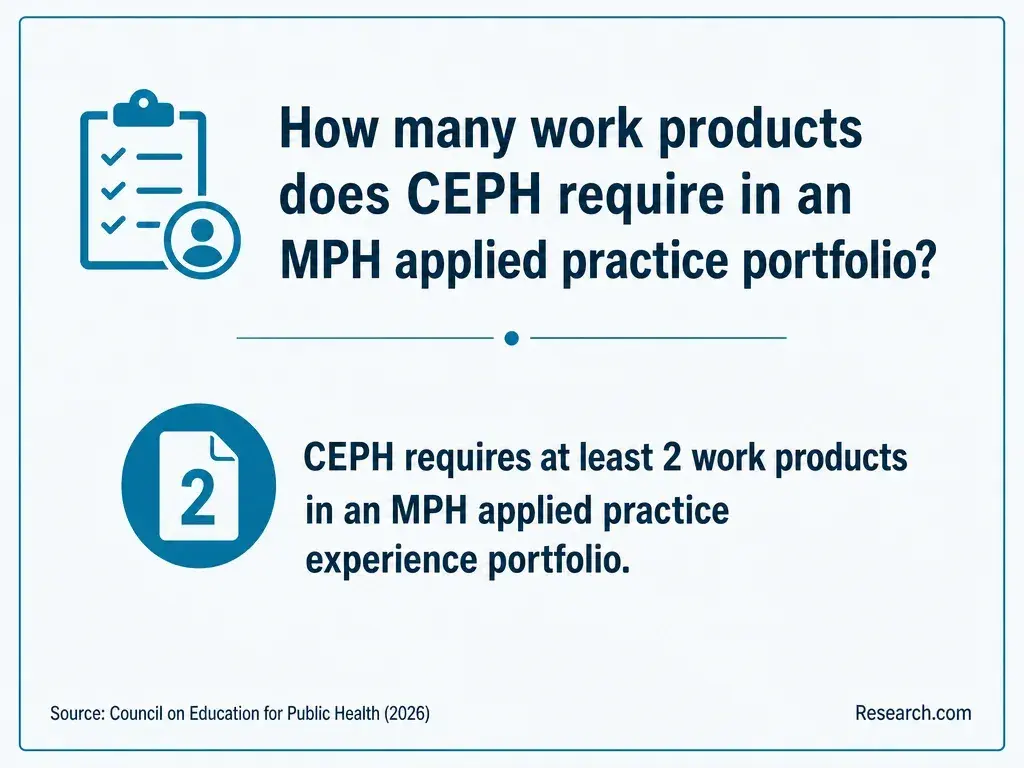
- For a CEPH-accredited MPH, the applied practice experience must demonstrate selected competencies through at least two student-produced work products; the school determines its own placement procedures and any hour requirement.
- Confirm the schedule, compensation, data permissions, and portfolio restrictions before committing. A useful project may be feasible without access to identifiable client records.
What is an MPH practicum in a sexual health education organization?
An MPH practicum - often called an applied practice experience - is supervised work in which a student applies population-health skills to a practice need. At a sexual health education organization, that might mean improving an educational program, assessing whether materials are accessible, or helping staff evaluate outreach. It is not the same as providing clinical care or simply attending workshops.
A strong host can identify a real organizational decision, provide a supervisor who can review the work, and allow the student to produce usable outputs. For example, an organization deciding how to improve workshop reach might need an outreach plan and an evaluation instrument. The student and host should agree on what each output will contain and who may see it.
Students entering public health from another field can bring useful communication, teaching, or community-service experience. Someone still deciding on an undergraduate route can explore online bachelor's study in public health, but undergraduate coursework is not a substitute for checking the MPH program's specific practicum rules.
How does CEPH accreditation shape MPH practicum requirements?
The Council on Education for Public Health (CEPH) sets criteria for accredited public health schools and programs. Its MPH applied practice criteria call for planned competency attainment and at least two student-produced work products that provide evidence of that learning. A host's offer of volunteer hours alone does not establish that the experience meets those criteria.
The academic program decides how students obtain approval, document competencies, submit work, and meet any locally specified hours or timing requirements. Check whether the particular MPH degree falls within the school's or program's CEPH accreditation scope; institution-level accreditation answers a different question. A program may also require a site agreement, faculty review, or supervisor evaluation before work begins.
Keep degree levels separate when comparing fieldwork policies. Online doctorates in public health may involve different applied or research requirements; their project rules do not establish what an MPH placement must include.
What projects can MPH students complete in sexual health education?
The best project answers a question the organization already needs to address and fits the student's time, authority, and access. The examples below show how a manageable practice task can yield evidence of learning without assuming access to sensitive records.
| Possible project | Potential work products | Approval issue to resolve |
| Review educational materials for accessibility and accuracy | Assessment rubric and revised materials | Who approves clinical content and publication? |
| Plan evaluation of a community workshop | Logic model and feasible measurement plan | Can staff collect feedback under the organization's policies? |
| Improve outreach to a defined audience | Partner-informed outreach plan and implementation guide | Who may speak for community partners? |
| Summarize existing, permitted program data | Data dictionary and aggregate findings brief | What access, privacy, and data-use approvals are required? |
A student should not assume that a survey, interview, or analysis is exempt from review because it is for a class. Ask the academic coordinator and host who determines whether consent, institutional review, or other oversight is needed. If a proposed project depends on restricted client data that cannot be approved in time, a materials review or prospective evaluation plan may be the better practicum.
An MPH practice brief also differs from the original research expected in many doctoral pathways. Students whose main goal is advanced epidemiologic research can compare budget planning for a public health PhD before treating a practice placement as a route to that training.
A placement is strongest when the student can name the competencies they will demonstrate, not merely topics they will encounter. Relevant examples include assessing community needs, planning an intervention, communicating health information, applying ethical judgment, and designing an evaluation. A project involving existing data may also develop data interpretation, provided the student has appropriate access and supervision.
Match each proposed competency to observable work. An outreach plan can demonstrate audience analysis and communication choices; a logic model can show how activities connect to intended outcomes. Sitting in on a workshop, by itself, offers less evidence of applied skill. Ask the faculty adviser whether the proposed outputs satisfy the program's competency-assessment requirements before accepting the placement.
Concentrations vary by institution. Public health master's degree types explained can help distinguish a practice-oriented MPH from a more research-focused route, but the student's actual degree requirements control the practicum decision.
Either format may permit a local organization to host the student, but placement support and approval processes differ. An online student may need to identify a host independently; a campus student may have access to established partners. Neither arrangement guarantees a suitable opening, remote supervision, or permission to work from home.
Ask the academic coordinator who secures the site, when approval must be completed, whether remote tasks count, and how faculty and host supervisors will communicate. Ask the host which meetings, workshops, and community events require attendance at specific times. This matters especially when a student is balancing fieldwork with employment or caregiving: asynchronous classes do not make a partner's operating hours asynchronous.
When comparing short online public health degree options, examine fieldwork calendars separately from advertised course flexibility. A compressed academic schedule can leave less time to negotiate a site agreement and revise deliverables.
Useful preparation combines public health methods with the ability to work respectfully with a community organization. Health behavior or health communication coursework can support audience-centered materials. Epidemiology and introductory biostatistics help students interpret evidence without overstating what local data show. Program planning and evaluation prepare them to define activities, indicators, and limitations.
Students should also understand confidentiality, sexual health terminology, accessibility, and the difference between evidence-based education and individualized clinical advice. Before placement, identify a skills gap tied to the proposed project: a student building a feedback tool may benefit more from a focused survey-design course than from an unrelated elective.
If cost influences course selection, budget-friendly online public health degrees provide a starting point for comparing programs. Verify that any lower-cost option actually offers the coursework and supervised practice support your project needs.
There is no universal admission category called a "sexual health education MPH." A student might enter an MPH in community health, health promotion, maternal and child health, or another area and then pursue an appropriate host site. Requirements - including prior degree, prerequisites, application materials, and experience expectations - belong to the specific program, not the practicum setting.
Applicants from teaching, social services, communications, biology, or other backgrounds can document relevant skills while checking whether a program requires particular quantitative preparation. Community experience may strengthen an application, but it does not automatically satisfy a prerequisite or reserve a practicum placement. Before applying, ask whether students can work with external sexual health education organizations and when placement approval occurs.
Funding is a separate admission-planning question. Public health master's university award comparisons may help identify questions about eligibility, but applicants should obtain award terms and their own net-cost estimates directly from each school.
There is no single practicum duration or price across MPH programs. Schools set their own credit, hour, term, and enrollment rules, while host sites determine when supervision and activities are available. The practical timeline also includes approval, onboarding, data permissions, drafting, feedback, and final assessment - not only time spent at the organization.
Calculate the cost of the placement you can actually complete. Check whether practicum credits carry tuition, whether the site pays students, and whether travel, background checks, required training, or reduced work hours affect your budget. An unpaid remote project may save travel costs yet still require attendance during paid work hours.
Comparing lower-tuition MPH programs is useful only alongside each school's fieldwork policies. Request a written estimate of required credits and fees, then confirm with the academic coordinator that your proposed schedule can accommodate site approval and deliverable revisions.
A relevant practicum can support applications for health education specialist, community outreach, program coordination, or evaluation-assistant roles. Its strongest contribution is evidence of tasks performed: materials developed, partners consulted with permission, or an evaluation plan completed. Entry-level responsibilities differ from managing a program or directing research, and a placement does not guarantee employment.
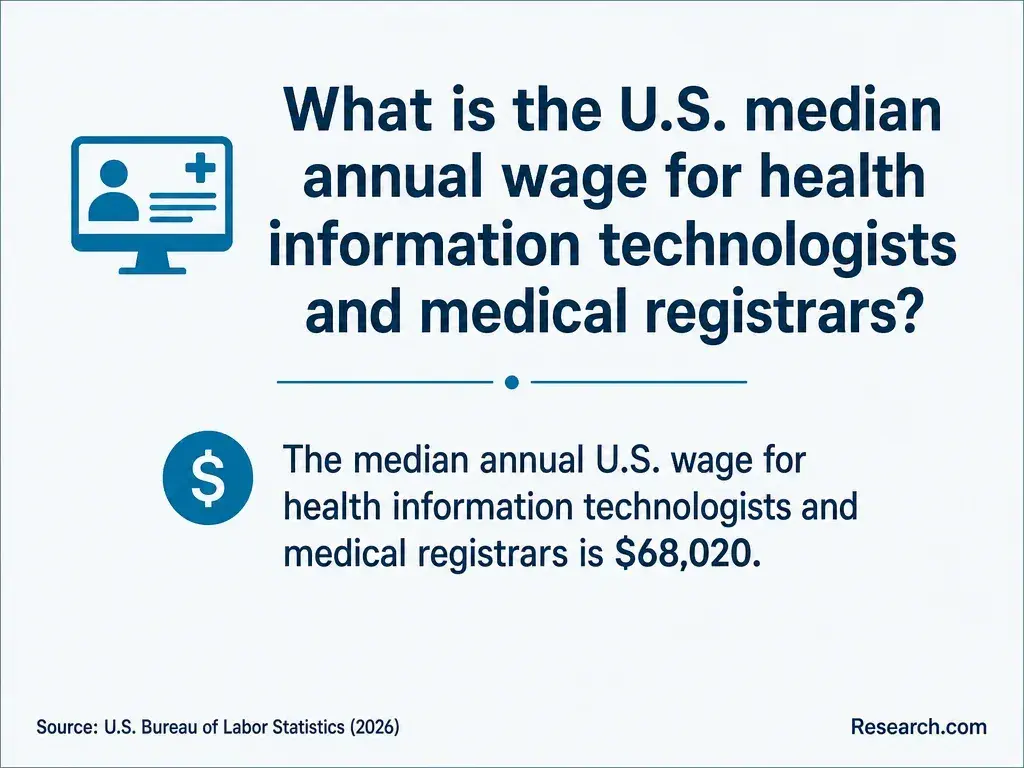
For salary context, the US Bureau of Labor Statistics' Occupational Outlook Handbook reports occupation-wide pay for health education specialists, a closer comparison than a general public health salary. That median is not the expected wage for an MPH graduate or a new hire; employer, location, experience, and job duties matter. Use current occupation-specific data and local job postings when evaluating an offer. Average earnings after an MPH can provide additional context, but degree-wide figures should not replace role-specific comparisons.
If your target job is primarily workshop facilitation, supervised community experience or targeted training may be more direct than an MPH. The degree makes more sense when you need broader population-health, program-design, or evaluation preparation and can demonstrate those abilities through the placement.
Which certifications and standards apply to sexual health educators?
Requirements depend on the actual role. An MPH does not automatically award Certified Health Education Specialist (CHES), Master Certified Health Education Specialist (MCHES), or Certified in Public Health (CPH) status. The respective credentialing bodies set examination and eligibility rules; employers decide whether a credential is required or preferred for a particular position.
Educational work also calls for accurate, age-appropriate content, accessible communication, respect for community priorities, and clear referral boundaries. An educator should know when a question requires a licensed clinician rather than offering individualized diagnosis or treatment. If the host serves minors or handles sensitive information, confirm its safeguarding, consent, and confidentiality policies before beginning work.
Credentials for practice should not be confused with research degrees. Lower-cost epidemiology research training and aid is relevant to a different goal: advanced research preparation, not qualification to deliver community sexual health education.
Other Things You Should Know About Public Health
Ask the host and your program first. Use a public or approved version that removes confidential information, respects intellectual-property rules, and does not imply the organization endorsed claims it has not reviewed.
Tell your faculty adviser promptly. A revised scope may be workable if the supervisor, competencies, timeline, and assessable outputs remain acceptable to the program.
You may be able to volunteer, subject to the host's rules, but do not assume the activity will count retroactively. Obtain your program's approval before relying on it for academic credit.
State exactly what you completed - for example, a measurement plan rather than evaluated outcomes. Explain its intended use and limitations without claiming results the organization has not collected.
- Master of public health community-based practicum | nih.gov https://pubmed.ncbi.nlm.nih.gov/21617409/
- Writing and Using Learning Objectives - PMC - NIH https://pmc.ncbi.nlm.nih.gov/articles/PMC9582829/
- HIPAA and Research | hhs.gov https://www.hhs.gov/hipaa/for-professionals/special-topics/research/index.html
- Sexual Health Education | Adolescent and School Health https://www.cdc.gov/healthy-youth/what-works-in-schools/sexual-health-education.html
- Comprehensive sexuality education | who.int https://www.who.int/news-room/fact-sheets/detail/comprehensive-sexuality-education
- Principles and Best Practices for Protecting Participant Privacy | Grants & Funding https://grants.nih.gov/policy-and-compliance/policy-topics/sharing-policies/dms/privacy/best-practices
- Practicum Examples | UW School of Public Health https://sph.washington.edu/mph-practicum/examples
- MPH Practicum Overview for Preceptors | Host Organizations | Harvard T.H. Chan School of Public Health https://hsph.harvard.edu/office/field-education-and-practice/host-organizations/mph-practicum-overview-for-preceptors/
- Data Security Guidelines | Research Ethics & Compliance https://research-compliance.umich.edu/data-security-guidelines%20
- Research Ethics and Informed Consent | Educational Research Basics by Del Siegle https://researchbasics.education.uconn.edu/ethics-and-informed-consent/