2027 Evaluating the Sustainability Plan for a Grant-Funded Prevention Service: A DrPH Applied Project Planning Guide

Co-Founder and Chief Data Scientist
A grant-funded prevention service may be valued by participants yet still lack the money, staffing, or authority to operate after its award ends. For an experienced public health practitioner, that gap is a strong DrPH applied-project problem - but only if the project can produce a decision the organization can use.
This guide shows how to evaluate what should continue, measure what continuation would require, and build a sustainability plan with community partners. It also helps you judge whether your site, doctoral program, and available data make the project feasible.
Key Things You Should Know
- Evaluate sustainability as a decision about the service's essential functions, not a promise to preserve every grant-funded activity.
- Compare the fully loaded cost of each continuation option with identified funding, staff time, partner commitments, and evidence of community value; an uncommitted funding prospect is not secured revenue.
- A defensible DrPH project produces an approved, usable decision tool - such as a costed options plan - with baseline measures, named decision-makers, data permissions, and a schedule for reassessment.
What Is a DrPH Applied Project for a Grant-Funded Prevention Service?
It is a practice-focused project that helps an organization decide whether and how to maintain a prevention service when time-limited grant support changes. The service might provide screening navigation, community health education, or referrals. A workable project question is: Which functions can the host organization and its partners sustain without reducing access for the people the service is intended to reach?
The output could be a costed set of continuation options, a partnership agreement proposal, or a decision dashboard. It is not proof that the service is effective or that replacement funding will appear. A DrPH emphasizes leadership and organizational decisions; a PhD is generally better suited to a primary goal of producing original research. Readers choosing between those aims can use this guide to comparing DrPH and PhD program goals.
Before committing, identify the organizational sponsor who can act on the findings, the community representatives who should shape the decision, and the faculty member who will assess the work. Site support, academic approval, and permission to use service data are separate requirements.
How Can You Evaluate the Sustainability of a Grant-Funded Prevention Service?
Start by separating the service's purpose from its current grant-funded design. Continuation might mean keeping the full service, retaining only a high-value function, transferring delivery to a partner, integrating referrals into routine operations, or ending the service with a responsible transition. A sustainability evaluation compares these options against community need, likely benefit, equity, cost, and operational feasibility.
Use a defined baseline period and review service records, the grant agreement, budgets, staffing schedules, referral workflows, and existing evaluations. Ask participants and community partners what would be lost or changed under each option, using an appropriate and approved engagement process. Then distinguish findings from assumptions: a partner's interest in taking referrals is not a staffing commitment, and prior grant spending is not necessarily the cost of routine delivery.
For a tightly scoped internal improvement question, supervised evaluation training may be more direct than doctoral study. A practitioner comparing education costs with career aims may also consider shorter public health programs and salary outlook; the project itself still needs someone with authority to act on its findings.
What Should a DrPH Applied Project Sustainability Plan Include?
The plan should let a real decision-maker compare feasible futures, rather than collect aspirations. Its exact format should follow the host organization's needs and the DrPH program's requirements. These components make the proposed decision and its evidence explicit:
- Decision and scope: State which service functions, population, sites, and post-grant period are under review.
- Baseline and value: Document reach, delivery, referrals, participant experience, and known evidence limitations.
- Options and costs: Compare continuation, adaptation, transfer, and closure, including staff time, supervision, facilities, technology, and transition costs.
- Governance: Name the budget owner, implementation lead, partner roles, and community input needed before a choice is made.
- Triggers and review dates: Specify what would prompt expansion, redesign, or an orderly wind-down.
- Evidence and approvals: Record data sources, access permissions, confidentiality safeguards, and required academic or institutional review.
Include workforce development only where it solves a documented capacity gap. For example, an entry-level staff member's education plan is different from a budget to retain a qualified supervisor; if formal undergraduate study is genuinely necessary, a public health bachelor's affordability guide can inform the individual's education decision, but it cannot establish a sustainable staffing model for the service.
Choose a framework for the question it helps answer, not because it supplies a ready-made score. The following approaches serve different purposes in a prevention-service project.
| Approach | Useful question | Important limit |
| Program Sustainability Assessment Tool (PSAT) | Where do stakeholders see strengths and gaps in capacity, funding, partnerships, adaptation, and related domains? | Perceptions do not verify that money or partner commitments exist. |
| RE-AIM | Who is reached, how is the service implemented, and what happens to delivery over time? | Continued activity alone does not demonstrate affordability or equitable access. |
| Consolidated Framework for Implementation Research (CFIR) | Which organizational and contextual conditions help or hinder integration into routine practice? | Identifying barriers does not itself select or finance a continuation option. |
A practical combination is to use PSAT for stakeholder assessment, service records for observed delivery, and a cost-and-authority review for the final decision. If the main aim instead becomes developing and testing new theory, compare that scholarly pathway separately with cost-conscious public health PhD planning; a sustainability framework does not turn a practice project into a PhD dissertation.
Build a resource picture for each continuation option. Separate committed revenue from pending applications, restricted funds, and informal offers. Estimate the full operating cost rather than copying the grant's total: one-time startup purchases, donated space, and grant reporting work may change, while supervision, insurance, data systems, and referral follow-up may remain.
Test partnerships against specific responsibilities. Who will accept referrals, provide staff time, host data, handle missed appointments, and resolve problems? A letter of support may show goodwill without committing resources. Confirm proposed roles with the people authorized to make them, and document what happens if a partner withdraws.
Capacity also includes the skills to run and evaluate the service. If an employer proposes graduate education to fill that gap, compare its cost and time away from work with targeted training and supervised experience. A public health master's degree investment guide can support that separate education decision; the service's financial plan should not assume an employee will enroll or remain unless the arrangement is agreed upon.
For this project, the most useful preparation combines program evaluation, implementation science, budgeting, qualitative inquiry, epidemiologic reasoning, and organizational leadership. Evaluation courses help distinguish outputs from outcomes; qualitative methods help interpret partner and participant perspectives; budgeting and leadership courses support a choice the organization can implement.
Match coursework to your actual gap. If you can lead partners but cannot assess missing service records or interpret outcome patterns, arrange methods support rather than treating a general evaluation course as proof of advanced statistical ability. A working practitioner considering deeper quantitative training can compare the scheduling demands described in balancing employment with a biostatistics master's. A separate degree is rarely the fastest solution to a single project's analysis need.
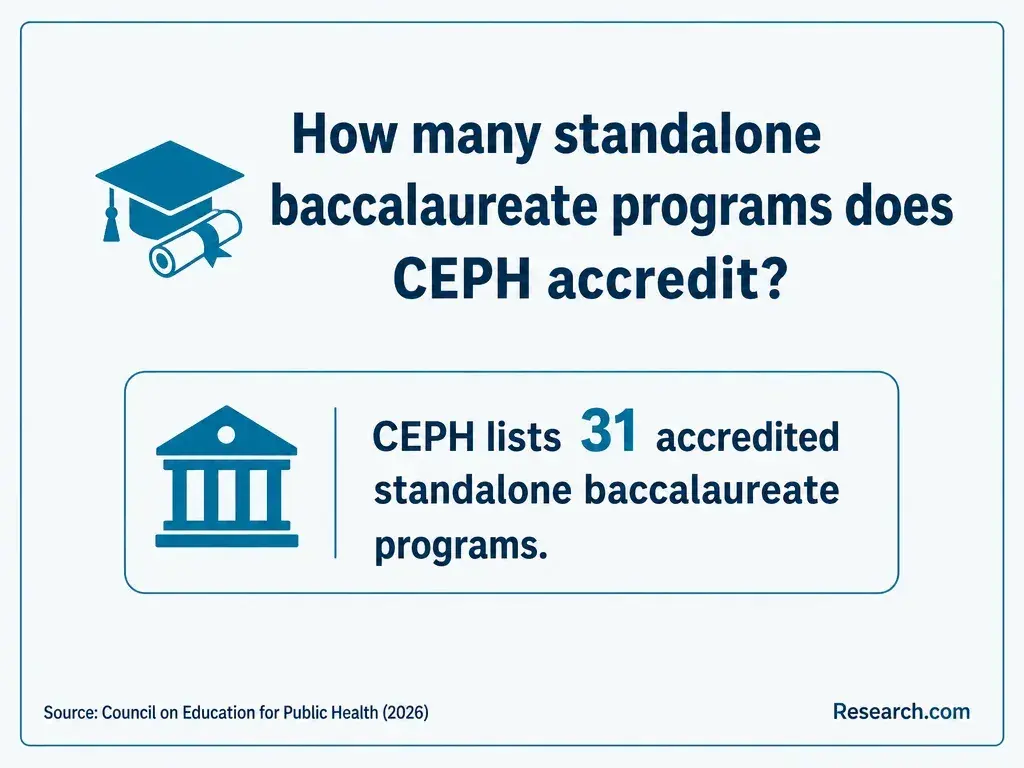
A DrPH applicant should verify the current Council on Education for Public Health (CEPH) criteria and the specific school or program's implementation of them. In particular, ask how its DrPH applied practice experience, competency assessment, and integrative learning requirement relate to the proposed sustainability project. An applied practice experience and a culminating project may be connected, but they should not be assumed to be interchangeable.
Request written answers about site approval, supervision, acceptable work completed at your existing employer, deliverables, and the point at which work may begin. Confirm that CEPH accreditation covers the relevant school or program and degree; institutional accreditation alone does not answer that question.
An MPH offers a different level of preparation and applied requirements. For a practitioner not yet ready for doctoral leadership work, MPH programs with less restrictive admissions may be worth examining, but admissions accessibility does not establish project fit.
Define what "sustained" means before observing post-grant activity. For example, it might mean that a specified function remains available to the intended population, under an identified operating owner, with adequate staffing and a documented funding source. Measure that outcome at agreed review points rather than counting a service as sustained because it operated briefly after an award ended.
Pair the primary continuation measure with indicators that could reveal a misleading success: eligible people served, referral completion, wait time, costs, staff turnover, and access differences across relevant groups where data quality and privacy permit. Record each indicator's numerator, denominator, source, owner, and collection schedule. If the data cannot reliably identify eligible people, say so rather than treating visit counts as population reach.
An evaluation can describe what happened and whether an option appears workable; without an appropriate comparison and design, it cannot claim that the sustainability plan caused improved health outcomes. Advanced epidemiologic research requires different preparation and resources. Readers whose main goal is that research - not an organizational continuation decision - can explore online epidemiology doctorate financial assistance separately.
Choose for the project you can execute, not for a degree label alone. Ask potential programs whether faculty can supervise sustainability evaluation, whether your employer can serve as a project site, and how community partners participate in project decisions. Compare required live sessions, campus visits, pacing, leave policies, and any restrictions on using work conducted as part of your job.
Before enrolling, obtain a realistic outline of project milestones, tuition and fees through completion, travel or fieldwork expenses, and the approvals needed from your employer and data steward.
A willing supervisor does not automatically provide access to restricted records. If prior grades raise an admissions concern, public health master's options after a weak GPA may help frame a preparatory alternative; ask each DrPH program how it evaluates later coursework and substantial leadership experience rather than assuming one rule applies everywhere.
What Careers and Salaries Follow a DrPH in Public Health Program Management?
This project can demonstrate skills relevant to prevention-program director, health department manager, nonprofit program leader, or health-system population-health roles: negotiating partnerships, assessing service value, building budgets, and presenting defensible options. Hiring and advancement still depend on management experience, employer requirements, and authority to oversee people and resources. A DrPH does not itself confer a promotion or clinical license.
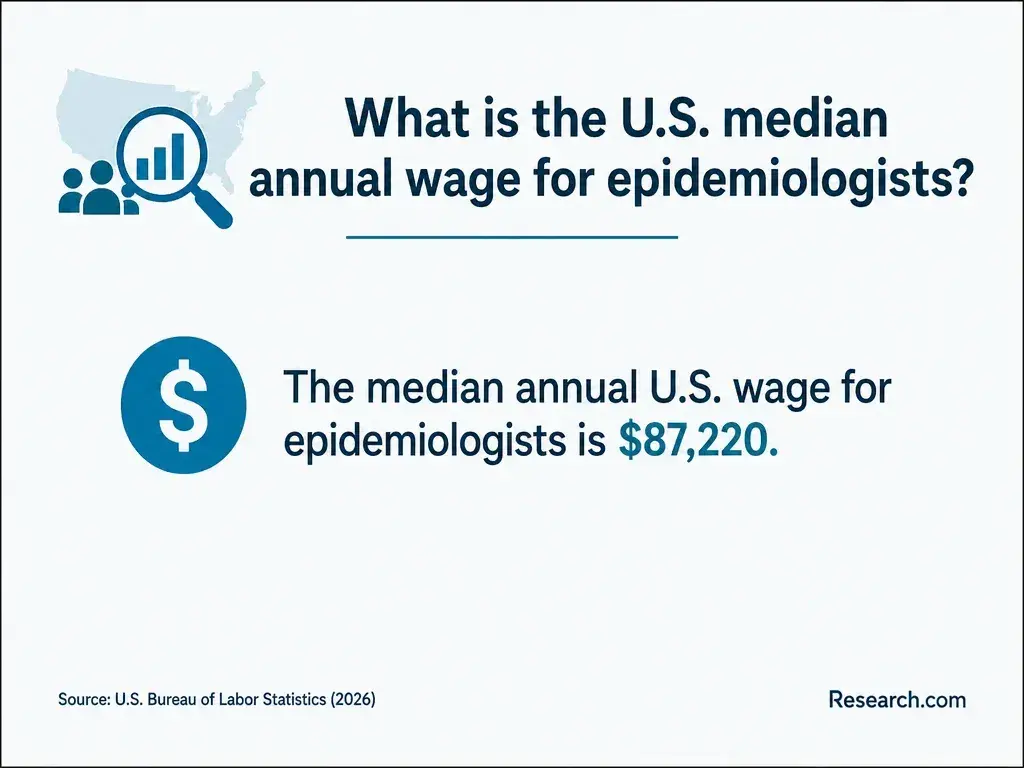
Salary comparisons require a matched occupation, location, sector, and level of responsibility. US Bureau of Labor Statistics occupational wages describe workers in an occupation - not DrPH graduates or the likely pay from this project - and public-sector pay may follow established grades.
For a different credential comparison, the MPH graduate compensation guide can provide context, but it should not be used as a DrPH earnings forecast. If the goal is to improve one existing service rather than move into broader leadership, employer-supported evaluation training or mentorship may be the lower-cost choice.
Other Things You Should Know About Public Health
Yes. If continuation is infeasible or would compromise access or quality, a responsible plan can recommend a transition, referrals to other providers, and clear communication with affected participants.
Only within your employer's, partners', and university's rules. Remove confidential information, obtain any required permission, and distinguish a proposed tool from findings approved for public release.
Not every operational evaluation is human-subjects research, but the student should not make that determination alone. Follow university and host-site procedures before collecting or sharing data.
Document the gaps, use defensible process and resource measures, and propose a better data-collection workflow. Do not fill missing results with estimates presented as observed outcomes.
- Chapter 16: Planning | projectdelivery.gov.uk https://projectdelivery.gov.uk/teal-book/home/part-e-planning-and-control/chapter-16-planning/
- An Assessment of the Sustainability and Impact of Community Coalitions once Federal Funding has Expired | ASPE https://aspe.hhs.gov/reports/assessment-sustainability-impact-community-coalitions-once-federal-funding-has-expired-0
- Step 6: Planning for Sustainability | Agency for Healthcare Research and Quality https://www.ahrq.gov/funding/training-grants/hsrguide/hsrguide6.html
- Home Health Quality Measures | cms.gov https://www.cms.gov/medicare/quality/home-health/home-health-quality-measures
- Developing a Transition Plan | noaa.gov https://orta.research.noaa.gov/plans/
- eCFR:: 2 CFR Part 200 Subpart D -- Post Federal Award Requirements https://www.ecfr.gov/current/title-2/subtitle-A/chapter-II/part-200/subpart-D
- Assessing the sustainability capacity of evidence-based programs in community and health settings - PMC https://pmc.ncbi.nlm.nih.gov/articles/PMC10012779/
- Evaluating for Sustainability | crestresearch.ac.uk https://crestresearch.ac.uk/comment/evaluating-for-sustainability/
- Identifying and Analyzing Stakeholders and Their Interests | ku.edu https://ctb.ku.edu/en/table-of-contents/participation/encouraging-involvement/identify-stakeholders/main