2027 Choosing Public Health BS Coursework for Public Health Survey Research Centers

Co-Founder and Chief Data Scientist
A public health BS can prepare you for work at a survey research center, but the degree title alone says little about your readiness to design questionnaires, manage data, or interpret population-health findings. For students choosing courses or comparing programs, the useful question is whether the curriculum builds those skills in a sensible sequence - and gives you a chance to demonstrate them.
This guide identifies the coursework and supervised experience to prioritize, explains where a BS is sufficient for entry-level work, and shows what to verify before committing to a program.
Key Things You Should Know
- Prioritize statistics, research design, survey methods, data management, and an applied project over a long list of loosely related public health electives.
- A BS commonly takes about four years of full-time study, but transfer-credit decisions, course sequencing, and internship access can change your timeline and cost.
- A bachelor's degree can support entry-level survey operations or research-assistant work; independent study design and advanced analysis often require substantial experience or graduate training.
What Is a Public Health BS for Survey Research Careers?
A public health BS is an undergraduate degree that studies health at the population level. At a survey research center, that perspective helps staff ask useful questions about health behaviors, services, exposures, and community conditions - and recognize when a survey may miss the people it is meant to represent.
There is no single "survey research BS" curriculum. One public health program may emphasize community practice, while another offers substantial quantitative coursework. A statistics, sociology, or data science major with relevant health coursework can also be a strong route. Choose the BS when you want population-health context alongside methods training, not because its title alone promises a research job. If your eventual goal requires more specialized graduate study, comparing specialization fit across public health master's degrees can help you distinguish practice-oriented and research-intensive options.
What Coursework Prepares Students for Public Health Survey Research?
Look for a sequence, not isolated course titles: introductory statistics should support research design; research design should inform questionnaire development; and an applied course should require students to clean, analyze, and explain data. Epidemiology adds a useful lens for defining populations, measuring health outcomes, and interpreting patterns without treating an association as proof of causation.
The strongest preparation also covers sampling, nonresponse, measurement error, confidentiality, and clear reporting. A course called "research methods" may touch each topic briefly, so ask for syllabi and assignment descriptions. If graduate study is a possibility, check the target program's actual quantitative prerequisites before selecting undergraduate electives; public health graduate prerequisite completion options may help if a needed course is unavailable in your BS program.
How Does Accreditation Affect a Public Health BS Program?
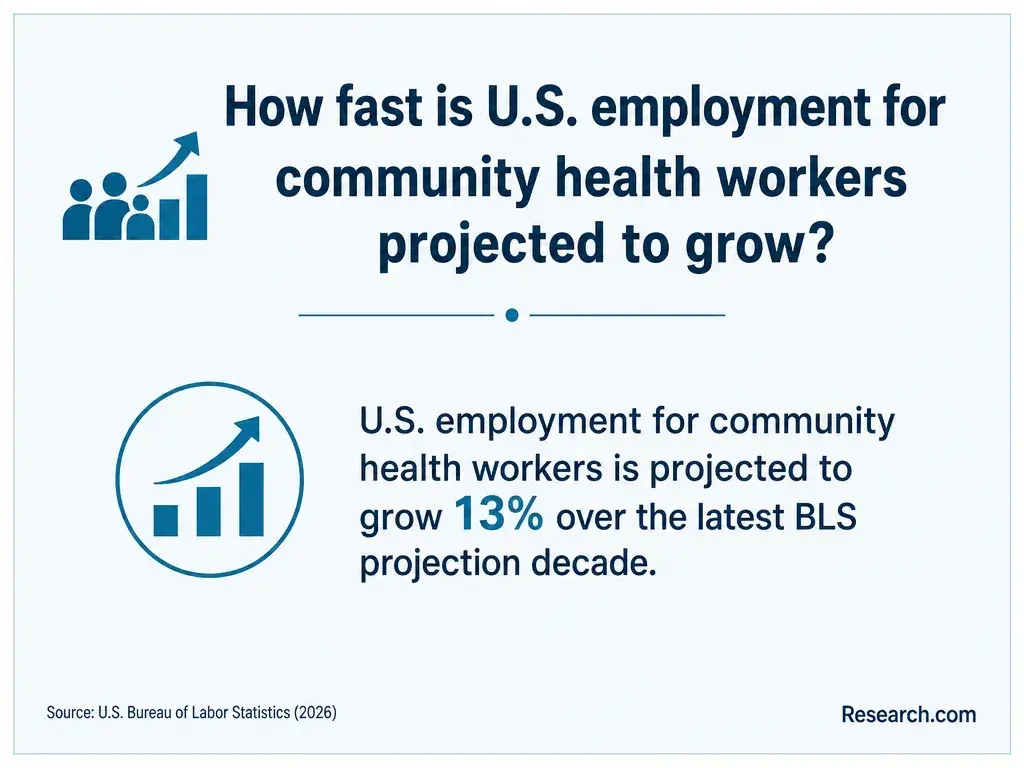
First, verify the institution's recognized institutional accreditation; it matters for matters such as credit recognition and federal aid eligibility. Separately, check whether the Council on Education for Public Health (CEPH) accredits the relevant public health school, unit, or individual program, and whether the particular BS is within that scope. Institutional accreditation does not establish CEPH coverage.
Accreditation is a quality check, not proof that a BS offers survey methods, statistical software practice, or a research-center placement. Compare the published curriculum and available faculty-supervised projects directly. If you later consider an MPH, the accreditation question must be checked again for that degree; a list of CEPH-accredited Master of Public Health programs is a starting point, not a substitute for confirming a program's current status and scope.
Course names vary, so compare what students actually do. These course areas connect most directly to survey-center tasks:
- Statistics and biostatistics: Summarize data, quantify uncertainty, and interpret estimates rather than merely run software commands.
- Research design and survey methods: Define a target population, assess sampling and nonresponse, write questions, and evaluate whether responses measure the intended concept.
- Data management and computing: Document variables, check errors, maintain reproducible workflows, and handle restricted information appropriately.
- Epidemiology and health equity: Define health measures and assess whose experiences a survey design might omit.
- Communication or qualitative methods: Test whether questions are understandable and explain findings and limitations to nontechnical audiences.
When electives compete for space, prioritize a methods course with a substantial project over another broad survey of public health topics. Protect the grades and foundational skills needed for later quantitative study, too. If graduate school remains an option and your record is uneven, guidance on public health master's admissions with a low GPA can help you plan without assuming one grade decides your future.
Choose the format that gives you reliable access to methods courses, feedback, and a credible applied project. Online study can reduce commuting, but a course may still require live meetings, group questionnaire work, or an internship on a fixed schedule. Campus study may make research-center introductions easier, though access to a particular project or position is never guaranteed.
Ask each program how students obtain data for assignments, which software they can use, whether remote research placements are permitted, and who supervises applied work. Also check whether required courses run often enough to keep you on schedule. Compare undergraduate options on those terms rather than assuming a flexible online pathway will remain flexible at every degree level; online MPH degree options on a budget are a separate decision if you later pursue graduate training.
Requirements depend on whether you are applying as a first-year student, transferring into the university, or seeking admission to a public health major after enrollment. Check each decision separately. A school may accept a statistics course as transfer credit yet decide that it does not satisfy the major's methods requirement.
Request a written degree audit showing how prior courses apply to general education, prerequisites, the major, and residency requirements. Confirm when you can enter the major and whether limited course availability would delay the research sequence. Undergraduate application rules should not be inferred from graduate-school advice: for example, public health graduate programs with no recommendation letters concern a different admissions process.
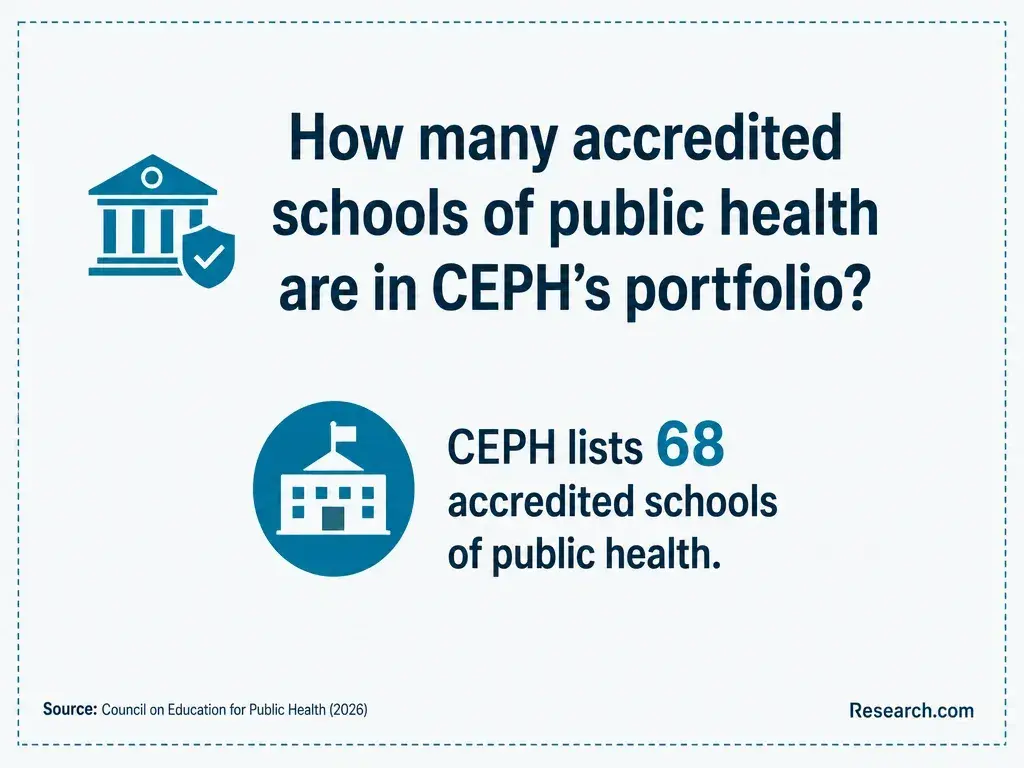
A bachelor's degree commonly takes about four years of full-time study, but your remaining time depends on accepted credits that actually meet degree requirements, prerequisite order, course availability, and any internship requirement. For a transfer student, an official audit is more useful than an estimate based solely on credits accepted.
Compare total expected cost through graduation, not just advertised tuition: include required fees, software or equipment, transportation, and possible lost earnings during unpaid fieldwork. Ask for the tuition rate that applies to your residency status and delivery format, then build a term-by-term plan. An online public health degree tuition guide can help you identify programs to investigate, but the institution must confirm your actual charges and aid eligibility.
Entry-level openings may be called research assistant, survey operations assistant, data collection coordinator, or program assistant. Titles vary widely, so compare duties rather than assuming all "researcher" jobs demand the same preparation. The table distinguishes plausible starting work from responsibilities that usually need more training or experience.
| Work area | Potential bachelor's-entry responsibilities | Likely additional preparation |
| Survey operations | Track fieldwork, document procedures, and check incoming responses under supervision | Experience managing complex studies and staff |
| Research support | Review literature, test instruments, clean data, and prepare basic summaries | Advanced sampling, modeling, or independent study design |
| Community-facing projects | Coordinate outreach and help make materials understandable and respectful | Experience leading partnerships and interpreting findings with communities |
Seek a supervised project that produces a questionnaire draft, documented dataset, or concise methods memo you are authorized to share. A doctorate is not the default next step for these entry roles. Explore doctoral public health study costs and career directions only if your longer-term goal calls for advanced research or practice leadership.
There is no reliable single salary for public health BS graduates working at survey centers. Employer, location, job duties, and experience matter, and centers may use titles that span several occupations. The U.S. Bureau of Labor Statistics' Occupational Outlook Handbook entry for survey researchers is a useful occupation-wide wage and outlook reference, but its median is not an entry-level offer or an outcome measure for this degree. Check its wage reference year and projection period when using it to assess a job market.
Compare actual postings for the roles and locations you would pursue, including benefits and advancement requirements. If you are weighing a later master's degree against work experience, consider cost and duration of public health master's degrees alongside the specific jobs that request graduate training; do not assume the credential will produce a salary increase.
Do Public Health Survey Researchers Need Certification or Licensure?
Survey research support is generally not a licensed clinical profession. Employers may value particular methods, software, privacy training, or research experience, but a public health BS does not itself grant a professional certification. Check the specific posting before paying for a credential: requirements for an interviewer, data analyst, and clinical professional are not interchangeable.
Likewise, an advanced degree is not a license to conduct research independently or access restricted data; project approvals and organizational rules still apply. If a future role explicitly calls for doctoral training, comparing public health doctorate entry requirements is more relevant than collecting unrelated certifications now. For an initial survey-center role, demonstrable methods work is usually the more immediate priority.
Other Things You Should Know About Public Health
Not necessarily. You should understand that a sample may not represent its target population; an introductory explanation of weighting is useful, while complex weighting is commonly learned with supervision.
Use data only under its access and sharing terms. Public or appropriately approved data is safer for a public portfolio than identifiable or restricted records.
No universal rule applies. Ask your instructor and institution how the project is classified before collecting responses, especially if you plan to share or publish findings.
Ask who will supervise you, what tasks and feedback you will receive, what data you may access, and whether you can describe a redacted version of the work to future employers.
- How to use cognitive interviews to refine questionnaire items | nih.gov https://pmc.ncbi.nlm.nih.gov/articles/PMC9524256/
- Principles and Best Practices for Protecting Participant Privacy | Grants & Funding https://grants.nih.gov/policy-and-compliance/policy-topics/sharing-policies/dms/privacy/best-practices
- Step 4 - Gather Credible Evidence | Program Evaluation https://www.cdc.gov/evaluation/php/evaluation-framework-action-guide/step-4-gather-credible-evidence.html
- BS in Public Health | UCLA Fielding https://ph.ucla.edu/degree-programs/undergraduate-programs/bs-public-health
- How to Become an Epidemiologist: Education and Job Outlook | tamu.edu https://public-health.tamu.edu/degrees/mph/blog/how-to-become-an-epidemiologist.html
- Recruiting Research Participants | Brown University https://division-research.brown.edu/research-cycle/conduct-research/human-subjects-research/conducting-research-after-irb/recruiting
- Public Health, B.S. - California State University, Los Angeles https://ecatalog.calstatela.edu/preview_program.php
- B.S. in Public Health | CSUSM https://www.csusm.edu/publichealth/bspublichealth/index.html
- Protecting Confidentiality | virginia.edu https://hrpp.research.virginia.edu/teams/irb-sbs/researcher-guide-irb-sbs/protecting-confidentiality
- Data governance & quality management - Innovation and breakthroughs across different fields - ScienceDirect https://www.sciencedirect.com/science/article/pii/S2444569X24001379