2027 Choosing MPH Coursework for Global Health Implementation

Co-Founder and Chief Data Scientist
A global health concentration can sound like the right preparation for implementation work, but its course title tells you little about what you will learn to do. If you hope to help a health program operate effectively across settings, you need more than knowledge of diseases and interventions: you need methods, local partnerships, operational judgment, and supervised practice.
This guide shows prospective and current MPH students how to choose coursework, evaluate applied opportunities, and identify gaps that a degree alone will not close.
Key Things You Should Know
- Prioritize a sequence of implementation or program-planning, evaluation, health-systems, and quantitative or qualitative methods courses, not a global health label alone.
- Choose an applied experience that lets you produce a usable deliverable with an approved partner; international travel is not required for meaningful implementation training.
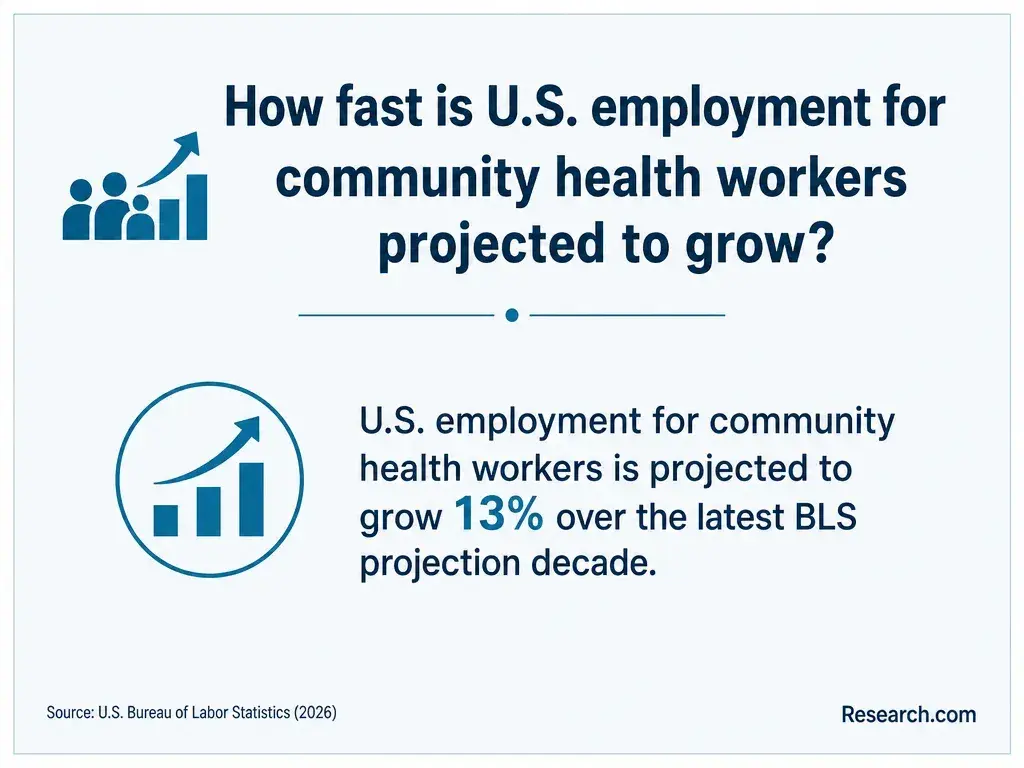
- The U.S. Bureau of Labor Statistics reported a $81,390 median annual wage for epidemiologists in May 2023, but that occupation-wide figure is not an MPH graduate salary or a reason to choose epidemiology electives for every implementation role.
What is global health implementation in an MPH program?
Global health implementation is the work of adapting, delivering, monitoring, and improving population-health programs in real service settings. An MPH student might examine why a vaccination outreach plan is not reaching its intended population, work with local partners to revise delivery, and track whether the revised process is feasible. That differs from discovering a new intervention or merely describing a health problem.
"Global" describes the scope of health problems and the importance of cross-border learning; it does not mean every project must take place outside the United States. Implementation work depends on local governance, resources, community priorities, and the health system involved.
A domestic project with a refugee-serving organization, for example, can build relevant skills without claiming that experience in one community transfers automatically to another.
Schools may place this training in a global health concentration, an implementation science track, a generalist MPH, or electives across departments. An elective does not create a formal concentration.
If you are comparing named pathways, use public health master's specialization comparisons to clarify the options, then inspect each school's actual course sequence and applied requirements.
Which MPH coursework prepares students for global health implementation careers?
The strongest course combination connects a program decision to evidence, delivery, and learning. The table distinguishes useful course content from what you should be able to produce or explain afterward; course names and availability vary by school.
| Course area | Implementation value | Evidence to look for in coursework |
| Program planning and implementation science | Identifies delivery barriers and adapts an intervention to its setting | Stakeholder-informed implementation plan with a clear rationale |
| Monitoring and evaluation | Connects activities, indicators, data sources, and decisions | Logic model and feasible evaluation plan |
| Epidemiology, biostatistics, and data management | Interprets need, coverage, and variation without overstating causality | Documented analysis and an explanation of its limitations |
| Qualitative methods and community engagement | Investigates acceptability, workflow, and partner priorities | Ethical interview or feedback protocol and analysis plan |
| Health systems, policy, and budgeting | Tests whether delivery fits staffing, financing, procurement, and governance | Operational or policy brief with explicit constraints |
Sequence matters. Take introductory epidemiology and statistics before an advanced evaluation elective; learn program planning before proposing indicators for an applied project. If your target role is implementation coordination, a methods course you can apply well may be more valuable than an advanced modeling elective you cannot use.
For a genuinely quantitative analyst role, compare the MPH's methods depth with an online biostatistics master's flexibility guide rather than assuming one MPH elective provides specialist preparation.
How do you choose an accredited MPH program for global health?
Check both the institution's recognized accreditation and the Council on Education for Public Health (CEPH) listing for the specific school, unit, or program and degree you would enter. Institution-level accreditation alone does not establish CEPH coverage of an MPH. Confirm status and scope directly in the accreditor's directory and with the program for your intended entry term.
Then test the curriculum against your intended task. Request a course map showing when implementation, evaluation, and health-systems electives run; ask whether enrollment is restricted and whether the applied practice experience can involve an organization and problem relevant to your goals. A published course is less useful if it rarely runs before you expect to graduate.
Compare total charges and access to fieldwork alongside academic fit. Low-tuition online MPH options can help you assemble a shortlist, but verify each candidate's current tuition, fees, CEPH scope, elective availability, and placement support independently. A cheaper program that cannot support your intended implementation work may be the poorer fit.
Employers need evidence that you can turn an intervention idea into a workable process. That means listening to community and delivery partners, defining responsibilities, estimating resources, selecting indicators that staff can realistically collect, and explaining results without claiming that a process change caused an outcome you did not rigorously evaluate.
A useful applied portfolio might contain a redacted stakeholder map, logic model, implementation timeline, indicator definitions, and a short account of what you would change if data quality or staffing proved inadequate. Obtain school and partner approval before using organizational materials; remove confidential information and do not present a proposed plan as a completed evaluation.
For someone who already works in a nonprofit or health department, an MPH can deepen evaluation and systems skills. Someone without a bachelor's degree needs an undergraduate pathway first. Online public health bachelor's accelerated class options may help with that earlier step, but shorter classes do not replace supervised implementation experience. For either reader, practice and feedback matter as much as the course label.
Choose the format that lets you complete the right coursework and applied work, not simply the format with the most convenient advertisement. Online study may allow you to keep a job with an implementation partner. Campus study may make scheduled collaboration, faculty access, and local placement development easier. Neither format guarantees those advantages.
Ask about live-session time zones, group-work hours, required visits, access to specialized electives, and who secures the applied practice site. An online student working across time zones or caring for family members should also ask whether partner meetings can occur during normal working hours. A campus student should confirm whether required fieldwork conflicts with paid employment.
If you do not yet hold a bachelor's degree, comparing MPH formats is premature. Start with degree eligibility and cost, including public health bachelor's cost comparisons if an undergraduate route is appropriate. If you already have a qualifying degree, compare MPH formats using the same implementation-course and placement criteria.
Programs generally require a qualifying bachelor's degree, but their GPA policies, prerequisite courses, tests, recommendations, essays, and experience expectations differ. A non-public-health major does not automatically rule you out: experience in clinical care, community organizations, logistics, research, or management can help demonstrate why you want implementation training.
Check each program's published requirements rather than treating recommended preparation as a universal prerequisite.
Before applying, compare your transcript with the courses you want to take. If advanced evaluation assumes statistics or introductory epidemiology, ask whether a prerequisite, bridge course, or approved alternative will make that sequence possible. Explain specific work you have done with partners, data, budgets, or service delivery in your application; interest in international work alone is less informative.
Application policies also vary. Some applicants may find public health graduate entry without reference letters worth investigating, but verify the current rule for the exact MPH and entry term. An easier application process says nothing by itself about the quality of implementation coursework.
Completion time depends on required credits, enrollment pace, course scheduling, and when you can undertake applied practice. A concentration with infrequently offered electives can delay graduation even if the core fits your schedule. Ask for a term-by-term plan that includes prerequisite courses and the timing of partner approvals.
For cost, compare the full price of the plan you can actually complete: tuition, mandatory fees, travel or campus visits, fieldwork expenses, and any earnings you would give up. Ask whether an applied placement can be paid and whether your current employer might support a suitable project; neither arrangement should be assumed.
University scholarship options for MPH applicants are worth checking, but compare written award terms, renewal conditions, and remaining charges before relying on aid.
If you already have substantial program-delivery experience and only need a specific evaluation or budgeting skill, a targeted course or employer-supported training may be less costly than a second degree. The MPH is more compelling when you need an integrated curriculum, supervised practice, and the credential for roles you have identified.
Implementation-focused graduates may pursue program coordinator, monitoring and evaluation associate, implementation specialist, health-systems project officer, or research coordinator roles in health departments, nonprofits, health systems, and research organizations. Titles are inconsistent: read job descriptions for responsibility for partner coordination, work plans, data quality, reporting, and budgets.
An early-career applicant is more likely to enter through supervised coordination or analysis than immediately direct a multi-site program. A clinician or experienced nonprofit manager may bring stronger subject-matter or operational experience but still need evaluation methods or population-health practice. For an epidemiologist position, check the employer's quantitative requirements; a general implementation curriculum may not be enough.
Advanced leadership or independent research goals can change the education decision. A practice-focused doctorate and a research-focused doctorate are not interchangeable with an MPH, so consult a public health doctoral admissions comparison only if your target responsibilities genuinely call for further study. For many implementation jobs, demonstrated partner work and a strong applied project are the more immediate next steps.
There is no single reliable U.S. salary for "global health implementation professionals with an MPH." Employers use different titles, and compensation varies with duties, experience, location, funding, and sector. Use a named occupation as a reference point only when its work matches the job you want.
For example, the U.S. Bureau of Labor Statistics reported a $81,390 median annual wage for epidemiologists in May 2023. That figure covers the occupation, not MPH alumni or global health implementation staff. It is most useful if you are comparing roles that actually require epidemiologic analysis; it should not anchor your expectations for a program-coordination offer.
Compare current postings for your target title and location with the full cost and time required for training. If higher-paid research roles are the reason you are considering a doctorate, account for additional study and funding uncertainty, including the considerations in online epidemiology doctorate financial assistance. Do not assume that an additional credential will produce a particular salary increase.
What certifications and standards support global health implementation careers?
No single certification authorizes general global health implementation work. The Certified in Public Health (CPH) credential may be relevant to broad public health practice, while CHES or MCHES may fit eligible health education professionals. Eligibility and renewal rules come from the respective certifying bodies; an MPH concentration or elective does not automatically award a credential.
For implementation roles, standards for ethical data use, community partnership, and sound evaluation often matter more than collecting credentials. Check partner permission, confidentiality obligations, and whether institutional review or a data-use agreement is needed before collecting information or sharing a project output. An employer may also require role-specific training in grant reporting or information security.
Keep admission and certification decisions separate. Entry flexibility in public health master's programs may affect when a student begins study, but it does not waive an independent certifying body's eligibility rules. Check the requirements for the precise credential and job before paying for an exam or additional coursework.
Other Things You Should Know About Public Health Programs
No. A well-scoped local project can demonstrate partnership, adaptation, and evaluation skills. Explain the setting's limits rather than presenting it as experience with every health system.
Possibly. Your program must approve its academic fit, and your employer must permit the work and any use of organizational information. Existing employment alone does not establish approval.
No. Implementation science studies how interventions are adopted and delivered in real settings. Program evaluation assesses a particular program against defined questions; the two can inform each other.
Choose the methods elective if you still need a transferable skill required by your target role. Choose the disease-specific elective when you have that foundation and the subject is directly relevant to the programs you expect to support.
- Health system strengthening in fragile and conflict-affected states: A review of systematic reviews - PMC https://pmc.ncbi.nlm.nih.gov/articles/PMC11178226/
- CDC Approach to Program Evaluation https://www.cdc.gov/evaluation/php/about/index.html
- Health Systems Governance | who.int https://www.who.int/health-topics/health-systems-governance
- Practicums, Internships and Projects What's the Difference? | Oregon State University https://health.oregonstate.edu/internships/types-of-experiential-learning
- Fundamentals of Implementation Science | Global Health E-Learning Program https://edgh.washington.edu/courses/fundamentals-of-implementation-science/
- MPH Foundational Competencies | UW School of Public Health https://sph.washington.edu/mph-practicum/competencies
- Community-engaged Scholarship | umd.edu https://communityengagement.umd.edu/ways-to-engage/research-teaching-service
- Program Evaluation to Enhance Implementation and Adaptation | ucsf.edu https://epibiostat.ucsf.edu/program-evaluation-enhance-implementation-and-adaptation
- Master of Public Health - Quantitative Methods | Harvard T.H. Chan School of Public Health https://hsph.harvard.edu/program/mph-quantitative-methods/