2027 DrPH Programs: Verifying Which Degrees CEPH Accreditation Covers

Co-Founder and Chief Data Scientist
A university may advertise a CEPH-accredited school of public health without making clear whether the DrPH you plan to enter falls within that accreditation. For experienced public health practitioners, that distinction matters before committing to doctoral coursework, travel, and an applied project. This guide explains what CEPH accredits, how to check a particular degree and delivery format, and which questions to put in writing to a program. It also separates accreditation from admissions, professional credentials, and career outcomes so you can evaluate the degree on its merits.
Key Things You Should Know
- Verify the specific DrPH degree and its awarding academic unit against CEPH's current listing and the school's written confirmation; institutional accreditation or a CEPH-accredited MPH alone is not enough.
- Online delivery does not create a separate CEPH credential: confirm that the online DrPH is included in the accredited unit's scope and check any required campus visits or in-person project work.
- CEPH accreditation evaluates educational quality, not individual licensure, certification, admission, promotion, or salary; those decisions have separate requirements.
What is a DrPH degree, and what does CEPH accreditation cover?
A Doctor of Public Health (DrPH) is generally a practice-focused doctorate for professionals who want to lead population-health programs, systems, or policy work. A public health PhD typically places greater emphasis on producing original research. The distinction matters when evaluating a doctorate's curriculum and culminating work, although each university defines its own degrees.
The Council on Education for Public Health (CEPH) accredits eligible public health schools and programs, not students or a university as a whole. The crucial question is whether the degree-granting unit and particular DrPH fall within the published accreditation scope. A university's institutional accreditation establishes a different kind of review; the presence of a CEPH-accredited MPH elsewhere at that university does not settle the DrPH question.
Accreditation scope matters at other degree levels, too. Someone comparing online public health bachelor's program features should not assume that a school's undergraduate and doctoral offerings have identical accreditation coverage.
Which DrPH programs are accredited by CEPH?
There is no reliable shortcut based on a university's name or a third-party list. CEPH's current directory identifies accredited schools and programs, but applicants must connect that listing to the DrPH's actual academic home. School names, degree offerings, and accreditation decisions can change; a list without a checked date and degree-level confirmation should be treated as a starting point, not a final answer.
Use this sequence for every DrPH on your shortlist:
- Find the institution in CEPH's current directory and note the exact name and status of the accredited school or program.
- Check the school's official DrPH page and accreditation disclosures for the degree's academic home, delivery options, and any stated exclusions or limitations.
- Ask the accreditation liaison or DrPH director to confirm in writing that your exact degree, format, location, and intended entry term are within the accredited scope.
- Save the directory listing and written response, and recheck status before accepting an offer.
If a school is only seeking accreditation or has another status that is not current accreditation, do not describe its DrPH as CEPH-accredited. Resources on online public health doctorate pathways can help build a shortlist, but CEPH and the awarding school should resolve the final scope question.
What are the CEPH accreditation requirements for DrPH degrees?
CEPH evaluates public health education against its applicable accreditation criteria. For a DrPH within an accredited unit, that means reviewing evidence about doctoral learning, faculty and other resources, assessment, and opportunities to demonstrate advanced public health practice competencies. Accreditation is a judgment about the school or program's compliance with those standards; it is not a separate examination that every student passes.
A useful distinction is between CEPH criteria and a school's graduation rules. The former govern accreditation review; the latter specify the courses, milestones, applied work, and final product an enrolled student must complete. Ask the school for its current DrPH handbook and the CEPH criteria applicable to its accreditation category rather than relying on a generic claim that every DrPH has the same credit total or project format.
Coverage at one degree level should not be used to infer coverage at another. For example, CEPH-accredited distance learning MPH options may be useful comparisons for a practitioner considering a master's degree, but an MPH listing does not itself verify a DrPH.
CEPH does not award a lesser accreditation simply because instruction is online. What matters is whether the online DrPH is offered by the covered school or program and included in its accredited scope. Verify that point explicitly when an institution offers multiple campuses, partners, or doctoral formats.
Accreditation also does not establish scheduling flexibility. An online DrPH may still require live classes, group meetings, campus residencies, or an approved practice site. A practitioner balancing employment or caregiving should request the actual attendance calendar and project-site rules before comparing formats. Likewise, online delivery does not establish a lower price: the online public health degree tuition guide provides broader cost context, but the DrPH's own fee schedule controls its cost.
Expect advanced work that connects public health evidence to organizational decisions: leadership, policy, management, communication, equity, evaluation, and collaboration with communities or institutions. Programs may teach these through different courses, concentrations, and applied projects. CEPH accreditation does not make their course catalogs interchangeable.
For an experienced practitioner, the decisive curriculum question is whether the program strengthens skills needed for the next responsibility. A health department manager may need budgeting and cross-agency implementation; an evaluation lead may need stronger study design and interpretation. If the goal is primarily advanced statistical research rather than practice leadership, flexible routes to a biostatistics master's degree may be a more direct comparison than another DrPH concentration.
Request sample syllabi and the rules for the culminating project. In particular, determine whether you can use a problem at your current workplace and who must approve the site, supervision, data access, and final deliverable. Employment at a site is not, by itself, project approval.
CEPH accreditation does not impose one universal DrPH admissions checklist. Schools set their own rules for prior degrees, professional experience, academic records, recommendations, interviews, and any required preparation. An MPH or a particular number of years in practice should not be assumed mandatory unless the program says so.
Applicants should document responsibility, not just job titles: decisions made, teams or partnerships led, budgets or programs managed, and evidence used to improve practice. Ask admissions whether your experience meets its definition of relevant work and whether the program expects access to an organization for doctoral applied work. A strong applicant can still face a poor fit if an appropriate project or supervisor is unavailable.
If an academic record is a concern, comparing public health graduate programs with GPA flexibility can provide context for discussing preparation, but master's policies cannot be assumed to apply to a DrPH. Get the doctoral program's answer directly.
There is no single defensible duration or price for a CEPH-covered DrPH. Both depend on required credits, course sequencing, enrollment pace, transfer policies, project progress, and charges that may continue after coursework. A part-time plan that fits a working practitioner can also extend the period during which tuition or fees are due.
Compare written estimates using the same assumptions for each school. Separate tuition from mandatory fees, campus travel, project expenses, and any continuation charges. Then ask which costs apply if the applied project takes longer than planned and whether employer education assistance covers doctoral study. Online public health doctorate investment planning can help frame that comparison, but only a school-specific estimate and its published policies can establish your likely bill.
A DrPH may support progression into public health agency leadership, health-system population-health strategy, nonprofit program direction, policy implementation, or senior evaluation and improvement roles. The degree is most useful when its applied work builds on an existing record of responsibility; accreditation does not substitute for the experience, technical skills, or hiring criteria of a particular employer.
Map a target job's duties to your current evidence of leadership before enrolling. If the gap is initial public health practice experience rather than doctoral-level leadership preparation, a master's program, supervised work, or targeted training may be the better next step. For someone considering that earlier step, comparing online MPH reference letter policies addresses one application detail - but it should not drive the larger career decision.
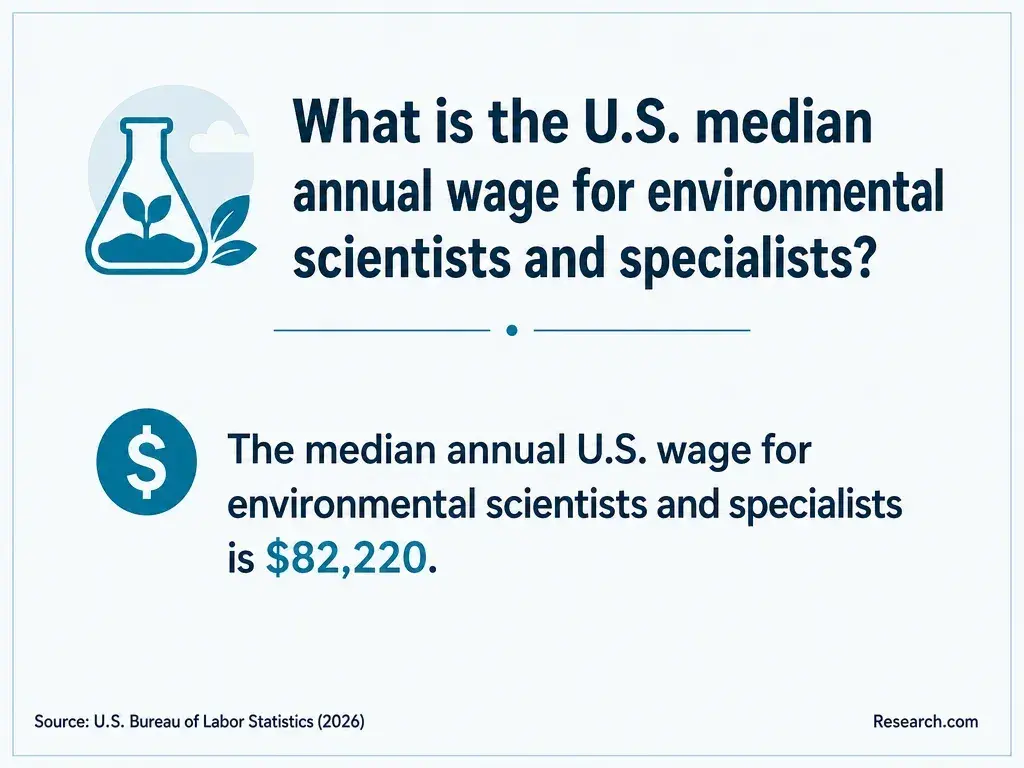
There is no single trustworthy salary figure for "DrPH graduates." Public health leadership spans government, nonprofits, health systems, and other employers with different pay structures. Even a published wage for a named occupation describes that occupation's workforce, not the expected earnings or financial return of people with a DrPH.
For a useful estimate, compare current postings for the specific role, location, employer type, and experience level you seek. Include your present compensation and any earnings you would forgo while studying. If you are weighing a practice doctorate against a research doctorate, comparing tuition for public health research degrees can inform the cost side, but the two degrees should be evaluated against different career goals - not against an assumed doctoral salary premium.
Does a CEPH-accredited DrPH qualify you for public health certification or licensure?
CEPH accreditation does not itself issue a professional credential or license. For Certified in Public Health (CPH) eligibility, check the National Board of Public Health Examiners' current pathways and examination requirements against your education and experience. Health education credentials such as CHES or MCHES have their own eligibility rules. A DrPH also does not grant a clinical license.
Before choosing a doctorate because a job advertisement mentions a credential, identify the issuing organization or state board and verify its exact requirements. If the target role does not require a doctorate, the time and cost of an earlier degree or focused training may deserve comparison; public health degree cost and duration comparisons offer broader context, not a substitute for checking credential eligibility.
Other Things You Should Know About Public Health
No. Identify which institution awards the degree and which academic unit administers it, then request written clarification of CEPH coverage for the joint arrangement.
Usually the key issue is coverage of the degree and its administering unit, not the concentration label. Confirm the status of any separately awarded credential.
Keep a dated copy of the CEPH listing, the school's accreditation disclosure, and its written confirmation identifying your degree and entry term.
Ask which catalog and graduation rules apply to your cohort and how changes affect your project or course sequence. Check accreditation status separately if the school announces a change.
- Analysis of CEPH-accredited online public health doctoral programs and MPH degree holder demand - PMC https://pmc.ncbi.nlm.nih.gov/articles/PMC10248437/
- 34 CFR Part 602 -- The Secretary's Recognition of Accrediting Agencies | ecfr.gov https://www.ecfr.gov/current/title-34/subtitle-B/chapter-VI/part-602
- Accreditation | School of Public Health | West Virginia University https://publichealth.hsc.wvu.edu/about/accreditation/
- CEPH Accreditation | UW School of Public Health https://sph.washington.edu/about/ceph-accreditation
- CEPH Accreditation | UCLA Fielding https://ph.ucla.edu/about/why-ucla-fielding/ceph-accreditation
- DrPH Program in Leadership - School of Public Health | University of Illinois Chicago https://publichealth.uic.edu/academics/public-health-degrees/drph/
- Students' Frequently Asked Questions | Council on Education for Public Health https://ceph.org/constituents/students/faqs/
- CEPH Invites Feedback on Accreditation Criteria Updates | Association of Schools and Programs of Public Health (ASPPH) https://aspph.org/ceph-invites-feedback-on-accreditation-criteria-updates/
- CPH Eligibility Requirements | NBPHE https://www.nbphe.org/certified-in-public-health/cph-eligibility-requirements/