2027 Public Health BS Military Education Benefits: Matching the Actual Degree Plan

Co-Founder and Chief Data Scientist
A military education benefit may cover college coursework without covering every course you need to finish a public health BS. Transfer credits, major prerequisites, enrollment format, and benefit rules can change the amount you pay and the time you spend in school.
This guide is for service members and veterans comparing degree plans - not just advertised tuition. It explains which funding options to investigate, how to check an actual degree audit against your remaining eligibility, and when a different education path may serve your career goal better.
Key Things You Should Know
- Start with an approved degree audit: credits the school accepts are not necessarily credits that satisfy public health major or graduation requirements.
- Post-9/11 GI Bill eligibility can provide up to 36 months of education benefits for many eligible students, but individual entitlement, payment rates, and covered charges must be confirmed with VA and the school.
- Compare the remaining courses, required fieldwork, schedule, and uncovered costs before choosing between GI Bill benefits, military tuition assistance, other aid, or a shorter pathway.
What Is a Public Health BS Degree for Military Students?
A bachelor of science in public health studies prevention and health at the population level. Depending on the school, its degree plan may combine statistics and biology with epidemiology, health policy, environmental health, community health, and an internship or capstone. It is not clinical training and does not confer a nursing, counseling, or other professional license.
Military experience can make the coursework more useful: preventive medicine, emergency planning, logistics, data reporting, and unit-level health education all provide examples to examine through a civilian public health lens. But experience and credit are different. The receiving university decides whether training documented on a Joint Services Transcript or Community College of the Air Force transcript earns credit - and whether that credit fulfills a particular requirement.
If your goal is a specific entry-level role rather than a bachelor's credential, compare the remaining degree requirements with shorter public health programs and salary outlook. A shorter option helps only if it supplies the qualification employers actually request.
Which Military Education Benefits Can Fund a Public Health BS?
The right benefit depends on service status, individual eligibility, school approval, and the courses left on your plan. The table distinguishes common funding routes; it does not establish anyone's entitlement.
| Funding route | Who should investigate it | Degree-plan issue to verify |
| Post-9/11 GI Bill | Eligible veterans, service members, and approved transferees | Remaining entitlement, school and program approval, certified enrollment, tuition and fee coverage, and housing allowance rules |
| Montgomery GI Bill or other VA education programs | People whose service and benefit elections make them eligible | Whether the payment structure and remaining eligibility fit the school's charges |
| Military tuition assistance | Eligible active-duty, Guard, or Reserve members under applicable service rules | Approval before coursework, annual limits, eligible courses, grades, and any service obligations |
| Veteran Readiness and Employment (VR&E) | Veterans who may meet VA's eligibility and entitlement criteria | Whether an approved employment plan includes this degree and its necessary expenses |
| Federal, state, school, or employer aid | Students who qualify under each program's rules | How awards interact with military benefits and any remaining balance |
For eligible students, the Post-9/11 GI Bill may also provide a housing allowance and books-and-supplies stipend; payment depends on circumstances, including enrollment. The Yellow Ribbon Program may help with eligible tuition and fees above the GI Bill's applicable coverage, but participation and awards depend on both VA rules and the school's agreement.
Ask the school's certifying official and your benefit administrator for an individualized estimate before committing. If you expect to study beyond the BS, consider whether preserving entitlement for cost-conscious online MPH program choices better fits your long-term plan; future eligibility and prices still require a fresh check.
How Do You Match Military Benefits to Your Actual Degree Plan?
Match funding to remaining, applicable requirements, not to the number of credits listed on a transcript. An elective that transfers may raise your completed-credit total while leaving a statistics prerequisite, upper-division major sequence, or residency requirement untouched.
Use this sequence before comparing schools or requesting benefit certification:
- Request an official transfer evaluation and a term-by-term degree audit showing general education, prerequisites, major courses, electives, residency credits, and any internship or capstone.
- Submit military transcripts, prior college transcripts, course descriptions, and relevant training documentation; ask the academic department to review disputed equivalencies or substitutions in writing.
- Mark when each remaining course is offered, whether it requires an earlier course, and whether fieldwork can be completed near your duty station or after separation.
- Ask the school certifying official which planned courses can be certified under your VA benefit, and ask the appropriate military education office about tuition-assistance approval if you are serving.
- Calculate the expected balance by term, including fees, books, travel, and periods when your enrollment level or benefit coverage changes. Confirm the figures before registering.
For example, a student whose military training earns elective credit may still face a multi-term statistics-to-epidemiology sequence. That sequence - not the headline number of accepted credits - can determine how much benefit entitlement is used. If graduate study is a firm objective, include it in the same funding forecast; public health doctorate financial planning and outcomes illustrates why later education costs should not be assumed away when allocating a finite benefit.
Online study can reduce relocation and commuting, but "online" does not mean asynchronous. Check live meeting times, exam rules, group work, required campus visits, and whether an internship site must be arranged locally. Campus study may offer easier access to faculty, community partners, and veteran services, but it can be harder to sustain through duty changes.
For a service member facing unpredictable schedules, the better format is the one that offers workable course rotations and a realistic interruption policy. For a veteran seeking local civilian contacts, campus-based projects may have greater value.
Ask how the program handles deployment, withdrawal, reentry, and fieldwork placement; then separately confirm how your enrollment format affects any VA housing allowance. A later degree may present different format trade-offs, so public health doctorates for research and practice should not be used as a proxy for how flexible a particular BS will be.
Requirements vary, but a BS commonly includes general education, quantitative and science preparation, public health core courses, upper-division electives, and an applied experience. Inspect the catalog for the specific entry term: a course's presence in the catalog does not mean it counts toward your major or will be offered when you need it.
Pay particular attention to statistics, introductory biology or other science requirements, and prerequisites for epidemiology. Military health or safety training might support a substitution request, but only the academic department can approve one. For an internship or capstone, ask whether duties at an existing military or civilian workplace qualify, who supervises the work, and whether access to information or a community partner requires separate approval.
Choose electives by the work you want to demonstrate. Emergency preparedness may connect with logistics experience; program evaluation or data courses may fill a gap for civilian analyst-support roles. If you later plan graduate specialization, use public health graduate study areas and career outcomes to identify useful undergraduate preparation without assuming that a BS elective creates a formal specialization.
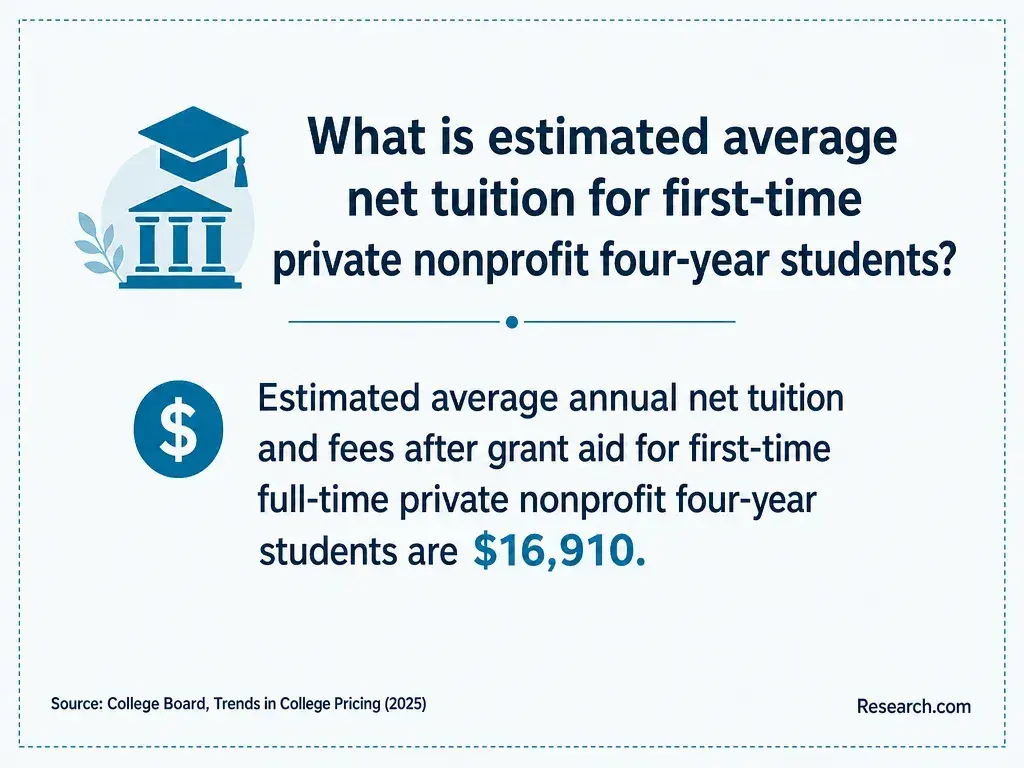
First, verify that the college or university holds recognized institutional accreditation; this matters for education quality review, credit mobility, and many aid decisions. Then check whether public health-specific accreditation from the Council on Education for Public Health (CEPH) applies. CEPH can accredit schools, programs, or standalone baccalaureate programs, so a university's claim that its public health school is accredited does not, by itself, tell you whether the BS under consideration is within that accreditation's scope.
Ask the program to identify the exact accredited entity and confirm the degree's status in CEPH's directory. Also ask a prospective employer, graduate program, or certifying body whether it requires a particular accreditation pathway. Neither institutional nor CEPH accreditation makes military transfer credit automatically applicable to your degree plan.
Apply the same verification standard if you consider advanced study: reviewing selectivity in public health doctoral study is a different task from confirming accreditation and the coverage of a specific credential.
First-year applicants generally follow university undergraduate admissions rules; transfer applicants also submit transcripts for credit evaluation. Some schools admit students directly to public health, while others require a separate major application or prerequisite coursework. Admission to the university therefore does not necessarily mean admission to the BS major.
Request the current rules for transfer GPA, science or statistics prerequisites, minimum grades, and the number of credits that must be completed at the university. Supply every prior college transcript and applicable military transcript rather than relying on an unofficial credit estimate. After admission, request a written audit and ask when any unresolved major-credit decisions will be finalized.
Later graduate applications have their own rules; for example, public health master's programs that omit reference letters should not influence how you assess a BS program's admission or transfer requirements.
Many bachelor's degrees are designed around roughly 120 semester credits, but the school's actual requirements and your approved audit control the remaining workload. Accepted military or college credit can shorten the path only when it satisfies requirements you would otherwise need to complete. Course sequencing, part-time enrollment, and fieldwork availability may extend it.
Compare costs term by term rather than relying on an advertised per-credit rate. The table shows charges and constraints that can change the amount you must finance.
| Cost or timing component | What to confirm |
| Tuition and mandatory fees | Charges for the actual remaining courses, enrollment format, and residency classification |
| Books, technology, and travel | Required materials, software, campus visits, and fieldwork transportation |
| Uncovered or repeated coursework | Prerequisites, courses that do not transfer as expected, and repeat-course rules |
| Time away from work or service | Fieldwork hours, fixed class meetings, and any change in earnings or duty availability |
Ask financial aid and the school certifying official to estimate each planned term using your individual eligibility; published tuition alone cannot establish your out-of-pocket total. The same discipline applies if a research degree is a later goal: public health PhD program cost comparisons cannot substitute for checking funding terms and remaining benefit entitlement.
A public health BS can support applications for health education, community outreach, program coordination, emergency preparedness support, and entry-level data or evaluation work. Actual eligibility depends on the job description, location, experience, and any required credential. A veteran's planning, training, or logistics record can be valuable evidence, especially when translated into civilian examples of responsibilities and results.
For salary research, start with a precisely matched occupation in the U.S. Bureau of Labor Statistics Occupational Outlook Handbook, such as health education specialist or community health worker, and check its wage year, entry requirements, and local market. An occupation-wide median is not the expected starting pay of a BS graduate. Epidemiologist positions, for example, typically require at least a master's degree and should not be treated as a standard BS outcome.
Compare job postings with your audit before taking on debt: if the target role calls chiefly for experience with outreach or reporting, a supervised project or relevant employment may matter more than another elective. If the roles you want consistently require graduate education, examine MPH education and long-term earnings without assuming the degree will produce a particular salary.
Which Certifications or Graduate Degrees Advance Public Health Careers?
Choose the next credential only after identifying a job requirement or a skill gap. The Certified in Public Health (CPH) and Certified Health Education Specialist (CHES) credentials have separate eligibility and examination rules set by their respective certifying organizations; earning a BS does not award either credential automatically. Check the current rules against the exact degree, coursework, and experience you will have.
An MPH can provide broader professional public health preparation, while a research-oriented MS may be more appropriate for a defined analytical goal. Some technical or leadership roles also require substantial experience, not simply another degree. For a veteran entering civilian practice, a strong first step may be a public health job or supervised project that documents community engagement, reporting, or evaluation skills.
If a future research pathway genuinely calls for doctoral study, compare its funding separately from BS benefits. Financial support for online epidemiology doctoral study is relevant to that later decision, not a reason to enroll in a BS or reserve benefits without a concrete career plan.
Other Things You Should Know About Public Health
Contact your academic advisor, registrar, and benefit administrator promptly. Ask about military leave, withdrawal and reentry deadlines, course availability on return, and any effect on aid or VA certification. Keep the school's decisions in writing.
Possibly, but benefit transfer has Department of Defense eligibility and approval rules. Confirm that the transfer was approved and that the recipient can use the entitlement before planning around it.
Sometimes, subject to the specific benefit and service rules. Tell both the military education office and school certifying official about every source of payment so they can determine what may be approved and certified.
Ask your advisor for a revised degree audit and notify the appropriate benefit office. A change may alter required courses, completion time, or what the school can certify; do not assume the original funding estimate still applies.
- GI Bill And Other Education Benefit Eligibility | Veterans Affairs https://www.va.gov/education/eligibility/
- Options for Financing Higher Education | Military OneSource https://www.militaryonesource.mil/education-employment/for-service-members/money-for-higher-education/
- 38 CFR Part 21 Subpart P -- Post-9/11 GI Bill | ecfr.gov https://www.ecfr.gov/current/title-38/chapter-I/part-21/subpart-P
- Military Training Evaluation Program (MTEP) | dantes.mil https://www.dantes.mil/credit4training/
- Education and Training - Veterans Benefits Administration https://www.benefits.va.gov/gibill/
- Bachelor of Science (B.S.) Major in Public Health | Texas State University https://mycatalog.txstate.edu/undergraduate/education/health-human-performance/public-health-bs/
- Bachelor of Science in Public Health | charlotte.edu https://ech.charlotte.edu/degrees-and-programs/phs-undergraduate-programs/bachelor-science-public-health-bsph-2/
- Bachelor of Science in Health Sciences - UAA Catalog | University of Alaska Anchorage Academic Catalog https://catalog.uaa.alaska.edu/undergraduateprograms/coh/bs-healthsciences/
- Additional College and Course Fees and Incidental Charges | utsa.edu https://catalog.utsa.edu/policies/tuitionfees/additionalfees/
- Public Health (BS) - Academic Catalogs - University of Louisville https://catalog.louisville.edu/undergraduate/majors/public-health-bs/