2027 From Health Insurance Analysis to Public Health: Choosing a Graduate Pathway

Co-Founder and Chief Data Scientist
Health insurance analysts already work with data that can inform population health, but a move into public health changes the questions being asked - and often the people served. Instead of focusing chiefly on coverage, claims, or plan performance, you may want to study disease patterns, evaluate community programs, or shape policy. This guide helps working analysts choose among graduate degrees and shorter alternatives. It compares the skills, field experience, cost, and career evidence that matter most, so you can invest in a pathway that fits the work you actually want to do.
Key Things You Should Know
- Choose an MPH for population-health practice or policy, a methods-intensive MS for research and advanced analysis, and an MHA only when healthcare management - not public health practice - is the goal.
- Your claims, utilization, and quality-measure experience is transferable, but employers may still expect evidence of epidemiology, community engagement, or program evaluation.
- Compare the full cost and required fieldwork before enrolling; a targeted course, supervised project, or job change may be a better first step than another degree.
What Is the Best Graduate Degree for Moving From Health Insurance Analysis to Public Health?
For most insurance analysts seeking policy, population-health, or program-evaluation roles, a Master of Public Health (MPH) is the most versatile graduate option. It connects quantitative work to prevention, health systems, equity, and applied decisions. The best choice changes, however, if your target job is primarily research, technical modeling, or organizational management.
Start with job descriptions rather than degree labels. A population-health analyst may need epidemiologic interpretation and stakeholder communication; a research statistician may need substantially deeper mathematics and programming. This comparison identifies the principal trade-off.
| Pathway | Best fit for an insurance analyst | Limitation to check |
| MPH | Public health policy, epidemiology-informed analysis, evaluation, or practice | Quantitative depth varies considerably by concentration and electives |
| MS in epidemiology, biostatistics, or health services research | Research design or specialist analytical work | May require stronger mathematics and offer less practice-oriented training |
| MHA or related management degree | Health system operations, finance, or administration | Does not substitute for population-health methods or community practice |
| Targeted coursework or certificate | Adding a defined skill while testing a career change | May not meet jobs that explicitly require a master's degree |
If your intended move is from payer analytics to a similar analytical role at a health department, nonprofit, or research organization, ask whether a portfolio project and relevant experience would close the gap first. Comparing shorter public health education investments can help frame that decision, but verify that any credential teaches the methods your target employers request.
What Public Health Graduate Degrees and Specializations Can You Choose?
Within an MPH, epidemiology is a strong fit for analysts who want to investigate patterns of illness and risk. Health policy or health services fits work on access, financing, and system performance. Biostatistics fits those who want more demanding statistical work, while community health or program evaluation can help analysts move closer to intervention design and implementation. A concentration's name alone does not establish course depth; inspect required courses and available projects.
An MS typically emphasizes specialized methods or research more than an MPH. A practice-focused DrPH usually suits experienced professionals pursuing organizational leadership, while a research-focused PhD suits those preparing to produce original scholarship. Neither doctorate is the default next step for a career switch from insurance analysis. If a research doctorate is a serious goal, consider supervision and funding alongside public health PhD program cost comparisons; a low advertised tuition figure does not resolve those questions.
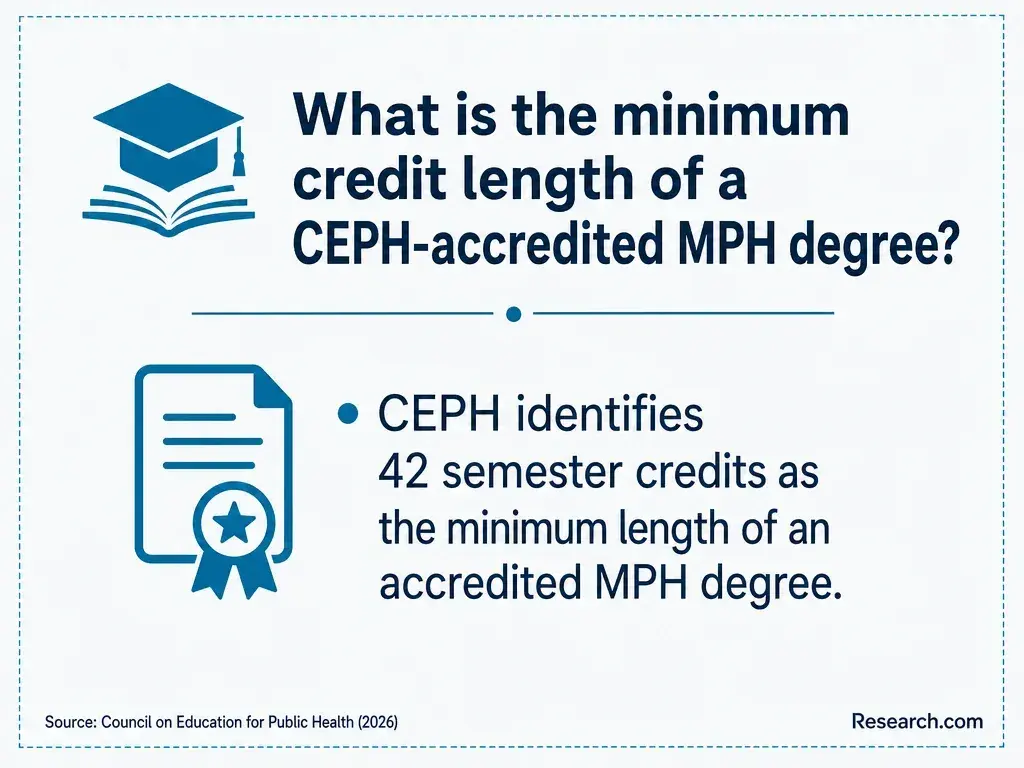
Why Does CEPH Accreditation Matter for Public Health Graduate Programs?
The Council on Education for Public Health (CEPH) accredits eligible schools and programs of public health. Its standards provide an important way to assess public health education, particularly if you want broad practice preparation or may later pursue an opportunity with specific accreditation expectations. Institutional accreditation is separate: a university's institutional status does not tell you whether its MPH or another public health degree is covered by CEPH accreditation.
Check CEPH's current listing for the exact school or program, its status, and the degrees included. Then confirm with the university that your intended degree and entry term are within scope. This matters when comparing online MPH accreditation and program quality, especially if the university also advertises non-MPH degrees that may have different accreditation coverage. Accreditation is a screening factor, not proof that a particular concentration, placement, or employer connection will suit you.
An insurance analyst may enter with experience in claims, utilization, risk adjustment, quality measures, or reporting. Graduate public health study adds the population-level reasoning needed to interpret those measures responsibly: epidemiology, study design, biostatistics, social and structural determinants of health, policy, ethics, and evaluation. An MPH may also require applied work that connects classroom learning to a practice setting.
The most consequential gap is often not software proficiency but interpretation. Claims record billed services for covered people; they do not, by themselves, represent everyone in a community or capture all unmet needs. Learning to define a population, assess selection and missing data, and explain uncertainty makes payer experience more useful in public health.
Compare syllabi for the level of statistics and epidemiology you need, then identify a project in which you can demonstrate the new skills. If earlier grades make your quantitative preparation difficult to judge, review low-GPA pathways to public health master's study and ask programs whether recent methods coursework would strengthen your application.
An online program can let you keep your insurance job, but online does not necessarily mean self-paced. Live classes, group assignments, campus visits, and required practice experiences can still conflict with work hours. Campus study may offer easier access to local partners and faculty, but it can require a commute or reduced employment.
Before choosing a format, request a sample course schedule and written details on live attendance, fieldwork timing, placement support, and whether your current employer can serve as a project site. Approval of an existing-job project is a program decision, not an automatic benefit. When finding online MPH programs that fit your profile, weigh those practical obligations and curriculum fit more heavily than an advertised claim of convenience.
Requirements differ by school and degree. MPH programs commonly consider prior college work, a statement of purpose, and evidence that the applicant understands the intended field. A quantitative MS may expect more preparation in statistics, calculus, programming, or research methods. Professional insurance experience can strengthen an application, but it does not replace a prerequisite that a particular program requires.
Read each program's current admissions page and ask which requirements are mandatory, which are recommended, and whether outstanding coursework may be completed before enrollment. In your statement, connect a specific public health problem to your analytical experience rather than presenting claims expertise as equivalent to community-based practice. If obtaining references is difficult while employed, investigate online public health master's programs without recommendation letters - and confirm the policy for your intended term before relying on it.
Completion time depends on the degree's credit requirements, course sequence, enrollment pace, and applied or research requirements. Working part-time while studying may protect income but extend the period over which tuition and fees are paid. An MS thesis or an MPH practice experience can also affect scheduling in ways a course-only plan may not show.
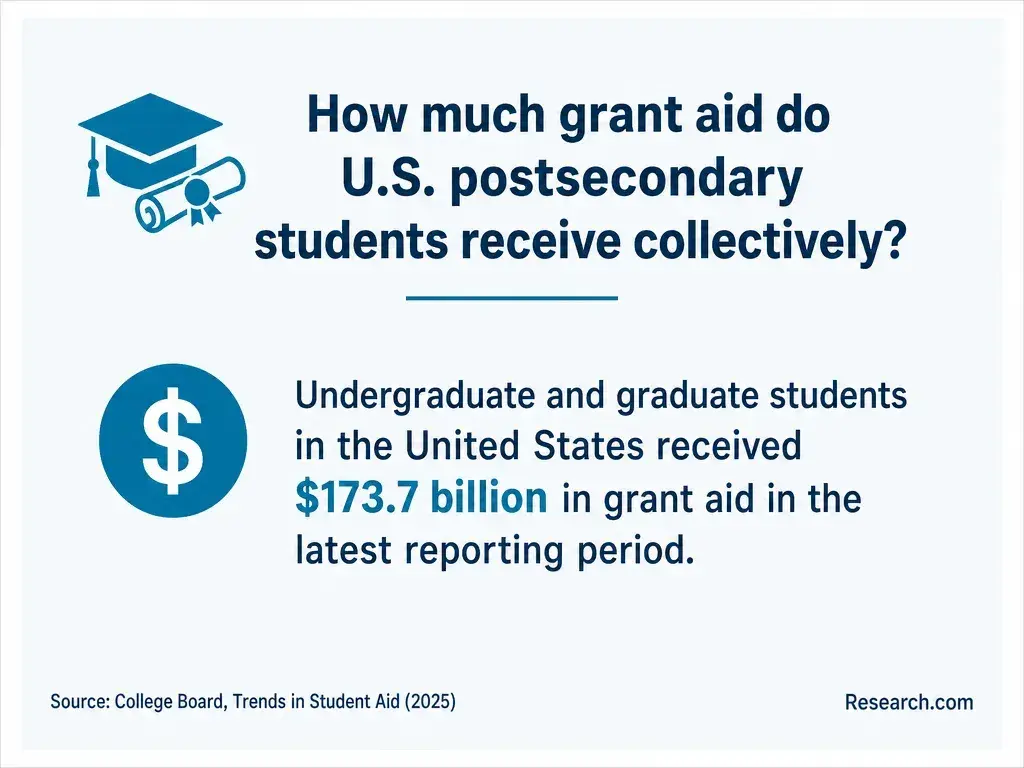
Build a school-specific estimate from published per-credit or term tuition, mandatory fees, required credits, travel or campus visits, and any fieldwork-related reduction in paid hours. Ask whether tuition changes during enrollment and whether employer assistance covers the exact program and courses. Online MPH scholarships and eligibility can be worth investigating, but compare written aid offers and renewal conditions rather than treating an advertised award as guaranteed.
For a realistic return-on-investment check, compare that total with the least expensive route that could qualify you for your target role. Include the value of staying employed, not just the tuition bill.
The closest transitions usually build on what you already do: population-health analyst, health policy analyst, quality-improvement analyst, or evaluation analyst. In these roles, you might define measures, assess service-use patterns, evaluate a program, and explain findings to decision-makers. Employers will still look for experience with the relevant population, data, and setting.
A larger transition - to epidemiologist, community program manager, or independent research lead - may require stronger methods, direct practice experience, or substantial prior responsibility. An MPH alone does not establish readiness for every role. If you need to keep working while building that evidence, comparing flexible public health master's entry routes may help you identify programs to investigate; confirm any conditions and deadlines directly with admissions staff.
Before applying, collect several job postings for one target role. Mark the recurring methods, software, stakeholder, and degree requirements, then choose a program or project that addresses the gaps you cannot already document.
Pay depends on the occupation, employer, location, and experience - not simply on holding an MPH. For one relevant benchmark, the U.S. Bureau of Labor Statistics reported a $83,980 median annual wage for epidemiologists in May 2024. That is an occupation-wide midpoint, not an expected salary for a new graduate or a prediction of what an insurance analyst would earn after changing jobs.
Use the benchmark only if epidemiologist positions match your intended work and qualifications. For an adjacent analyst move, compare posted pay ranges for your specific target roles with your current compensation and likely education costs. Broader discussion of average earnings after an MPH can provide context, but degree-wide averages should not replace occupation- and location-specific comparisons.
Do Public Health Careers Require Licensure or Professional Certification?
Many public health analyst, policy, and evaluation jobs do not require a professional license. Requirements depend on the position: clinical work retains its separate state licensing rules, and a particular employer may prefer or require a relevant certification. An MPH does not automatically award a license or professional certification.
For example, the Certified in Public Health (CPH) credential has its own eligibility and examination rules. Health education credentials such as CHES or MCHES follow different requirements. Check the responsible credentialing organization and the actual job posting before paying for an exam or selecting coursework around it.
A doctorate is likewise a degree, not a substitute for a required license or certification. If you are considering one for leadership rather than credential eligibility, assess public health doctorate expenses and salary prospects against the responsibilities you hope to gain; most analyst transitions do not call for that investment.
Other Things You Should Know About Public Health
Only if your employer and program authorize the proposed use and you meet applicable privacy and data-use requirements. A classroom assignment is not automatic permission to access, transfer, or publish restricted data.
Translate the work into defensible tasks: defining populations, checking data quality, interpreting utilization patterns, evaluating measures, and communicating limitations. State what you personally did rather than claiming population-health impact you cannot demonstrate.
Possibly. Look for internal population-health, quality, policy, or evaluation teams where you can gain relevant responsibilities. Confirm that the work includes more than relabeling the same reporting tasks.
Compare your coursework and projects with target job requirements before pursuing another degree. If the missing pieces are public health context, epidemiology, or partner experience, targeted study and a supervised project may be more useful than a second master's.
- Pathways Programs | Federal Register https://www.federalregister.gov/documents/2024/04/12/2024-06810/pathways-programs
- Competencies for Public Health Professionals | cdc.gov https://www.cdc.gov/infrastructure/training-professional-development/competencies-for-public-health-professionals.html
- Types of Financial Aid: Grants, Work-Study, and Loans | studentaid.gov https://studentaid.gov/understand-aid/types
- Your financial path to graduation | consumerfinance.gov https://www.consumerfinance.gov/paying-for-college/your-financial-path-to-graduation/
- Practicum and Capstone: COPHP MPH | Health Systems and Population Health https://hspop.uw.edu/cophpmph/program-experience/practicum-capstone/
- MPH Field Placement & Capstone Project Courses | Medical College of Wisconsin https://www.mcw.edu/education/graduate-school/graduate-school-programs/public-health/mph-program/culminating-experiences
- MPH vs MS vs MHA: Which Public Health Master's Degree Is Right for You? | Tulane WSPH https://sph.tulane.edu/mph-vs-ms-vs-mha
- Admissions - Master of Public Health - The University of Chicago https://publichealth.bsd.uchicago.edu/about/admissions/
- How to Apply for a Master's Degree Program | umich.edu https://sph.umich.edu/admissions/programs-degrees/masters/how-to-apply.html
- Practicum and Thesis/Capstone | Rollins School of Public Health at Emory University https://mch.emory.edu/current-students/practicum-and-thesis-capstone/