2027 Choosing a Public Health PhD for Global Health Implementation Research

Co-Founder and Chief Data Scientist
A public health PhD can prepare you to study why proven health interventions succeed in some settings but struggle in others. For global health implementation research, however, a program's name matters less than its supervisors, methods training, research partnerships, and funding.
This guide is for prospective researchers deciding whether doctoral study fits their goals and which programs can support a feasible dissertation. It explains what to verify before applying, how to compare offers, and when a practice-focused or shorter route may serve you better.
Key Things You Should Know
- Choose a PhD for original implementation research, not solely to manage or deliver global health programs; a practice-focused degree or supervised work may fit those goals better.
- Prioritize a prospective advisor, viable partner and data access, suitable methods training, and a written funding offer over a "global health" label.
- Compare the full funding period with expected dissertation milestones; tuition coverage alone does not establish what you will receive for living costs, summer work, or research travel.
What Is a Public Health PhD in Global Health Implementation Research?
Implementation research studies how an intervention can be adopted, delivered, adapted, and sustained in real-world systems. In global health, the setting may involve cross-border partnerships or health systems outside the United States. A doctoral project might examine why clinics differ in their uptake of an established treatment protocol, using interviews, service records, and an implementation framework. It must distinguish an intervention's clinical effectiveness from the question of how people and organizations put it into practice.
This is usually a research focus within a public health PhD, rather than a universally standardized degree title. Relevant doctorates may sit in health behavior, epidemiology, health policy, health services research, or another department. Check the actual degree and dissertation rules rather than assuming a global health elective constitutes a formal specialization.
A PhD requires a completed bachelor's degree for admission under the institution's rules, and many applicants also have graduate preparation. If you are earlier in your education, public health undergraduate degree options online address that separate first step; they do not replace doctoral research preparation.
Why Choose a Public Health PhD for Global Health Implementation Research?
Choose this route if you want to design studies, develop or test implementation approaches, publish research, and build an independent scholarly agenda. Its value is the combination of rigorous inquiry and sustained work with the people and systems that would use the findings. Strong projects give local collaborators a meaningful role in setting questions and interpreting results, rather than treating a partner site solely as a source of data.
A PhD is less direct if your primary goal is to run programs, lead an organization, or strengthen day-to-day implementation. A DrPH generally emphasizes practice leadership; an MPH, a research-oriented MS, targeted methods training, or supervised program work may be sufficient for other goals. If you need a narrower graduate starting point, choosing a public health master's specialization can clarify whether you first need epidemiology, evaluation, policy, or community-engaged practice skills.
What Careers Can You Pursue With This Public Health PhD?
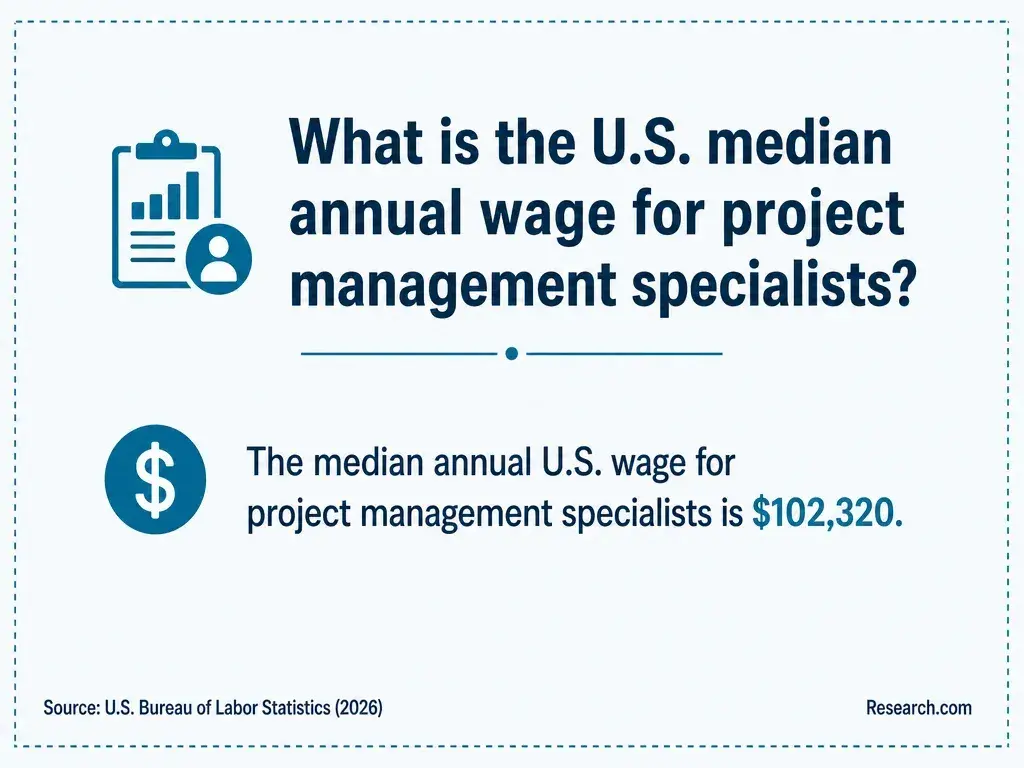
Graduates may seek university research and teaching positions, research roles in health systems or nonprofits, and evaluation or implementation-science positions in government and other organizations. Their work can include study design, partnership development, grant writing, analysis, publication, and translating findings into decisions. Faculty and research-director jobs typically require a competitive record and experience beyond degree completion.
The distinction is between being trained to conduct research and being hired to lead a particular project or institution. For applicants whose preferred work is program delivery rather than original scholarship, compare doctoral roles with positions accessible through experience and a master's degree. Salary prospects with a Master of Public Health provide context for that alternative, not an estimate of what PhD graduates will earn.
First verify that the university holds recognized institutional accreditation. Then check the Council on Education for Public Health (CEPH) directory for the accredited school or public health unit and the scope of its accreditation. A university's institutional accreditation and a school's CEPH status answer different questions; neither proves that every degree or track has the same coverage.
CEPH can be a useful indicator when comparing public health schools, but it cannot establish dissertation fit, advisor availability, or access to a research partnership. Ask the program to identify the degree-awarding unit and clarify how its PhD relates to any CEPH-accredited school. For readers weighing a master's instead, choosing an MPH with CEPH accreditation is a distinct decision; do not transfer an MPH's accreditation description to a PhD without checking.
Look for advanced study in research design, epidemiology or biostatistics as appropriate to the project, qualitative and mixed-methods inquiry, implementation frameworks, health systems, and research ethics. The critical test is whether you can progress from a sound question to a defensible dissertation - not whether the catalog lists every topic. Training should address how to measure implementation outcomes, account for context, and avoid claiming that an observed association proves an intervention caused change.
Dissertation work may require agreements with partner organizations, secure access to appropriate data, community involvement, and institutional review or other approvals. A faculty member's existing partnership does not automatically entitle a student to use its records or recruit participants. Ask how students obtain approvals and what alternative projects remain feasible if access changes.
Applicants still completing foundational study can explore undergraduate public health programs with faster course cycles, but faster coursework is not a substitute for the graduate-level methods and sustained research experience a PhD demands.
Requirements vary. Programs commonly assess academic records, a statement of research interests, recommendations, prior research experience, and preparation for the proposed methods. A master's degree, publication, thesis, entrance test, or prior international work may matter at a particular school, but none should be assumed universal. Applicants from clinical, social science, computing, or other backgrounds can be competitive when they show relevant research reasoning and address specific preparation gaps.
Before applying, separate three questions: Are you eligible? Does your record show you can undertake doctoral research? And can this program supervise the question you want to pursue? Describe a plausible research problem and your contribution to previous projects without claiming independent responsibilities you did not hold. Confirm whether prospective advisors are accepting students and whether contacting them is expected.
If an MPH would help you develop methods or practice experience first, recommendation-free application options for MPH study concern that alternative application route; they do not indicate that PhD recommendations are optional.
A PhD involves coursework, research milestones, and a dissertation, so completion time depends on prior preparation, program rules, project access, and research progress. Do not treat a stated minimum timeline as a likely finish date. Compare each offer with the program's documented time-to-degree information and ask what happens if a partnership or data agreement delays the dissertation.
The most consequential price is often the net cost of attendance and foregone earnings, not advertised tuition. Examine the offer for tuition and mandatory-fee coverage, stipend amount, health insurance, summer support, teaching or research duties, guaranteed versus conditional funding, and support for fieldwork and travel. Also check continuation charges and funding rules after the stated support period. A funded offer can still leave substantial living or project costs.
For a related doctoral cost comparison, epidemiology doctorate aid and affordability comparisons can help frame questions, but verify every funding term in the specific PhD offer before relying on it.
Choose by the work you must do, not the delivery label. A campus-based program may provide regular contact with a research group and access to departmental seminars. An online or hybrid format may reduce relocation, but can still require live meetings, residencies, scheduled collaboration, and travel to a partner site. Neither format guarantees a suitable supervisor or feasible dissertation.
Ask how often you will meet your advisor, how methods courses and research-group meetings operate, whether assistantships require local presence, and where dissertation work can be conducted. If you intend to research outside the United States, confirm partner-site responsibilities and travel funding separately from classroom delivery. Comparing online public health doctoral formats is useful for screening, but verify that a listed degree is a research PhD rather than a practice-focused doctorate.
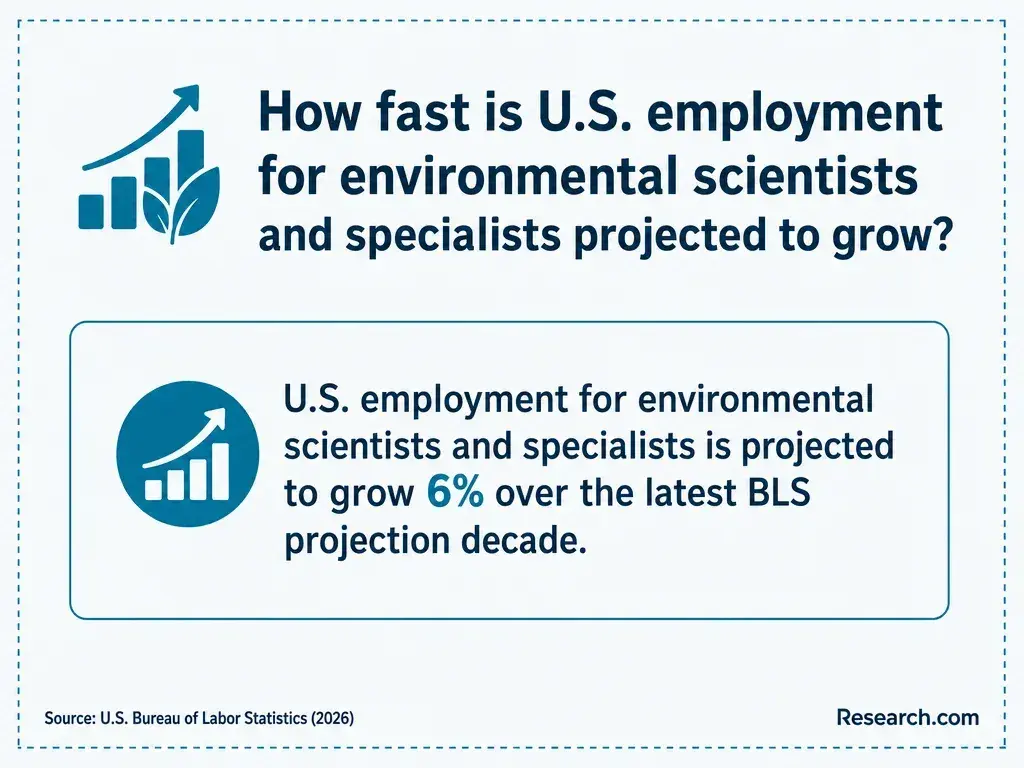
There is no single salary or job-growth figure for "global health implementation research PhD graduates." Employers classify work under different occupations, and pay varies by role, sector, location, funding source, and experience. The U.S. Bureau of Labor Statistics' Occupational Outlook Handbook can provide a benchmark for a specifically defined occupation, such as epidemiologist, but its occupation-wide median is not a doctoral graduate salary or a forecast of global health research openings.
For a meaningful comparison, identify jobs you would actually apply for, check their stated degree and experience requirements, and compare posted pay with the funding and earnings you would give up during study. Academic research hiring and grant-supported roles can have constraints that broad occupation projections do not capture. If the financial decision hinges on a shorter credential, weighing the cost of public health graduate study offers a separate master's-level comparison rather than a PhD earnings promise.
How Can You Compare Reputable Global Health PhD Programs?
Start with a research question you could refine, then compare programs on evidence that they can support it. The table separates three features that are often bundled together in promotional descriptions.
| Feature | Stronger evidence | Important limitation |
| Supervision | Faculty work closely matches the proposed question and methods. | Research fit does not establish current advising capacity. |
| Research access | Established partnerships support relevant, appropriately governed work. | A partnership does not guarantee student data access. |
| Funding | A written offer specifies support, duration, duties, and conditions. | Covered tuition may exclude living, summer, or travel costs. |
Use that comparison to build a shortlist, then put the unresolved questions to program directors, prospective advisors, and current students. In particular, confirm recent dissertation topics, methods-course availability, milestone and leave policies, advisor-change procedures, and what students do when field access falls through. Review comparisons of public health doctorate entry requirements only as an initial screen: easier entry does not establish stronger mentorship or a better dissertation fit.
Favor the program where your research question, supervision, ethical access, and funding form a workable plan. If no offer meets those conditions, gaining research experience or targeted methods training before applying may be the better decision.
Other Things You Should Know About Public Health
No. A project can examine cross-border systems or partnerships while much of the analysis occurs in the United States. Any field visit should have a defined research purpose, appropriate permissions, and a realistic budget.
Yes. Clinical experience can inform an implementation question, but doctoral research requires appropriate study-design and analysis skills. A public health PhD does not add or replace clinical licensure.
The student and advisor should engage relevant local researchers, practitioners, and community representatives as appropriate. Their priorities and governance requirements can materially change the question and study design.
No. Staffing, policy, resources, and community context may differ. A strong dissertation explains which mechanisms and conditions may be transferable and where further testing is needed.
- Ethics Guidance for Developing Partnerships with Patients and Researchers - CIHR https://cihr-irsc.gc.ca/e/51910.html
- The role of implementation science training in global health | nih.gov https://pmc.ncbi.nlm.nih.gov/articles/PMC5110555/
- International Research - OHSRP - NIH https://irbo.nih.gov/special-topics/international-research/
- International Compilation of Human Research Standards | hhs.gov https://www.hhs.gov/ohrp/international/compilation-human-research-standards/index.html
- PhD in Global Health Metrics and Implementation Science | UW Department of Global Health https://globalhealth.washington.edu/education-and-training/academic-programs/phd-in-global-health-metrics-and-implementation-science/
- PhD in Global Health and Development | Emory University https://sph.emory.edu/degrees-programs/phd/global-health-and-development
- Concentration in Implementation Science | Johns Hopkins https://publichealth.jhu.edu/academics/drph/curriculum/concentration-in-implementation-science
- Research conducted abroad | citystgeorges.ac.uk https://www.citystgeorges.ac.uk/research/support/integrity-and-ethics/guidance-and-resources/abroad
- Educational approaches to teach students to address colonialism in global health: a scoping review | BMJ Global Health https://gh.bmj.com/content/8/4/e011610
- Health Services Research and Implementation Science | ucsd.edu https://ph.ucsd.edu/phd/public-health/index.html