2027 Separating Prediction Accuracy From Causal Evidence for MPH and MS Students

Co-Founder and Chief Data Scientist
A model can identify people likely to need emergency care without showing that an outreach program will prevent those visits. That distinction matters when public health students turn analyses into recommendations, evaluations, or research.
This guide is for MPH and MS students choosing methods courses, projects, or degree pathways. It explains what prediction accuracy and causal evidence establish, how to assess each, and which program features support the work you want to do.
Key Things You Should Know
- Prediction asks who is likely to experience an outcome; causal analysis asks what would change that outcome under a specified intervention. Strong performance on one question does not answer the other.
- For a prediction project, check performance on data separated from model development, calibration, and performance across relevant groups. For a causal project, define the intervention and comparison, then assess confounding, selection, and timing.
- Choose an MPH or MS by its actual methods courses, supervision, data access, and project requirements—not its degree label. Neither degree alone establishes advanced causal-inference competence.
What Is the Difference Between Prediction Accuracy and Causal Evidence in Public Health?
Prediction accuracy describes how well a model forecasts an outcome for people or settings it has not already learned from. Causal evidence concerns the effect of a defined action or exposure compared with an alternative. A variable can help predict an outcome without being a useful intervention target.
Consider a hypothetical health department predicting heat-related emergency visits. A model might flag residents whose past utilization, housing conditions, and local temperatures indicate higher risk. That could help allocate outreach, provided the model is tested appropriately. It does not establish that outreach will reduce visits. To assess that claim, the department needs a comparison between what would happen with outreach and what would happen without it, for a specified population and period.
The questions require different evidence. This comparison shows what to report before claiming that an analysis supports a public health decision:
| Question | Prediction study | Causal study |
| Primary target | Future outcome under the conditions represented in the data | Outcome difference under a specified intervention versus comparison |
| Key test | Performance on genuinely separate, relevant data | Whether the design and assumptions support a credible comparison |
| Common failure | Data leakage, poor calibration, or failure in a new setting | Confounding, selection bias, or unclear intervention timing |
| Defensible conclusion | "This model may help identify higher-risk cases in settings where it has been validated." | "Under the stated assumptions, the intervention may change the outcome by the estimated amount." |
Before choosing a method, write the decision in plain language: "Whom should we contact?" calls for prediction; "Will contacting them prevent visits?" calls for causal evidence. These aims can coexist, but they require separate analyses. When comparing public health master's fields of study, look for the training that matches the question you expect to answer.
How Do MPH and MS Degrees Use Predictive and Causal Methods?
An MPH commonly emphasizes using evidence for population-health decisions: interpreting surveillance, targeting services, evaluating programs, and explaining uncertainty to partners. An MS in epidemiology, biostatistics, or a related field may offer more sustained research or quantitative methods work. Neither description is a guarantee; course sequences and projects vary by program.
In practice, an MPH student might assess whether a risk score helps a department prioritize follow-up and whether its performance differs across communities. An MS student might examine model validation or the assumptions behind an observational estimate of an intervention's effect. Students in either degree can do both kinds of work when their preparation and supervision support it.
For deeper study, ask whether a program teaches study design, causal diagrams, longitudinal data, and sensitivity analysis—not merely regression or predictive software. Independent methodological research may call for training beyond a master's degree, but a doctorate is unnecessary for many applied analyst roles. Students considering that longer route can compare lower-cost epidemiology research training and aid against the specific research responsibilities they hope to assume.
Which Accreditation Standards Apply to MPH and MS Public Health Programs?
Institutional accreditation and accreditation by the Council on Education for Public Health (CEPH) answer different questions. Institutional accreditation applies to the university. CEPH accreditation has a defined scope covering an accredited school, public health program, or unit and its included degrees; it should not be inferred from the university's status or another degree's accreditation.
For an MPH, check the accreditor's listing and the school's documentation for the exact degree and entry term. For an MS, check its precise title and whether it falls within the accredited unit's scope rather than assuming every public health-related MS is included. CEPH status can matter for particular employers or credential pathways, but it does not establish that a program teaches advanced prediction or causal inference. A list of CEPH-accredited graduate public health programs can help start a comparison; confirm current scope with CEPH and the institution before enrolling.
Foundational epidemiology and biostatistics help students describe patterns and interpret associations. To make defensible predictive or causal claims, look further: study design, data management, model assessment, missing-data methods, confounding, and communicating uncertainty. Advanced electives should build on prerequisites rather than stand in for them.
Review a syllabus or project description for the work students actually perform. A predictive course should address separation of training and test data, calibration, and performance in the intended population. A causal course should require a clear intervention, comparison, outcome, timing, assumptions, and checks on alternative explanations. An applied project or thesis adds value when qualified supervision and appropriate data access let a student practice those decisions.
A cost-conscious student comparing online MPH degree options on a budget should check whether the needed methods courses are regularly offered and open to MPH students. A cheaper program with only introductory analysis may be a poor fit for a specialized research goal; a targeted course may be sufficient if the student already has the degree and needs one skill.
Delivery format does not determine methodological rigor. Online students can learn to assess models and research designs if courses provide accessible data, computing support, substantive feedback, and opportunities to discuss assumptions. Campus-based study may make certain research meetings or collaborations easier, but availability depends on the program and supervisor.
Compare the practical conditions for the project you want: whether advanced courses run remotely, whether sessions are live, how students obtain approved data, and whether faculty supervise online theses or applied projects. An online label does not remove scheduled meetings, group work, or site requirements. Guides to lower-cost routes through online public health study can narrow choices but confirm that the advertised format includes the method sequence you need.
Requirements vary by degree and school. Applicants generally need an eligible prior degree, while individual programs set their own policies on grades, statements, recommendations, tests, and prerequisites. Quantitative MS programs may expect stronger mathematics, statistics, or programming preparation than a generalist MPH. Relevant work or research can strengthen an application without automatically replacing a required course.
If your background is outside public health, document what you already know: statistics coursework, research projects, coding, community work, or experience evaluating programs. Then compare each program's stated prerequisites with the preparation required for its advanced courses. Ask admissions staff whether an outstanding prerequisite can be completed before enrollment and obtain the answer for that program. Applicants seeking online graduate public health options without letters should still check every prospective program's current application instructions.
Completion time depends on credit requirements, enrollment pace, course sequencing, and whether an applied experience or thesis requires additional terms. An MS thesis can be delayed by supervision or data access; an MPH project can depend on a site's approvals and schedule. Ask for a term-by-term plan showing when the methods courses and required project are available.
Compare published tuition alongside mandatory fees, software or computing costs, travel, and income lost to study or unpaid fieldwork. A shorter advertised path is not necessarily less expensive if required courses cannot be taken in sequence. Ask financial-aid staff which awards apply to the exact degree and enrollment load. Information on university scholarship options for MPH applicants is a starting point, not confirmation that a particular student will receive an award.
Predictive and causal skills matter in public health analyst, epidemiology, program evaluation, and research roles, but job titles do not reliably identify the methods used. An analyst might maintain surveillance reports and assess a risk model; an evaluator might develop a comparison strategy for a community program. More specialized roles may expect substantial statistical preparation, programming, or prior research experience in addition to a degree.
Match your portfolio to the target job's decisions. A prediction sample can explain its intended users, validation, calibration, and limits. A causal-analysis sample can state the intervention, comparison, plausible biases, and what remains uncertain. Use authorized or public data, and never present a class exercise as evidence that an intervention worked in a real community.
Those seeking independent research leadership can start comparing accessible public health doctoral programs while checking research fit and supervision rather than treating admission accessibility as proof of suitability.
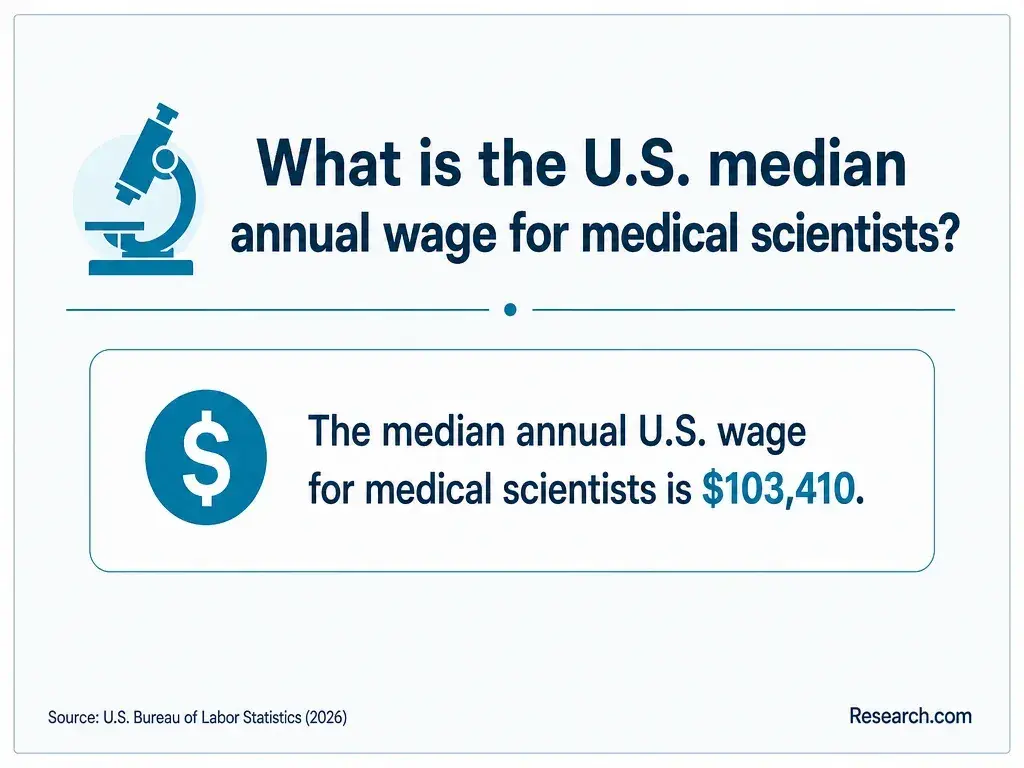
Salary and employment projections should be tied to a defined occupation, not to "MPH graduates" or "MS graduates" as a group. The US Bureau of Labor Statistics reports occupation-level information for roles such as epidemiologist and statistician, but those occupations include workers with different degrees, experience, employers, and responsibilities. Their published medians are not offers to new graduates or returns attributable to one program.
For a useful comparison, identify the occupations and employers you would realistically qualify for, then consult the latest BLS Occupational Outlook Handbook entry for each role's wage reference year, projection period, and typical entry education. Compare that evidence with local postings and your likely education cost. A guide to weighing the cost of public health graduate study can frame the trade-off, but no broad salary figure can resolve whether a specific methods degree is worth its price for you.
Which Certifications and Professional Standards Matter for Public Health Careers?
The Certified in Public Health (CPH) credential and health education credentials such as CHES and MCHES have distinct eligibility rules set by their certifying organizations. Neither an MPH nor an MS automatically awards certification, and certification does not by itself establish competence to estimate causal effects or deploy a predictive model. Check the current rules and the requirements of the jobs you want before paying for a credential.
Methodological practice also calls for standards that a certificate cannot replace: reproducible analysis, honest reporting of validation and uncertainty, appropriate privacy protections, and review of data-use, institutional, and community permissions. A student entering through health education may consider whether an eligible undergraduate route is more appropriate than a master's; comparisons of public health undergraduate program affordability are useful only after checking the credential's specific coursework rules. For an established professional who needs better causal reasoning, supervised methods training may be more direct than another degree or certificate.
Other Things You Should Know About Public Health
No. Feature importance describes a variable's contribution to a particular model's predictions. Correlation, measurement practices, and relationships among predictors can affect it; an intervention requires separate causal reasoning.
Yes. Overall performance can conceal differences in calibration, data quality, or error rates across populations. Examine performance in the groups and settings where decisions will be made, while protecting privacy.
No. Statistical significance does not rule out confounding, selection bias, measurement error, or an incorrectly specified comparison. The study design and assumptions determine how much causal weight the result can bear.
Not automatically. Data access does not necessarily include permission to publish. Confirm the data-use agreement, site and institutional requirements, privacy protections, and any applicable review before sharing results or code.
- Reporting the methods used in public health research and practice | cdc.gov https://stacks.cdc.gov/view/cdc/51821
- Forecasting Causal Effects of Interventions versus Predicting Future Outcomes - PMC https://pmc.ncbi.nlm.nih.gov/articles/PMC9030387/
- Chapter 6: Methods to address bias and confounding - ENCePP https://encepp.europa.eu/encepp-toolkit/methodological-guide/chapter-6-methods-address-bias-and-confounding_en
- Evaluating and Disseminating Intervention Research - NCBI https://www.ncbi.nlm.nih.gov/books/NBK43735/
- Difference-in-Difference Estimation | Columbia University Mailman School of Public Health https://www.publichealth.columbia.edu/research/population-health-methods/difference-difference-estimation
- Evaluation of clinical prediction models (part 2) | bmj.com https://www.bmj.com/content/384/bmj-2023-074820
- Causal Methods for Epidemiological Research | Brown University https://mph.sph.brown.edu/concentrations/causal-epidemiology
- Distinguishing Description, Prediction, and Causal Inference | neurology.org https://www.neurology.org/doi/10.1212/WNL.0000000000210171