2027 MPH Admissions Interviews: Explaining Your Concentration Choice

Co-Founder and Chief Data Scientist
In an MPH admissions interview, naming a concentration is easy; explaining why it fits your experience and goals takes preparation. Interviewers may want to know whether you understand the work behind the label, what you still need to learn, and why their program is a sensible place to learn it. This guide helps applicants from public health and other backgrounds build a specific, credible answer - and check whether their chosen concentration actually supports the work they hope to do.
Key Things You Should Know
- Build your answer around a public health problem, relevant experience, a skill gap, and a verified opportunity in the program - not the concentration's name alone.
- A concentration signals focused coursework; it does not by itself confer a license, certification, specialist job, or guaranteed salary.
- Before interviewing, check the official curriculum and applied experience requirements so you can explain why this particular MPH fits your next step.
How should you explain your MPH concentration choice in an admissions interview?
Give a concise answer that moves from evidence to intention: what you have seen or done, which population-health problem interests you, what skills you lack, and how the concentration helps you develop them. Then identify a relevant feature of the specific program that you have confirmed in its curriculum or admissions materials. You do not need to claim that your career plan is fixed.
This four-part sequence can help you prepare without sounding rehearsed:
- Start with a concrete experience. Describe a project, job, course, or community responsibility and your actual role in it.
- Name the question it raised. Explain the public health problem you want to investigate or address, without claiming your experience proves its cause.
- Identify the learning gap. Specify a method, practice skill, or policy perspective you need rather than saying you want to "make a difference."
- Connect the gap to the program. Mention a confirmed course sequence, applied opportunity, or faculty area, and explain how you would use the training.
For example: "While coordinating clinic outreach, I saw how difficult it was to tell whether our reminders reached people who faced the greatest access barriers. I want to study epidemiology so I can design appropriate measures and interpret the results responsibly. Your published curriculum includes study design and applied analysis, which would help me evaluate outreach more rigorously." This is an illustrative answer, not a claim about any particular program.
Be ready for a follow-up about why you chose this concentration over a neighboring one. If you are still deciding, say what distinction you are testing. Interview expectations vary; some programs do not interview every applicant, and others rely more heavily on written materials. If letters are an obstacle in your application process, compare online graduate public health options without letters while checking each program's actual interview policy separately.
What are the most common MPH concentrations and career paths?
Concentration names differ by school, and similar names can conceal different levels of methods training. The comparison below gives you a starting point for explaining your choice; it does not establish the curriculum or job eligibility of a particular program.
| Common concentration | Typical focus | Relevant work to discuss in an interview |
| Epidemiology | Study design, surveillance, and interpretation of population-health patterns | Investigating health patterns or evaluating prevention efforts |
| Biostatistics | Statistical analysis, data management, and communication of uncertainty | Analyzing health data under appropriate methodological supervision |
| Community or behavioral health | Community partnership, health communication, and program design | Developing and evaluating community-serving initiatives |
| Health policy or management | Policy analysis, health systems, implementation, or organizational decisions | Supporting policy development or managing public health programs |
| Environmental or occupational health | Exposure, prevention, and environmental or workplace health | Assessing risks or supporting prevention programs, subject to role-specific requirements |
If your target is intensive statistical modeling rather than broad public health practice, ask whether the MPH offers enough advanced coursework or whether biostatistics graduate programs for busy professionals better match your goal. Your interview answer should reflect that comparison, not imply that every biostatistics concentration provides the same technical depth.
How does CEPH accreditation affect MPH program and career options?
The Council on Education for Public Health (CEPH) accredits eligible public health schools and programs. It is distinct from an institution's general accreditation. When assessing an MPH, check CEPH's listing for the exact school, unit, or program and confirm that the degree you intend to enter falls within its accredited scope. Do not infer coverage from the university's name or a different public health degree.
Accreditation can matter when an employer or a professional credential specifies an accredited-degree pathway. It does not mean that a concentration is independently accredited, that every elective will be offered when you need it, or that graduates qualify automatically for a particular job. If accreditation comes up in an interview, use it as context for your academic decision, then return to the competencies and applied work you want to develop. For comparison research, finding an online MPH with CEPH accreditation is a starting point; confirm scope and status directly before applying.
Translate your goal into tasks before choosing a label. Someone who wants to evaluate a community program may need study design, data interpretation, stakeholder engagement, and implementation skills; either epidemiology or community health could fit, depending on which tasks they expect to own. Someone aiming to run a health department program may need budgeting and partnerships more urgently than advanced statistical modeling.
Your starting background changes the answer. A social worker can discuss community relationships and identify a gap in population-level evaluation. A data analyst can demonstrate quantitative preparation while acknowledging limited experience with public health ethics or community context. A recent graduate can draw on coursework or supervised projects without presenting them as independent professional practice.
Keep your proposed next step proportional to your goal. If you seek a specific methods skill, a course or supervised project may be more direct than an MPH. If you are already planning for advanced practice leadership, compare the MPH with later doctoral study - but do not present a doctorate as an automatic next rung. Reviewing public health doctorate financial planning and outcomes can help you keep that longer-term ambition separate from the immediate reason you chose an MPH concentration.
An MPH generally combines foundational public health study with concentration requirements and applied learning, but the course sequence and depth vary. Read the current catalog, not just the concentration description. For an epidemiology choice, distinguish an introductory survey from courses in study design and analysis. For community health, look for program planning, evaluation, communication, and meaningful work with communities. For policy, determine whether the emphasis is policy analysis, management, or both.
Before your interview, identify a plausible learning sequence: the preparation you already have, an early course that fills a gap, a more advanced course or elective, and an approved applied experience where you could practice the skill. Check prerequisites and course availability; an elective's presence in a catalog does not guarantee a seat or make it part of your formal concentration.
If you have not yet completed a bachelor's degree, the immediate decision is undergraduate completion rather than an MPH concentration. Compare remaining requirements and public health undergraduate program affordability before planning graduate study. Applicants with bachelor's degrees outside public health should instead check each MPH's actual prerequisites; an unrelated major is not automatically disqualifying.
Delivery format affects how you build the evidence behind your interview answer. An online student may complete substantial methods coursework remotely but still need scheduled live sessions, group work, software access, or an approved local applied practice site. A campus student may have easier access to some in-person activities but still need to secure a suitable project and supervisor. Neither format alone establishes the quality of concentration training.
Ask how often advanced concentration courses run, whether they require synchronous attendance, who helps arrange field experiences, and what happens if your preferred elective is unavailable. Working applicants should test these obligations against actual weekly schedules rather than equating "online" with "self-paced." When comparing affordable distance learning MPH degrees, include fieldwork logistics and required visits alongside tuition; the least expensive advertised option may not be the most workable one.
Expect each school to specify its own eligibility rules and application materials. A bachelor's degree and academic records are common starting points, while prerequisites, recommendations, essays, tests, experience expectations, and interviews differ. Quantitatively demanding concentrations may recommend or require preparation that a generalist route does not. Separate an official requirement from evidence that simply makes your application stronger.
For interview preparation, compare your transcript and experience with the concentration's stated expectations. If you lack a skill, explain how you will prepare rather than overstating proficiency. Applicants entering from another discipline can use online MPH admission options for varied backgrounds to begin a comparison, then verify current prerequisites and interview practices with each program. An accessible application process is not proof that the concentration supplies the training you need.
Time to completion depends on required credits, course sequencing, enrollment pace, and the timing of applied work. Cost depends on tuition rules, mandatory fees, materials, travel, and any earnings you forgo. Because these vary substantially, a general MPH price or completion promise is less useful than a term-by-term estimate for your intended concentration.
Request a current degree plan and a written breakdown of charges. Ask whether required concentration courses are offered often enough for your proposed pace and whether a practicum could add travel or unpaid hours. If an award is important to affordability, verify eligibility, renewal conditions, and how it affects your actual bill. Guidance on reducing MPH tuition with institutional awards can help frame those questions, but do not assume an award will be available.
In an interview, mention cost or scheduling only when it genuinely explains program fit - for example, why a realistic course sequence would let you complete a relevant applied project. Avoid claiming that the degree will pay for itself through a particular job.
A concentration can help you build evidence for a role, but hiring depends on the actual tasks, your experience, technical skills, and employer requirements. Epidemiology coursework may support applications to surveillance or research teams; community health preparation may support program coordination or evaluation; policy training may support analyst roles. An advanced analyst, epidemiologist, or manager position may require experience beyond graduation.
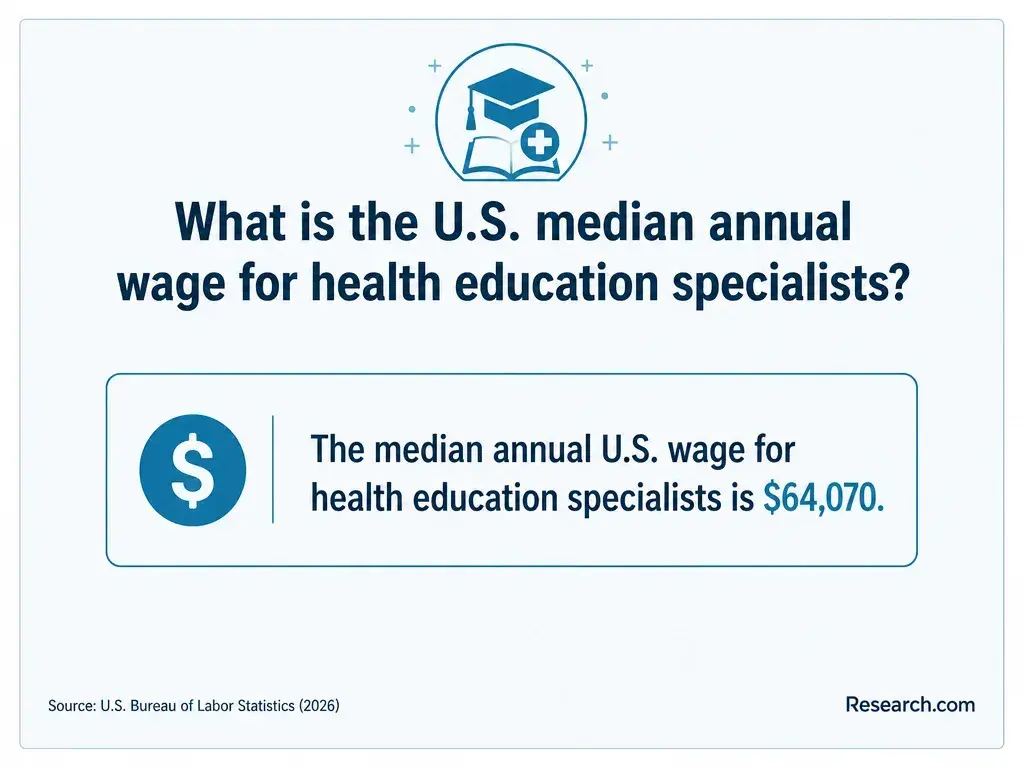
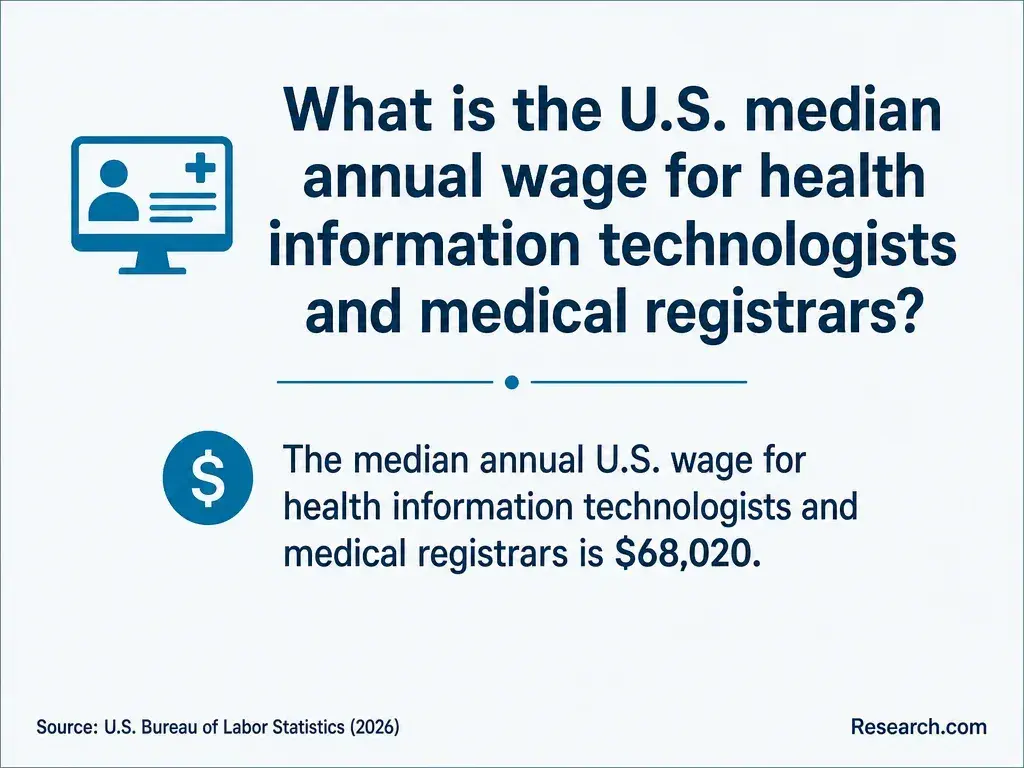
For salary research, match the job you want to a defined occupation and location. U.S. Bureau of Labor Statistics occupational medians describe workers across employers and experience levels - not starting pay or outcomes for graduates of one MPH concentration. Use public health graduate salaries by career as a comparison aid, then check current occupation-specific data and actual job postings. In an interview, a credible career goal describes the responsibilities you want to grow into, not a salary you expect the degree to deliver.
Which public health certifications or licenses support your concentration?
Credentials answer a different question from concentration choice. The Certified in Public Health (CPH) credential concerns public health knowledge; Certified Health Education Specialist (CHES) and Master Certified Health Education Specialist (MCHES) relate to health education under their respective eligibility rules. None is automatically awarded with an MPH. Check the certifying organization's current degree, coursework, experience, examination, and renewal requirements before describing a credential as part of your plan.
Licenses are more role-specific. An MPH in environmental health does not itself grant a regulated environmental credential, and an MPH in any concentration does not authorize clinical practice. If an interviewer asks about professional development, name a credential only when it serves your intended work and you understand what eligibility still requires. Likewise, online public health doctoral admission options concern a separate degree pathway, not a certification or license that follows automatically from your concentration.
Other Things You Should Know About Public Health
Practice its main points, not a script. A conversational answer makes it easier to respond accurately when an interviewer asks about a course, experience, or alternative concentration.
Yes, if the program allows that flexibility. Explain what distinguishes the options, which evidence currently favors one, and how you will confirm your choice under the school's policies.
Say what changed and why. Connect the new interest to evidence from your experience, then ask whether changing concentrations is permitted and whether it would affect required courses or timing.
Only if you are comfortable doing so. Keep the focus on the public health questions it raised and the preparation you seek; you do not need to disclose private medical details to justify your choice.
- Public Health as a Problem-Solving Activity: Barriers to... - NCBI https://www.ncbi.nlm.nih.gov/books/NBK218227/
- Principles of Epidemiology | Lesson 1 - Section 1 https://archive.cdc.gov/www_cdc_gov/csels/dsepd/ss1978/lesson1/section1.html
- Eligibility and Core Expectations | peacecorps.gov https://www.peacecorps.gov/how-to-apply/preparing-to-apply/eligibility-and-core-expectations/
- Measuring, Monitoring, and Evaluating the Health of a... - PMC https://pmc.ncbi.nlm.nih.gov/articles/PMC7171905/
- How to Choose the Best Specialization for Your MPH Degree | tufts.edu https://medicine.tufts.edu/news-events/news/how-choose-best-specialization-your-mph-degree
- Which MPH Program is Right For Me? | Health Systems and Population Health https://hspop.uw.edu/cophpmph/which-mph-program-is-right-for-me/
- MPH Selective Admissions Criteria | Zuckerman College of Public Health https://publichealth.arizona.edu/admissions/graduate/criteria/mph/selective/admissions
- 5 Considerations for Choosing an MPH Program | University of Bridgeport https://www.bridgeport.edu/news/considerations-for-choosing-an-mph-program/
- Choosing Your Path: 8 Public Health Concentrations | Tulane University https://online.tulane.edu/public-health/blog/public-health-concentrations
- How to Choose an MPH Concentration | UNC-MPH https://onlinemph.unc.edu/concentrations/choose-a-concentration/