2027 Choosing Public Health BS Coursework for Veterans' Community Health Programs

Co-Founder and Chief Data Scientist
Military experience can prepare you to lead teams, coordinate services, and respond to health risks, but civilian veterans' programs also require community engagement, data literacy, and careful evaluation. If you are choosing a public health BS, the most useful question is which courses and supervised experiences will help you do that work - not whether a catalog mentions veterans.
This guide shows how to assess the curriculum, apply prior learning, compare formats and costs, and identify realistic career paths before you enroll.
Key Things You Should Know
- Prioritize epidemiology, data literacy, community assessment, program planning, and evaluation; add veteran-focused electives only after confirming that the core curriculum covers these skills.
- Look for an approved, supervised project with a veterans' organization, health department, or health system. A course title alone does not demonstrate readiness to run a community program.
- Verify the degree's accreditation scope, military-credit evaluation, fieldwork schedule, and total remaining cost with each school; none can be inferred from a "military-friendly" label.
What Is a Public Health Bachelor's Degree for Veterans' Community Health Programs?
A public health BS is undergraduate preparation for preventing health problems and improving outcomes across populations. For veterans' community programs, that can mean assessing local needs, coordinating outreach, explaining services, tracking participation, and evaluating whether a program is reaching the people it intends to serve. It is not a clinical qualification or, ordinarily, a degree exclusively about veterans.
The strongest fit is often a general public health major paired with relevant electives and an approved community placement. A veteran who has managed logistics, preventive medicine activities, emergency response, or personnel support may bring useful experience, but should identify which civilian methods - such as survey design or evaluation - still need development. If the goal is direct counseling, nursing, or social work, check that profession's separate education and licensure route rather than assuming a public health BS will qualify you.
A bachelor's degree is also a different decision from graduate study. Public health PhD affordability guide information is relevant only if you later pursue a research career; a doctorate is not a prerequisite for coordinating community outreach.
What Coursework Should a Public Health BS Include for Community Health Careers?
Start with the courses that teach you to understand a population, design a feasible response, and judge its results. The table distinguishes foundational preparation from its likely use in community programs; a single introductory course does not establish specialist proficiency.
| Course area | Contribution to community health work |
| Epidemiology and introductory biostatistics | Interpret health patterns, denominators, uncertainty, and routine program data without treating an association as proof of cause. |
| Community assessment and social determinants of health | Examine access barriers and local priorities without assuming veterans share one set of needs. |
| Health behavior and communication | Develop accessible messages and outreach approaches with the intended community. |
| Program planning and evaluation | Specify a program's purpose, activities, participation measures, and limits of the evidence. |
| Health policy and systems | Understand how public agencies, healthcare providers, and community organizations have different responsibilities. |
Compare syllabi and course sequences, not just major names. Statistics may precede epidemiology or evaluation, while an upper-level elective may be offered infrequently. For veterans balancing work and family, public health undergraduate study with intensive terms may shorten a calendar schedule but can compress demanding quantitative or group-project work. Ask when required courses actually run before choosing a pace.
How Does CEPH Accreditation Affect a Public Health Bachelor's Degree?
The Council on Education for Public Health, or CEPH, accredits eligible public health schools and programs. Institution-level accreditation and CEPH accreditation answer different questions: the former concerns the college or university, while the latter concerns the public health unit or program within its stated scope. Do not assume every bachelor's degree at a university with a CEPH-accredited MPH is itself covered.
Check CEPH's accreditation listing and the school's current documentation for the exact unit, degree, and campus or delivery arrangement you are considering. Then review the actual curriculum and placement support. Accreditation is a useful quality signal, but it does not establish that a school has veteran-focused electives or a suitable local field site. This scope distinction also matters if you later use online public health PhD and DrPH comparisons: accreditation of one degree level should not be assumed to extend to another.
After securing the core courses, choose electives by the work you want to perform. Mental health and substance-use public health courses can inform prevention and referral design, but do not train you to diagnose or treat. Chronic disease, disability, aging, and occupational or environmental health may help you understand different service needs. Emergency preparedness can build on military operations experience while introducing civilian agency roles and community partnerships.
For a program-coordination goal, the most valuable combination is often community-engaged planning, qualitative methods, health communication, and evaluation. An appropriately supervised project might produce a proposed outreach plan or an aggregate-data dashboard for a willing partner. Approval to work at a site is separate from permission to access records, contact participants, or share findings. If your interest instead becomes advanced epidemiologic research, investigate methods depth and funding separately; epidemiology doctorate scholarships and grants address a later, distinct educational decision.
Neither format is inherently better. Online study may work well during employment, relocation, or caregiving, while a campus program may make local partnerships and in-person faculty access easier. Either can require live meetings, group work, daytime field hours, travel, or a placement that the student must arrange.
Compare distance learning options for public health undergraduates against your actual schedule and location. Ask whether required courses are asynchronous, how exams are administered, whether any campus visits are mandatory, and who finds and approves placements near you. Also ask veteran services how they support benefit certification, schedule changes, and career connections. Online enrollment by itself does not determine a student's VA education-benefit payment or eligibility; confirm your circumstances with the school's certifying official and the VA.
Admission to the university, entry into the public health major, and graduation are separate decisions. First-year applicants generally submit secondary-school records under the institution's rules; transfer applicants submit transcripts from prior colleges. A particular major may also require prerequisite coursework or a separate application. Ask admissions and the department for the requirements that apply to your entry term.
If you have college or military learning, request an official evaluation and a degree audit showing where each accepted credit applies: general education, prerequisites, the major, electives, or neither. Give the registrar or transfer-credit office transcripts and any required military education records; ask the department about course substitutions and the advisor about remaining course sequences and residency requirements. An accepted credit does not necessarily replace a required public health course.
Do not use graduate admissions checklists to plan undergraduate entry. For example, comparing online MPH reference letter policies concerns a different degree level; your BS program's published rules control what you must submit now.
A conventional full-time bachelor's pathway is designed around several academic years, but a veteran's remaining time depends on the approved degree audit, prerequisite order, course availability, enrollment pace, and placement requirements. Military experience may lead to evaluated credit without satisfying the particular courses this major requires. Get a term-by-term plan before treating an advertised completion time as your own.
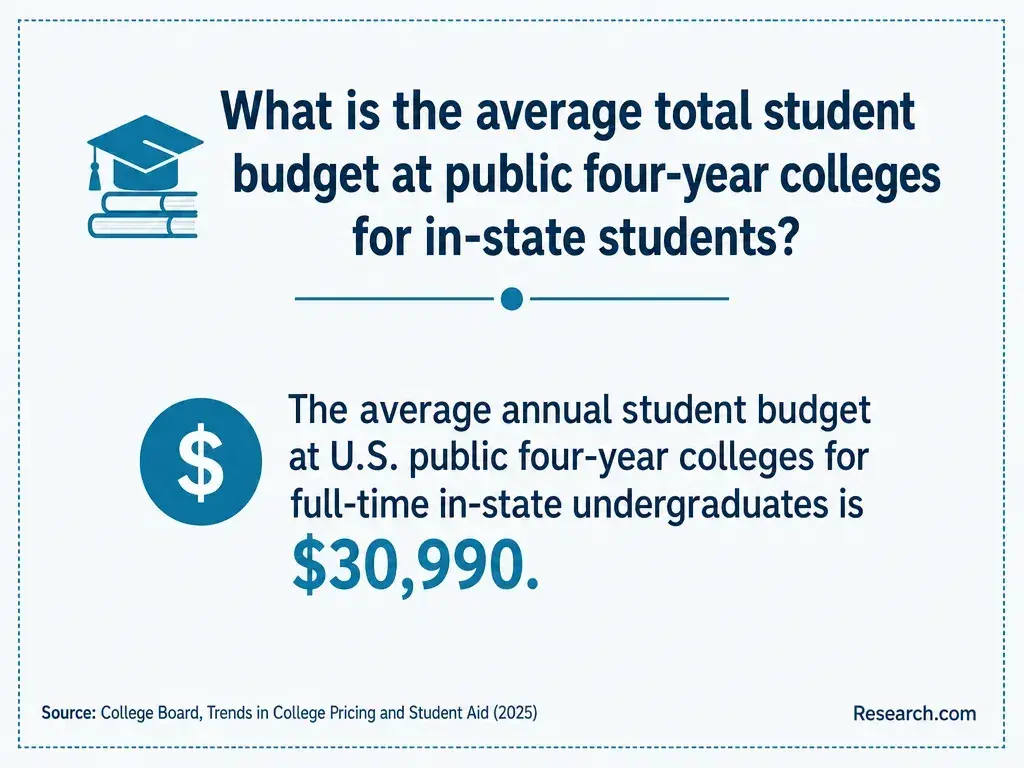
Compare the cost of credits still needed - not just a school's advertised tuition rate. Include mandatory fees, books and technology, possible placement travel, and earnings affected by unpaid fieldwork. Comparing affordable online public health colleges can identify candidates, but only each school's current charges and your approved aid package can establish your likely expense. Ask the financial aid office and VA certifying official how your enrollment pattern, benefit eligibility, and any applicable Yellow Ribbon participation affect the plan; do not assume every veteran receives the same support.
Relevant early-career targets include community health worker, outreach or program assistant, health education support staff, preparedness program assistant, and evaluation or data-support assistant. Depending on the employer, the work may involve arranging referrals, maintaining partnerships, delivering approved health information, tracking activities, or preparing reports. Veterans' organizations are one setting, not the only route: local health departments, nonprofits, health systems, and government contractors may also serve veteran populations.
Military leadership or logistics experience can strengthen an application, especially when paired with civilian fieldwork and a portfolio sample that contains no confidential information. It does not automatically qualify someone for clinical practice, independent epidemiology, or program-director authority. Read job postings for the actual tasks, required credentials, and experience. If a later target role calls for graduate preparation, review online public health master's entry requirements then; an MPH should address a demonstrated career gap, not serve as a default next step.
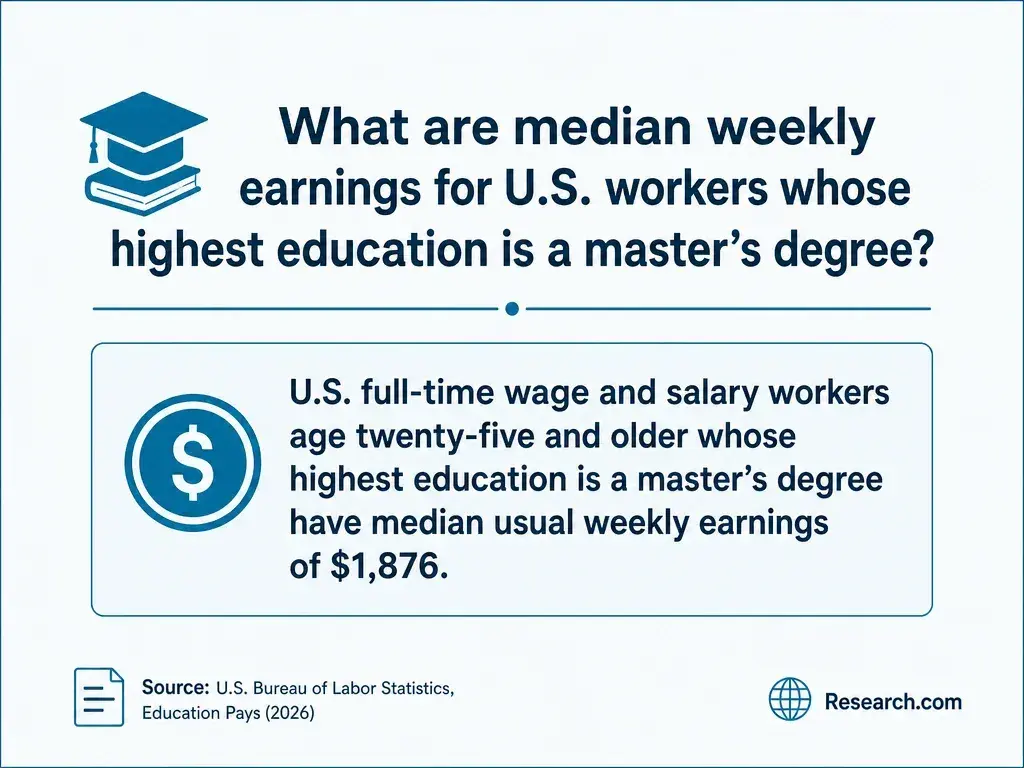
There is no single salary or employment projection for "public health BS graduates." The U.S. Bureau of Labor Statistics reports wages and projected employment for occupations, including community health workers and health education specialists - not for holders of a particular degree. Those occupations differ in typical entry requirements, responsibilities, employer mix, and pay, so a figure for one should not be presented as the likely outcome for the other.
For a useful comparison, select the closest job title from positions you would actually apply for, check its latest BLS Occupational Outlook Handbook wage reference year and projection period, and then examine local postings for pay ranges and qualifications. Public-sector pay scales and nonprofit budgets can further change the picture. Public health master's salary outlook is a separate comparison, not evidence that a bachelor's graduate will receive a master's-level salary.
Which Certifications and Licenses Do Community Health Professionals Need?
A public health BS does not itself award a professional license. Many community program roles are not licensed clinical jobs, but employers or states may specify training or certification for particular duties. Check the position and jurisdiction before paying for an additional credential.
The Certified Health Education Specialist, or CHES, credential has its own eligibility and examination rules; a public health major is not automatic eligibility. Certified in Public Health, or CPH, also has separately defined eligibility pathways. Community health worker certification or registration requirements vary by state. Counseling, social work, nursing, and other clinical services require their own professional qualifications regardless of public health coursework.
If the missing preparation is graduate-level practice or specialization rather than a job-specific credential, types of public health master's degrees can help distinguish that later choice. For the immediate decision, ask prospective employers which credentials they require and whether supervised experience would be more useful than another qualification.
Other Things You Should Know About Public Health
No. Your experience may inform your interests, but you can study and work on veterans' community health without sharing personal medical or service details.
Not without the applicable permissions. Ask the instructor and data-owning organization about access, privacy, and review requirements; a public or appropriately approved aggregate dataset may be a more feasible starting point.
Define the community and program purpose precisely, use available evidence, and seek input through approved partnerships. Avoid assuming that service era, gender, disability status, location, or healthcare access is the same for everyone.
Consider a supervised volunteer or entry-level program role, employer training, or a targeted course. Use the experience to identify a specific skill gap before committing to a bachelor's program.
- CDC Program Evaluation Framework, 2024 | MMWR https://www.cdc.gov/mmwr/volumes/73/rr/rr7306a1.htm
- Federal Policy for the Protection of Human Subjects ('Common Rule') | HHS.gov https://www.hhs.gov/ohrp/regulations-and-policy/regulations/common-rule/index.html
- Health Equity - VA.gov https://www.research.va.gov/topics/health_equity.cfm
- Substance use disorders in military veterans: prevalence and treatment challenges - PMC https://pmc.ncbi.nlm.nih.gov/articles/PMC5587184/
- Care coordination - Community Care | Acquisition Academy https://department.va.gov/vha/community-care/care-coordination/
- Veteran Community Partnerships - National Center for Healthcare Advancement and Partnerships | Veterans Affairs https://www.va.gov/healthpartnerships/vcp.asp
- VA Social Work Allied Health Professions Trainee Program https://www.socialwork.va.gov/education.asp
- Ethics Principles for Access to and Use of Veteran Data | DigitalVA https://digital.va.gov/ethics-principles-for-access-to-and-use-of-veteran-data/
- What Is a Public Health Degree? - American Military University https://www.amu.apus.edu/area-of-study/health-sciences/resources/what-is-a-public-health-degree/
- About the Public Health Major | uiowa.edu https://www.public-health.uiowa.edu/about-the-public-health-major/