2027 Public Health PhD Admissions After an MS in Biostatistics

Co-Founder and Chief Data Scientist
An MS in biostatistics can be strong preparation for a public health PhD, but it does not answer the admissions question by itself. Doctoral programs also evaluate what you want to study, whether you have done research, and whether faculty can supervise the work.
If you are deciding whether to apply, this guide will help you distinguish eligible programs from good research matches, identify gaps in your preparation, and compare the funding and career implications before committing to a doctorate.
Key Things You Should Know
- An MS in biostatistics can meet the degree requirement for many public health PhD programs; admission still depends on each program's prerequisites, research expectations, and faculty fit.
- Choose the doctoral field by the questions you want to investigate: biostatistics PhDs emphasize methods development, while epidemiology, health services, and other public health PhDs may emphasize applying methods to population-health problems.
- Compare written funding terms, supervision, and dissertation feasibility before applying. An advertised online format or a previous master's degree does not establish a shorter, cheaper, or more flexible path.
What Public Health PhD Options Are Available After an MS in Biostatistics?
Your MS gives you quantitative tools; your proposed research question should determine the PhD. A public health PhD trains you to produce original research, whereas a practice-focused DrPH generally centers on leadership and applied public health work. Program names and boundaries vary, so examine dissertation topics rather than choosing by degree title alone.
The distinctions below can help you identify programs worth investigating.
| Doctoral field | Best fit for a biostatistics MS graduate who wants to... | Preparation to examine |
| Biostatistics | Develop, evaluate, or extend statistical methods for health research | Mathematical statistics, computing, and evidence of methodological research |
| Epidemiology | Study disease patterns, exposures, and causal questions in populations | Study design, epidemiologic theory, and subject-area knowledge |
| Health services or health policy research | Investigate care delivery, access, or policy effects | Research design, health systems context, and sometimes economics or qualitative methods |
| Population or social and behavioral health research | Evaluate interventions or study structural and community influences on health | Theory, community-engaged research, and methods beyond statistical analysis |
A second methods-focused master's is rarely the default next step after an MS in biostatistics. If your actual need is a particular computing or applied-methods skill rather than an original research career, compare targeted training or online graduate biostatistics options for professionals with the time required for a PhD.
Can an MS in Biostatistics Meet Public Health PhD Admission Requirements?
Yes, often - but eligibility is not the same as competitiveness. A program that accepts a relevant master's may consider an MS in biostatistics sufficient academic preparation. Another may specify epidemiology coursework, particular mathematics courses, or prior research experience. Only the admitting program can determine how your transcript meets its rules.
Admissions reviewers may see a strong quantitative foundation but still need evidence that you can formulate a public health question, choose a defensible study design, interpret limitations, and sustain independent research. A thesis, research assistantship, substantial analytic project, or carefully explained work product can demonstrate those abilities; a publication is not universally required. Describe your contribution rather than relying on a project title or software list.
Do not treat public health master's conditional admission options as evidence that a PhD will waive missing preparation. Ask the doctoral director whether a gap is disqualifying, can be addressed before enrollment, or can be covered through doctoral coursework.
How Do You Apply to Public Health PhD Programs After Biostatistics?
Begin with research fit, not an application-volume target. Identify a question you could investigate for several years, then examine recent faculty work, available data or partnerships, and the program's supervision model. A faculty member's related publication does not establish that they are accepting students or have funding.
Use the following sequence to turn your MS experience into a credible doctoral application.
- Shortlist programs whose faculty and dissertation expectations match your question and methods interests.
- Check each program's current degree, prerequisite, test, deadline, writing-sample, and recommendation requirements.
- Prepare a research statement that explains a question, why it matters to population health, what your MS prepared you to do, and what you still need to learn.
- Select recommenders who can describe your research judgment and independence, not only your course grades.
- Ask about advisor assignment, available support, and whether proposed data access or community partnerships are realistic.
Master's admissions rules do not transfer automatically to doctoral applications: a guide to MPH admissions without faculty recommendations, for example, cannot establish a PhD program's letter policy. Follow the doctoral program's own instructions, including its required application system.
There is no universal public health PhD prerequisite list. A biostatistics track may expect advanced probability, inference, linear algebra, and programming; an epidemiology track may emphasize study design and causal reasoning; policy or population-health tracks may value economics, theory, qualitative inquiry, or community-engaged research. Programs also differ on whether missing subjects must be completed before admission.
Compare your transcript with both the published admission requirements and the first-year doctoral curriculum. An MS regression course may prepare you for an applied analysis but not necessarily replace doctoral mathematical statistics. Conversely, strong graduate methods work should not be dismissed merely because it was earned outside a school of public health. Request a written assessment when equivalency is unclear.
Foundational public health courses - even shorter course terms for a public health BS - serve a different purpose from doctoral prerequisites. If you lack epidemiology or population-health context, ask whether a specific bridge course would address the gap rather than assuming you need another full degree.
Choose the format that supports the research, supervision, and schedule you actually need. Campus-based study may make regular faculty meetings, research-group participation, teaching, and access to institutional resources easier. A distance-delivered doctorate may reduce relocation needs, but it can still require live seminars, residencies, research meetings, or travel. Confirm whether the exact PhD - not merely another degree at the school - is offered in the advertised format.
If you plan to keep working, obtain a sample term schedule and ask when assistantship duties, required courses, examinations, and advisor meetings occur. Compare any flexible-sounding doctoral option with affordable distance learning public health degrees only after deciding whether your goal truly requires doctoral research; a less expensive online master's is not a substitute for a PhD.
Completion time depends on required coursework, qualifying examinations, proposal approval, data access, research progress, and the dissertation. Your MS may strengthen your preparation without reducing required doctoral credits or milestones. Ask programs for their own completion outcomes for comparable entrants rather than assuming a master's will shorten the degree.
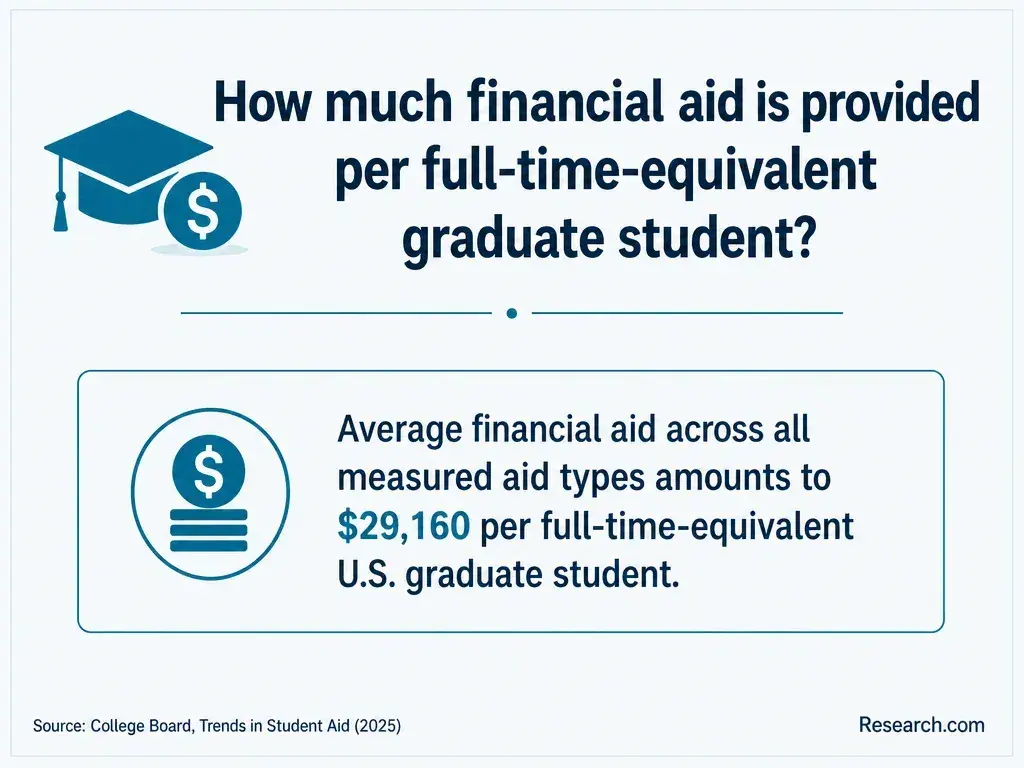
Published tuition alone is a poor measure of doctoral cost. Compare written offers for tuition coverage, mandatory fees, stipend, health insurance, summer support, renewal conditions, assistantship workload, and support after the initial funding period. Include relocation or travel and the earnings you would forgo. An unfunded place can have a very different financial profile from a funded research appointment.
A public health PhD affordability guide can help generate questions, but request a program-specific funding letter before deciding. Clarify whether support is guaranteed for a stated period, contingent on satisfactory progress, or dependent on a grant or available teaching work.
Confirm the university's institutional accreditation, then check whether the school, unit, or program has Council on Education for Public Health (CEPH) accreditation and whether the particular doctoral degree falls within its scope. Institutional accreditation and CEPH accreditation answer different questions; neither proves that a prospective advisor, funding arrangement, or dissertation opportunity is right for you. Use the accreditor's and institution's current records to verify status.
For a research doctorate, quality also depends on faculty availability, mentoring practices, methods training, access to appropriate data, and transparent progression policies. Request the handbook and ask how advisors are assigned, what happens if an advisor leaves, and how long funding continues during dissertation work. Interpret a public health doctoral program selectivity overview as admissions context, not as a measure of research quality or your likelihood of admission.
A public health PhD can prepare you for research-intensive university, government, nonprofit, health-system, or private-sector work. Potential responsibilities include designing studies, developing methods, leading analytic teams, evaluating interventions, securing research support, and communicating findings to decision-makers. Academic faculty positions also depend on publications, teaching, funding, and job availability; the degree alone does not secure one.
Match the doctorate to the work you want to own. If you want to develop biostatistical methods, seek methodological mentorship. If you want to direct population studies, prioritize subject expertise and research design alongside analysis. If your goal is primarily to become an applied analyst or advance in an existing role, compare experience, targeted training, and affordable public health graduate study and earnings before taking on doctoral opportunity costs.
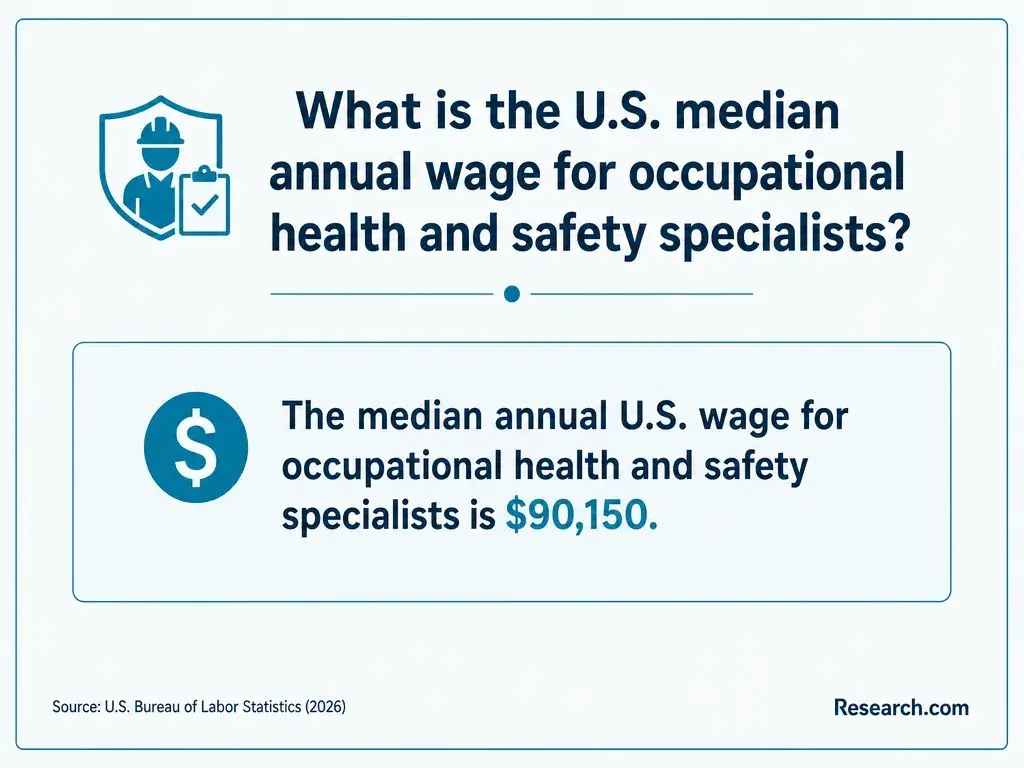
There is no defensible single salary figure for public health PhD graduates. Compensation depends on occupation, sector, location, seniority, and whether a role is academic, government, or industry-based. The US Bureau of Labor Statistics reports wages for occupations such as epidemiologists and statisticians, not for everyone holding a particular public health degree.
Check the current Occupational Outlook Handbook entry for the role you intend to pursue, including its wage reference year and typical entry requirements.
For your own decision, compare realistic jobs available with your MS against jobs for which the PhD would make you more competitive. Weigh the possible change in responsibilities and pay against years of study, funding terms, and lost earnings. Resources on comparing public health tuition and study length can frame that calculation, but published occupational wages are not a promise of a return on your doctorate.
What Certifications and Professional Standards Apply to Public Health Careers?
A public health PhD does not automatically award a professional certification or clinical license. Some jobs may value the Certified in Public Health (CPH) credential; health education roles may specify CHES or MCHES; regulated clinical positions have separate licensing rules. Check the relevant certifying body's current eligibility requirements and the actual job posting before pursuing a credential. Neither a doctoral title nor coursework in a related area establishes eligibility by itself.
Research roles also carry professional obligations that matter more than an optional certificate: reproducible analysis, responsible authorship, secure data handling, and appropriate review of work involving people or restricted information. If credential eligibility is central to your choice, check the scope of CEPH accreditation for the exact degree. Listings of CEPH-accredited distance learning MPH options describe a different degree and cannot establish the status of a school's PhD.
Other Things You Should Know About Public Health
Often, programs accept applications from students completing a degree, but they may require a final transcript before enrollment. Check the program's deadline for degree conferral and explain any remaining thesis or coursework.
Yes, if the program permits a writing sample and you have permission to share the work. Identify your contribution to any coauthored paper and label its publication status accurately.
Many universities have a process, but available supervisors, funding, and timing can constrain a change. Read the doctoral handbook and ask how the program supports students through advisor transitions.
It may be. The university determines degree comparability and whether it requires a credential evaluation or English-language evidence. Ask about those requirements early; admission to a US program does not itself establish visa or work authorization.
- Predicting professional school performance with a unique lens | nih.gov https://pmc.ncbi.nlm.nih.gov/articles/PMC6961370/
- How to Apply | MD-PhD http://mdphd.gpp.nih.gov/prospective-students/how-apply
- PhD in Public Health (Biostatistics) | Rutgers School of Public Health https://sph.rutgers.edu/academics/degree-programs/doctor-philosophy-public-health-phd/phd-public-health-biostatistics
- Research statements for faculty job applications | University of Pennsylvania https://careerservices.upenn.edu/application-materials-for-the-faculty-job-search/research-statements-for-faculty-job-applications/
- Apply to PhD program - Admissions | washu.edu https://publichealth.washu.edu/admissions/apply-phd/
- Ph.D. Program - Admission Timeline | Mayo Clinic College of Medicine and Science https://college.mayo.edu/academics/biomedical-research-training/phd-program/how-to-apply/application-timeline/
- PhD in Public Health Admissions | gmu.edu https://gch.gmu.edu/admissions/phd-public-health-admissions
- Research Experiences to Prepare for Grad School | umich.edu https://me.engin.umich.edu/grad-school-guide/early-undergrad/research-experiences/
- U-M School of Public Health Biostatistics Doctoral Programs | umich.edu http://www1.sph.umich.edu/biostat/programs/phd.html
- Top three tips: Choosing a strong reference for your graduate business school application | Carey Business School blog https://blog.carey.jhu.edu/article/top-tips-choosing-strong-reference