2027 DrPH Admissions After an MS in Epidemiology

Co-Founder and Chief Data Scientist
An MS in Epidemiology gives you substantial analytical preparation, but DrPH admissions committees also look for evidence that you can lead public health work beyond the analysis itself. If you are considering a practice-focused doctorate, the decision is whether your experience, goals, and access to an applied project fit a particular program - not simply whether your master's degree has the right name.
This guide explains how to assess eligibility and competitiveness, compare programs and costs, and decide whether a DrPH would advance the work you want to do.
Key Things You Should Know
- An MS in Epidemiology can meet a DrPH program's graduate-degree requirement; an MPH is not a universal prerequisite.
- Admissions committees may weigh your practice responsibilities, leadership evidence, and project access as heavily as your quantitative training.
- Compare eligibility, competitiveness, and readiness separately: meeting the minimum requirements does not establish that a DrPH is the best next step.
What is a DrPH, and why pursue it after an MS in Epidemiology?
A Doctor of Public Health (DrPH) is generally a practice-focused doctorate emphasizing leadership, policy, implementation, and organizational or population-health improvement. An MS in Epidemiology typically develops deeper expertise in study design, analysis, and interpretation. Together, they can prepare a practitioner to use evidence to guide decisions across a public health organization - not just produce the analysis behind those decisions.
The distinction matters if your goal is to direct surveillance strategy, lead a health department initiative, oversee evaluations, or translate findings into policy and operations. If you primarily want to develop methods, publish original research, or pursue a research-intensive faculty role, a PhD may fit better. Compare the expectations behind both degrees using a public health doctoral degree comparison guide, then inspect individual programs rather than treating the degree labels as interchangeable.
What are the admission requirements for DrPH programs after an MS in Epidemiology?
Requirements vary by school. A program may specify an accredited graduate degree, relevant professional experience, foundational public health preparation, recommendations, a statement of purpose, or an interview. Its policy - not a general admissions checklist - determines whether your MS qualifies and how it counts experience gained before or during the degree.
For an epidemiology applicant, the strongest application connects methods to responsibility. Describe who used your findings, what decisions they informed, whether you managed people or partnerships, and how you handled uncertainty, equity, and data governance. A surveillance analyst who coordinated a cross-agency response, for example, can demonstrate a different scope of practice from one who performed analyses without implementation responsibility; neither job title alone settles the question.
Review each school's published criteria and ask admissions staff to clarify ambiguous terms such as "public health experience" or "post-master's experience." A public health doctoral admissions requirements guide can help you organize those questions, but confirm deadlines, tests, application systems, and exceptions directly with the program before applying.
Does an MS in Epidemiology qualify you for DrPH admission?
Often, yes - but qualification is program-specific. An MS can satisfy a requirement for a relevant master's degree even when it is not an MPH. Some schools may require particular public health foundations or allow applicants to complete identified gaps. Others may place more weight on professional practice than on the precise master's title.
Separate three decisions: eligibility means you meet the published minimums; competitiveness means your experience and goals make a persuasive application; and readiness means you can undertake doctoral leadership work. Before assuming you need another degree, send the program your transcript or course descriptions and ask which, if any, competencies are missing. If an MPH is genuinely required or would address a substantial practice gap, investigate low-tuition online MPH options alongside the cost and time of alternatives the DrPH program accepts.
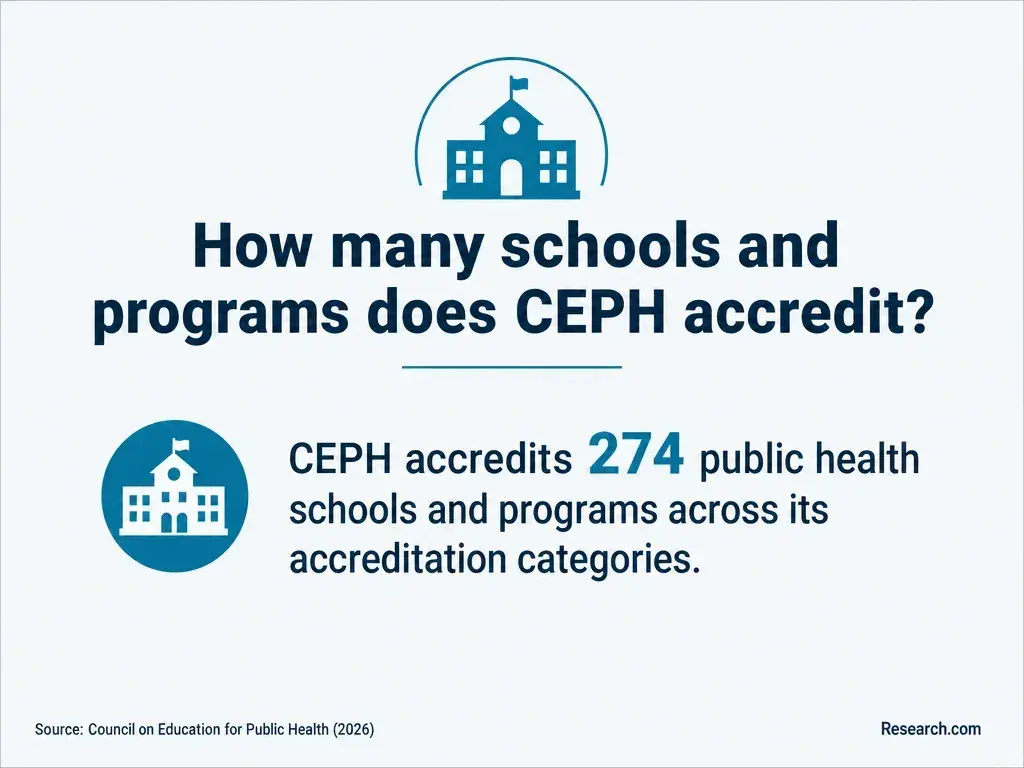
Check institutional accreditation and public health-specific accreditation separately. The Council on Education for Public Health (CEPH) accredits specified schools, programs, and units; a university's accreditation or an accredited degree elsewhere at that university does not, by itself, establish that its DrPH is covered. Verify the current CEPH listing and the degree's status with the school.
Then compare what you would actually study and complete. Ask for the curriculum, doctoral project rules, residency requirements, completion policies, and evidence of support for employed students. An epidemiologist seeking senior practice leadership should look for opportunities to manage partnerships, budgets, and implementation - not merely repeat advanced methods courses. The existence of affordable undergraduate public health study at an institution tells you neither the accreditation scope nor the value of its doctoral program; evaluate the exact DrPH you would enter.
Neither format is inherently better. Online delivery can preserve employment and access to a current practice setting; campus-based study may make in-person collaboration and local partnerships easier. The useful comparison is whether the schedule and project arrangements support your work - not the word "online" on a program page.
Ask how often classes meet live, whether attendance follows a fixed time zone, how many campus visits are required, and whether project meetings or fieldwork must occur during business hours. Confirm whether your workplace can serve as a project site, who must approve it, and what happens if you change employers. A flexible course schedule does not remove travel, supervision, or partner-approval obligations. Include those costs when reviewing epidemiology doctorate aid and affordability comparisons.
DrPH curricula commonly extend beyond epidemiologic methods into leadership, health policy, program design, implementation, evaluation, communication, and organizational change. Exact courses and milestones vary. For someone with an MS in Epidemiology, the most valuable learning may be how to set priorities with community partners, defend a budget, manage a team, and act on imperfect evidence.
Look closely at the culminating work. A practice-focused project may require an organizational partner, faculty oversight, approvals, and a usable product or improvement plan. It is not automatically equivalent to an MS thesis or a PhD dissertation. Ask how the program handles confidential workplace data, partner permission, and review when a project could constitute human-subjects research.
If your goal is narrowly technical - such as learning another modeling approach - targeted training or online graduate biostatistics options for professionals may be more direct than a leadership doctorate.
There is no dependable single timeline or price for DrPH study. Completion depends on enrollment pace, course sequencing, required residencies, and how quickly an approved applied project can proceed. A project delayed by partner approval or data access can extend study even after coursework is finished.
Request a written estimate for your intended pace that separates tuition from mandatory fees, travel, and any charges for continued enrollment while finishing the project. Ask when employer tuition assistance becomes available and whether aid continues during the project stage. An advertised per-credit price is not a total-cost estimate. Use a public health graduate scholarship eligibility guide to frame funding questions, while checking award terms carefully: a scholarship available to master's students may not fund doctoral study.
A DrPH can support advancement toward roles that combine epidemiologic evidence with leadership, such as surveillance program director, public health evaluation leader, health department administrator, or director of population-health initiatives. Responsibilities may include setting strategy, supervising analysts, negotiating partnerships, overseeing budgets, and explaining evidence to decision-makers. Employers typically assess the experience behind the degree as well as the credential itself.
If you want to remain primarily an individual contributor in analysis, additional methods training or increasingly responsible epidemiology work may be a better investment. If you seek a research-intensive academic appointment, compare PhD training and funding expectations - including public health PhD program cost comparisons - before choosing a practice doctorate. Neither pathway guarantees a particular title or promotion.
There is no reliable national salary figure for "DrPH graduates" as a group. Pay depends on the occupation, employer, location, seniority, and responsibilities. The U.S. Bureau of Labor Statistics reports wages and employment projections for occupations such as epidemiologist, not for everyone holding a particular doctorate. A leadership role may also be classified differently from an epidemiologist role.
Use occupation-specific labor data as context, then examine actual job postings and your employer's pay grades for the positions you want. Compare likely compensation with tuition, lost work time, and the experience needed to qualify for those positions. An MPH graduate compensation guide can provide another degree-related perspective, but neither MPH nor DrPH averages should be treated as an offer you can expect after graduation.
Do DrPH graduates need licenses or professional certifications?
A DrPH does not itself confer clinical licensure, and most public health leadership or epidemiology positions do not have a universal DrPH-specific license. A particular job may nevertheless require an existing clinical license, a professional certification, or another credential set by its employer or jurisdiction. Read the requirements of the role you intend to pursue rather than assuming the doctorate satisfies them.
Credentials such as Certified in Public Health (CPH) have their own eligibility and examination rules. Before paying for additional coursework solely to pursue a credential, check the certifying organization's current rules against your MS, prospective DrPH, and professional experience. Undergraduate courses - including intensive online public health bachelor's classes - should not be assumed to substitute for a specified graduate-degree or certification requirement.
Other Things You Should Know About Public Health
Not universally. Relevant practice accomplishments may be more important. Check the program's criteria and present publications, reports, or other work products only in ways that respect employer and data-use restrictions.
Do not assume so. A DrPH project generally must meet that program's own practice, supervision, and approval requirements. Your thesis could help establish preparation or inform a new project.
Only the receiving school can decide. Ask how many credits, if any, can apply to its DrPH and whether transferring them changes required milestones or tuition.
It can help you test feasibility, but an informal conversation is not site approval. Ask the DrPH program when a partner must be identified and what agreements and supervision it requires.
- Analysis of CEPH-accredited DrPH programs in the United States: A mixed-methods study - PMC https://pmc.ncbi.nlm.nih.gov/articles/PMC7861440/
- Curriculum and Concentrations | Johns Hopkins https://publichealth.jhu.edu/academics/drph/curriculum
- Apply (DrPH) | College of Public Health | University of Kentucky https://cph.uky.edu/programs/doctor-public-health/apply
- FAQs | School of Public Health | University of Illinois Chicago https://publichealth.uic.edu/academics/public-health-degrees/drph/faqs/
- Doctor of Public Health (DrPH) | Rutgers School of Public Health https://sph.rutgers.edu/academics/degree-programs/doctor-public-health-drph
- DrPH Public Health Policy & Management Admissions Criteria | Zuckerman College of Public Health https://publichealth.arizona.edu/admissions/graduate/criteria/drph-phpm
- Doctor of Public Health (DrPH) - Rollins School of Public Health | Emory University https://sph.emory.edu/degrees-programs/drph
- DrPH FAQS - School of Public Health https://publichealth.gsu.edu/academics-admissions/drph-faqs/