2027 Choosing MPH Coursework for Applied Infectious Disease Surveillance

Co-Founder and Chief Data Scientist
An MPH can teach infectious disease epidemiology without preparing you to maintain a surveillance system, investigate an unusual signal, or explain findings to a health department. That distinction matters when choosing courses in a field where decisions depend on timely, reliable data. This guide is for prospective MPH students and early-career practitioners who want applied surveillance work. It shows how to assess course depth, build a feasible sequence, find supervised practice, and judge whether a program - or a more targeted training route - fits your goal.
Key Things You Should Know
- Prioritize a sequence of epidemiology, biostatistics, infectious disease methods, and hands-on data management; a course title alone does not establish surveillance competence.
- Choose fieldwork that lets you help define cases, assess data quality, analyze trends, and communicate a finding under supervision - not simply observe an outbreak team.
- Verify the exact MPH's accreditation coverage, course availability, data access, placement support, and total cost before treating an advertised concentration as a career pathway.
What is an MPH in applied infectious disease surveillance?
Applied infectious disease surveillance is the ongoing collection, analysis, interpretation, and sharing of information about infections so public health agencies can decide whether and how to act. Depending on the setting, work may involve case reports, laboratory results, emergency-department signals, or other data sources. Surveillance identifies patterns and potential problems; it does not, by itself, prove what caused an increase.
There is no single, standardized degree called an "MPH in applied infectious disease surveillance." A student may pursue this goal through an epidemiology concentration, infectious disease electives, data-focused coursework, and an approved applied practice experience. Check the degree and concentration actually awarded rather than inferring a specialty from one course.
An MPH generally emphasizes population-health practice. A research-oriented MS may be a better fit for someone seeking deeper methodological research training, while clinical diagnosis and treatment require separate professional qualifications. Readers who are still selecting their first degree can explore distance learning options for public health undergraduates, but a bachelor's curriculum should not be assumed to provide the same surveillance-methods depth as an MPH.
Which MPH coursework prepares students for infectious disease surveillance?
The strongest curriculum builds from defining and measuring disease to handling imperfect data and producing an actionable report. The table distinguishes essential foundations from courses that add depth for particular surveillance jobs; availability and prerequisites vary by school.
| Course area | What to look for | Why it matters in surveillance |
| Core epidemiology and biostatistics | Incidence, prevalence, denominators, study design, uncertainty, and interpretation | Supports defensible comparisons across places, groups, and time |
| Infectious disease epidemiology | Transmission, case definitions, testing limitations, and outbreak investigation | Connects observed patterns to plausible public health responses |
| Surveillance methods | Reporting systems, timeliness, completeness, sensitivity, and signal assessment | Shows how a system's design affects what it can detect |
| Data management and analysis | Cleaning, deduplication, reproducible code, visualization, and secure handling | Turns incoming records into results colleagues can check and use |
| Communication, policy, and ethics | Briefing decision-makers, reporting rules, privacy, and community context | Helps ensure findings are shared accurately and responsibly |
Take introductory epidemiology and statistics before advanced infectious disease or modeling courses when prerequisites require it. Then pair a surveillance-focused elective with data analysis and an applied project. If programming or statistics is a gap, address it early: a short-term course format does not automatically provide more practice. Students building an undergraduate foundation first can compare shorter course terms for a public health BS while checking that the pace leaves room to learn quantitative material.
How do you choose an accredited MPH program for infectious disease surveillance?
Start by confirming both the institution's recognized accreditation and whether the specific MPH falls within the scope of Council on Education for Public Health (CEPH) accreditation. They answer different questions. Check the accreditor's current listing and ask the program to identify the accredited school, unit, or degree; do not assume every degree at an accredited university is covered.
Next, examine the current catalog and recent course schedule - not just a concentration description. Ask whether surveillance and infectious disease electives run often enough for your intended graduation date, who teaches or supervises applied work, and whether students can obtain an approved placement involving real surveillance tasks. Request examples of permissible student deliverables, without expecting access to confidential records. Compare the full pathway: an otherwise appealing program may be a poor fit if the needed elective is irregular or fieldwork cannot accommodate your schedule.
Keep degree types separate when checking program claims. Listings of affordable online public health PhD programs may inform a later research-training decision, but PhD affordability or institutional recognition does not establish an MPH's CEPH coverage or surveillance-course availability.
A well-chosen MPH can teach students to turn a public health question into a consistent case definition, select an appropriate population and time period, calculate descriptive measures, and recognize how delayed reports or changing test practices distort a trend. Students should also learn to assess missingness and duplicate records, document analytic decisions, create readable displays, and explain uncertainty without presenting surveillance patterns as causal proof.
Technical skill is only part of readiness. Surveillance staff coordinate with laboratories, clinicians, community partners, and agency teams; they must follow reporting rules and data-access agreements while communicating findings without stigmatizing populations. An MPH classroom can introduce these responsibilities, but independent judgment develops through supervised work with feedback.
Course depth should match the target role. Routine reporting and descriptive analysis may call for strong applied data skills; developing new statistical methods or directing a research program usually demands further training and experience. Someone considering that later route can investigate online epidemiology doctorate financial assistance, while first asking whether doctoral research is necessary for the work they want to do.
They can be, if students get substantive methods instruction, timely feedback on analysis, and a feasible supervised applied practice experience. Online delivery does not make fieldwork remote, remove live-session requirements, or secure access to agency data. A simulated dataset can teach reproducible analysis, but it cannot fully substitute for learning how a partner agency handles reporting delays, approvals, and operational decisions.
Ask how often classes meet live, which courses use group work, what software and computing support are provided, and whether the school helps arrange local placements. If you work while studying, confirm the actual weekly schedule and when placement activities must occur. When comparing online MPH programs with accessible admissions, assess those training conditions separately from admission difficulty.
Requirements belong to the particular MPH program, not to surveillance as a profession. Programs commonly assess prior college study, academic records, a statement of purpose, and evidence of readiness for graduate work; specific prerequisites, references, tests, and experience policies differ. An unrelated undergraduate major does not automatically rule out admission, but applicants should check whether statistics, biology, or other preparation is required rather than merely recommended.
For a surveillance-focused application, describe a concrete interest - such as improving the interpretation of delayed case reports - and show relevant evidence from coursework, laboratory, clinical, community, computing, or data work. If a prerequisite is missing, ask whether it must be completed before applying, before enrollment, or during the degree. Reviewing conditional public health graduate entry can help frame that conversation, but only the program can confirm an exception or admission condition for your application.
Time to completion depends on the program's credit requirements, full- or part-time enrollment, course rotation, and when an approved practice experience can begin. Build a term-by-term plan that includes prerequisites and the availability of the surveillance electives you actually want. An advertised fast completion time may not apply if a required course or placement is offered later in your sequence.
For cost, request an estimate for your enrollment pattern that separates tuition and mandatory fees from software, travel, campus visits, and any income you may give up for fieldwork. Compare the remaining cost after confirmed aid, not an advertised tuition figure or an assumed scholarship. Explore institutional scholarships for public health graduate students, then verify eligibility, renewal conditions, and whether an award applies to your chosen MPH and study pace.
Coursework can support applications for public health surveillance assistant, data analyst, disease investigation, and epidemiology roles, depending on the employer and the applicant's experience. Early-career staff might check incoming reports, clean data, prepare routine summaries, or support investigations under supervision. Epidemiologists may design analyses, interpret trends, and advise response teams; those responsibilities often require substantial methods preparation and relevant experience in addition to a degree.
Read job postings for tasks rather than relying on titles. A "surveillance analyst" opening might emphasize databases and dashboards, while an "epidemiologist" opening might emphasize case investigation, study design, or statistical analysis. Compare those requirements with your courses and work samples. For someone seeking an entry-level support role rather than a master's-level epidemiology position, affordable shorter online public health degrees or targeted training plus supervised experience may be a more direct route; neither guarantees a particular job.
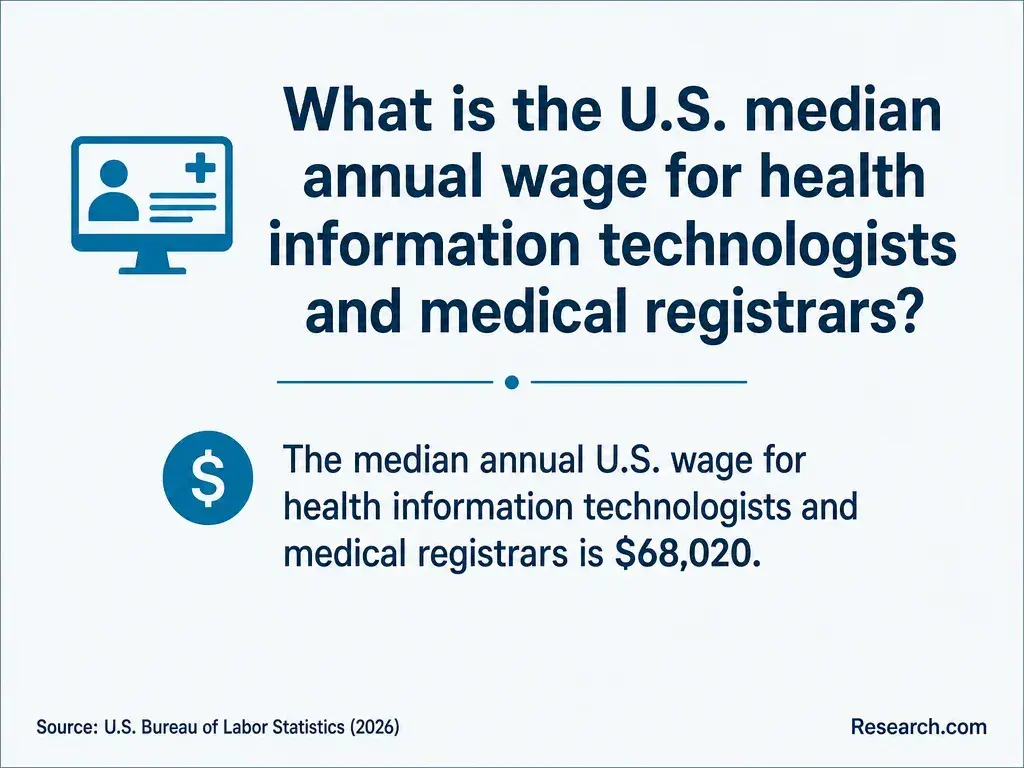
There is no single wage for "infectious disease surveillance professional": the phrase spans support staff, analysts, epidemiologists, and managers in different labor markets. The U.S. Bureau of Labor Statistics' Occupational Outlook Handbook reports occupation-wide pay and employment projections for epidemiologists, a useful reference only when the job's duties and qualifications match that occupation. Its median is not an expected starting salary or a measured outcome for graduates of a particular MPH.
For a financial decision, compare posted pay ranges for the specific roles and locations you would pursue with the degree's remaining cost and any forgone earnings. Account for whether you already qualify for the role without an MPH. The same caution applies to online public health doctorate investment planning: a higher credential is not, by itself, evidence of a higher return in surveillance work.
What certifications and practical experiences support infectious disease surveillance careers?
An approved MPH applied practice experience with a health department, laboratory-connected public health team, health system, or other suitable partner can produce stronger evidence of readiness than another broadly titled elective. Seek a scoped assignment with qualified supervision: for example, documenting a data-quality check, producing a reproducible summary with approved data, and writing a brief that explains limitations and a decision the findings could inform. Site willingness, school approval, supervision, and permission to use or share data are separate requirements.
Public health credentials may complement experience, but an MPH does not automatically award certification, and no general certification substitutes for an employer's required surveillance skills. Check current eligibility and relevance before paying for a credential. If you are building experience before graduate school, a supervisor's assessment and a safely shareable work sample can document your abilities - even if you are considering online graduate public health options without letters. Remove confidential information from any portfolio material and obtain the partner's permission before sharing it.
Other Things You Should Know About Public Health
No. Contact tracing identifies and follows up with people who may have been exposed in a particular investigation. Surveillance monitors information across cases and time to inform broader public health decisions; the activities can intersect.
Not generally. Wastewater measurements can add a population-level signal, but interpretation depends on sampling, laboratory methods, the population served, and other limitations. They answer different questions from individual case reports.
It depends on the data, purpose, and institution's policies. Publicly available summaries, restricted records, and human-subjects research can trigger different permissions or review. Ask the course instructor and data steward before starting.
A useful project may still be possible using approved aggregate, deidentified, synthetic, or process data. Agree on the learning objectives and permitted deliverable with the site and MPH program before accepting the placement.
- A Guide to Establishing Event-based Surveillance | who.int https://iris.who.int/bitstreams/1e38533c-30b3-419e-89b5-94d63b30df6f/download
- Conducting a Field Investigation | Field Epi Manual https://www.cdc.gov/field-epi-manual/php/chapters/field-investigation.html
- Principles of Epidemiology: Home|Self-Study Course SS1978 | cdc.gov https://archive.cdc.gov/www_cdc_gov/csels/dsepd/ss1978/test.html
- Surveillance of Infectious Diseases - PMC - NIH https://pmc.ncbi.nlm.nih.gov/articles/PMC7150019/
- Stages of an outbreak investigation | who.int https://www.who.int/emergencies/outbreak-toolkit/standardized-data-collection-tools/investigating-outbreak-of-unknown-disease
- Back to Basics: Steps of an Outbreak Investigation | ncdhhs.gov https://www.dph.ncdhhs.gov/media/1794/open
- Attributes of Surveillance Systems - UW Sites https://sites.uw.edu/surveillancetoolkit/surveillance-overview/attributes-of-surveillance-systems/
- College of Public Health Competencies - Catalog Home | The University of Oklahoma Health Sciences Course Catalog https://catalog.ouhsc.edu/public-health/bulletin/competencies/
- Outbreak Investigation Steps: A Guide for Epidemiologists | tamu.edu https://public-health.tamu.edu/degrees/mph/blog/outbreak-investigation-101.html
- Epidemiology and Biostatistics: PHB Bulletin | iu.edu https://bulletin.iu.edu/iub/phb/2023-2024/courses/department_courses/epi-and-biostats.shtml