2027 Graduate Public Health Preparation for Tribal Public Health Program Administration

Co-Founder and Chief Data Scientist
Administering a tribal public health program requires more than general management skills. Leaders must work within tribal governance, manage funding and staff, use health information responsibly, and answer to the community the program serves. For tribal health employees, nonprofit professionals, and applicants considering graduate study, the choice is whether a degree will build those capabilities better than targeted training and supervised experience. This guide explains which graduate pathways fit different responsibilities, what to look for in coursework and fieldwork, and how to assess cost, credentials, and career prospects before enrolling.
Key Things You Should Know
- For most prospective program administrators, an MPH with substantial management, evaluation, and community-engaged practice is a closer fit than a research-focused MS; an MPA may fit roles centered on government operations.
- Check both institutional accreditation and whether CEPH accreditation covers the exact public health degree under consideration. Neither establishes that a program teaches tribal governance or offers a tribal partner placement.
- There is no single tribal public health administrator wage reported by the Bureau of Labor Statistics. Compare actual job postings, compensation structures, required experience, and the full cost of study rather than treating a broad occupational median as an expected salary.
What Is Graduate Preparation for Tribal Public Health Program Administration?
Graduate preparation for tribal public health program administration combines population-health practice with the ability to run programs under a tribal nation's laws, priorities, and decision-making processes. The work can involve planning services, supervising teams, administering grants or contracts, evaluating results, coordinating with other governments, and presenting information to tribal leadership. The scope varies by employer: a tribal health department, intertribal organization, urban Indian organization, or outside agency may have different authority and accountability.
Tribal sovereignty is not an elective topic. Administrators need to understand who has authority to approve a project, govern data, set priorities, and represent a community. Consultation with a tribal government is not interchangeable with seeking feedback from individual participants. Federal funding rules also do not replace tribal policies or partner agreements.
A degree is not always the next step. Someone already coordinating programs may benefit more immediately from budget mentorship, grant-management training, and an approved evaluation project. Someone without a bachelor's degree will need to address graduate eligibility first; low-cost public health bachelor's programs online are one possible starting point, though an adjacent accredited bachelor's degree can also support a later graduate application.
What Degrees Prepare Students for Tribal Public Health Administration?
The best degree depends on the work the applicant wants to perform, not whether a program includes "tribal health" in its name. This comparison separates preparation for population-health practice from preparation for government operations or specialized research.
| Pathway | Strongest fit | Potential gap to address |
| MPH | Designing, implementing, and evaluating population-health programs | Depth in tribal governance, budgeting, and supervision varies by program |
| MPA | Public-sector budgeting, personnel, procurement, and organizational management | May require additional epidemiology and community health preparation |
| MHA | Administration of healthcare delivery and clinical operations | May give less attention to prevention programs and tribal public health governance |
| Research-oriented MS | Advanced analysis or a defined research function | May offer less preparation for day-to-day program leadership |
An MPH is often the most direct graduate route when the goal is to lead prevention programs rather than a clinic or research unit. Compare the actual curriculum and fieldwork, however: a management-focused MPA with strong tribal partnerships may serve an experienced health worker better than an MPH without relevant applied opportunities. The overview of MPH and related public health graduate pathways can help applicants distinguish degree labels before examining specific courses.
A graduate certificate can fill a defined gap for someone who already has substantial responsibility. A DrPH is generally a later practice-leadership option; it is not necessary simply to qualify for an initial program coordinator position.
What Accreditation Should Tribal Public Health Graduate Programs Have?
First, verify that the university has recognized institutional accreditation. Then check the Council on Education for Public Health (CEPH) listing for the exact school, unit, or program and degree you plan to enter. University accreditation alone does not establish CEPH coverage for an MPH, and the presence of an accredited degree elsewhere at the university does not establish coverage for every public health offering.
CEPH accreditation evaluates public health education; it does not certify tribal expertise, guarantee a tribal field site, or approve a particular employer's hiring decision. Use online MPH program accreditation comparisons to develop a shortlist, then confirm scope and status directly with CEPH and each school for your intended entry term.
Ask the program to identify faculty or instructors with relevant experience, examples of approved tribal or intertribal practice partnerships, and its process for arranging fieldwork respectfully. A partnership named in promotional materials is not a promise of a placement or permission to use community data.
A useful curriculum joins public health fundamentals to decisions an administrator actually makes. Epidemiology and data literacy help interpret needs assessments; policy and governance clarify authority; budgeting and workforce management support implementation; and evaluation helps determine whether a program is reaching its stated goals. Tribal history, sovereignty, community engagement, and data governance should shape how those tools are used, not appear only in a standalone cultural-content session.
To judge academic depth, look beyond course titles. The following evidence shows whether students can practice the work under appropriate supervision:
- A program plan with a budget, staffing assumptions, and measures chosen with a partner's priorities in mind.
- An evaluation exercise that explains data access, limitations, community review, and who may approve release of findings.
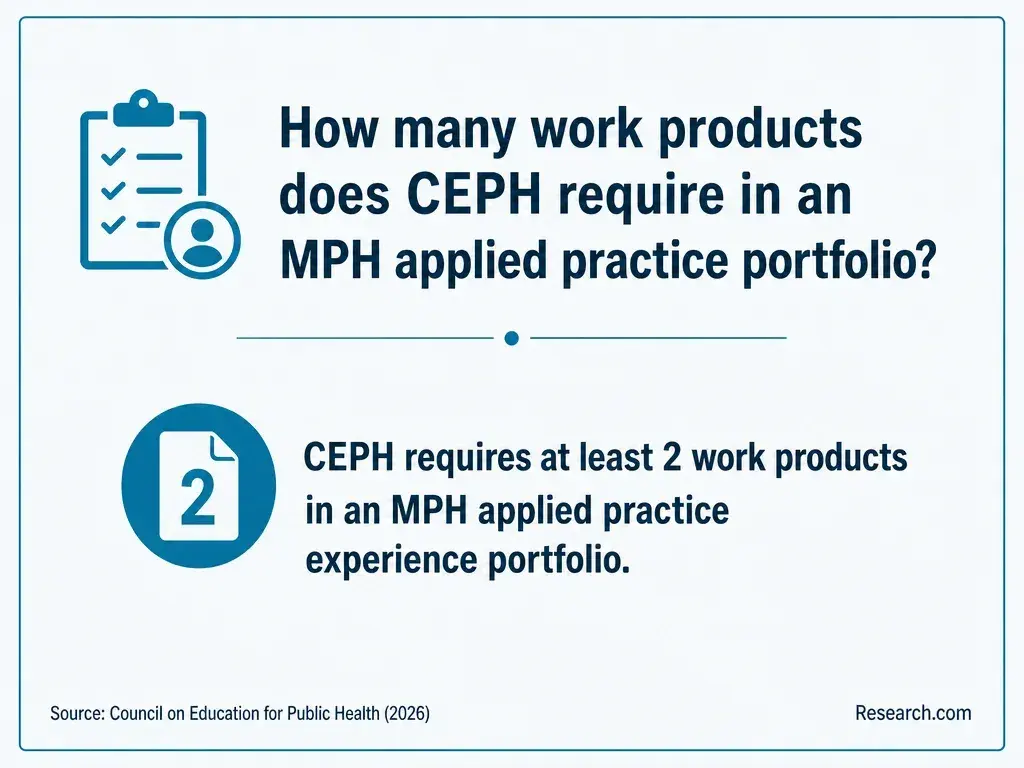
- An applied placement or project with defined responsibilities, a qualified supervisor, and deliverables approved by the school and host organization.
Administrators need to question denominators, missing records, and interpretations, but not every role requires advanced statistical modeling. Applicants seeking a dedicated analyst role should compare methods requirements and online graduate biostatistics options for professionals rather than assume a general MPH elective provides equivalent depth.
Online study can allow a working tribal health professional to remain in their community and apply coursework to local responsibilities. Campus study may offer more scheduled access to faculty and classmates. Neither format is inherently better for tribal public health administration: the decisive issue is whether the student can complete meaningful, approved practice work while meeting community and employer obligations.
Online does not necessarily mean asynchronous. Ask about live class times, group meetings, campus visits, placement travel, and whether an existing job can qualify for applied practice after school approval. Campus applicants should ask the same questions about placement availability and whether relocating would separate them from the community where they intend to work.
For applicants still completing undergraduate study, online public health bachelor's curriculum and formats offer a separate comparison; undergraduate flexibility should not be assumed to carry over to an MPH's fieldwork or live-session requirements.
Requirements differ by school and degree. Applicants should confirm the acceptable bachelor's credential, any minimum GPA or prerequisite coursework, required statements and references, application system, deadlines, and whether work experience is required or simply valued. Statistics may be required, recommended, or taught within the program; no single prerequisite rule applies to all MPHs, MPAs, or MS degrees.
For this career goal, a strong application connects prior responsibilities to future program work. Describe a budget, outreach effort, reporting process, partnership, or supervised evaluation accurately, including your own role and what you still need to learn. Community experience can be compelling evidence of fit, but it does not automatically replace an official admission requirement.
If former faculty are unavailable, ask each school what kinds of professional recommenders it accepts before applying. Guidance on MPH application options without academic references can help frame that inquiry; it is not a substitute for checking the program's current rules. Applicants with uneven grades should likewise ask whether recent coursework or an explanation of academic circumstances can be considered.
Completion time depends on required credits, course sequencing, enrollment pace, and the timing of an approved field placement. A faster advertised course schedule does not necessarily shorten a degree if key courses run infrequently or a community partner needs time to approve a project.
Compare a written cost estimate for tuition and mandatory fees with the expenses that determine whether study is feasible: travel or residency visits, placement time away from paid work, books or software, and any extra terms needed to finish. Ask whether employer education assistance applies to the specific degree, requires continued employment, or is paid only after successful course completion. Do not count an unconfirmed award as savings.
Applicants who must complete a bachelor's degree first should budget that stage separately. Accelerated courses in public health bachelor's study may change scheduling, but they do not remove graduate admission requirements or guarantee an earlier MPH completion date.
Relevant positions may include program coordinator, health educator, grant or evaluation specialist, preparedness coordinator, and - after appropriate experience - program manager or health department leader. Duties matter more than titles: one coordinator may oversee a grant budget and staff, while another primarily schedules activities and prepares reports.
An MPH graduate with limited management experience may enter through implementation or evaluation work and build evidence of responsibility before seeking a director role. Someone already supervising services may use graduate study to strengthen analysis, policy, and organizational planning. In either case, review job postings from the intended employer for experience requirements and any applicable hiring preferences; a degree alone does not confer leadership authority.
Experienced practitioners considering doctoral study should first decide whether advanced practice leadership is necessary for their goal. A public health doctoral admissions comparison is a starting point for exploring options, not evidence that a doctorate is needed - or that admission is assured - for tribal program administration.
There is no single Bureau of Labor Statistics occupation called "tribal public health administrator," so a national median cannot reliably describe this career. Depending on actual duties, a position might be compared with BLS categories covering health education specialists, medical and health services managers, or other occupations. Those categories include many employers and settings outside tribal public health; their wages and projections are not MPH graduate outcomes or a tribal employer's pay scale.
For a useful estimate, compare posted pay ranges for the specific role and region, then account for benefits, contract or grant funding, supervisory scope, and the employer's compensation policy. Job prospects also depend on funding continuity and experience with the program's population and operations. If considering a later doctorate, assess the added cost against an actual role requirement rather than assuming a salary increase; examples of employer tuition support for epidemiology doctorates do not establish that a tribal employer will fund a doctorate or reward one in an administrative position.
Which Certifications and Competencies Support Tribal Public Health Careers?
Public health credentials can demonstrate additional preparation, but none substitutes for understanding the employing nation's governance or for experience managing a program. The Certified in Public Health (CPH) credential may be relevant to broad public health practice; CHES or MCHES may fit roles with substantial health education responsibilities. Check each certifying body's current eligibility and maintenance rules, and check the employer's posting before paying for an exam. An MPH does not automatically award a certification or clinical license.
Prioritize demonstrable competencies: preparing a defensible budget, interpreting program data, managing grants and reporting, supervising staff, communicating across partners, and following tribal and organizational rules for data access and release. If an applicant's immediate barrier is graduate admission rather than a job credential, a certification may not address it. For example, MPH applications after uneven undergraduate grades call for checking the school's academic policies and presenting evidence of current readiness.
Before enrolling, identify one target role and compare its posted duties with your existing work, the degree's required courses, and a field project you could realistically undertake with approval. That comparison reveals whether a full graduate degree, supervised responsibility, or focused training is the better next investment.
Other Things You Should Know About Public Health
Not every position has the same eligibility rules. Review the specific employer's hiring policy and posting, including any applicable preference, rather than assuming either universal eligibility or a universal membership requirement.
Only after confirming who controls the data and obtaining the permissions required by the tribal government or organization, school, and any applicable review process. Access for work purposes does not automatically authorize academic use or publication.
Possibly, but the school must approve the site, supervision, learning objectives, and deliverables. Routine job duties may not satisfy its applied practice requirements without a distinct, approved project.
Examine the actual coursework, faculty experience, partner relationships, and project approval process. A well-supported individual pathway may be more useful than a concentration label without relevant supervised practice.
- Tribal Self-Governance | Fact Sheets https://www.ihs.gov/newsroom/factsheets/tribalselfgovernance/
- 260. Research Involving American Indian Tribes and Communities | Research Integrity & Security https://www.unr.edu/research-integrity/program-areas/human-research/human-research-protection-policy-manual/260-research-involving-american-indian-tribes-and-communities
- The Practicum - Experiential Learning | Master of Public Health https://mph.uconn.edu/experiential-learning/
- Tribal Health Care Administration, GCRT - OSU online degrees https://osuonline.okstate.edu/programs/certificates/tribal-health-care-administration
- Tribal Data Sovereignty | Columbia University Mailman School of Public Health https://www.publichealth.columbia.edu/research/programs/columbia-university-northern-plains-superfund-research-program/about/tribal-data-sovereignty
- ADHS and Tribal Nations Advance Indigenous Data Sovereignty Policy | Native Nations Institute https://nni.arizona.edu/news/adhs-and-tribal-nations-advance-indigenous-data-sovereignty-policy
- Indigenous Public Health, Certificate - JHU catalogue https://e-catalogue.jhu.edu/public-health/certificates/indigenous-public-health/
- Seven Resources to Strengthen Strategic Planning and Grants Management in Public Health https://www.phinfrastructure.org/resource/strengthening-organizational-competencies-in-strategic-planning-and-grants-management/