2027 Graduate Public Health Preparation for Refugee Health Program Coordination

Co-Founder and Chief Data Scientist
Refugee health program coordination calls for more than knowledge of public health: coordinators must connect clinical services, community partners, interpreters, and resettlement organizations without losing sight of privacy or the priorities of people they serve. If you are considering graduate study for this work, the best choice depends on your existing experience and the responsibilities you want next.
This guide explains what the role involves, when an MPH is worthwhile, which training and field experiences matter, and how to compare programs against realistic career and financial goals.
Key Things You Should Know
- An MPH can prepare you to design and evaluate refugee health services, but relevant community experience and supervised coordination work may matter more than the degree for an initial coordinator position.
- Choose coursework and fieldwork around referral systems, interpretation access, program evaluation, and partnerships. A program labeled "global health" is not necessarily focused on US refugee services.
- Compare the full cost and scheduling demands of graduate study with your target employer's requirements. An MPH does not provide clinical licensure, certification, or a guaranteed coordinator salary.
What does a refugee health program coordinator do?
A refugee health program coordinator helps organizations make health services accessible and workable for people who have arrived in the United States through refugee resettlement or related pathways.
The position may sit in a health department, clinic, resettlement agency, or community organization. Its scope depends on the employer: some coordinators organize referrals and follow-up, while others oversee grants, partnerships, staff, and evaluation.
Typical work includes coordinating appointments and interpretation, maintaining referral relationships, explaining service processes to partners, tracking whether people can access services, and reporting program activities.
Coordinators should distinguish a missed referral from a lack of interest: transportation, scheduling, language access, eligibility rules, and trust can all affect participation. They also need to protect confidential information and work with communities rather than treating them as a single group with uniform needs.
This is generally a program role, not permission to diagnose, provide therapy, or practice nursing. Someone starting in navigation or outreach may find that experience and an undergraduate qualification are a more direct first step than graduate school.
For readers who still need a bachelor's degree, online bachelor's study in public health is one possible foundation, subject to the employer's actual requirements.
What degree is best for refugee health program coordination?
An MPH is often the strongest graduate fit when the goal is to plan, manage, and evaluate population-health programs. It is not automatically the best next credential. Match the degree to the work you want to own, not simply to the population a program says it serves.
The distinctions below help separate public health coordination from clinical practice, direct social services, and agency administration.
| Pathway | Best fit | Important limit |
| MPH | Population-health planning, partnerships, evaluation, and health systems work | Does not confer clinical licensure or replace local service experience |
| MSW | Social work practice and, with the applicable pathway, clinical social work | Not a substitute for population-level evaluation or health department training |
| MPA or MHA | Public-agency operations or healthcare administration | May offer less preparation in community health and epidemiology |
| Targeted training plus experience | Building skills for an existing outreach, navigation, or coordinator job | May not meet an employer's graduate-degree requirement |
If you already coordinate services in a nonprofit, ask whether your next role requires evaluation and public health leadership or whether mentorship, a methods course, and responsibility for a supervised project would close the gap.
If you are comparing MPH concentrations, use public health master's fields of study to narrow the options, then inspect each school's actual courses and field partners. A "global health" label alone does not establish preparation for US resettlement systems.
What education and training are required for refugee health coordinators?
There is no single degree or license required for every job titled refugee health coordinator. Employers set qualifications according to the duties: a navigation-focused position may value community service and language skills, while a role managing budgets, contracts, and evaluation may prefer graduate preparation and substantial program experience. Review several actual job descriptions in your target location before committing to a degree.
Whichever route you choose, seek training in interpretation and language access, confidentiality, trauma-informed and culturally responsive practice, referral workflows, and the boundaries between coordination and clinical advice.
Learn how the local health department, providers, and resettlement organizations divide responsibilities. Language proficiency can help, but it does not replace a qualified interpreter when one is needed for a particular service.
If you have relevant work but lack a bachelor's degree, complete that eligibility step before planning an MPH. If you already have a bachelor's, you do not necessarily need another undergraduate degree or a public health major to apply to an MPH. Meanwhile, for students with incomplete admission materials, consider exploring online public health master's no-letter application paths.
Both online and campus-based MPH study can support this goal, but delivery format is less important than access to appropriate applied work.
An online student may be able to complete coursework remotely while arranging an approved experience with a local clinic, health department, or community organization. A campus program may offer established regional partners, but it does not guarantee a suitable placement.
Compare programs on the details that affect your week: live-class times, group projects, required campus visits, placement approval, supervision, and whether your current workplace could host an applied experience.
Online does not necessarily mean asynchronous. Working students should also ask when site meetings occur and whether the program permits a manageable part-time pace.
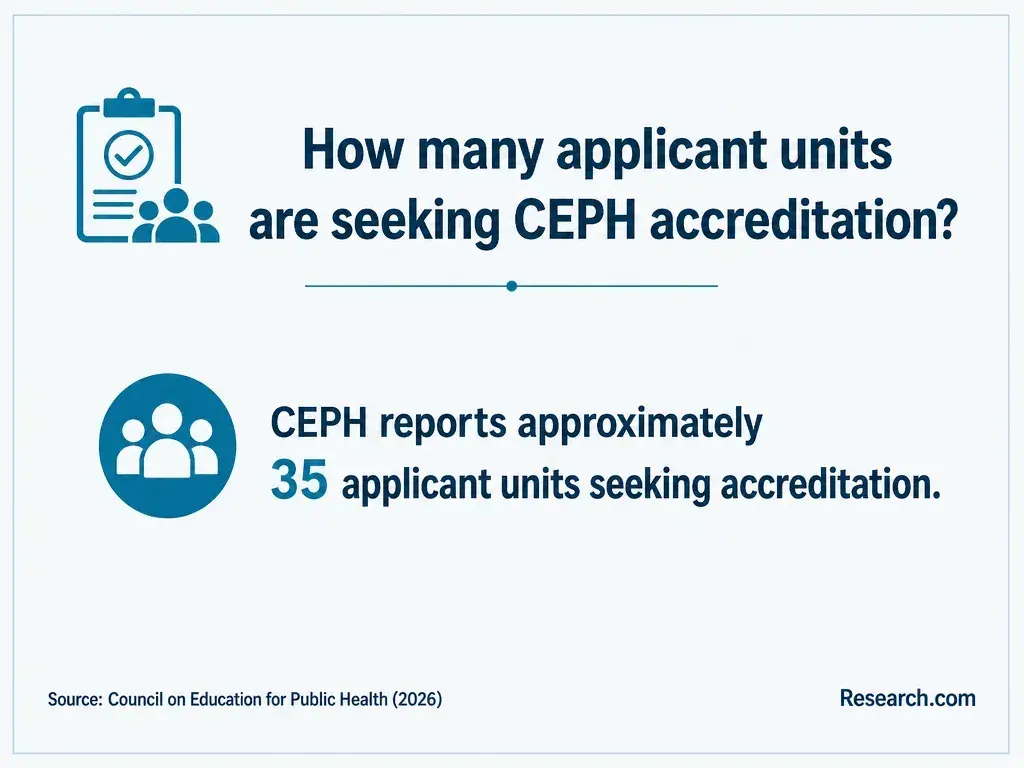
When reviewing online MPH admission options for varied backgrounds, separate ease of admission from suitability for refugee health work. Check the exact degree's public health accreditation status and scope with the Council on Education for Public Health (CEPH), as well as institutional accreditation, rather than assuming one establishes the other.
Prioritize courses that help you make specific program decisions. Epidemiology and biostatistics support interpretation of community health data; program planning and evaluation help you define services and assess whether referrals work; health policy and management clarify eligibility, budgets, and accountability. Community engagement, qualitative methods, and health communication are especially useful when service users and partners identify different barriers.
A practical sequence is to build basic data and systems literacy first, then use electives and supervised work to address a real coordination problem. For example, an approved student project might map a referral process, propose measures for timely follow-up, and identify where interpretation is needed. Any use of client-level information would require the site's permission and applicable privacy and academic review; a student should not assume access to records.
Check whether the courses you want are required, regularly offered electives, or part of a formally named concentration. If a prerequisite is missing, ask the program when it must be completed; guidance on applying to an MPH with incomplete prerequisites can help frame that conversation, but only the school can confirm its policy.
MPH applicants generally need an eligible bachelor's degree, but prerequisites, grades, recommendations, tests, and experience expectations vary by program. A public health major is not universally required.
Experience in resettlement, community health, interpretation access, care navigation, or nonprofit operations can demonstrate fit when an application explains your responsibilities and what you learned.
Build an application around evidence rather than a broad statement of commitment: identify a coordination problem you have observed, the skills you used, and the methods you need to learn. If your academic record is uneven, ask how the program evaluates later coursework and relevant experience.
MPH applications after uneven undergraduate grades offers a starting point for that preparation. Confirm requirements on the program's current admissions page, including any transcript evaluation for education completed outside the United States.
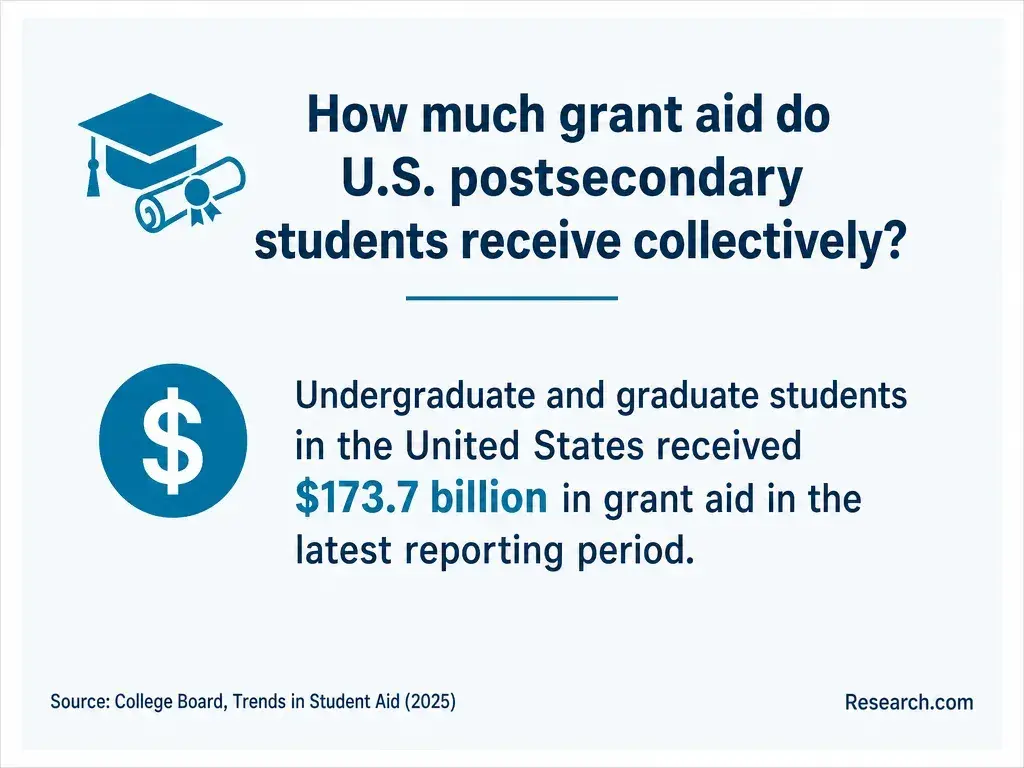
Time and cost vary with credit requirements, enrollment pace, tuition rules, and whether you must arrange fieldwork around a job. Full-time study is commonly planned over about two academic years, but that is not a promise of completion time for a particular MPH. Part-time study can spread tuition payments while extending the period before you can use the credential to pursue a new role.
For a useful comparison, request each school's current total-credit requirement and per-credit or program tuition, then add mandatory fees, travel or campus visits, placement expenses, and any earnings you would give up.
Ask whether employer tuition assistance applies and whether a placement at your workplace is permitted. Do not assume an advertised tuition figure covers the entire degree.
Look into low-tuition online MPH options as well to save on expenses. If you do not yet have a bachelor's, include that step in the timeline rather than comparing MPH prices in isolation.
An MPH can support applications for program coordinator, health department program specialist, community health program manager, or evaluation-focused roles with organizations serving newcomers.
The match depends on your experience: an MPH graduate with supervised partnership and reporting work may be better prepared for coordination than a graduate whose experience is entirely classroom-based. Senior management still usually calls for demonstrated responsibility over people, budgets, contracts, or programs.
Look beyond job titles when building a portfolio. Useful evidence includes a privacy-safe referral workflow, an evaluation plan, a partner-training resource, or a report explaining how you defined and checked program measures. Obtain permission before sharing workplace materials, and remove confidential information.
Public health doctoral admissions comparisons are relevant only if later goals genuinely call for advanced practice leadership or research; a doctorate is not a standard next step for becoming a coordinator.
There is no single reliable US salary figure for "refugee health coordinator." The title spans outreach, health education, grant administration, and program management, and compensation varies by employer, location, funding, and responsibility.
US Bureau of Labor Statistics figures for health education specialists or community health workers can provide occupational context when a posting closely matches those duties, but their occupation-wide wages are not an MPH graduate salary or a refugee-health-specific pay rate.
For a decision you can act on, compare posted pay ranges for local jobs you could realistically obtain now with ranges for jobs requiring the experience and degree you expect to have after study. Include benefits and the cost of leaving or reducing work.
If the immediate goal is an entry-level community role, compare graduate tuition against public health undergraduate tuition comparisons and relevant work-based training before assuming the MPH will pay for itself.
What certifications and standards support refugee health careers?
Helpful standards come from several places, but none is a universal refugee health coordinator license. Employers may value training in confidentiality, language access, emergency preparedness, or program evaluation.
The Certified in Public Health (CPH) credential and health education credentials such as CHES can be relevant to particular roles; verify current eligibility with the certifying organization and check whether employers actually request them.
Professional standards also shape everyday practice. Use qualified interpretation when appropriate, follow the employer's privacy and data-sharing rules, and establish who can approve outreach, referral changes, and reports.
If an MPH program advertises CEPH accreditation, verify that the accreditation covers the school or program and degree you would enter. A certification, an accredited degree, and clinical licensure are distinct qualifications.
More education is not automatically the next credential to pursue. If you are considering a doctorate for a future leadership role, assess the responsibilities it would help you take on before using a public health doctorate career value guide to explore that separate decision.
Other Things You Should Know About Public Health Programs
Possibly. The MPH program must approve the site, supervisor, learning objectives, and deliverables. Ask whether a project distinct from your normal duties is required before relying on your job as a placement.
Not necessarily. Language skills can strengthen your work, but programs also need reliable interpretation processes. Check the job posting and never substitute informal language ability for required qualified interpretation.
Not without the relevant organization's permission and any required privacy, data-use, and academic approvals. A process map or evaluation plan using no identifiable client data may be a safer starting point.
Ask the program which organizations have hosted recent students, what work students were permitted to do, and who supervised them. Confirm opportunities directly; a listed partnership does not guarantee an available placement.
- Refugee Health | Health & Human Services https://hhs.iowa.gov/health-prevention/refugee-health
- Your Rights Under HIPAA | hhs.gov https://www.hhs.gov/hipaa/for-individuals/guidance-materials-for-consumers/index.html
- Health Communication with Refugee, Immigrant, and Migrant Communities | CDC Yellow Book https://www.cdc.gov/yellow-book/hcp/refugees-immigrants-migrants/health-communication-with-refugee-immigrant-and-migrant-communities.html
- Balancing confidentiality and care coordination: challenges in patient privacy - PMC https://pmc.ncbi.nlm.nih.gov/articles/PMC11328515/
- CLAS Standards - Think Cultural Health - HHS.gov https://thinkculturalhealth.hhs.gov/clas/standards
- Barriers to Immigrants' Access to Health and Human Services Programs | ASPE https://aspe.hhs.gov/reports/barriers-immigrants-access-health-human-services-programs-0
- Data policy | who.int https://www.who.int/about/policies/publishing/data-policy
- Refugee health information for health care and public health professionals | Mass.gov https://www.mass.gov/info-details/refugee-health-information-for-health-care-and-public-health-professionals
- Master of Public Health | UCLA Fielding https://ph.ucla.edu/degree-programs/master-public-health