2027 Public Health PhD Research: Studying Adaptation Without Losing Intervention Fidelity

Co-Founder and Chief Data Scientist
A public health intervention may need different language, delivery schedules, or staffing to work in a new community. Change too much, however, and researchers can no longer assume it delivers the mechanism that made it promising.
For prospective PhD students, studying that tension requires more than an interest in implementation science: it requires a feasible research question, access to partners and data, and a supervisor who can support the methods. This guide explains how adaptation and fidelity are studied and how to judge whether a doctoral program can support that work.
Key Things You Should Know
- Fidelity does not mean identical delivery. preserve an intervention's essential functions while testing whether changes to language, setting, staffing, or format affect how those functions operate.
- Measure both the change and its consequences. document what changed, why, who decided, and when; then assess relevant delivery, reach, participant experience, and outcomes rather than relying on a single fidelity score.
- Choose a PhD for the research infrastructure. faculty fit, partner access, ethical oversight, methods training, and written funding terms matter more than an implementation-science label alone.
What Is Public Health PhD Research on Adaptation and Intervention Fidelity?
Adaptation is a deliberate change to an intervention or its delivery to improve fit with a population, organization, or setting. Intervention fidelity concerns whether the intervention's intended functions are delivered as designed. A public health PhD researcher might investigate which changes preserve those functions, which improve uptake, and which alter the intervention so substantially that its effectiveness must be reconsidered.
Consider an illustrative community-based hypertension education program. Translating materials or offering evening sessions may improve access while preserving its intended educational and self-management functions. Omitting the supported goal-setting activity could affect a function the program depends on. That distinction is a hypothesis to investigate, not proof that any particular change is safe or harmful.
The table separates concepts that are often collapsed into one "fidelity" measure. The relevant measures depend on the intervention's theory and the study question.
| Concept | Question it answers | Possible evidence |
| Core function | What must the intervention accomplish to operate as intended? | Program theory, prior evidence, and partner input |
| Adaptable form | How can that function be delivered in this setting? | Materials, workflow descriptions, and adaptation records |
| Fidelity | Were the intended functions delivered? | Observation, records, or participant reports |
| Implementation and outcomes | Who received it, how was it experienced, and what followed? | Reach and participation data, interviews, and appropriate outcome measures |
A PhD is appropriate when the goal is to generate generalizable knowledge about such questions, not simply to implement a local program. Someone still building an undergraduate foundation may explore intensive online public health bachelor's classes, but an accelerated schedule does not replace supervised research experience or make a particular major a universal PhD prerequisite.
How Do Public Health Researchers Adapt Interventions Without Losing Fidelity?
Researchers first specify the intervention's proposed mechanism and distinguish essential functions from features that can vary. They then make adaptations visible and testable rather than treating every departure from a manual as either a failure or an improvement. Frameworks such as FRAME and FRAME-IS can help describe modifications, but choosing a framework does not establish that fidelity was maintained.
A defensible dissertation plan usually follows this sequence:
- Define the population, setting, intervention, comparison, and outcomes; state which functions are hypothesized to produce benefit.
- Work with delivery staff and community partners to identify needed changes, their reasons, decision-makers, and timing.
- Record planned and unplanned modifications, including changes to content, delivery, staffing, and organizational workflow.
- Measure fidelity to essential functions alongside reach, acceptability, and outcomes using measures appropriate to the study design.
- Analyze who received which version and when; examine alternative explanations before attributing outcome differences to an adaptation.
For example, if evening sessions reach more participants, improved reach does not itself show that the intervention's active functions were delivered or that health outcomes improved. Staff turnover, differences between sites, incomplete records, and participants' reasons for attending can complicate interpretation. Researchers should arrange permissions for observation and data use, determine applicable institutional review requirements, and agree with partners on what may be reported before collecting data.
A prospective student who primarily wants to learn program evaluation may not need a dissertation. Where graduate preparation is the immediate gap, conditional entry into public health master's programs is one possibility to investigate; any conditions and available methods courses must be checked with the program.
What Are the Admission Requirements for a Public Health PhD?
Requirements vary by university and field. Programs commonly assess prior academic work, statements of research interest, recommendations, and evidence of preparation for doctoral methods. Some expect a relevant master's degree; others admit applicants with a bachelor's degree. A publication, thesis, GRE score, MPH, or particular software package should not be assumed to be universally required.
For adaptation-and-fidelity research, readiness is more specific than eligibility. Useful evidence includes quantitative or qualitative methods work, experience evaluating an intervention, a clear account of an unresolved implementation question, and evidence that the applicant understands partnership and data-access constraints. Applicants from clinical, social science, computing, or other backgrounds can explain how their existing skills support the proposed research and where they need further training.
Before applying, compare faculty publications and current projects with the question you want to study. Ask the graduate director whether applicants need to identify a supervisor, how advising assignments work, and whether the faculty member has capacity to supervise the proposed methods. Guides to online public health doctorates by admissions accessibility may help identify programs to investigate, but easier entry is not evidence of dissertation fit, funding, or research access.
Relevant doctoral training may span intervention theory, implementation frameworks, causal inference, mixed methods, qualitative interviewing, measurement, study design, and community-engaged research. Course titles alone reveal little about depth. A student studying fidelity needs opportunities to define constructs, assess whether measures capture the intended functions, distinguish implementation outcomes from health outcomes, and explain uncertainty in the results.
Ask to see the current course sequence and recent dissertations, then identify who teaches advanced methods and whether research assistantships provide supervised experience with intervention data. If the program lacks a dedicated implementation-science course, faculty projects and cross-departmental coursework may still provide strong preparation; the reverse is also true of an appealing course catalog without an available supervisor.
For someone seeking applied literacy rather than an independent research career, an MPH with appropriate evaluation coursework may be a better-sized commitment. Options such as online MPH study without reference letters address a different admissions obstacle; verify both the application policy and the actual depth of implementation-science training before treating one as an alternative.
Delivery mode alone cannot establish research quality. An online PhD can support strong scholarship when students have sustained supervision, suitable methods instruction, research-team participation, and authorized access to a setting or dataset. A campus program does not automatically provide those things. For adaptation research, the decisive issue is whether the student can observe implementation, collaborate with partners, and obtain feedback throughout the dissertation.
Ask about required live sessions, campus visits, research meetings, local fieldwork, time-zone expectations, and who arranges partner access. Students balancing work or caregiving should also check whether milestones and assistantship duties permit their intended pace. Compare written funding terms across formats; lower travel demands do not establish a lower total cost. If an MPH is a viable alternative, online MPH net tuition after scholarships provides a separate comparison to investigate, not an estimate of PhD funding.
A PhD involves coursework and research milestones followed by dissertation work; the time needed depends on program rules, enrollment pace, study design, recruitment or partner timelines, and access to usable data. Adaptation research can face delays when sites change procedures or approvals take longer than expected. Ask for the program's published completion data and milestone policies rather than planning around its shortest advertised timeline.
Compare net financial commitments, not tuition alone: required fees, health coverage, travel, software, research costs, summer support, and earnings forgone may all matter. A funding offer should state the duration and amount of support, tuition coverage, required teaching or research work, renewal conditions, and what happens after funded years end. For an initial comparison, public health PhD tuition comparisons can identify questions to bring to universities; published tuition is not the same as a funded student's cost.
Confirm that the university holds recognized institutional accreditation. Then check the Council on Education for Public Health (CEPH) listing for the specific accredited school, unit, or program and whether the degree under consideration falls within its scope. Institutional accreditation and CEPH accreditation answer different questions; neither establishes that a particular adviser can support an adaptation study.
For this research interest, compare prospective programs on recent faculty work, committee expertise, methods courses, access to implementation partners, dissertation policies, and written funding arrangements. Ask who controls the proposed data, whether a partnership survives a faculty departure, and what happens if recruitment or site access fails. A program's record with community-engaged dissertations may be more informative than the presence of "implementation" in a concentration title.
Students considering a master's first can use information on public health master's programs accredited by CEPH to examine that distinct pathway. They should still verify the exact degree's accreditation scope and whether its faculty and courses build the research skills needed for a later PhD.
Relevant roles include university research and teaching, research-scientist positions in health systems or nonprofits, and evaluation or implementation research in government and other organizations. Responsibilities may include designing studies, securing funding, supervising analysis, publishing findings, and helping partners interpret evidence. Hiring depends on methods expertise, publications or other research outputs, collaboration, and the employer's needs - not the degree title alone.
A PhD is most defensible when the desired role requires leading an independent research agenda. Someone who wants to coordinate delivery or conduct routine program monitoring may progress more directly through supervised evaluation work, an MPH, or targeted methods training. Compare those routes using public health degree cost and duration comparisons, then check actual job descriptions: a shorter degree is valuable only if it develops the skills the target role requires.
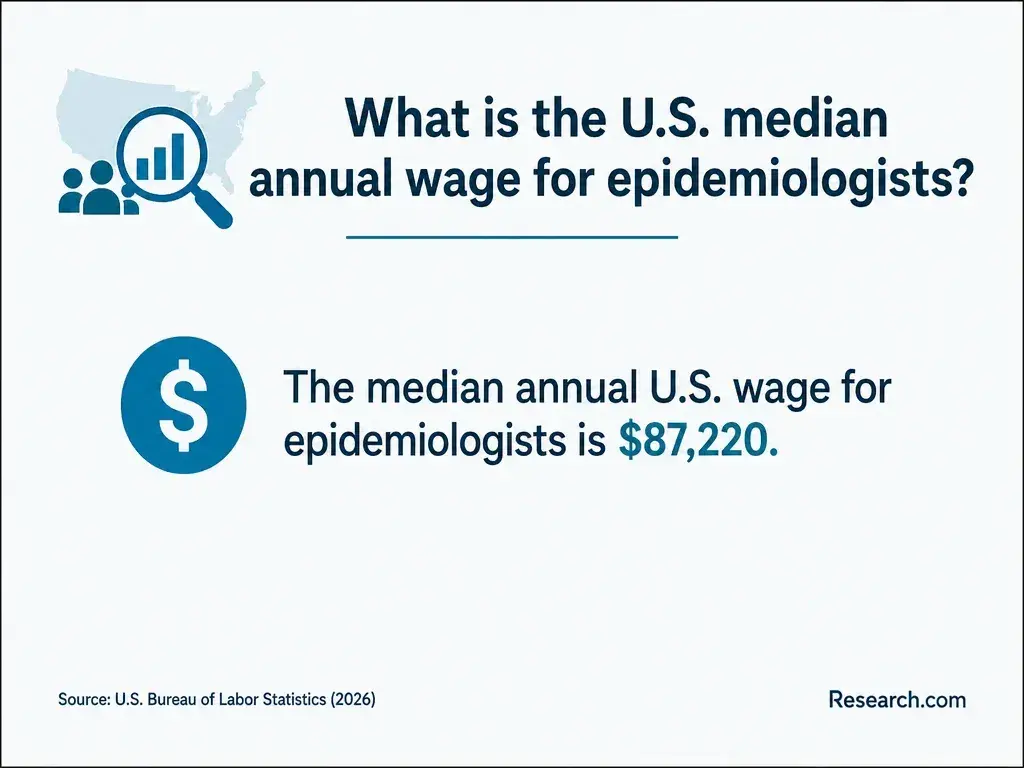
There is no single reliable salary figure for "public health PhD graduates." Academic, government, health-system, and nonprofit positions have different pay structures, and experience, location, funding, and responsibilities matter. The U.S. Bureau of Labor Statistics publishes occupation-level wage data - for example, for epidemiologists - but those figures include workers with different degrees and are not PhD graduate outcomes.
For a useful comparison, collect salary ranges from current postings for the specific research roles and locations you would pursue. Weigh those ranges against funding during study and earnings you would forgo. The MPH salary and career earnings outlook can provide context for a different degree pathway, but it should not be used to predict the return on a PhD.
What Certifications and Professional Standards Apply to Public Health Researchers?
No single certification licenses someone to conduct public health implementation research. The Certified in Public Health (CPH) credential and health education credentials such as CHES or MCHES have separate eligibility and examination rules; none substitutes for doctoral methods training or authorizes access to restricted research data. Check the issuing organization's requirements if a particular job requests a credential.
Research responsibilities instead depend heavily on the project: applicable human-subjects review, informed consent where required, privacy and data-use rules, secure handling of records, transparent analysis, and agreed authorship and reporting practices. Community partners may also have legitimate approval and governance requirements beyond a university's review process. For a student choosing between a credential and further doctoral training, comparing epidemiology doctoral tuition support addresses one financial consideration; neither funding nor certification resolves a mismatch in research supervision.
Other Things You Should Know About Public Health
Possibly, if the data identify which intervention version participants received and contain suitable measures of delivery and outcomes. Public availability does not automatically settle privacy, reuse, or institutional review questions.
Yes, if the program accepts a well-defined research question and rigorous methods. Findings about proposed adaptations should not be presented as evidence that the adapted intervention works.
Preregistration can clarify planned comparisons and outcomes before results are known. It should allow researchers to document necessary changes and label exploratory analyses accurately.
That depends on agreements among the student, institution, and partners, including ownership, attribution, confidentiality, and publication review. Set those expectations before collecting or sharing materials.
- Iterative Decision-making for Evaluation of Adaptations (IDEA) | nih.gov https://pmc.ncbi.nlm.nih.gov/articles/PMC7261620/
- Adaptation & Fidelity of Interventions in Implementation Science | cancer.gov https://cancercontrol.cancer.gov/is/training-education/training-in-cancer/TIDIRC-open-access/module-7
- Cultural Adaptations of Behavioral Health Interventions - PMC https://pmc.ncbi.nlm.nih.gov/articles/PMC3965302/
- Adapting interventions to new contexts - the ADAPT guidance | The BMJ https://www.bmj.com/content/374/bmj.n1679
- Functions & Forms - University of Colorado School of Medicine https://medschool.cuanschutz.edu/accords/CoresResources/dissemination-implementation-core/functions-forms