2027 Negotiating Shared Responsibility Across Public Health Agencies for DrPH Students

Co-Founder and Chief Data Scientist
When several public health agencies share a problem, agreement on the goal does not settle who can authorize action, fund it, supply data, or answer to the community. For experienced practitioners considering a DrPH, negotiating those responsibilities can be both a leadership challenge and a feasible applied project.
This guide explains how to define decision rights, work across government and community partners, assess a doctoral program's preparation, and decide whether the degree, or a smaller training investment, fits the work you need to do.
Key Things You Should Know
- Start with a written responsibility map: distinguish the agency accountable for a decision from partners that implement, advise, fund, or provide data.
- A workable DrPH project needs an authorized sponsor, partner participation, usable baseline evidence, and permission to access or share information; enrollment alone provides none of these.
- Compare programs on supervised cross-agency project support, scheduling, accreditation scope, and full cost, not the DrPH label alone.
What Is a DrPH Degree in Public Health Agency Leadership?
A Doctor of Public Health (DrPH) is generally a practice-focused doctorate intended to develop advanced public health leadership. For an agency professional, its value lies less in acquiring a higher title than in learning to change how organizations make decisions together.
A public health PhD is generally oriented more toward producing original research; either degree may involve research, but their projects and career aims differ by program.
Consider a proposed effort to coordinate heat-response services across a city health department, a county agency, emergency management, and community organizations. A suitable DrPH project might establish a shared referral process and evaluate whether partners carry out their agreed tasks.
It should not presume that the process improves health outcomes without appropriate evidence. If your main goal is an independent research career, compare doctoral expectations and funding as well as public health PhD program cost comparisons.
A DrPH is most compelling when you already have substantial practice responsibility and need structured leadership training, supervision, and time to complete an approved improvement project. If you primarily need negotiation coaching or a single interagency agreement, employer-supported training may be more direct.
How Do Public Health Agencies Share Responsibility Across Sectors?
Shared responsibility does not mean interchangeable authority. Government agencies retain duties assigned by law and policy; health systems, schools, and community organizations have their own obligations and constituencies.
Partners can coordinate work without giving one organization authority it does not possess. A health department might set a surveillance protocol, for example, while a nonprofit helps residents understand services and reports barriers to access.
A responsibility map makes those distinctions visible before partners promise results. The following example shows questions to resolve for a hypothetical heat-response initiative; assignments would depend on local law, agreements, and partner consent:
| Function | Possible lead | Decision to settle |
| Public alerts | Authorized government agency | Who approves messages and timing? |
| Service referrals | Participating service providers | Who accepts referrals and handles unmet need? |
| Community feedback | Community partners with agreed support | How will feedback influence decisions? |
| Performance review | Designated coordinating team | Which data may be used and reported? |
Record one accountable decision-maker for each function, the partners responsible for delivery, escalation routes, resources, and review dates.
Budget and staffing commitments matter: an agency cannot fairly assign work to a smaller partner without discussing capacity and compensation.
Some tasks can be staffed through supervised early-career roles rather than doctoral leadership positions; comparing public health undergraduate study options may help an agency think about that workforce pathway.
What Career Paths Can DrPH Graduates Pursue in Public Health Agencies?
Experienced practitioners may pursue agency leadership, preparedness coordination, program direction, cross-jurisdictional partnerships, or performance-improvement roles. The relevant qualification is usually a combination of demonstrated responsibility, subject expertise, budget and personnel experience, and the employer's hiring rules, not the doctorate by itself.
A DrPH project can provide evidence of how you handled competing mandates, documented decisions, and revised implementation when partners disagreed.
Match the project to the job you want. A prospective agency director may need evidence of governance and resource allocation; a partnership lead may need facilitation and agreement-management experience; an evaluation director may need credible measures and data-governance skills.
An MPH and progressively responsible agency work may be sufficient for some advancement routes. Professionals who need that earlier step can investigate comparing online public health master's scholarship awards rather than assuming a doctorate is the next affordable move.
Check both the institution's recognized accreditation and the Council on Education for Public Health (CEPH) accreditation record. They answer different questions: institutional accreditation concerns the institution, while CEPH accreditation has a defined public health school, unit, or program scope.
Confirm that the specific DrPH and its location or delivery arrangement fall within the applicable scope; do not infer coverage from another degree at the university.
Accreditation is a starting check, not proof that a program can support your agency project. Ask for the current curriculum, project handbook, approval process, faculty-supervision arrangements, and policies for working with an existing employer.
When finding public health doctorates that fit your background, treat any description of admissions ease separately from accreditation and project quality.
Relevant preparation combines governance and public health law, negotiation, budgeting, community engagement, implementation, and evaluation. For shared responsibility, look beyond a course title: students should have opportunities to identify who holds authority, facilitate disagreement, negotiate feasible commitments, and assess whether an agreement works in practice.
A strong applied assignment might require a student to compare existing referral procedures, develop a partner-approved responsibility map, select process measures, and plan a review cycle.
Useful measures could include whether agencies complete assigned tasks on time or resolve referrals; neither measure alone establishes a population-health benefit.
Faculty should help students distinguish organizational improvement from human-subjects research and determine which institutional reviews, data agreements, and community permissions apply.
Not every collaborator needs doctoral training. If your agency mainly needs staff who can implement and monitor an established program, inexpensive online MPH study pathways or targeted training may serve that need better than another leadership doctorate.
Neither format is inherently better for negotiating interagency work. An online program may let a practitioner remain employed and develop a local project, while campus study may offer easier access to in-person faculty and peer collaboration.
The decisive issue is whether the program's schedule and supervision fit the agencies whose decisions you must observe or influence.
Before choosing, obtain the actual timetable for live sessions, group work, residencies, project reviews, and required travel. Ask whether a supervisor can work with partners in your jurisdiction and how the school handles a project that loses agency sponsorship.
Compare those obligations when exploring public health doctorate pathways for advanced study; "online" does not mean that negotiations, fieldwork, or campus visits can be completed at any hour.
Requirements vary. Programs may evaluate graduate preparation, public health or related practice experience, leadership responsibilities, recommendations, and a statement of professional goals. Do not assume that every school requires an MPH, the same length of service, or a director-level title.
Applicants from government, healthcare, or community organizations should document what they actually managed: decisions made, partners coordinated, budgets influenced, and changes evaluated.
Admission eligibility is not the same as readiness for a cross-agency project. Before applying, discuss a plausible problem with your employer and prospective faculty, then identify which partner approvals and data permissions would still be needed.
If you first need graduate-level public health preparation, review public health master's admissions exceptions explained while checking each school's actual rules. An exception at a master's program does not establish DrPH eligibility.
Time and cost depend on the school's required credits, enrollment pace, tuition basis, fees, and applied-project milestones. For an agency professional, the largest practical delay may be securing partner agreement or permitted data access, not finishing a course.
Ask whether the school charges for continuing enrollment while a project is delayed and whether an employer will protect work time for doctoral tasks.
Build a written budget that separates tuition and fees from travel, required campus visits, project expenses, reduced work hours, and any employer assistance. Confirm the terms of reimbursement before relying on it. Weighing the cost of public health graduate study can provide an alternative benchmark, but a lower-priced master's program and a DrPH do not prepare students for identical work.
There is no single salary or job-growth figure for "DrPH graduate." Public agencies hire into distinct occupations and pay grades; a doctorate may help demonstrate preparation without changing a position's authorized salary range.
For a defensible comparison, identify the exact jobs you could pursue, then check their posted pay ranges, required experience, location, and civil-service rules.
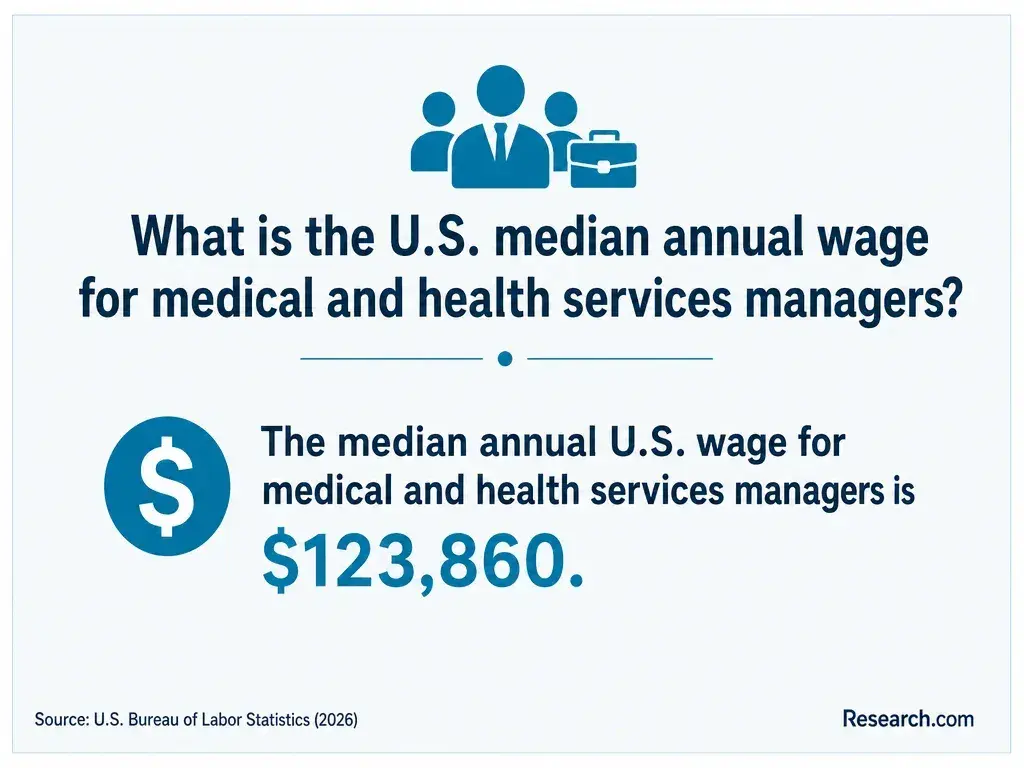
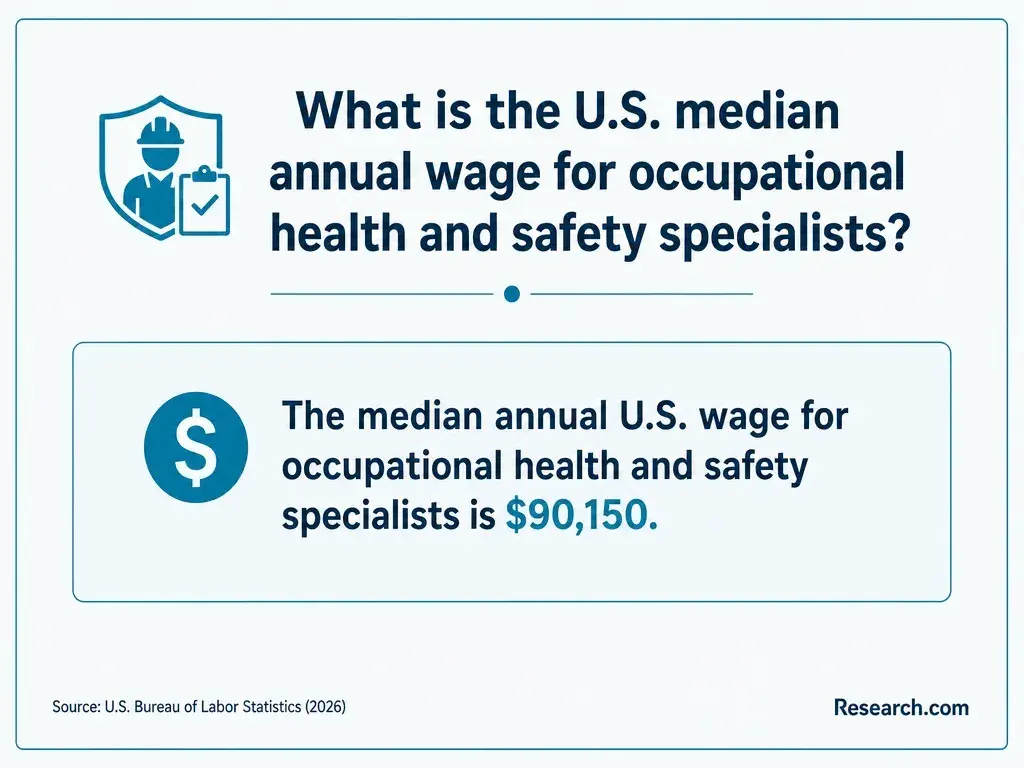
Federal occupational wage and outlook figures can provide context only when the occupation closely matches the work. They are not predictions of a graduate's earnings or promotion.
If your realistic alternative is remaining in an MPH-level role, MPH degree salary expectations may help frame the comparison; use actual agency vacancies and the full doctoral cost to judge whether further study is worthwhile.
Do DrPH Graduates Need Licenses or Professional Certifications?
A DrPH does not itself grant clinical licensure, and there is no universal license for negotiating public health agency partnerships. Specific jobs may require a preexisting professional license or prefer a credential; check the job posting and the responsible licensing or certifying body rather than assuming the doctorate satisfies either requirement.
Credentials such as Certified in Public Health have separate eligibility and examination rules. They may document knowledge, but they do not replace authority delegated by an agency or the trust needed to work with community partners.
If a desired position requires a master's degree before doctoral study, address that admission pathway directly, including addressing GPA concerns in an MPH application when relevant, rather than pursuing a certification as a presumed substitute.
Other Things You Should Know About Public Health
Separate legal authority from operational capacity. Have the authorized decision-makers document the disputed function, each partner's constraints, an escalation route, and a date to revisit the assignment.
Possibly, but employment does not equal academic or partner approval. Confirm the school's project rules, employer support, supervision, and permissions for any information or deliverable you plan to use.
Each jurisdiction may have different authority, budgets, reporting duties, and approval processes. Identify those differences before proposing a shared workflow or a single lead agency.
Not necessarily. A collaboration agreement does not automatically authorize data access. Specify the data, purpose, permitted users, safeguards, and applicable legal or institutional approvals before sharing begins.
- Collaboration in A Competitive Healthcare System: Negotiation 101 for Clinicians - PMC https://pmc.ncbi.nlm.nih.gov/articles/PMC5925852/
- Legal Considerations | Field Epi Manual https://www.cdc.gov/field-epi-manual/php/chapters/legal.html
- Common Budgetary Terms Explained | cbo.gov https://www.cbo.gov/publication/57660
- Privacy Laws, Policies and Guidance | commerce.gov https://www.commerce.gov/opog/privacy/privacy-laws-policies-and-guidance
- Health Systems Governance | who.int https://www.who.int/health-topics/health-systems-governance
- Federal Grants-in-Aid Administration: A Primer | congress.gov https://www.congress.gov/crs-product/R42769
- Improving Coordination of Related Agency Responsibilities | Administrative Conference of the United States https://www.acus.gov/document/improving-coordination-related-agency-responsibilities
- Conflict Resolution and Public Policy | New Jersey State Policy Lab https://policylab.rutgers.edu/conflict-resolution-and-public-policy-two-decades-of-experience/
- DrPH Program Leadership and Operating Guidelines | Fay W. Boozman College of Public Health https://publichealth.uams.edu/future-students/academics/doctoral/drph/drph-program-leadership-and-operating-guidelines/