2027 From Health Journalism to Public Health: Choosing a Graduate Pathway

Co-Founder and Chief Data Scientist
Health journalists already know how to investigate evidence, interview experts, and explain risks to the public. Moving into public health work, however, may require skills that reporting rarely demands: analyzing population data, designing programs, or evaluating whether an intervention worked.
This guide is for reporters, editors, and other health communicators considering graduate study. It compares degrees with less costly alternatives and shows how to judge a program by the work you want to do - not by the degree title alone.
Key Things You Should Know
- For a move into health communication or program work, an MPH with relevant applied experience is often a closer fit than a research-focused MS; a degree may be unnecessary for an adjacent communications role.
- Reporting skills transfer, but employers may still expect evidence of data analysis, program evaluation, community partnership, or policy work.
- Compare total cost and fieldwork access against the target job. As a salary benchmark - not a graduate outcome - the US Bureau of Labor Statistics reported a $63,000 median annual wage for health education specialists in May 2024.
What public health graduate degrees can health journalists pursue?
Start with the job you want to perform. An MPH is a professional degree oriented toward population-health practice; it generally makes the most sense for journalists seeking health communication, community programs, policy implementation, or public health agency work. A research-oriented MS can be a better fit if you want substantial training in epidemiology, biostatistics, or another specialized method. Check the actual course sequence: degree labels do not establish how much analysis you will learn.
A DrPH is generally aimed at experienced practitioners seeking practice leadership, while a PhD centers on original research. Neither is the usual first step from reporting into an entry-level public health role. If a doctorate is a later goal, compare doctoral public health programs by entry criteria alongside their experience expectations and the work required after admission.
For a journalist who mainly wants to cover studies more accurately, a statistics course, methods certificate, or supervised data project may be more direct than another degree. Choose graduate study when the target role calls for a broader set of competencies and you can obtain credible practice or research experience while enrolled.
How does an MPH prepare health journalists for public health careers?
Reporting offers a strong starting point: finding credible sources, identifying uncertainty, meeting deadlines, and making technical material understandable. An MPH adds the population-health perspective behind decisions about prevention, services, and resources. It also gives a journalist opportunities to show work beyond published stories - for example, developing a community-informed communication plan or evaluating a program's reach under appropriate supervision.
The shift is not simply from writing about public health to writing for an agency. Public health staff may help choose audiences, define measurable objectives, work with community partners, and revise messages based on evidence. Ask prospective programs who supervises applied projects and whether placements include the kind of work you want, rather than assuming a communication concentration provides it.
A journalism degree is not inherently a barrier to MPH admission. If earlier grades concern you, review public health graduate GPA requirements and alternatives, then check each program's stated policy. Recent quantitative coursework or strong applied work may help demonstrate readiness, but neither overrides a school's requirements.
What accreditation should you look for in a public health graduate program?
Check two different things: whether the university holds recognized institutional accreditation and whether the relevant school, unit, or program holds CEPH public health accreditation. Confirm that the specific degree you are considering falls within the accredited scope; accreditation of another degree at the same university is not enough. These checks matter when comparing program quality and any later credential pathway that specifies accredited education.
Accreditation does not establish that a program has suitable communication electives, accessible placements, or strong career connections. Request the curriculum and applied-experience rules, then ask where recent students completed relevant work. If you are weighing lower-cost undergraduate study instead of graduate school, apply the same institutional-accreditation check to inexpensive public health bachelor's education; a cheaper option is useful only if its coursework advances your specific goal.
For a working journalist, online study can preserve employment and access to local public health partners. Campus study may offer easier access to in-person research teams, events, and placements. Neither format guarantees those opportunities. Compare required live sessions, group-work schedules, campus visits, field placement rules, and whether career services support students in your location.
Ask how the program approves a placement at a newsroom, health department, or nonprofit - and whether your current job could qualify. Existing employment does not automatically satisfy an applied-experience requirement. If you only need foundational coursework before applying to graduate school, compare the time commitment of individual courses with public health bachelor's pacing and course length; an accelerated course is not necessarily easier to combine with a reporting deadline.
An MPH typically builds foundations in epidemiology, biostatistics, population health, health systems and policy, social and behavioral approaches, and public health practice. For journalists, the important question is how deeply you can use those foundations. Reading a study critically differs from cleaning data and conducting an analysis; learning communication theory differs from testing whether a campaign reached its intended audience.
Match the curriculum to your intended work. A future health communication specialist should look for audience research, accessible messaging, community engagement, and evaluation. A prospective analyst needs more quantitative coursework, suitable prerequisites, and supervised analytical projects. A journalist interested in leadership should first build practice experience; when considering a later doctorate, examine doctoral public health program features such as leadership coursework and applied-project expectations rather than treating doctoral study as an advanced MPH.
Requirements vary by degree and school. Programs commonly ask for evidence of prior higher education, transcripts, a statement of purpose, and references, but prerequisites, tests, GPA policies, and work-experience expectations are program-specific. An MS with intensive quantitative work may expect more mathematics or statistics preparation than a generalist MPH. Journalism experience can strengthen an application when you explain the public health problem you want to address and identify the skills you still need.
Before applying, compare each program's published prerequisites with your transcript. Ask admissions staff whether a recent standalone statistics course is acceptable, whether outstanding coursework must be complete before enrollment, and how they assess relevant reporting or community work. If obtaining references is difficult after years in a newsroom, explore public health graduate admissions with fewer reference documents, while confirming the current requirements of any program on your shortlist.
Completion time depends on required credits, enrollment pace, course availability, and the timing of fieldwork or a thesis. A full-time master's path is often measured in roughly two academic years, but that is not a promise for a particular MPH or MS. Part-time study may better protect reporting income while extending the period over which you pay fees and balance school with work.
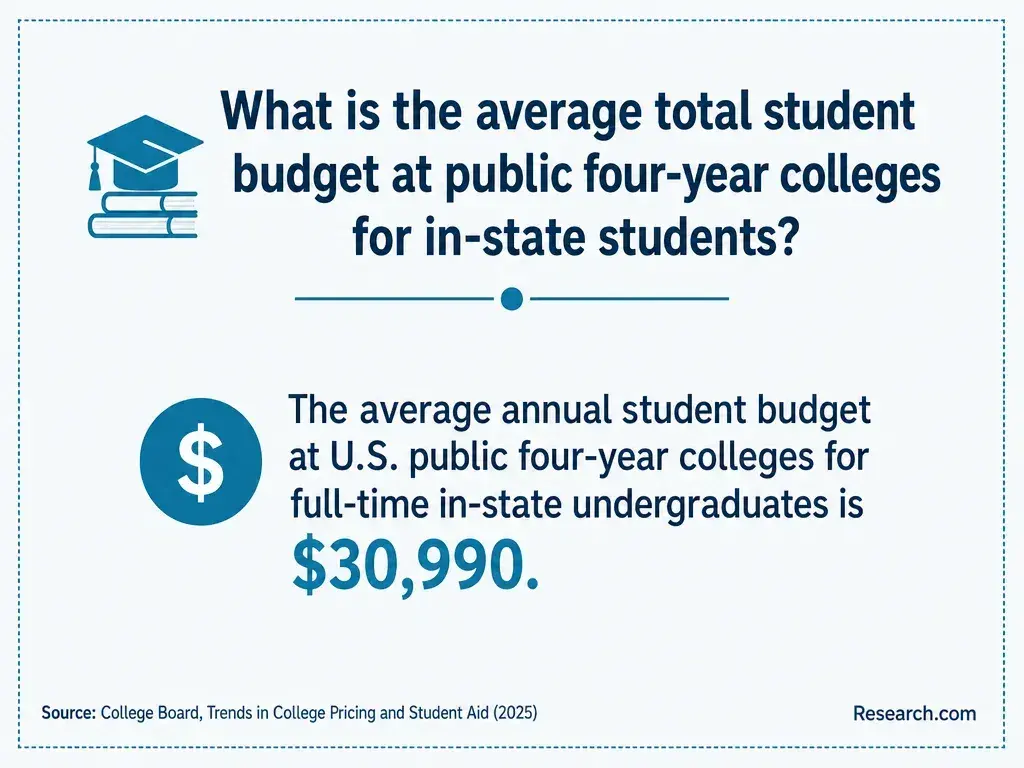
Compare schools using total expected cost, not advertised tuition alone: required credits multiplied by the applicable tuition rate, plus mandatory fees, books or software, travel, and any income lost during an unpaid placement. Ask whether a proposed local placement is permitted before assuming it will reduce costs. Use comparing online MPH tuition costs to build an initial shortlist, then obtain each school's current rate and requirements for your enrollment status. Employer assistance, scholarships, and aid should enter your calculation only when you have confirmed eligibility and terms.
The closest transitions usually build on reporting rather than discard it. Health communication staff develop and assess public-facing information; health education specialists plan educational activities and evaluate their reach; program coordinators organize partners, services, and reporting. Policy or evaluation roles may also fit journalists who have developed stronger research and analytical skills. Job titles vary, so read the actual duties and required experience.
Epidemiologist and specialized analyst positions demand more than an ability to interview researchers: employers may expect substantial methods training and evidence of independent analysis. Management roles generally require relevant practice and supervisory experience as well as education. If you need a master's degree for a specific target role but are uncertain about admissions competitiveness, online MPH programs by admissions accessibility can be a starting comparison - not a substitute for checking curriculum and placement quality.
Test the transition before committing: collect several target postings, separate required qualifications from preferences, and identify which gaps a degree would close. Where the gap is mainly agency experience, a contract communication project or supervised community partnership may be a better first move.
Pay depends on the occupation, location, employer, and experience - not simply on holding an MPH. The US Bureau of Labor Statistics reported a $63,000 median annual wage for health education specialists in May 2024. That occupation-wide figure includes workers with different educational backgrounds and career stages; it is not an expected starting salary or a return-on-investment estimate for journalists earning an MPH.
Compare the compensation and requirements in actual postings for your target jobs with your current earnings, tuition, and potential time away from paid work. Government, nonprofit, health-system, and private-sector roles can have different pay structures and advancement routes. For broader context, use the earnings outlook for public health master's holders cautiously: occupational wages and graduate outcomes answer different questions.
What certifications and licenses do public health careers require?
Many health communication and program positions do not require a professional license. Some employers value certifications such as Certified in Public Health (CPH) or Certified Health Education Specialist (CHES), but eligibility, exams, and renewal rules come from the respective certifying bodies. An MPH does not automatically award either credential, and it does not authorize clinical practice.
If a posting names a credential, check its current eligibility route before choosing courses or a degree. CHES-related education requirements, for example, should not be inferred from a program's public health title alone. Someone considering public health undergraduate degree options online as an alternative should make the same course-by-course check. Clinical positions, where relevant, have separate state licensing requirements that public health graduate study does not replace.
Other Things You Should Know About Public Health
Usually, if your schedule allows it. Check live-class and placement commitments, and follow your newsroom's policies on outside work, funding, and potential conflicts of interest.
Do not assume so. Protect source agreements and private information; obtain necessary permissions and use public, approved, or appropriately deidentified material instead.
Get the repayment and employment terms in writing. If you still report, discuss the arrangement with your editor because funding could affect your independence or the appearance of independence.
No. Select clips that demonstrate evidence appraisal and clear communication, then add approved projects showing the public health tasks you can perform. Describe your own contribution without disclosing confidential information.
- Development of a Core Competency Model for the Master of Public Health Degree | nih.gov https://pmc.ncbi.nlm.nih.gov/articles/PMC2509588/
- Competencies for Public Health Professionals | cdc.gov https://www.cdc.gov/infrastructure/training-professional-development/competencies-for-public-health-professionals.html
- Cost of Attendance (Budget) | 2025-2026 Federal Student Aid Handbook https://fsapartners.ed.gov/knowledge-center/fsa-handbook/2025-2026/vol3/ch2-cost-attendance-budget
- Graduate Programs in Public Health | ny.gov https://www.health.ny.gov/prevention/public_health_works/education/graduate_programs.htm
- Careers Guide: Explore Public Health Jobs | UIC Online MPH https://onlinemph.uic.edu/news-stories/public-health-careers/
- Curriculum | Johns Hopkins | Bloomberg School of Public Health https://publichealth.jhu.edu/academics/mph/curriculum
- - Admission Requirements for the Graduate Major in | UCLA Graduate Programs https://grad.ucla.edu/gasaa/deptinfo/deptinfo.asp
- Accreditation | University of Oklahoma Hudson College of Public Health https://publichealth.ouhsc.edu/about/accreditation
- Careers With a Master of Public Health Degree | llu.edu https://publichealth.llu.edu/about/blog/careers-master-public-health-degree
- Online Undergraduate and Graduate Degrees and Certificates | sps.nyu.edu https://www.sps.nyu.edu/info/information-for-students/online-programs.html