2027 Public Health BS Disability Accommodations in Community Placements

Co-Founder and Chief Data Scientist
A community placement may be required to finish a public health BS, but its travel, schedule, technology, or on-site duties may create disability-related barriers. Students need to know what can change without losing the learning experience - and who must help arrange it.
This guide explains accommodation options, legal responsibilities, the request process, and how to assess a prospective site. It also covers the degree and career considerations that matter when deciding whether a program's fieldwork requirements are feasible.
Key Things You Should Know
- Accommodations can address placement access, scheduling, communication, and task methods; they do not automatically waive essential learning outcomes or required hours.
- Section 504 may apply to federally funded colleges, while ADA Titles II and III govern public institutions and many private institutions, respectively. A host site's obligations depend on its own role and legal status.
- Request a placement-specific plan before site commitments are finalized. Get the school's approval, the host's operational agreement, and a clear process for resolving barriers that arise during fieldwork.
What disability accommodations are available in public health BS community placements?
A community placement is supervised work with an organization—such as a health department or nonprofit—used to meet a program's learning objectives. For students navigating online public health bachelor's admissions and coursework, an accommodation changes how a student accesses or completes that work when a disability creates a barrier. The appropriate change depends on the student's needs, the site's operations, and the tasks the degree actually requires.
The comparisons below show how an arrangement can preserve a public health learning objective while changing the conditions under which a student meets it. None is automatic approval for a particular placement.
| Placement barrier | Potential accommodation | Learning objective to preserve |
| Inaccessible meeting or outreach location | Accessible room or an approved alternative location | Participation in community engagement and supervised work |
| Disability-related difficulty with a fixed schedule | Adjusted shifts, breaks, or an approved longer completion period | Required work, supervision, and any applicable hours |
| Inaccessible documents or software | Accessible files, compatible software, or assistive technology | Accurate analysis, communication, and deliverables |
| Barrier to an on-site task | Modified task method or approved remote participation where feasible | Competency in the task rather than mere observation |
Other possibilities include interpreters, captioning, an accessible workstation, or adjusted methods for presenting a project. A remote assignment may be appropriate for data cleaning or drafting outreach materials, but it may not replace in-person community interaction if that interaction is essential and no equivalent arrangement meets the objective. Ask the fieldwork coordinator which outcomes are essential before treating a particular task or location as nonnegotiable.
Are public health BS programs required to provide disability accommodations?
Generally, covered US colleges must provide eligible students equal access through reasonable modifications or accommodations. For prospective students reviewing public health doctoral degree choices, understanding these protections is essential: Section 504 of the Rehabilitation Act applies to recipients of federal financial assistance, ADA Title II applies to public colleges, and Title III applies to many private colleges. The applicable rule and the precise duty depend on the institution and circumstances; a requested change need not be granted if it would fundamentally alter an essential requirement or meet another legally recognized limit.
The college cannot simply send a student to an outside site and stop addressing access. It should engage with the student about its degree requirements and placement arrangements. A host organization may have separate obligations - for example, as a public entity, a place of public accommodation, or an employer - but those obligations are not identical to the college's. If the student is also a site employee, employment rules may add another process. The school and host should clarify who provides equipment, accessible space, supervision, and communication support.
An accommodation decision should be individualized. A concern about safety calls for a specific assessment of the task and available measures, not an assumption based on a diagnosis. Students should also distinguish an approved accommodation from permission to access identifiable community or patient information; privacy, training, and data-use rules still apply.
How do students request accommodations for public health field placements?
Start with the college's disability services office and fieldwork coordinator before a site is finalized, if possible. Even as students align their academic experience with broader public health graduate study areas and career outcomes, existing classroom accommodations may not address travel, site technology, outreach events, or a supervisor's schedule. The following sequence helps turn a general approval into a workable field plan.
- Obtain the placement description, essential learning outcomes, required tasks, hours, location, schedule, and site-selection deadlines.
- Tell disability services which placement conditions create barriers and request an interactive review; provide documentation under the college's stated process.
- Ask the fieldwork coordinator to assess proposed changes against academic requirements and discuss suitable sites or task arrangements.
- Before starting, confirm with the host who will implement each approved measure, how supervision and hours will be recorded, and whom to contact if it fails.
- Keep the written plan and promptly report new barriers so the school can revisit it before missed work jeopardizes completion.
Ask the coordinator: "Which tasks must be done on site?" "Can an accessible alternative site meet the same competencies?" "Who approves a changed schedule or deliverable?" and "What happens if the host cannot implement an agreed measure?" A host's willingness does not by itself confer academic approval, and a school-approved plan needs an operational arrangement the host can carry out.
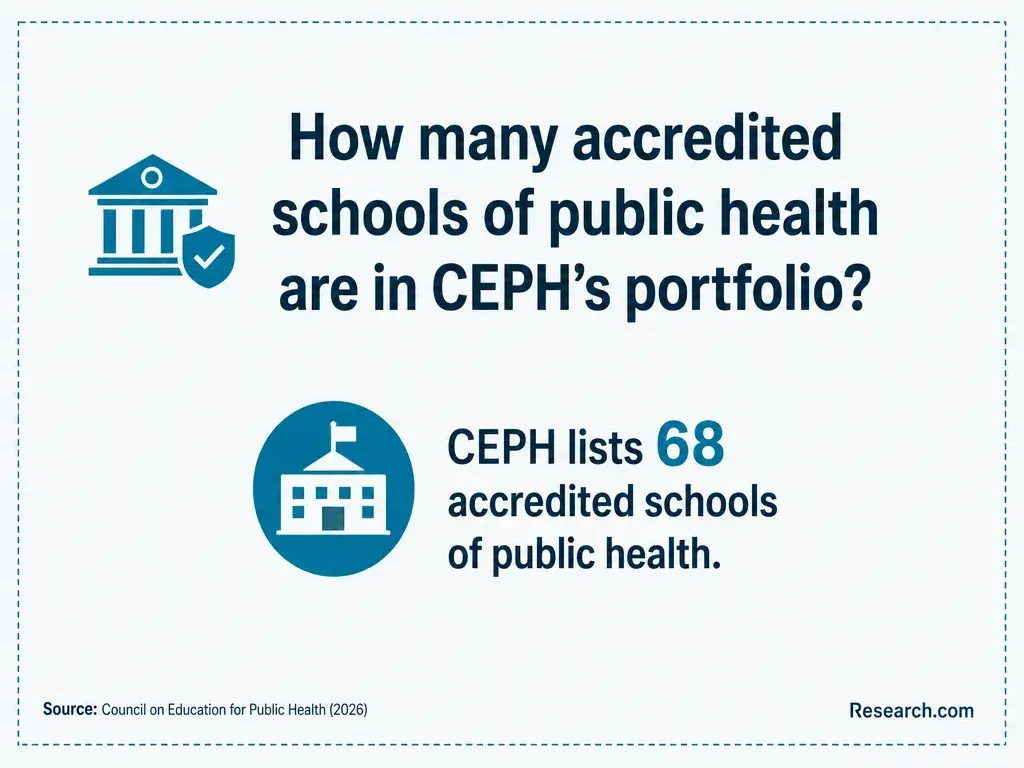
Accreditation and disability law answer different questions. Institutional accreditation concerns the college as a whole; Council on Education for Public Health (CEPH) accreditation has a defined scope that must be checked for the particular school, unit, or program. Neither an accreditation label nor an accessible online course proves that a specific community site will be accessible. Graduate-program comparisons, including online MPH programs with CEPH accreditation, should not be mistaken for confirmation of a BS program's accreditation scope.
For placement decisions, examine how the BS program identifies eligible sites, approves learning agreements, assigns supervision, assesses competencies, and resolves access problems. Ask for its current fieldwork handbook, disability accommodation procedure, and complaint or appeal route. Accessibility should extend to required instructions, digital tools, communications, meetings, and the practical means of completing approved work - not merely to a statement in the catalog.
If a prospective site appears inaccessible, request an assessment before accepting it. A program's ability to offer an appropriate alternative site or equivalent arrangement may matter more to your completion plan than a broad promise that it "supports all students."
Yes. Online enrollment does not remove a covered college's accommodation responsibilities, but it also does not mean fieldwork can always be completed from home. Some placements are local to the student; others require travel, scheduled live meetings, or on-site community activities. Check those conditions before enrollment, especially if transportation or a fixed work schedule creates an access barrier.
Compare online public health bachelor's accelerated class options against the actual placement handbook, not just the course-delivery label. Ask whether the school helps secure local sites, permits a student-proposed site, provides remote supervision, and approves remote tasks when they meet the same objectives. Confirm which party pays for any required travel or equipment.
For a student with a disability, an online program is a good fit only if both coursework and required practice are accessible. A distant site that requires repeated in-person attendance can erase the flexibility gained from asynchronous classes.
Useful preparation connects population-health concepts to tasks a site can supervise. Epidemiology and introductory statistics help students interpret local indicators without overstating what the data prove. Health behavior and communication courses support audience-appropriate materials. Program planning and evaluation teach students to define an activity, track its implementation, and explain limitations. Ethics and community engagement matter when a project involves residents' priorities, representation, or sensitive information.
Review the actual course sequence rather than assuming every BS covers these areas to the same depth—or that every student is progressing straight toward advanced options like university scholarships for online public health master's study. A student assigned to an outreach program might reasonably produce a reviewed communication tool or a basic process-measure plan; an introductory statistics course alone does not qualify that student to lead a complex causal analysis. The strongest placement matches coursework already completed with a defined deliverable, accessible tasks, and regular feedback from both site and faculty supervisors.
Admission to a university and admission to its public health major may be separate decisions. Whether you are entering straight from high school or affordable online public health PhD programs down the road, schools may require general education courses, a minimum academic standing, or particular prerequisite courses before students enter upper-division work. Placement eligibility can have additional conditions, such as required training or host-site screening. Check the rules for the specific program and entry term; there is no single national BS admissions or placement checklist.
Transfer and returning students should request a degree audit showing where accepted credits apply - not just a count of credits received. An accepted statistics course, for example, may count as elective credit without satisfying the major's statistics requirement. Before committing to a program, ask whether remaining prerequisite sequences delay placement eligibility and whether a site's screening requirements could affect your options. Disability services can discuss access to the process, while the academic program retains authority over degree and placement requirements.
A full-time bachelor's pathway is commonly planned across four academic years, but a student's actual timeline depends on transferable credits, course availability, prerequisite order, and when placements run. An accommodation such as a modified field schedule may also change the completion date. Get an individualized degree audit and placement calendar before relying on an advertised timeline.
Compare the full cost of attendance and fieldwork, not tuition alone: mandatory fees, remaining credits, transportation, unpaid placement hours, accessibility-related logistics, and any additional term needed to finish. Prices and aid depend on the institution and enrollment status, so a reliable total requires a current school estimate. If the goal is a specific entry-level community role rather than a bachelor's credential, compare the employer's requirements with shorter public health study formats and career prospects; a shorter route may be sufficient for some roles but will not substitute for a BS where one is required.
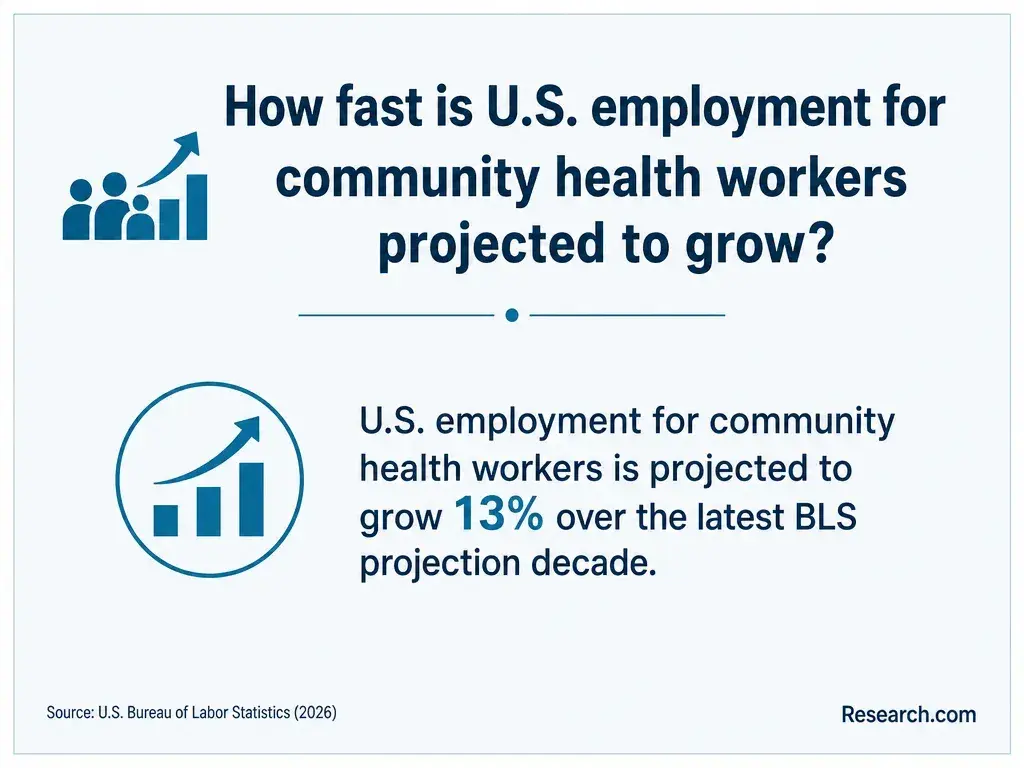
A BS plus relevant supervised work can support applications for roles such as program assistant, outreach coordinator, community health worker, or entry-level health education staff. Responsibilities may include organizing events, communicating approved health information, maintaining program records, and helping monitor activities. Employers may value a placement deliverable that demonstrates those tasks more than a placement title alone.
Certification is separate from graduation. Eligibility for credentials such as Certified Health Education Specialist (CHES) or Certified in Public Health (CPH) depends on the certifying organization's current education and examination rules; a public health BS does not award either credential automatically. Some jobs also have state-specific requirements. Before choosing a placement for career preparation, compare actual job postings with its supervised duties and check credential eligibility with the certifier.
Students aiming for advanced epidemiology, independent research, or management should not assume the BS alone establishes readiness. Relevant work experience or further education may be appropriate, depending on the position—whether that means moving directly into the workforce or finding online MPH programs that fit your profile. Further study is not necessary simply to perform every community-facing public health job, but aligning your undergraduate preparation with your long-term goals ensures a smoother transition.
What salaries and job outlook can public health BS graduates expect?
There is no reliable single salary or job-growth figure for "public health BS graduates." The US Bureau of Labor Statistics reports wages and projections by occupation, not by undergraduate major. A community health worker, health education specialist, and program coordinator may perform different work and fall under different occupational classifications; an occupation-wide median also includes workers with varied education and experience.
For a useful comparison, identify the job title and tasks you want, check the latest Bureau of Labor Statistics occupational wage and projection reference years, then compare local postings for education, experience, and pay. Weigh any projected earnings against your remaining degree costs, the feasibility of completing placement hours, or the potential entry flexibility in public health master's programs if you decide to pursue further education later. An accessible placement with substantive, supervised work may improve the evidence you can bring to an entry-level application, but it cannot guarantee a job or salary.
Other Things You Should Know About Public Health
Usually, a supervisor needs to know the approved work arrangements, not your full diagnosis. Ask disability services what information must be shared to implement the plan and how it will be protected.
It may be possible, but access can depend on the setting and applicable law. Raise the issue before placement so the school and host can assess the particular work areas and any legitimate safety or infection-control requirements.
Do not assume it can. Contact disability services and the fieldwork coordinator promptly to discuss make-up work, an adjusted schedule, or another remedy under the school's policies.
Preserve the placement description, requests, responses, and relevant dates. Use the college's disability grievance or ADA/Section 504 process, and ask how you can continue meeting degree requirements while the concern is reviewed.
- Disability Inclusion in Programs & Activities | cdc.gov https://www.cdc.gov/disability-inclusion/our-work/index.html
- FERPA | Protecting Student Privacy - Department of Education https://studentprivacy.ed.gov/ferpa
- Students with Disabilities Preparing for Postsecondary Education | U.S. Department of Education http://www.ed.gov/higher-education/students-disabilities-preparing-postsecondary-education
- Confidentiality - Student Disability Services https://disabilities.uchicago.edu/students-2/policies/confidentiality/
- Faculty Responsibilities for Providing Accommodations | ucdavis.edu https://accessibility.ucdavis.edu/faculty-responsibilities-providing-accommodations
- Reasonable accommodations explained | apa.org https://www.apa.org/pi/disability/dart/toolkit-three
- Confidentiality Guidelines for Student Disability Information | Washington State University https://spokane.wsu.edu/studentaffairs/access-and-wellness/access-services/student-disability-confidentiality-guidelines/
- Internships, Externships, Practicum, and Fieldwork | The University of Utah https://disability.utah.edu/accommodations-services/fieldwork.php
- Confidentiality of Student Information | rutgers.edu https://radr.rutgers.edu/resource/confidentiality-student-information
- Americans with Disability Act - Academic Affairs | Coles College of Business https://campus.kennesaw.edu/faculty-staff/academic-affairs/curriculum-instruction-assessment/digital-learning-innovations/academic-web-accessibility/advanced-accessibility-solutions/regulations-policies-standards/americans-disability-act.php