2027 Choosing MPH Coursework for Mixed-Methods Public Health Evaluation

Co-Founder and Chief Data Scientist
A public health program can collect survey results and interview participants yet still struggle to explain whether it is reaching the people it intends to serve. Evaluators need both kinds of evidence - and the ability to interpret them together. If you are choosing MPH coursework for that work, course titles alone will not tell you whether a program teaches the full process. This guide shows how to assess methods courses, applied projects, and program constraints so you can build a useful sequence of skills rather than a disconnected set of electives.
Key Things You Should Know
- Prioritize coursework in quantitative analysis, qualitative inquiry, and integration; taking one course in each method is not, by itself, mixed-methods training.
- Look for an approved applied project that produces an evaluation question, defensible measures, a sampling plan, and an interpretation of how the two evidence strands fit together.
- Compare the courses you can actually take - not just a concentration name - against prerequisites, scheduling, supervision, data access, and total cost.
What Is Mixed-Methods Public Health Evaluation?
Mixed-methods evaluation combines quantitative evidence, such as service-use counts or survey responses, with qualitative evidence, such as interviews or observations, to answer a defined question about a public health program. The distinguishing step is integration: deciding how the findings inform one another and what their agreement or disagreement means for a program decision.
For example, an evaluation of a community screening initiative might ask whether eligible residents are attending and what makes attendance difficult. Administrative counts could describe reach; interviews could explore scheduling, trust, or transportation. Those interviews would not turn attendance patterns into proof of causation, and a small interview sample would not estimate the prevalence of a barrier. Together, the strands could guide a better-informed implementation decision.
Choose coursework around the decision you want to support: improving implementation, assessing outcomes, or investigating why results differ across settings. If your goal is primarily advanced statistical modeling or original methods research, a research-intensive MS may fit better than a generalist MPH. A comparison of public health master's career directions can help clarify that distinction before you commit to a course sequence.
Which MPH Courses Build Mixed-Methods Evaluation Skills?
Build a sequence that moves from an evaluation question to data collection, analysis, and a decision-ready interpretation. A catalog may distribute these skills across core courses, electives, and an applied experience rather than offer a course called "mixed methods."
The table shows what to look for in syllabi and assignments. Course names vary; the work students complete is the stronger test.
| Course area | Skill to look for | Evidence in an assignment |
| Program planning and evaluation | Logic models, evaluation questions, indicators, and intended use | An evaluation plan tied to a stakeholder decision |
| Epidemiology and biostatistics | Study design, data quality, comparison, and uncertainty | Analysis that explains its denominator and limitations |
| Qualitative methods | Sampling, interviewing, coding, and reflexivity | An interview guide and documented analysis approach |
| Mixed-methods design | Sequencing, sampling across strands, and integration | A joint display or integrated interpretation |
| Applied practice or integrative experience | Producing a useful deliverable under supervision | A partner-appropriate brief or evaluation plan |
Before selecting electives, ask an adviser which courses are required, which run regularly, and whether prerequisites allow you to take qualitative and quantitative methods before your applied project. If you have not completed a bachelor's degree, online bachelor's study in public health can provide a foundation; it is not a substitute for graduate-level evaluation coursework.
How Does CEPH Accreditation Shape MPH Evaluation Coursework?
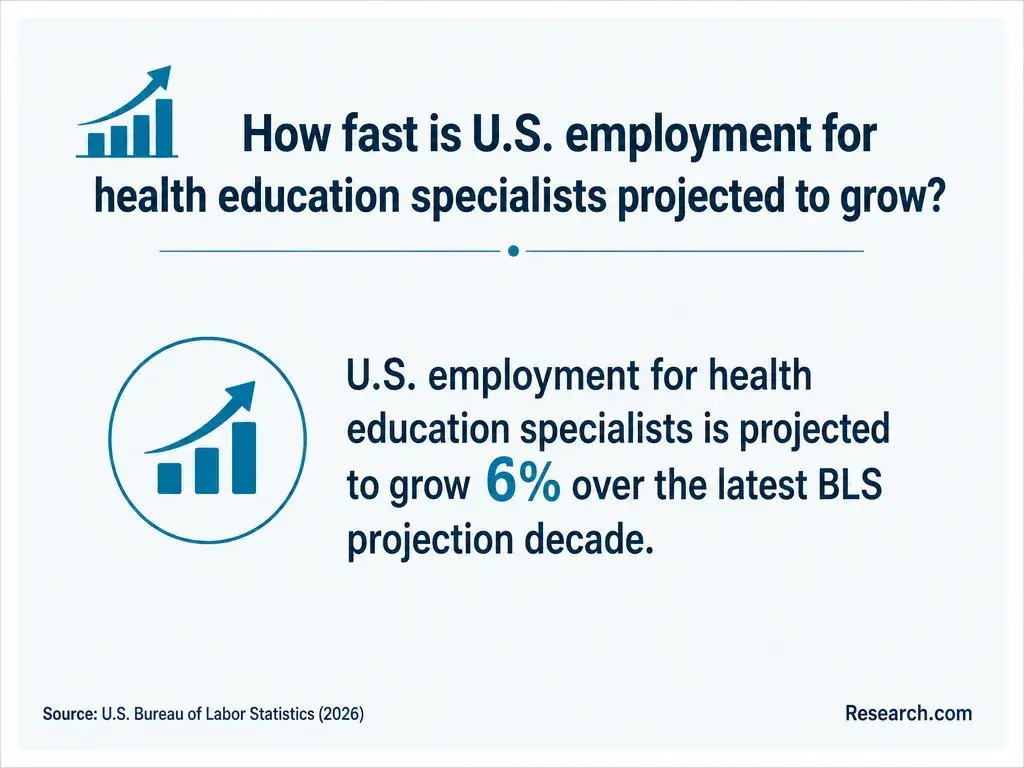
The Council on Education for Public Health (CEPH) sets expectations for accredited public health schools and programs, including MPH foundational competencies and applied learning. Those expectations make program evaluation and evidence-informed practice relevant across MPH curricula. They do not guarantee a dedicated mixed-methods elective, advanced qualitative training, or an evaluation placement.
Check the CEPH directory and the school's current materials for the exact accredited school or program and whether the MPH you intend to enter falls within its scope. Institutional accreditation is a separate question. Then inspect syllabi and project requirements to see how the program teaches and assesses evaluation skills. This check matters even when comparing online public health degrees for budget-conscious students: a low advertised price says little about methods depth or accreditation scope.
For most evaluation roles, the useful starting combination is applied biostatistics, epidemiologic study design, and a course that works with imperfect program data. Seek practice defining a target population, selecting a meaningful denominator, comparing groups appropriately, examining missing data, and communicating uncertainty. A survey-methods or applied regression elective may be valuable if the projects you want to do require it.
Depth should follow the evaluation question. Describing who a program reached calls for different skills from estimating whether the program caused an outcome. If a course promises impact evaluation, check whether it addresses comparison groups, confounding, selection bias, and the limits of causal claims - not just software commands. Also ask whether students work with reproducible analysis files and explain results to nontechnical partners.
Students still completing undergraduate preparation may be tempted to fill a statistics gap through fast-paced online public health bachelor's courses. Check what the MPH actually requires first: a short undergraduate course may establish a prerequisite, but its pace or completion does not demonstrate graduate-level analytic readiness.
Choose a qualitative course that goes beyond conducting interviews. Strong preparation covers purposeful sampling, interview or observation design, consent, coding, analytic memos, reflexivity, and credible interpretation. For community-serving work, look for attention to whose perspectives are missing and how partners can review interpretations without being asked to endorse conclusions they do not share.
A useful assignment might require students to explain why interviews were selected, how participants would be recruited, what would count as a contrasting case, and how themes would be supported. For mixed methods, the course should also prepare you to relate themes to quantitative patterns without treating a few quotations as representative survey results.
Check permissions before proposing an applied study. A host organization's willingness to collaborate is not the same as permission to access records or contact participants; confidentiality, data-use terms, and any required institutional review need separate attention. If an MPH expects earlier methods preparation that you lack, explore addressing prerequisite gaps before MPH enrollment rather than assuming an elective can be taken without its prerequisite.
Choose the format that gives you reliable access to methods instruction, feedback, and a feasible evaluation project. An online MPH can work well if live classes, group analysis, advising, and partner meetings fit your schedule. Campus study may make collaboration or local placement easier, but it does not automatically provide a suitable evaluation site or more individual supervision.
Ask each program how students obtain feedback on interview guides and analysis, what software and data access they receive, whether methods electives run in their preferred terms, and who helps arrange applied projects. Confirm required live sessions, campus visits, and project meetings separately from the label "online." An existing job or nonprofit connection may offer a promising project, but the program must approve the experience and the organization must authorize the work.
Format also affects financing. When comparing online options, examine actual eligibility and renewal conditions for university-funded aid for online MPH programs; do not assume an advertised award applies to every enrollment pattern.
Requirements belong to the individual MPH program, not to "evaluation-focused" study as a universal category. Programs may ask for a bachelor's degree, transcripts, a statement of purpose, recommendations, and evidence of quantitative preparation; their policies on prerequisites, tests, work experience, and application systems differ.
Use your application to connect prior experience to an evaluation question. Community outreach, clinical operations, survey administration, research assistance, and program reporting can all provide useful preparation if you explain what you did and where you need more training. If a program recommends statistics rather than requiring it, that still deserves attention before an applied analysis course.
Verify each program's published policy before requesting documents or ruling yourself out. For applicants whose referees are unavailable, information about public health master's programs that omit reference letters may help narrow a search, but the current admissions page controls.
Time to completion depends on credit requirements, full- or part-time enrollment, elective rotation, prerequisites, and when you can undertake an approved applied experience. The cheapest path on a tuition page may become slower or costlier if the qualitative course runs infrequently or a project requires travel and unpaid time.
Request a term-by-term plan and a written cost estimate. Compare tuition and mandatory fees with software, travel, and any additional terms needed to finish the sequence; account for earnings you may forgo if you reduce work hours. A published comparison of Master of Public Health affordability comparisons is a starting point, not a substitute for the charges and course availability that apply to your enrollment.
If your goal is to improve one aspect of evaluation in a current job, a targeted methods course plus supervised practice may be less costly than an entire MPH. The degree is more compelling when you also need broad public health preparation and its applied learning opportunities.
Relevant roles include program evaluation associate, public health analyst, research coordinator, and evaluation specialist in health departments, nonprofits, health systems, and research organizations. Early-career staff may clean data, coordinate interviews, build indicators, or draft findings under supervision; leading an evaluation or making causal claims usually requires stronger experience and methodological judgment.
There is no single "mixed-methods MPH salary." Pay depends on the job's tasks, employer, location, and experience. US Bureau of Labor Statistics occupation-wide wages can provide context for a clearly matched occupation, but they are not earnings figures for MPH graduates or for every evaluator. Guidance on understanding salary variation after an MPH is most useful alongside actual job postings and the full cost of the degree.
To judge readiness, compare target postings with your prospective coursework and portfolio. A defensible evaluation plan, analysis with documented limitations, and a concise partner-facing brief will show more about your preparation than an elective title alone. Remove confidential information before sharing any project work.
Which MPH Certifications and Professional Standards Matter?
Mixed-methods evaluation is not a licensed profession with one required credential. The Certified in Public Health (CPH) credential and health education credentials such as CHES or MCHES may be relevant to particular roles, but eligibility and employer preferences vary. An MPH concentration or elective does not automatically award a separate certification.
For evaluation work, professional standards are also practical habits: state the intended use of findings, document methods and limitations, protect participants, involve affected communities appropriately, and avoid presenting association as proof of impact. Ask employers which credentials they value; ask certifying bodies about current eligibility and examination rules.
If your intended work is original methods research or senior research leadership, compare the responsibilities and training involved before pursuing another degree. Public health doctoral program cost-benefit considerations are relevant to that separate decision, not a reason to assume a doctorate is necessary for applied evaluation.
Other Things You Should Know About Public Health
No. Use both when each answers a necessary part of the decision and you have the time, permissions, and skills to integrate them. A focused single-method evaluation is better than two weak, disconnected studies.
First check whether the strands measured the same population, period, and concept. A disagreement may reveal a measurement problem, a difference among groups, or an important exception; report it rather than forcing agreement.
Sometimes. Check whether the records contain the needed measures, cover the intended population, and can be used for that purpose under applicable permissions. Missing or inconsistent entries may limit what they can answer.
State who was invited, who responded, and what is known about nonrespondents. Describe the risk of nonresponse bias, avoid treating respondents as automatically representative, and interpret interviews in light of the same participation limits.
- Quantitative Approaches for the Evaluation of Implementation Research Studies - PMC https://pmc.ncbi.nlm.nih.gov/articles/PMC7176071/
- Participant Recruitment for Research | AHRQ https://digital.ahrq.gov/participant-recruitment-research
- Competencies for Public Health Professionals | cdc.gov https://www.cdc.gov/infrastructure/training-professional-development/competencies-for-public-health-professionals.html
- Handling the Qualitative Side of Mixed Methods Research | nih.gov https://www.ncbi.nlm.nih.gov/books/NBK545497/
- 6. Conducting Focus Groups and Interviews | ufl.edu https://assessment.ufsa.ufl.edu/resource-guide/module-6/
- Concentrations: HSPop MPH | Health Systems and Population Health https://hspop.uw.edu/hspopmph/program-experience/concentrations/
- Methods of Program Evaluation and Outcomes Measurement | osu.edu https://hslguides.osu.edu/c.php
- Curriculum - Master of Public Health - The University of Chicago https://publichealth.bsd.uchicago.edu/about/curriculum/
- Practicum Overview | UW School of Public Health https://sph.washington.edu/mph-practicum/overview
- Accreditation | Department of Public Health | ECU https://public-health.ecu.edu/accreditation/