2027 Evaluating an MPH Practicum in A Community Data Collaborative

Co-Founder and Chief Data Scientist
A community data collaborative can offer an MPH student more than a dataset: it can provide a real partner decision to inform, people to learn from, and work products an organization can use. But a promising project is not automatically an approved practicum. This guide is for students comparing placements or MPH programs. It explains how to test competency fit, supervision, data access, scheduling, cost, and career relevance before committing - so the experience serves both the community partner and the student's degree requirements.
Key Things You Should Know
- A strong placement combines an approved supervisor, a defined community-facing decision, permitted data access, and assessable work products - not just time spent observing meetings.
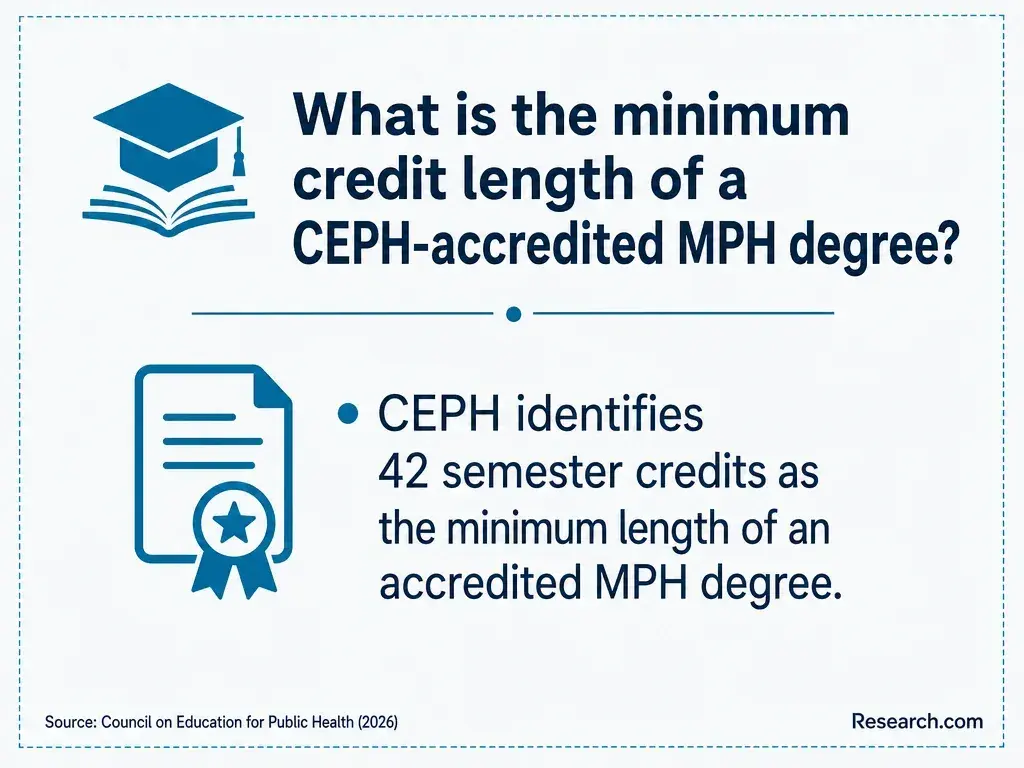
- CEPH-accredited MPH programs generally require an applied practice experience that produces at least two products demonstrating selected competencies; the program decides how a proposed placement satisfies its rules.
- Compare total tuition and fees with unpaid hours, travel, and the risk of a delayed data agreement; an online MPH does not necessarily offer remote or flexible fieldwork.
What is an MPH practicum in a community data collaborative?
An MPH practicum, often called an applied practice experience, is supervised work that applies public health competencies to a practice setting. A community data collaborative brings organizations together to use information for a shared purpose, such as identifying service gaps or improving how programs track reach. Participants might include a health department, nonprofit organizations, residents, and a health system; their roles and authority vary by partnership.
The decisive feature is not the collaborative's name or access to sophisticated software. It is whether the student can complete an approved, bounded assignment that answers a partner's question and yields usable products. A placement built entirely around watching analysts work may offer exposure but insufficient practice.
Students still completing an undergraduate degree should not treat accelerated online public health bachelor's accelerated class options as substitutes for MPH-level fieldwork. They are a different educational pathway with different admission and applied-learning requirements.
How do CEPH accreditation standards apply to an MPH practicum?
The Council on Education for Public Health (CEPH) sets applied practice expectations for programs within its accreditation scope. Its MPH criteria call for students to demonstrate selected foundational and concentration-specific competencies through practice and produce at least two work products. A dashboard and its accompanying decision brief, for example, might be distinct products if the program accepts them and each demonstrates the agreed competencies.
CEPH does not approve an individual student's site. The MPH program determines site eligibility, supervision, learning objectives, documentation, and assessment under its policies. Confirm that the specific MPH degree falls within the accredited school, unit, or program - not merely that its university holds institutional accreditation. A comparison of online MPH programs with CEPH accreditation can narrow a search, but the accreditor's current listing and the school's fieldwork handbook should settle scope and requirements.
Ask the practicum coordinator to approve the proposed competencies and products before work begins. Host willingness, academic approval, and permission to access or share data are separate decisions.
What skills and competencies can students develop through a community data practicum?
A well-scoped project can develop data quality checks, descriptive analysis, interpretation of population patterns, and communication for nontechnical decision-makers. It can also teach partnership skills: agreeing on whose question the analysis answers, explaining missing data, and checking whether a proposed display could misrepresent a community. These abilities become stronger when the student receives feedback and revises a product, rather than simply delivering a file.
Match the assignment to your starting skills and intended role. A student interested in program evaluation may benefit more from defining indicators with a nonprofit than from fitting an advanced model nobody can maintain. Someone seeking specialist quantitative work should check whether the practicum provides adequate methods supervision; flexible routes to a biostatistics master's degree may be more relevant than a generalist MPH if intensive statistical training is the primary goal.
Document methods, definitions, exclusions, and limitations. Descriptive differences between neighborhoods do not, by themselves, establish why those differences exist or whether a program caused them.
The best project starts with a decision the partner actually faces and uses data the student is authorized to handle. This comparison shows how several feasible project types differ; none should be presumed approved or completed at a particular site.
| Possible project | Partner decision it could support | Key constraint to check |
| Indicator dictionary and data-quality memo | Which measures can partners compare consistently? | Agreement on definitions and data ownership |
| Service-reach dashboard and interpretation brief | Where should outreach be reviewed? | Small-cell disclosure and misleading comparisons |
| Evaluation plan and reporting template | What should a program measure next? | Whether proposed indicators are collectable |
Before choosing, distinguish public, deidentified, restricted, and identifiable data. A data-use agreement may limit who can access records, where analysis occurs, and what can leave the site. The partner and university may also need to determine whether privacy rules, consent, or institutional review apply; calling work "evaluation" does not settle those questions.
A student who has not yet earned a bachelor's degree needs to resolve that educational step before pursuing an MPH; public health bachelor's cost comparisons address a different decision from selecting an MPH practicum. For an MPH student, a modest, authorized evaluation product is usually more useful than an ambitious analysis stalled by unavailable records.
Either format may permit a local placement, but the degree's delivery mode does not determine fieldwork location. Compare what each program actually does: identifies potential sites, negotiates agreements, approves supervisors, offers faculty check-ins, and helps when a site or dataset falls through. Ask whether required meetings occur during business hours and whether remote access to partner systems is allowed.
For working students, the practical question is how many hours must be available at the same time as the partner's staff. An asynchronous course cannot make a daytime community meeting asynchronous. Existing employment may provide a possible site, but the school must decide whether the proposed work is distinct, supervised, and eligible. Use an online MPH tuition comparison guide alongside each program's placement rules: a lower advertised tuition rate may not offset travel, time away from paid work, or an extra term caused by placement delays.
MPH admission and practicum approval are separate stages. Programs typically require a qualifying bachelor's degree and application materials, but policies on GPA, prerequisite coursework, tests, experience, and application systems vary. An undergraduate major outside public health does not automatically rule out admission. Statistics or methods preparation may be required, recommended, or built into the curriculum, depending on the school.
If your preparation is uneven, distinguish an official requirement from a way to strengthen your application. Comparing flexible public health master's entry routes can help frame questions, but obtain the specific program's written policy on outstanding prerequisites and when they must be completed. Do not assume admission guarantees a place with a particular data collaborative.
There is no single practicum duration or price across MPH programs. Schools set their own hours, credit requirements, sequencing, and approval deadlines. A short-looking project may require substantial time to arrange supervision, secure data access, revise products, and obtain academic sign-off. Request the fieldwork handbook and a term-by-term plan before accepting a site.
Budget for tuition on any practicum credits, mandatory fees, travel or equipment, and earnings lost to unpaid daytime work. Ask whether a delayed placement adds another term of charges and whether the site offers pay; do not presume either payment or reimbursement. If the real objective is independent research rather than supervised public health practice, compare that goal separately with doctoral training and its funding conditions, using an epidemiology doctoral education funding guide. Doctoral funding possibilities should not be counted as support for an MPH practicum.
The placement is most directly relevant to roles that turn community information into practice decisions: program evaluation assistant, public health analyst, health department program specialist, or nonprofit data and reporting coordinator. The student's products can demonstrate indicator design, careful interpretation, partner communication, and documentation. They do not establish proficiency in every analytic method or qualify a graduate automatically for a senior epidemiologist or research-director role.
Choose projects with the target role's tasks in mind. A dashboard accompanied by a clear limitations brief may support applications for reporting roles; an evaluation plan may be stronger evidence for program roles. If the target is advanced statistical research, another degree structure may fit better; choosing among public health master's degree formats is a separate comparison worth making before enrollment.
There is no reliable occupation-wide salary or growth rate for "MPH graduates in community data collaboratives." Employers hire for named roles, and compensation depends on responsibilities, location, sector, and experience. For a meaningful comparison, identify likely job titles in the area where you intend to work, then compare their posted requirements with the relevant U.S. Bureau of Labor Statistics occupational profiles. An occupational median describes workers in that occupation - not the expected starting pay from this practicum.
Assess financial value against the entire degree cost, not an attractive salary figure for a loosely related role. A guide to public health graduate program costs versus salaries can provide comparison questions, but your decision should use the program's charges and job openings that match your actual experience and project evidence.
How can students evaluate a reputable MPH practicum program?
Request evidence of what happens before, during, and after placement. A credible program can explain its approval process, competency assessment, supervisor expectations, and response when data access fails. It should distinguish a standing partnership from a guarantee that a particular student can join it. Compare programs on these points, not on partner logos alone.
These questions evaluate public health doctorate application accessibility and turn a promising placement description into a decision you can verify with the academic coordinator and proposed site supervisor:
- Who approves the site, supervisor, competencies, and proposed products, and by what deadline?
- Which partner decision will my work inform, and who will provide feedback on drafts?
- What data can I actually access, under whose permission, and what substitute task is available if access is delayed?
- What are the required hours, meeting times, travel expectations, and total practicum-related charges?
- What may I retain or present in a portfolio after removing confidential information and obtaining any required permission?
Confirm CEPH scope and read the fieldwork handbook for your entry term. If the answers reveal weak supervision or only observational tasks, seek a different site or program - even if the collaborative's mission is compelling.
Other Things You Should Know About Public Health
Only if the site's data policies and your program permit the specific tool and use. Do not upload restricted information to an unapproved service; verify outputs and document any permitted use.
Ownership and reuse depend on university policy and the site agreement. Clarify those terms before work starts, particularly if you hope to include a product in a portfolio.
Not automatically. Ask the partner and program about publication permission, confidentiality, authorship, and any applicable review before submitting an abstract.
Discuss the definitions, limitations, and intended use with them. Record unresolved differences accurately rather than changing a finding solely to make it more favorable.
- Competencies for Public Health Professionals | cdc.gov https://www.cdc.gov/infrastructure/training-professional-development/competencies-for-public-health-professionals.html
- Master of public health community-based practicum | nih.gov https://pubmed.ncbi.nlm.nih.gov/21617409/
- Practicums, Internships and Projects What's the Difference? | Oregon State University https://health.oregonstate.edu/internships/types-of-experiential-learning
- Practicum and Capstone: COPHP MPH | Health Systems and Population Health https://hspop.uw.edu/cophpmph/program-experience/practicum-capstone/
- Practicum Examples | UW School of Public Health https://sph.washington.edu/mph-practicum/examples
- MPH Practicum | Master of Public Health | Brown University https://mph.sph.brown.edu/applied-learning/mph-practicum
- 3 Model Data Use Agreements: A Practical Guide | mit.edu https://admindatahandbook.mit.edu/book/v1.0-rc5/dua.html
- Public Health Practicum | UCLA Fielding School of Public Health https://www.mphhp.ph.ucla.edu/public-health-practicum
- Section 1: Introduction - Master of Public Health Practicum Manual - Academic Guides at Walden University https://academicguides.waldenu.edu/masters-public-health-practicum-manual/introduction
- Practicum Proposal and Learning Plan FINAL 2.3.2020 | routt.co.us https://www.co.routt.co.us/AgendaCenter/ViewFile/Item/21008