2027 Does a Public Health BS Prepare You for Public Health Data Entry Quality Roles?

Co-Founder and Chief Data Scientist
A public health BS can help you understand why accurate records matter for surveillance, outreach, and program evaluation. But data entry quality jobs also demand careful work in specific systems, documented error checks, and respect for sensitive information - skills a degree alone may not prove.
This guide is for students and early-career applicants deciding whether a public health bachelor's degree is the right route into that work. It explains what employers may expect, how to build evidence of readiness, and when targeted training could be a faster, less costly choice.
Key Things You Should Know
- Direct answer: A public health BS can prepare you for entry-level data quality work, especially when it includes hands-on data management or a relevant internship; the degree alone does not establish proficiency in an employer's systems.
- Best evidence of readiness: Show that you can check records against documented rules, resolve discrepancies without guessing, protect sensitive information, and maintain an audit trail.
- Cost and pay decision: Data entry quality has no single dedicated federal wage category. Compare local job postings with the full cost of a BS before enrolling solely for this role.
Does a public health BS prepare you for public health data entry quality roles?
Yes, conditionally. A public health BS provides useful context for records about populations, services, exposures, and health outcomes. It can teach you to recognize why a missing date, inconsistent definition, or duplicate record could distort a report. What it may not teach is the employer's intake software, database permissions, correction workflow, or standards for a particular dataset.
"Data entry quality" may describe checking the completeness, accuracy, consistency, and timeliness of records entered into a registry, surveillance system, survey platform, or program database. At entry level, you might compare forms with entered records, flag missing fields, investigate duplicates, or route questionable values to an authorized reviewer. You should not independently change a source record merely because a value looks unusual.
If you already have clerical, clinical support, laboratory, or community-program experience, compare your skills with actual postings before pursuing another degree. A supervised project or employer training may close a narrow software or quality-control gap faster. If your goal is eventually to design analyses rather than check source records, specialization choices in public health graduate study become relevant later, not a prerequisite for entering data quality work.
What skills do public health data entry quality jobs require?
Job titles vary, so assess postings by task. The distinction is whether you can follow a specified process reliably - not simply whether you can type quickly or run a statistical test. This table connects common tasks with evidence an applicant could reasonably provide.
| Common task | Skill to demonstrate | Possible evidence |
| Check submitted records | Compare entries with source documents and a data dictionary | A supervised exercise using permitted sample data |
| Flag missing or conflicting values | Apply validation rules and escalate uncertain cases | A documented exception log and resolution procedure |
| Prevent duplicate or inconsistent records | Use identifiers and standardized definitions carefully | A quality-check protocol that distinguishes suspected from confirmed duplicates |
| Handle sensitive information | Follow access, storage, and disclosure rules | Relevant workplace training and a clear explanation of permitted access |
Excel or another spreadsheet tool is often useful, but employers may use a registry, electronic health record, or purpose-built case-management platform. Learn to explain the difference between a validation rule, an error you confirmed, and a value that needs expert review. Advanced statistical modeling is usually a separate skill set; career-compatible online biostatistics study is more pertinent if you later want to move into quantitative analysis.
What public health careers can you pursue with a bachelor's degree?
A BS may support applications for data quality assistant, registry assistant, surveillance support specialist, program assistant, or research support positions. Availability and minimum qualifications depend on the employer. The table shows how closely adjacent roles match the work in this article; it does not imply that every opening accepts a public health BS.
| Role type | Typical responsibility | What to check in postings |
| Data quality or registry support | Review fields, reconcile records, document exceptions | Required software, record type, and experience |
| Public health program assistant | Maintain participant or service records and support reporting | Amount of administrative versus data work |
| Research assistant | Support approved data collection and quality checks | Study-specific training and supervision |
| Health education or outreach support | Coordinate activities and document services | Communication duties and any credential preferences |
These are not interchangeable with epidemiologist, senior analyst, or data manager positions, which may require substantially more methods training and experience. Apply to roles whose listed tasks match what you can demonstrate, then build toward more complex responsibility. A doctorate is not a sensible entry requirement for record checking; public health doctorate costs and career outcomes matter only if a later leadership or research goal justifies that investment.
Look beyond course titles to assignments and software access. Introductory epidemiology can explain case definitions and surveillance measures; biostatistics can develop data literacy; research methods can teach variable definitions, missing-data documentation, and reproducibility. Health information, informatics, database, or program evaluation electives may provide more direct practice, if the school offers them.
The strongest preparation combines that coursework with an authorized internship, faculty-supervised exercise, or capstone in which you create a data dictionary, test validation rules, and document how exceptions would be resolved. Ask whether students work with synthetic, public, deidentified, or restricted data: each has different permissions, and access to one does not authorize use of another.
A student aiming only for quality-check work need not choose a BS because it offers the most advanced quantitative electives. First compare its applied assignments with cheaper training options. If you later consider a graduate degree for broader responsibilities, Master of Public Health affordability comparisons are a separate decision from selecting undergraduate courses that fit this job.
There is no universal license for public health data entry quality work. Employers may require privacy or system-specific training and may prefer experience with a particular registry. Requirements can differ for jobs involving clinical records, cancer registries, or other specialized data; read the exact posting and check the responsible employer or credentialing body.
A public health BS does not itself award professional certification or clinical licensure. CPH and health education credentials address different competencies and should not be purchased on the assumption that they qualify someone for a data quality position. Similarly, admissions-focused public health doctorate rankings say nothing about eligibility to correct records or use an employer's database. For this goal, documented training and accurate supervised work are more directly relevant.
Either format can teach the concepts behind data quality. The deciding issue is whether you can complete practical assignments, receive feedback, and obtain relevant experience. An online program may remove a commute but still require scheduled classes, group work, proctored assessments, or an in-person placement. A campus program may make local employer connections easier without guaranteeing an internship.
Ask each school how students access software, obtain placement approval, receive supervision, and show work publicly without revealing restricted records. If you work or provide care for others, request the actual schedule for required courses and fieldwork rather than relying on the label "flexible." Online graduate admissions are a different matter: online MPH study without reference letters may be worth examining later, but it should not determine your BS format choice.
Requirements vary by institution and by entry route. First-time applicants generally need to meet the university's undergraduate admission standards; some schools also have separate requirements for entry to the public health major. Transfer applicants should check whether prior statistics, science, or general education courses satisfy degree requirements - not merely whether the university accepts the credits.
Request a written degree audit and ask which prerequisites must be finished before upper-division courses or internships. This matters if delaying a required course would also delay the data-focused experience you want. Do not apply a graduate program's standards to an undergraduate application: guidance on addressing GPA concerns in an MPH application concerns a later, separate admissions decision.
A bachelor's degree is commonly planned as four years of full-time undergraduate study, but your remaining time depends on accepted credits, course sequencing, enrollment pace, and fieldwork availability. A transfer student should use an approved degree audit, not a headline completion estimate, to calculate the remaining path.
For a meaningful cost comparison, obtain each school's current tuition and mandatory fees, then account for remaining credits, books or software, travel, and any unpaid placement time. Compare that total with the cost of a relevant course or employer training if you already qualify for the jobs you want. Weighing the cost of public health graduate study is useful only if a later graduate-level role becomes your objective; it is not evidence that a second degree will pay off in an entry-level data quality job.
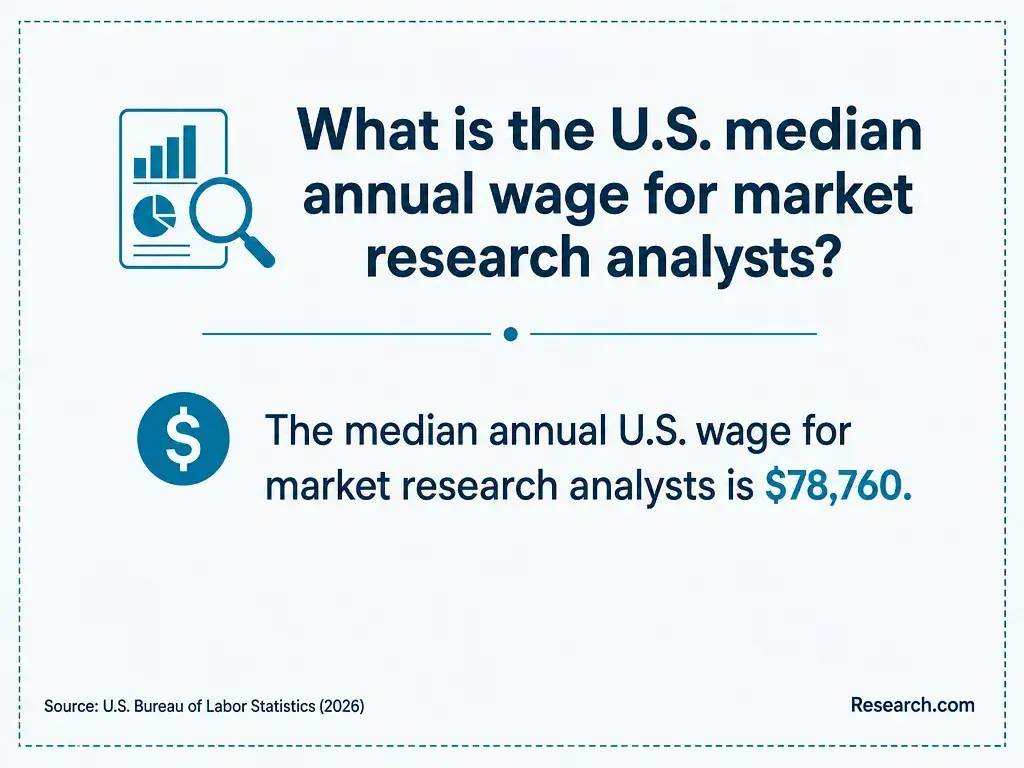
There is no reliable national median specifically for jobs called "public health data entry quality." The US Bureau of Labor Statistics reports wages by defined occupation, and a job that checks clinical records may fall closer to medical records specialist work than one supporting a research database or health department program. Those occupations have different duties and pay; none is a degree-specific salary estimate for public health BS graduates.
For a usable expectation, compare the posted pay of local openings whose duties and experience requirements match yours. Check whether the position is full time, temporary, or grant-funded, and whether it includes benefits. Do not use the pay of epidemiologists or managers to forecast entry-level earnings. Likewise, reducing epidemiology doctorate costs through assistance addresses a substantially different career and financial decision.
How do you choose an accredited public health BS program?
Confirm the institution's recognized accreditation, then check the exact scope of any Council on Education for Public Health accreditation the school advertises. Accreditation of a public health school, unit, or program should not be assumed to cover every degree offered by the institution. For this career goal, accreditation is a starting check - not a substitute for examining practical training.
Ask an adviser for the current degree requirements and examples of permitted data-focused assignments. Ask career services which employers host students, whether placements involve actual quality-control tasks, and how the school helps students obtain permission to use work samples in a portfolio. Compare those answers with tuition, scheduling, and the qualifications in nearby job postings before committing. A future graduate option, such as university scholarships for online public health master's study, should not distract from whether this BS provides the experience needed for your first role.
Other Things You Should Know About Public Health
Follow the organization's reconciliation procedure. Preserve the original information, document the discrepancy, and refer it to the person authorized to determine which source controls; do not guess.
Yes, if you have permission to share it. A project using synthetic or appropriately public data can show your rules and documentation without exposing confidential records.
Only if your organization has approved the tool, the data access, and the workflow. AI output can introduce errors; questionable records still need the required human review.
Name the records you handled, the checks you performed, and how you documented or escalated discrepancies. Avoid claiming an error reduction you did not measure.
- Health Insurance Portability and Accountability Act (HIPAA) Compliance - StatPearls - NCBI Bookshelf https://www.ncbi.nlm.nih.gov/books/NBK500019/
- Data Quality in Health Research: Integrative Literature Review | nih.gov https://pmc.ncbi.nlm.nih.gov/articles/PMC10646672/
- Summary of the HIPAA Privacy Rule | hhs.gov https://www.hhs.gov/hipaa/for-professionals/privacy/laws-regulations/index.html
- Public Health Surveillance in Electronic Health Records | cdc.gov https://www.cdc.gov/pcd/issues/2024/23_0417.htm
- PH.140 (Biostatistics) - JHU catalogue https://e-catalogue.jhu.edu/course-descriptions/biostatistics/
- Public Health | Saddleback College https://www.saddleback.edu/programs-degrees/all-programs/public-health
- Practicum Examples | UW School of Public Health https://sph.washington.edu/mph-practicum/examples
- BS, Public Health Science - College Park https://sph.umd.edu/undergraduate-degrees/bs-public-health-science-college-park