2027 Top AACSB-Accredited Online MBA Programs in the U.S.

Co-Founder and Chief Data Scientist
An online MBA can be a strong next step if you want to move into management, broaden your business skills, change functions, or strengthen your leadership profile without leaving your job. The harder question is not whether online MBAs are available; it is which programs have the academic quality, employer recognition, flexibility, and cost structure to justify the investment.
AACSB accreditation is one of the clearest quality signals in business education. It shows that a business school has met rigorous standards for faculty qualifications, curriculum design, student learning, strategic planning, and continuous improvement. For online students, AACSB accreditation also helps confirm that the remote format is not a watered-down version of the campus experience.
This guide reviews top AACSB-accredited online MBA programs in the U.S. for 2027 and explains how accreditation affects program quality, admissions, cost, and career value. Use it to compare options carefully, identify trade-offs, and choose a program that fits your schedule, budget, and long-term goals.
Key Benefits of Enrolling in a Top AACSB-Accredited Online MBA Program
- Global Recognition: AACSB accreditation is a mark of excellence recognized worldwide, signaling that your MBA meets rigorous academic and professional standards.
- High-Quality Curriculum: Accredited programs are regularly reviewed to ensure they offer relevant, research-backed coursework taught by qualified faculty.
- Stronger Career Opportunities: Employers value AACSB-accredited degrees, which can enhance your credibility and competitiveness in the job market.
- Robust Networking and Alumni Connections: Students gain access to an elite network of business professionals, industry leaders, and alumni from top institutions.
List of Top AACSB-Accredited Online MBA Programs in the U.S.
Choosing an online MBA is a major financial and professional decision. The right program should match your career goals, learning style, time availability, and budget—not simply carry a recognizable university name. AACSB accreditation is a valuable starting point, but students should also compare program length, delivery format, concentrations, total cost, required credits, live-session expectations, and access to career services.
Research.com’s review team evaluated programs using reliable higher education data sources and program-level information. You can read more about the Research.com methodology for additional details. The data used to rank academic programs come from the Integrated Postsecondary Education Data System, Peterson’s database (including its Distance Learning Licensed Data Set), College Scorecard, and the National Center for Education Statistics.
1. University of Southern California – Marshall School of Business (Online MBA)
University of Southern California offers an accelerated online MBA built for working professionals who want a structured program, a broad management curriculum, and access to a large global alumni network. The format may appeal to students who want a recognized private university brand and are comfortable with a premium tuition investment.
- Program Length: 21 months
- Tracks/Concentrations: General MBA (with electives)
- Cost/Tuition: Around $112,072 for five semesters
- Required Credits: 51 credits
- Accreditation: AACSB
2. Carnegie Mellon University – Tepper School of Business (Online Hybrid MBA)
Carnegie Mellon University offers a STEM-designated online/part-time MBA that blends live online coursework with periodic in-person Access Weekends. It is a strong fit for professionals seeking a quantitative, analytics-centered MBA with leadership development and campus-based networking built into the schedule.
- Program Length: 24–32 months
- Tracks/Concentrations: STEM MBA with focus on analytics and leadership
- Cost/Tuition: About $147,648 total
- Required Credits: 144 units (equivalent to roughly 48–50 semester credits)
- Accreditation: AACSB
3. Rice University – Jesse H. Jones Graduate School of Business (Online MBA)
Rice University offers a customizable online MBA with electives across major business functions. Students who want flexibility in course selection may find the program useful, especially if their goals involve finance, strategy, marketing, entrepreneurship, energy, or healthcare.
- Program Length: 24 months
- Tracks/Concentrations: General Management, Corporate Strategy, Finance, Investment Management, Marketing, Entrepreneurship, Energy, Healthcare
- Cost/Tuition: $2,130 per credit
- Required Credits: 54 credits
- Accreditation: AACSB
4. University of Washington – Foster School of Business (Hybrid MBA)
The University of Washington offers a hybrid MBA in which 95% of coursework is online, combined with short in-person sessions for collaboration and networking. This structure may work well for students who need online flexibility but still want face-to-face interaction and a stronger cohort experience.
- Program Length: 21 months
- Tracks/Concentrations: General MBA with elective specializations (e.g., business analytics, digital strategy)
- Cost/Tuition: About $93,000 total
- Required Credits: 62 credits
- Accreditation: AACSB
5. Indiana University – Kelley School of Business (Online MBA)
Indiana University offers a flexible online MBA with a wide range of electives, live classes, global immersions, and strong employer recognition. It is especially relevant for students who want to tailor the degree toward a specific function while maintaining a broad general management foundation.
- Program Length: 2 years
- Tracks/Concentrations: Business Analytics, Digital Technology, Management, Entrepreneurship, Finance, Marketing Strategy, Supply Chain & Operations
- Cost/Tuition: About $88,320 total
- Required Credits: 54 credits
- Accreditation: AACSB
6. University of Florida – Warrington College of Business (Online MBA)
The University of Florida offers a fully online MBA with both 16-month accelerated and 24-month options. The program may be a practical choice for professionals who want an AACSB-accredited public university MBA with a more defined general management structure.
- Program Length: 16 or 24 months
- Tracks/Concentrations: General MBA
- Cost/Tuition: Around $58,000 total
- Required Credits: 48 credits
- Accreditation: AACSB
7. University of North Carolina – Kenan-Flagler Business School (Online MBA)
The University of North Carolina offers a flexible online MBA with live classes, in-person summits, and more than 35 elective options. It is designed for students who want a high-touch online experience, multiple specialization choices, and opportunities to build relationships beyond the virtual classroom.
- Program Length: 18–36 months
- Tracks/Concentrations: Data Analytics, Entrepreneurship, Finance, Marketing, Strategy & Consulting
- Cost/Tuition: About $125,589 total
- Required Credits: 62 credits
- Accreditation: AACSB
8. Arizona State University – W. P. Carey School of Business (Online MBA)
Arizona State University offers an online MBA with multiple start dates per year and no GMAT/GRE requirement for most applicants. The program may suit students who want scheduling flexibility and concentration options in areas such as analytics, finance, entrepreneurship, marketing, and supply chain management.
- Program Length: 21 months
- Tracks/Concentrations: Business Data Analytics, Finance, Entrepreneurship, International Business, Marketing, Supply Chain Management
- Cost/Tuition: Around $66,266 total
- Required Credits: 49 credits
- Accreditation: AACSB
9. Rochester Institute of Technology – Saunders College of Business (Online Executive MBA)
Rochester Institute of Technology offers a cohort-based online executive MBA with live weekly sessions and an international travel component. It is most appropriate for experienced professionals who want a structured executive format rather than a traditional elective-heavy MBA.
- Program Length: 17 months
- Tracks/Concentrations: Executive MBA format (no separate tracks)
- Cost/Tuition: Around $78,000 (includes materials and travel)
- Required Credits: 47 credits
- Accreditation: AACSB
10. University of Kansas – School of Business (Online MBA)
The University of Kansas offers a flexible online MBA with eight-week courses and multiple start dates per year. Its shorter course format can help working students progress steadily while focusing on one subject area at a time.
- Program Length: 27 months
- Tracks/Concentrations: Finance, Management & Leadership, Marketing
- Cost/Tuition: $865 per credit
- Required Credits: 42 credits
- Accreditation: AACSB
What does it mean for an online MBA program to be AACSB-accredited?
An AACSB-accredited online MBA is offered by a business school that has met quality standards set by the Association to Advance Collegiate Schools of Business. AACSB accreditation is widely viewed as a leading benchmark for business education because it evaluates the entire business school environment—not just a single course or online delivery platform.
For students comparing MBA online programs, AACSB accreditation helps answer an important question: is the online degree backed by the same academic standards expected from a reputable business school? Accredited schools must show evidence of qualified faculty, relevant curriculum, clear learning goals, student support, ethical governance, and ongoing improvement.
AACSB accreditation does not guarantee a job, salary increase, or promotion. It also does not mean every AACSB-accredited MBA is equally strong for every career path. However, it does provide an external quality check that can reduce the risk of choosing a program with weak academic standards or limited employer credibility.
What AACSB accreditation typically signals
- Faculty quality: Instructors are expected to have appropriate academic and professional qualifications.
- Curriculum relevance: Programs must show that course content aligns with current business knowledge and practice.
- Student learning assessment: Schools must evaluate whether students are achieving defined learning outcomes.
- Continuous improvement: Accreditation is not permanent without review; schools must demonstrate progress over time.
- Institutional credibility: Employers and other universities are more likely to recognize degrees from accredited business schools.
Schools must undergo an extensive review process every five years, demonstrating a commitment to innovation, academic rigor, and impactful research. For online students, this matters because the format should still provide meaningful faculty access, rigorous assignments, peer engagement, and career-relevant learning.
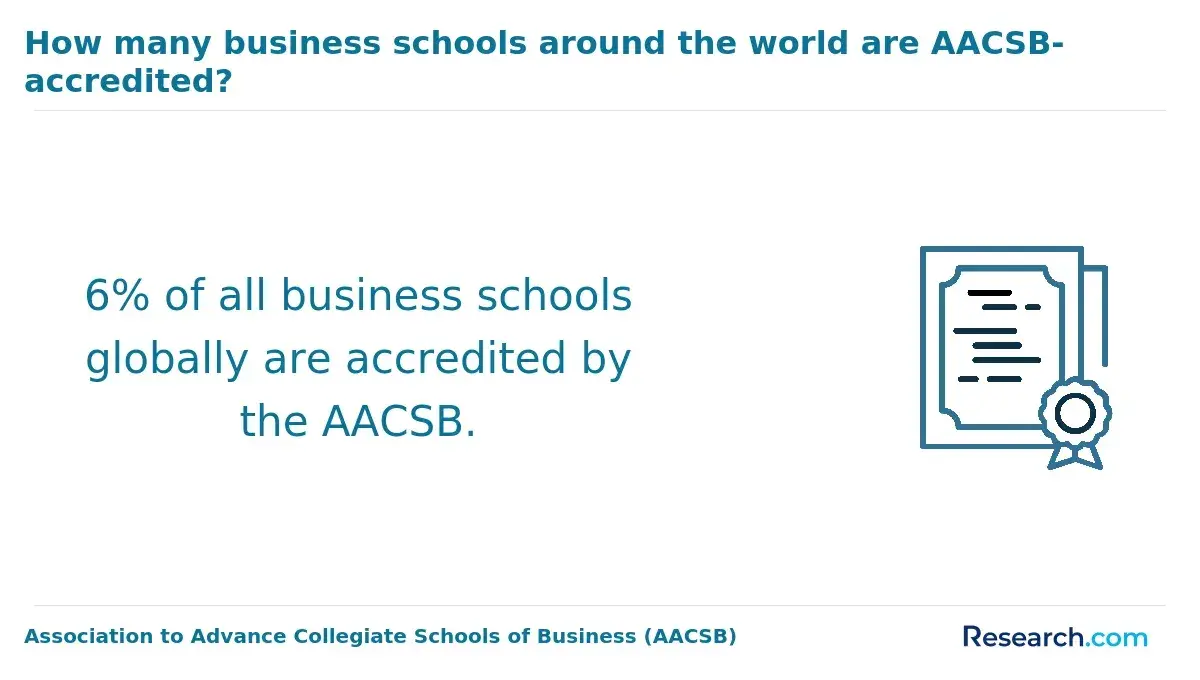
Why should accreditation matter when choosing an online MBA?
Accreditation should be one of the first filters you apply when evaluating an online MBA. It affects academic credibility, transferability, financial aid eligibility, employer perception, and the long-term value of the credential. A low-cost or fast MBA can become a poor investment if employers, doctoral programs, or reimbursement plans do not recognize the school’s quality.
- It helps verify academic standards: Accredited programs are reviewed for curriculum rigor, faculty qualifications, student learning outcomes, and continuous improvement.
- It can strengthen employer confidence: Employers are more likely to trust degrees from schools that have passed an external quality review, especially for management and leadership roles.
- It supports career mobility: An accredited MBA is generally easier to explain when applying for promotions, changing employers, or moving across industries.
- It may improve credit transfer and future study options: Courses from accredited schools are more likely to be considered if you transfer programs or pursue another graduate credential.
- It can affect financial aid and tuition assistance: Accreditation is often required for federal financial aid eligibility and may be required by employer tuition reimbursement policies.
- It protects against weak or unrecognized programs: Accreditation helps students avoid programs with limited oversight, poor student support, or questionable market value.
Accreditation is necessary, but not enough
AACSB accreditation should not be the only factor in your decision. A program can be accredited and still be a poor fit if it lacks the concentration you need, requires travel you cannot manage, has limited career support, or costs more than you can reasonably recover. Use accreditation as a quality baseline, then compare program structure, outcomes, faculty access, alumni network, and total cost.
AACSB-accredited MBA programs are often distinguished by stronger expectations for faculty qualifications, research-informed teaching, curriculum assessment, and strategic improvement. While non-AACSB programs can still offer practical business training, AACSB schools are typically held to a more demanding framework for how business education is designed, delivered, measured, and improved.
| Area of comparison | AACSB-accredited MBA programs | Other MBA programs may emphasize |
| Curriculum design | Broad managerial education supported by learning goals, assessment, and continuous review | Career-focused coursework that may vary more widely by institution |
| Faculty expectations | Strong emphasis on academic and professional qualifications, including research and industry expertise | Teaching experience, practitioner experience, or more flexible faculty qualification standards |
| Research connection | Greater integration of current business research, analytics, strategy, and evidence-based decision-making | More applied or teaching-centered content, depending on the school’s mission |
| Global perspective | Often includes international business, cross-cultural management, and global strategy considerations | May focus more on local, regional, or workforce-specific business needs |
| Leadership development | Typically emphasizes strategic thinking, ethical decision-making, communication, and organizational leadership | May focus more narrowly on functional skills or immediate workplace application |
Common features of AACSB-accredited MBA curricula include:
- Rigorous and research-driven coursework: Students are expected to connect theory, data, and practice rather than rely only on general business concepts.
- Qualified faculty: Professors typically bring strong academic preparation, professional experience, or both.
- Global business perspective: Programs often include international case studies, global market analysis, and cross-cultural leadership topics.
- Leadership and strategic thinking: Coursework usually develops decision-making, problem-solving, communication, and executive judgment.
- Applied learning opportunities: Many programs use consulting projects, simulations, team-based assignments, or business cases to connect coursework to real organizational challenges.
- Holistic skill development: AACSB-accredited programs generally combine analytical, strategic, ethical, and innovative approaches to business.
The best choice depends on your goal. If you want maximum employer recognition, a research-informed curriculum, or preparation for senior leadership, AACSB accreditation may be especially valuable. If you need a highly applied, lower-cost, locally oriented program, another accredited option may still be worth comparing.
AACSB accreditation is a multi-stage review process that evaluates whether a business school meets standards for mission, strategy, faculty resources, curriculum quality, student learning, and continuous improvement. It is not a quick approval or marketing label. On average, it takes about five to seven years from application to final approval, involving planning, documentation, implementation, and peer review.
- Eligibility Application: The school submits an initial application showing that it is prepared to pursue AACSB accreditation and can align with AACSB standards.
- Development Phase: The institution creates and implements a strategic plan that addresses faculty qualifications, curriculum quality, research expectations, student learning, and outcomes.
- Peer Review Visit: A team of deans and academic experts evaluates the school’s operations, documentation, faculty model, student experience, and performance evidence.
- Accreditation Decision: The AACSB Accreditation Council reviews the peer review findings and determines whether to grant accreditation.
- Continuous Improvement Review: Accredited schools must undergo reaccreditation every five years to maintain their status and demonstrate ongoing excellence.
Why the process matters to online MBA students
The length and depth of the process are part of what gives AACSB accreditation its value. Schools must show that quality is built into the business program, not added only for marketing. For online MBA students, this can mean more consistent course design, stronger faculty oversight, clearer learning outcomes, and more reliable institutional support.
Before applying, students should still verify accreditation directly through the school and AACSB resources, especially if a program is new, recently renamed, or delivered through a separate online learning partnership.
AACSB is not the only business accreditation body. In the U.S., students may also see business programs accredited by ACBSP or IACBE. These accreditors can indicate legitimate quality review, but they differ in emphasis. The right interpretation depends on the school’s mission, the type of MBA you want, and how much you value global business-school prestige versus teaching-centered or outcomes-based education.
- ACBSP (Accreditation Council for Business Schools and Programs): ACBSP emphasizes teaching excellence, student learning outcomes, and continuous improvement. It is often associated with schools that focus more on practical, career-oriented education than intensive research.
- IACBE (International Accreditation Council for Business Education): IACBE concentrates on outcomes-based education, assessing schools on mission alignment, student success, and program effectiveness. It often accredits smaller or newer institutions seeking recognition.
| Accreditor | Primary emphasis | Common fit |
| AACSB | Research quality, faculty qualifications, strategic management, global recognition, and continuous improvement | Students seeking a highly recognized MBA with strong academic credibility |
| ACBSP | Teaching excellence, student learning, practical business education, and continuous improvement | Students prioritizing applied learning and career-focused instruction |
| IACBE | Outcomes-based education, mission alignment, and program effectiveness | Students considering smaller, newer, or mission-driven business schools |
Compared with ACBSP and IACBE, AACSB is widely regarded as the gold standard and places greater emphasis on research quality, faculty qualifications, and global recognition. However, this does not automatically mean an AACSB program is the best option for every student. ACBSP or IACBE accreditation can still indicate a serious quality-review process, especially for students who want a practical, teaching-focused, or more affordable MBA.
AACSB-accredited MBA programs often use more selective admissions processes because they are trying to build cohorts that can handle rigorous graduate business coursework and contribute meaningfully to class discussion. Admissions committees commonly review undergraduate performance, professional experience, leadership potential, recommendations, essays or personal statements, and, in many cases, GMAT or GRE scores.
Compared with some non-AACSB or teaching-focused programs, AACSB-accredited MBAs may place more weight on academic readiness, career progression, quantitative preparation, and leadership evidence. Applicants are not evaluated only on grades or test scores; many programs also consider whether the candidate’s experience and goals fit the MBA curriculum and peer learning environment.
Common admissions materials
- Completed application form
- Official transcripts showing undergraduate academic history
- Resume documenting work experience and career progression
- Letters of recommendation from supervisors, faculty, or professional contacts
- Personal statement or essays explaining goals and program fit
- GMAT or GRE scores when required
- Interview for some programs or applicant categories
Many AACSB programs now offer flexible pathways for experienced professionals, including options for the best online MBA without GMAT. In these cases, schools may evaluate readiness through professional achievement, prior academic performance, certifications, quantitative coursework, or managerial experience instead of standardized test scores.
Applicants should not assume that a test waiver makes a program easy to enter. A strong application still needs to show clear career goals, communication ability, academic preparation, and evidence that the applicant can succeed in a demanding online MBA environment.
AACSB-accredited online MBA programs are often more expensive than non-accredited or some teaching-focused alternatives, but cost varies widely by institution. Higher tuition may reflect faculty resources, student services, curriculum development, career support, alumni networks, brand recognition, and the costs of maintaining accreditation standards. Still, price alone does not prove quality or return on investment.
Some AACSB-accredited online MBAs have premium tuition, while others are designed to be more affordable. Students should compare the full cost of attendance, not just the advertised per-credit rate. Fees, required residencies, travel, books, technology costs, and time away from work can change the real price of a program.
How to evaluate whether the cost is reasonable
- Calculate total tuition: Multiply the per-credit rate by the required credits when a total price is not listed.
- Ask about mandatory fees: Online program fees, graduation fees, technology fees, and residency costs can add up.
- Check employer support: Many working professionals reduce out-of-pocket costs through tuition reimbursement or sponsorship.
- Review scholarship options: Some programs offer merit awards, need-based aid, military benefits, or partnership discounts.
- Compare opportunity cost: An accelerated program may finish sooner, but a slower part-time program may be easier to manage while working full time.
- Estimate career value carefully: Do not assume a salary increase is guaranteed. Consider your industry, location, experience level, and whether the MBA supports a realistic next move.
Students looking for lower-cost options can compare affordable AACSB accredited online MBA programs. The best value is not always the cheapest program; it is the program that provides credible accreditation, relevant coursework, manageable scheduling, and career support at a price you can justify.
Graduates of AACSB-accredited online MBA programs may use the degree to pursue promotions, management roles, career changes, or broader leadership responsibilities. The credential can be especially useful for professionals who already have industry experience and need formal business training to move into strategy, operations, finance, marketing, consulting, or executive-track roles.
Common career outcomes include:
- promotions within current organizations
- transitions into higher-level management
- shifts into new functional areas such as finance, marketing, consulting, or operations
Career results vary. An MBA is not a guarantee of employment, a specific salary, or entry into senior leadership. Outcomes depend on prior work experience, industry demand, geographic market, networking effort, program reputation, career services, and how well the student can translate MBA learning into measurable business results.
Roles an online MBA can support
- Operations manager
- Marketing manager
- Finance manager
- Product manager
- Business analyst or strategy analyst
- Consultant
- Entrepreneur or business owner
- General manager or director-level leader
Many AACSB-accredited programs also provide career coaching, networking events, mentorship, alumni access, and employer connections. These services are most valuable when students use them early—before graduation—by refining their resume, building target-company lists, practicing interviews, and connecting with alumni in relevant roles.
How can prospective students decide which AACSB-accredited online MBA program best fits their goals?
The best AACSB-accredited online MBA is the one that fits your career plan, budget, schedule, learning preferences, and experience level. A highly ranked or expensive program may not be the right choice if it lacks your desired concentration, requires travel you cannot manage, or offers limited support for your target career path. Likewise, a lower-cost program can be a smart decision if it is accredited, reputable, and aligned with your goals.
With many options available—including traditional online MBAs, part-time formats, hybrid programs, and online executive MBA programs—students should compare both academic quality and practical fit.
Decision checklist for choosing an AACSB-accredited online MBA
- Career Goals: Decide whether you want a promotion, a career switch, a stronger leadership profile, or specialized expertise. Choose a program with coursework and employer connections that support that goal.
- Program Format and Flexibility: Compare fully online, hybrid, part-time, accelerated, synchronous, and asynchronous formats. Make sure the weekly schedule is realistic with your work and family responsibilities.
- Cost and Financial Aid: Review tuition, fees, scholarships, employer reimbursement, payment plans, and any required travel expenses.
- Networking Opportunities: Look for alumni access, live sessions, residencies, mentorship programs, career events, and cohort interaction.
- Curriculum and Specializations: Review required courses and electives to confirm the program covers the skills you need, such as analytics, finance, strategy, marketing, operations, entrepreneurship, or leadership.
- Reputation and Outcomes: Examine graduation rates, employment information, employer recognition, faculty expertise, and student support services.
Questions to ask before applying
- Is the business school currently AACSB-accredited?
- Are online MBA students taught by the same faculty who teach other MBA students?
- How often are live sessions required, and what happens if work travel conflicts with class?
- Are residencies, immersions, or campus visits mandatory?
- What career services are available specifically to online MBA students?
- How active is the alumni network in my target industry or region?
- What is included in tuition, and what costs are additional?
- Can I speak with current students or recent graduates before enrolling?
A strong final shortlist should include programs you can afford, complete successfully, and explain confidently to employers. Prioritize accreditation and fit over prestige alone, and choose the MBA that gives you the clearest path from where you are now to the role you want next.
Other Things You Should Know About Top AACSB-Accredited Online MBA Programs in the U.S.
Yes, most AACSB-accredited online MBA programs require a bachelor's degree from an accredited institution. Additional prerequisites may include a minimum GMAT/GRE score, relevant work experience, and proficiency in English for non-native speakers. Some programs might offer conditional admission if prerequisites aren't fully met.
AACSB-accredited online MBA programs ensure quality remote learning through rigorous standards that include interactive platforms, faculty training, and continuous assessment. In 2027, many use advanced technologies like AI-driven learning analytics to enhance educational delivery and student engagement.
Most AACSB-accredited online MBA programs ask for a bachelor’s degree, official transcripts, a résumé, a statement of purpose, and one or two recommendation letters. Many schools also request GMAT or GRE scores, but some waive them for applicants with strong academic or professional records.
- Accreditation Council for Business Schools and Programs. (n.d.). ACBSP accreditation Overview - Accreditation Council for Business Schools and programs. acbsp.org.
- Association to Advance Collegiate Schools of Business. (n.d.). Accreditation. aacsb.edu.
- Association to Advance Collegiate Schools of Business. (n.d.). Why Accreditation Matters. aacsb.edu.
- Gary W. Rollins College of Business. . (2024, January 12). Top Questions to Ask About Online MBA Programs - Gary W. Rollins College of Business. blog.utc.edu.
- GMAC. (2025). Demand for Graduate Business Degrees. gmac.com.
- Michigan State University. (2024, October 24). The Importance of AACSB Accreditation for Business Schools. michiganstateuniversityonline.com.