2027 Online MBA Workload by Credit Hour: What Students Should Expect

Co-Founder and Chief Data Scientist
Balancing work, life, and studies often challenges students pursuing an online MBA, especially when estimating the weekly workload per credit hour. Many enroll without knowing how much time to allocate to coursework, leading to stress and potential burnout.
Understanding the typical demands can help students set realistic schedules and avoid surprises that disrupt their professional and personal lives. This article breaks down the average workload associated with each credit hour and offers insights into managing time effectively, ensuring students can meet program expectations without compromising other responsibilities.
Key Things You Should Know
- The average workload for a 2026 online MBA is about 9-12 hours weekly per credit hour, equating to roughly 135-180 total hours per 15-credit semester.
- Most programs require 30 to 60 credit hours, with full-time students completing their degree in 1 to 2 years and part-time students in 2 to 4 years.
- Students should expect asynchronous content combined with live sessions, demanding strong time management and consistent weekly study to balance work and coursework.
What is the typical online MBA workload per credit hour?
The typical online MBA credit hour workload ranges from 8 to 12 hours weekly per credit. This estimate includes attending lectures, completing assignments, participating in discussions, and preparing for exams.
Quantitative courses like finance or accounting often require more time to master concepts and complete problem sets than courses focused on leadership or organizational behavior, reflecting the expected study time per MBA credit hour needed for success.
Full-time students usually take 9 to 12 credits per term, which can total 72 to 144 weekly study hours. Part-time students balancing work and family commitments often enroll in 3 to 6 credits, requiring 24 to 72 hours per week.
In fact, data shows that 67% of online MBA graduates completed their degrees while working full-time, underlining the importance of workload management.
Asynchronous online programs offer flexibility but demand disciplined time management. Students should plan consistent weekly study blocks, generally 2 to 4 hours per credit outside of lectures. Time-consuming projects, case studies, and group work may cause fluctuations during peak periods.
For prospective students prioritizing affordability alongside workload, exploring the cheapest MBA online programs can help balance cost and commitment. Realistic assessment of availability and choosing part-time options or lower credit loads can prevent burnout while meeting degree requirements.
How many hours per week does an online MBA course demand?
Online MBA course weekly workload averages about 8.2 hours per credit hour each week, according to the Eduventures 2025 Online Higher Ed Report. This means a typical 3-credit course demands approximately 24.6 hours weekly, including lectures, readings, assignments, and discussions. Notably, online MBA students spend 15% more time each week compared to traditional on-campus peers.
This increased commitment primarily results from asynchronous learning environments that require strong self-discipline and time management. Students need to dedicate time beyond video lectures to engage in interactive content, contribute to forums, and complete individual projects without live instructor interaction.
For working professionals balancing full-time jobs and family, this workload can feel intense but remains manageable with structured weekly planning. The average hours per week for online MBA classes can vary depending on course complexity and delivery method.
Courses heavy in quantitative subjects like finance or statistics often require additional study time beyond the average. Programs that emphasize case studies and group projects may include synchronous sessions, introducing fixed weekly time obligations.
Effective strategies to manage the workload include creating detailed weekly schedules, prioritizing tasks by deadlines, and using productivity tools. Students new to asynchronous formats should expect an initial adjustment period during which time requirements may feel higher.
Prospective students looking to compare programs and find affordable options can explore the best AACSB online MBA programs for insight on program design and commitments.
What factors influence online MBA workload intensity?
The intensity of an online MBA workload varies significantly depending on enrollment status, with full-time students dedicating notably more hours each week than part-time students. For instance, full-time enrollees averaged 28 hours weekly on studies, spending about 40% more time than their part-time counterparts.
This increased effort enables full-time students to finish their degree 22% faster, according to the BLS 2025 Graduate Employment Outcomes. These differences highlight how enrollment affects the online MBA credit hour workload and the overall completion speed.
Course design also plays a crucial role. Programs that rely heavily on case studies, group projects, or live discussions generally demand more outside engagement beyond asynchronous lessons.
Students often face multiple deliverables such as essays, presentations, and exams with tight deadlines, increasing workload intensity. In contrast, self-paced courses offer more flexibility but call for strong self-discipline.
Factors affecting MBA coursework intensity include personal and work commitments, especially for working professionals enrolled part-time who juggle job responsibilities alongside studies.
This balance typically slows progress but reduces weekly hours spent on coursework. Additionally, technology proficiency influences workload; those less familiar with online platforms may require extra time to manage assignments and communications.
Credit hours per course also impact study demands, as institutions may assign more credits to certain classes, requiring more time investment. Planning course load thoughtfully is essential to manage workload and avoid burnout.
Prospective students looking for affordable options might consider exploring the executive MBA cheapest programs to find a balance between cost and workload.
Students enrolled in online MBA programs face a weekly time commitment similar to traditional campus programs, though workload intensity can vary.
The AACSB 2025 Online Learning Impact Study found that those taking 9 or more credits per term in online MBA programs average about 35 hours per week, which closely matches campus MBA students' workload of 30 to 40 hours weekly depending on course demands. This average credit hour workload for online MBA students reflects the serious time investment required.
Campus programs typically feature structured schedules and face-to-face interactions, providing fixed times for study and group work. Conversely, online MBA students enjoy flexibility but must independently manage deadlines and coursework.
Synchronous online sessions offer engagement but reduce flexibility, while fully asynchronous formats demand careful time management to prevent overload. This balance affects students' stress levels, with 52% of online MBA students taking 9+ credits reporting burnout risks.
On-campus students benefit from in-person resources like advising and peer networks that help reduce burnout. Online students should utilize digital support tools, incorporate regular breaks, and avoid excessive credit loads to maintain well-being.
Prospective students comparing online MBA vs campus program workload comparison should plan credit hours carefully to avoid hours near full-time employment.
Those interested in exploring affordable options may find online MBA programs no GMAT low-cost available, which can offer flexible pathways without compromising education quality.
A typical online MBA program requires completing 30 to 60 credit hours, with each credit hour demanding about 3 to 5 hours of weekly work. For example, a 3-credit course usually involves 9 to 15 hours per week.
The curriculum covers core business disciplines like accounting, finance, marketing, operations management, organizational behavior, strategy, and business analytics. Students can also choose electives to specialize in fields such as entrepreneurship, healthcare management, or technology management.
Most online MBA coursework blends asynchronous and synchronous learning, with 82% being asynchronous, according to the Coursera 2025 Global Skills Report.
This format provides flexible scheduling by mainly relying on recorded lectures, readings, assignments, and discussion forums. Live sessions account for about 18%, often scheduled outside regular working hours and may include video conferences, guest lectures, or networking events.
Assignments typically involve case studies, group projects, and presentations designed to reflect real-world business challenges. Managing time effectively is essential, especially when coordinating with team members across different time zones.
Exams and quizzes are commonly delivered online with strict time constraints. Some programs also feature capstone projects or comprehensive exams that synthesize the knowledge gained throughout the course.
This approach helps students balance work and personal life while acquiring advanced skills aligned with career goals.
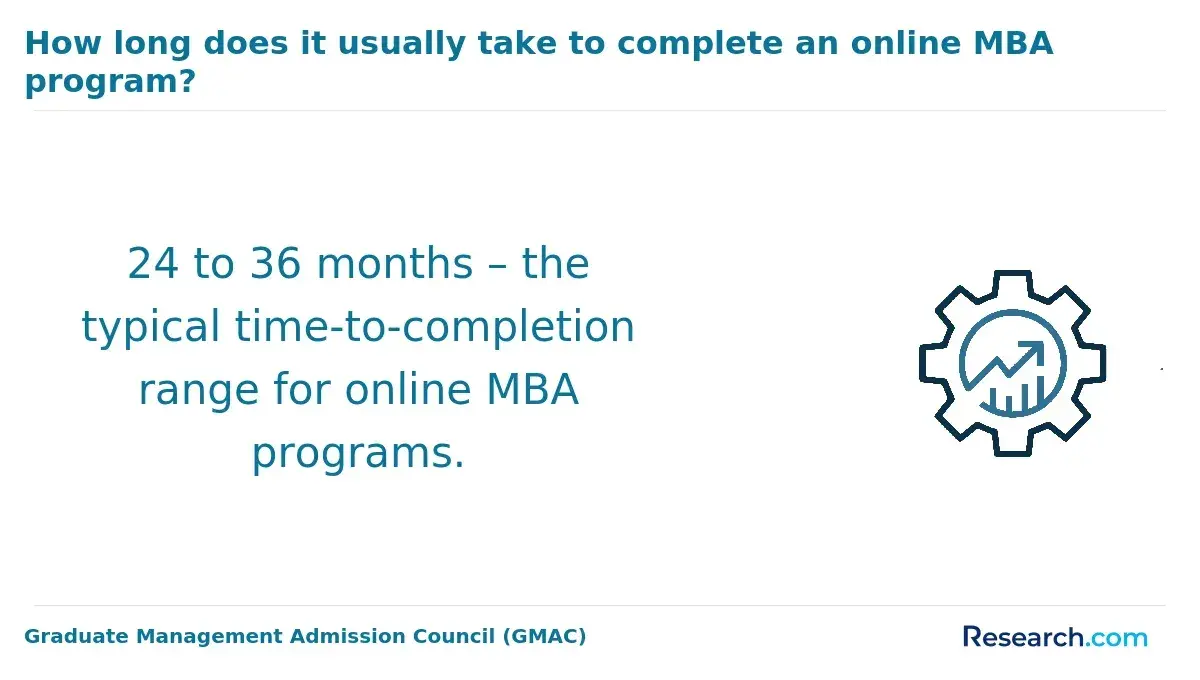
Completing an online MBA typically takes between 18 months and three years, influenced by program design and student pace. Full-time students usually finish in about two years by taking 36 to 54 credit hours, averaging 9 to 12 credits per semester.
Part-time students, juggling work or family, often stretch their studies to three years or more with 6 to 9 credits each semester.
The weekly study commitment generally ranges from 15 to 20 hours for online MBA credit hours, equating to roughly 540 to 1080 total hours for a 36-credit program.
According to the LinkedIn 2025 Workplace Learning Report, 41% of online MBA students spend an additional 12 hours weekly on group tasks due to time zone coordination challenges. This hidden workload can extend the overall completion time.
Accelerated programs may allow faster graduation but often require more than 20 hours of weekly study, while flexible pacing programs let students take longer than three years, providing necessary time buffers.
Other factors to consider include:
- Course format, since synchronous classes require fixed attendance times.
- Internship or residency requirements, which can add months to graduation.
- Personal discipline and study habits, impacting progress speed.
Evaluating these aspects helps students match MBA programs to their schedules and career goals while planning realistic timelines for earning their degree.
Admission to online MBA programs generally requires a bachelor's degree from an accredited institution, a minimum GPA around 3.0, and relevant work experience, typically between two and five years.'
Many schools ask for GMAT or GRE scores, though more programs are waiving these for candidates with strong professional backgrounds or prior academic success. Applicants must submit a comprehensive resume highlighting leadership roles and career growth.
Essays or personal statements are crucial, helping candidates convey their career objectives, leadership potential, and motivation for pursuing an MBA online. Letters of recommendation, often from supervisors or academic mentors, bolster the application by confirming achievements and character.
Some programs also include interviews-either remotely or in person-to evaluate communication skills and program fit.
Requirements can differ based on the target audience; executive online MBA programs usually expect more extensive managerial experience and higher test score benchmarks.
Careful review of each program's specific admission criteria is essential, as these standards shape acceptance chances and preparedness for academic demands.
Accredited online MBA programs generally range from $500 to $1,500 per credit hour, with total tuition fluctuating based on credit requirements, often between 30 and 60 hours.
For example, a 36-credit program charging $800 per credit totals about $28,800. Costs can differ due to factors like school prestige, residency status, and included services such as career counseling.
Public universities tend to offer lower tuition, especially for in-state students, with rates around $500 to $700 per credit hour. In contrast, private schools often charge over $1,200 per credit hour.
Some programs include fees for technology or materials in their per-credit cost, while others list them separately. It's important to budget for these additional expenses.
Financial aid, scholarships, and employer tuition reimbursement can significantly reduce overall costs. Verifying program accreditation, such as AACSB or ACBSP, is crucial for ensuring value and employer recognition.
Advances in education technology have also improved efficiency; for instance, AI integration reduced assignment time by 25% and increased course completion rates by 14%, helping students graduate faster and lower indirect costs like lost wages.
Students should consider program length and credit demands alongside per-credit costs. Accelerated programs may have higher per-credit fees but require fewer total credits, potentially lowering overall tuition. Requesting detailed cost breakdowns from schools can help tailor budgeting to individual financial plans.
Graduates of online MBA programs frequently secure roles in senior management, consulting, finance, marketing, and operations. Common positions include product manager, financial analyst, management consultant, marketing director, and operations manager.
According to the Payscale 2025 MBA Salary Report, graduates dedicating 20-25 hours weekly to their studies earned a 28% higher median salary premium three years post-graduation-$142,000 compared to $111,000 for those studying fewer hours. This underscores the need for effective workload management to boost long-term earnings.
High-demand careers after an online MBA show median salaries from $85,000 to over $150,000, based on role and industry:
- Financial analysts earn between $85,000 and $100,000 annually.
- Management consultants have salaries from $110,000 to $140,000.
- Marketing directors and product managers often surpass $130,000 in total pay.
Salary ranges also depend on industry growth and geography, with finance roles on the East Coast and technology leadership on the West Coast offering some of the highest premiums.
Prospective students should maintain consistent weekly study hours, enhancing skill retention and managerial competencies. Networking strategies and technical expertise remain crucial for standing out in competitive areas like consulting and finance.
How to choose a reputable online MBA program?
Choosing an online MBA program involves verifying accreditation with respected organizations such as AACSB, ACBSP, or EQUIS to ensure academic quality and recognition. Accreditation confirms the curriculum meets established standards, giving credits value for employers and further education.
Faculty expertise impacts the learning experience significantly. Seek programs with instructors holding doctoral degrees and with practical research or industry backgrounds. Faculty engagement in publishing or consulting helps ensure course content reflects current business trends.
Alumni outcomes provide insight into a program's effectiveness. The Forbes 2025 Career Mobility Index reports that 74% of online MBA graduates earned promotions within a year, with those studying less than 25 hours weekly advancing 19% faster. This suggests well-structured programs balancing workload maximize career benefits. Prospective students should look for schools that publish alumni career data.
A well-rounded curriculum covers finance, marketing, strategy, and offers electives aligned with career objectives. Programs featuring experiential learning through internships or consulting projects add practical value. Flexibility and modern technology platforms are important for working professionals managing study and work. Effective student support services-including advising, career counseling, and networking-enhance the degree's value.
By combining accreditation, faculty quality, alumni success, curriculum relevance, and student support, prospective students can identify an online MBA program suited to their goals and schedule.
Other Things You Should Know About MBA
In a 2027 online MBA program, students can expect to dedicate approximately 3 hours per week of study time for every credit hour enrolled. This workload includes lectures, readings, assignments, and participation in discussions.
Online MBA programs can vary, but most combine both asynchronous and synchronous elements. Asynchronous courses let students access lectures and materials at any time, while some programs schedule live sessions or group work. Understanding the program format is important to prepare for the commitment.
Reputation depends largely on the accreditation and ranking of the institution rather than the delivery mode. Accredited online MBAs from well-known universities are generally respected by employers and can lead to similar career opportunities as traditional MBAs. Due diligence in selecting a reputable school is essential.
Basic computer literacy and comfort with virtual learning platforms are necessary for online MBA students. Familiarity with video conferencing, online discussion boards, and digital collaboration tools is also helpful. Most programs provide technical support and orientation to ease this transition.
- How Long Does an Online MBA Take? | Beyond an MBA https://www.beyondanmba.com/how-long-does-an-online-mba-take/
- How to Choose an Online MBA Program - Tips to Consider https://www.umassglobal.edu/blog-news/choose-online-mba-program-tips-consider
- How to Choose The Right MBA Program Length https://www.princetonreview.com/business-school-advice/mba-program-length
- Online MBA vs Campus MBA Program - Which one to choose https://rcu.education/online-mba-vs-campus-mba-programs/
- Online MBA Programs Admission Requirements You Need to Know - consulting https://consulting.mampirbandung.com/online-mba-programs-admission-requirements-you-need-to-know/
- Unlocking The Mind: The Psychology Behind Pursuing An Online MBA https://poetsandquantsforexecs.com/features/unlocking-the-mind-the-psychology-behind-pursuing-an-online-mba/
- Career Opportunities After Online MBA Degree: Top Jobs, Salaries & Global Scope | SGT Online https://sgtonline.in/blogs/career-opportunities-after-online-mba-degree
- Online MBA Admissions Requirements by Program [Chart] https://www.bschools.org/blog/online-mba-admissions-requirements
- What can you do with an online MBA? | edX https://www.edx.org/resources/what-can-you-do-with-an-online-mba
- Online MBA vs Traditional MBA: What are the differences? | StudyNext Australia https://studynext.com/au/resources/online-mba-vs-on-campus-mba