2027 Negotiating Data Sharing Without Overpromising Access for DrPH Students

Co-Founder and Chief Data Scientist
A health department may welcome a DrPH student's evaluation proposal without being ready to release its records. That gap matters: promising an analysis before permissions, staffing, and privacy review are settled can damage a partnership and derail an applied project.
This guide is for experienced public health practitioners planning doctoral work with an employer or community partner. It explains how to negotiate a useful minimum dataset, document conditional commitments, and build a project that can proceed even if access changes.
Key Things You Should Know
- Ask for the least sensitive information that can answer a defined practice question; permission to discuss a project is not permission to receive data.
- Keep partner support, school project approval, privacy review, and a signed data-use arrangement distinct. None automatically substitutes for another.
- Negotiate a fallback deliverable, such as an aggregate-data evaluation plan, before making restricted records essential to graduation.
What Is Data Sharing in DrPH Programs?
In a DrPH applied project, data sharing means an organization permits a student to view, receive, analyze, or report information for a specified practice purpose.
It can involve public dashboards, approved aggregate counts, deidentified extracts, restricted individual-level records, or interviews. These are different levels of access, not interchangeable versions of the same dataset.
A practice-focused DrPH project might help a county agency assess referral delays or improve how it monitors a prevention program. The immediate output could be a revised workflow, evaluation plan, or decision brief - not necessarily a publishable study.
Students considering earlier-stage preparation can review the types of public health master's degrees; an MPH, research-oriented MS, and DrPH serve different purposes.
The governing question is what information is necessary for the partner's decision. If monthly referral totals can reveal where a process slows down, requesting names and full case histories adds risk without necessarily improving the project.
How Can DrPH Students Negotiate Data Access Without Overpromising?
Start with a problem the partner recognizes, then separate what each party hopes to do from what each can authorize. A manager's enthusiasm may establish interest, but a privacy officer, records custodian, legal team, community governing body, or academic reviewer may still need to decide whether access is appropriate.
The following sequence turns a broad request into a proposal a partner can evaluate:
- Define one practice decision, the population and period involved, and the minimum fields or summary measures needed.
- Ask who controls the information, who may approve each use, what restrictions already apply, and how long review usually takes.
- Offer access tiers: public information first, then partner-produced summaries, with restricted records only if necessary and approved.
- Describe the student's analysis and reporting skills accurately; arrange supervision or training for work beyond those skills.
- Set a decision date and a fallback output that meets school requirements without relying on unapproved records.
Use conditional language: "Subject to the organization's approval, I propose analyzing quarterly, nonidentifiable referral summaries." Avoid "I will obtain patient-level data" until the authorized parties have agreed.
If a student needs more foundational methods training before promising an analysis, pathways into public health master's prerequisite completion illustrate an earlier preparation route; coursework itself does not confer data access.
What Ethical and Legal Rules Govern Public Health Data Sharing?
The applicable rules depend on who holds the information, what it contains, how it was collected, and the proposed use. HIPAA may govern protected health information held by a covered entity or business associate; it does not make every public health dataset a HIPAA dataset.
State confidentiality laws, agency policies, contracts, consent terms, tribal governance requirements, and federal program rules may impose other limits. Removal of direct identifiers also does not automatically eliminate reidentification risk.
Students should ask their school and partner whether the activity is practice improvement, program evaluation, quality improvement, or human-subjects research, and who makes any required review determination.
An intention to publish does not by itself settle that question, nor does calling work "quality improvement" exempt it from review. Community permission and responsible representation matter even where individual consent or institutional review is not required.
Admission flexibility, including in MPH programs with less restrictive admissions, has no bearing on a record holder's privacy obligations. Use only approved storage and transfer methods, restrict access to authorized people, and obtain clearance before placing partner-derived material in a presentation or portfolio.
CEPH-accredited DrPH education is intended to develop advanced public health practice and leadership competencies. For data partnerships, the most relevant preparation combines evidence-based decision-making with communication, collaboration, ethical practice, and the ability to work across organizations.
The exact curriculum and assessed competencies must be checked for the school and degree under consideration.
These abilities become visible in a project when a student can explain why a measure answers a partner's question, identify missing or biased records, negotiate whose interpretation counts, and communicate limitations without exposing individuals or stigmatizing a community. Technical analysis alone is insufficient if the student cannot secure legitimate permission or translate results into a feasible organizational decision.
Earlier coursework, even comparing fast-paced online public health bachelor's courses when planning an education pathway, should not be mistaken for evidence of doctoral-level data governance skill. Ask prospective programs how students demonstrate these competencies in supervised partner projects, rather than assuming a course title proves proficiency.
A data-use agreement or other approved written arrangement should translate a promising conversation into enforceable boundaries. The partner's authorized staff and the school should decide which document is needed; a student should not draft around their legal or institutional review processes.
Before anyone transfers restricted information, make sure the appropriate document addresses these issues:
- Purpose, permitted analyses, approved users, data elements, source, and whether records are identifiable, coded, or aggregate.
- Approval authority, transfer and storage methods, security controls, retention period, deletion or return, and breach-reporting responsibilities.
- Restrictions on linkage, onward sharing, publication, quotation, and student portfolio use.
- Partner review of outputs, timelines, contact people, costs or staff effort, and procedures for changing or ending access.
Clarify who owns source records and whether the student may retain code, a redacted methods description, or only a final approved report. An admissions endorsement is not operational authorization: comparing public health master's recommendation requirements is a separate task from securing an organization's permission to use its data.
Neither format grants access to a partner's records. Online delivery may let a working practitioner remain near an employer or community organization; campus delivery may make in-person advising and local partnerships easier.
Either can work if the program accepts the proposed site, provides suitable supervision, and allows enough time for approvals.
The practical distinction is often scheduling rather than location. Ask about live sessions, campus visits, committee meetings, required partner meetings, secure computing, and what happens when a records review delays an applied-project milestone.
An online student working across time zones or agency schedules may have less flexibility than the program description suggests.
Students comparing formats may find an online public health master's accreditation guide useful for understanding the distinction between delivery mode and accreditation. For a DrPH decision, verify the doctoral degree's own accreditation coverage and project policies directly with the school; MPH information does not establish either.
DrPH applicants should distinguish admission eligibility from readiness to lead an applied partnership. Schools set their own degree, experience, methods, and application requirements; an MPH, a particular number of years, or a director title is not universal.
Strong evidence includes documented responsibility for public health decisions, collaboration across teams, evaluation or data interpretation, and a feasible route to a supervised project.
Describe the authority you actually held: Did you set measures, negotiate reporting with a partner, manage staff, or present findings to decision-makers? If your prospective project depends on your employer, ask whether the organization supports the proposed time commitment and review process, not whether a supervisor can promise unrestricted data.
Applicants with uneven earlier grades can consider guidance on MPH applications after uneven undergraduate grades as an earlier-stage example of documenting academic improvement; each DrPH program makes its own admissions decision.
Program length and total cost vary with credit requirements, enrollment pace, tuition structure, and how quickly a student completes doctoral milestones. Data-dependent projects introduce a less visible time risk: organizational review, contract negotiation, staff turnover, or a delayed extract can extend the project even after coursework is finished.
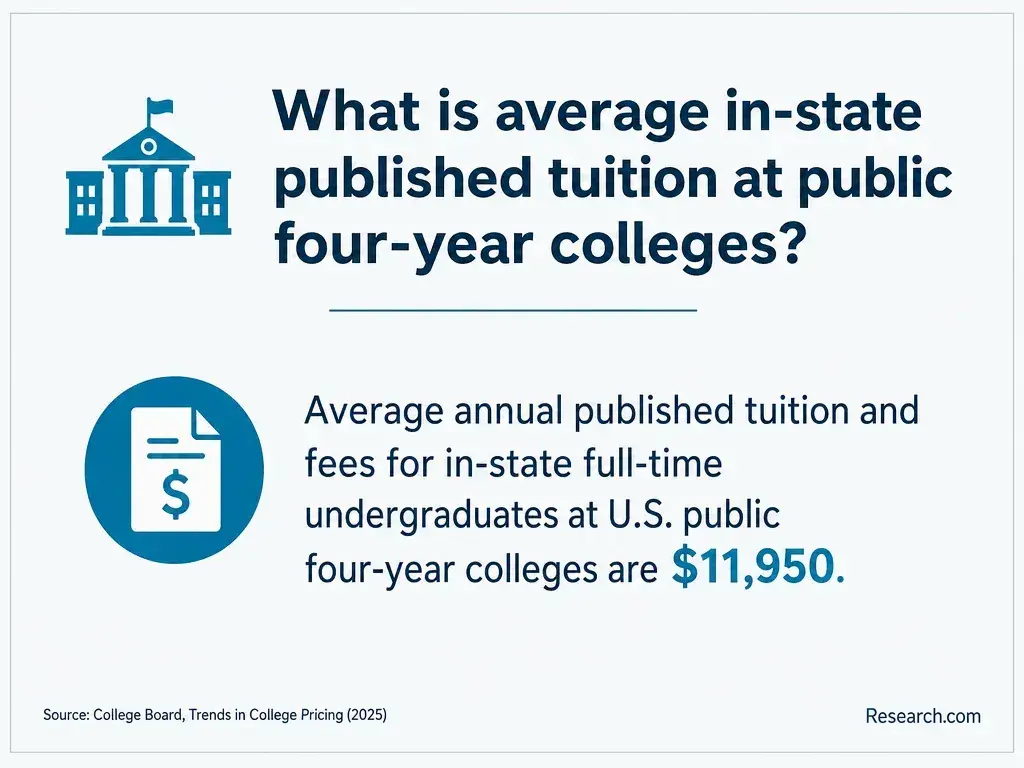
Compare written program estimates for tuition and required fees alongside travel, residency attendance, software or secure-computing needs, and charges that may continue during project completion.
Ask when a student must enroll or pay fees while awaiting partner approval, whether an approved change of project is possible, and whether employer tuition support covers that period. Do not assume an online option is cheaper merely because travel is reduced.
A public health doctorate career value guide can frame the broader cost discussion, but the useful comparison here is the cost of a feasible project, not tuition alone. A less expensive program offers little savings if its schedule or supervision cannot accommodate the necessary approvals.
Public health agency leaders, nonprofit evaluation directors, health-system population-health managers, and program or policy leaders may negotiate data access to monitor services and guide decisions.
Their work can involve defining measures, coordinating legal and community stakeholders, interpreting imperfect evidence, and setting limits on what findings support. Responsibility usually depends on prior experience and organizational authority, not the DrPH credential alone.
A practitioner already leading cross-agency work may use a DrPH project to demonstrate more rigorous governance and evaluation. Someone seeking only to improve data-use agreements in a current role may benefit sooner from employer legal guidance, supervised evaluation work, or targeted privacy training.
Comparing earnings across MPH career paths may provide broader occupational context, but those figures are not predictions of DrPH earnings or a return on a specific project.
How Should Students Evaluate DrPH Programs for Data Governance Training?
Choose a program by testing whether it can support the partnership you can realistically build - not by assuming its faculty or reputation will unlock records.
Ask the program director and a potential project supervisor to explain how students scope projects before access is final, who reviews agreements, and which deliverables remain acceptable if a partner supplies only aggregate data.
Request current policies on project-site approval, ethics review, secure storage, partner sign-off, committee changes, and milestone extensions. Then compare them with what your proposed partner can authorize.
Verify the exact school, unit, or program covered by CEPH accreditation and whether the DrPH is included; institutional accreditation and accreditation of a related MPH do not settle that question.
If you are still deciding whether your practice experience supports doctoral admission, consult a public health doctoral admissions requirements guide, then confirm each requirement with the institution. The strongest program fit is one in which your leadership goal, available supervision, partner authority, and a privacy-preserving fallback project all align.
Other Things You Should Know About Public Health
Yes, if you describe the relationship accurately. State that access is proposed or under discussion unless the organization has authorized a specific commitment.
Notify your academic supervisor, identify the new authorized contact, and confirm whether existing permissions remain valid before continuing access or analysis.
Often, if your program accepts it for the relevant learning objective. Label synthetic information clearly and do not present simulated findings as evidence about the partner's population.
Follow the approved partner and school review process. Agree in advance on who checks confidentiality and factual context before wider distribution.
- Institutional Review Boards: Actions Needed to Improve Federal Oversight and Examine Effectiveness | U.S. GAO https://www.gao.gov/products/gao-23-104721
- Chapter II: Proposal Preparation Instructions | NSF https://www.nsf.gov/policies/pappg/23-1/ch-2-proposal-preparation
- Guiding Principles for Successful Data Sharing Agreements | ed.gov https://ies.ed.gov/learn/blog/guiding-principles-successful-data-sharing-agreements
- Data Use Agreement | NNLM https://www.nnlm.gov/resources/data/data-glossary/data-use-agreement
- How to Request and Access Datasets from dbGaP | nih.gov https://grants.nih.gov/policy-and-compliance/policy-topics/sharing-policies/accessing-data/dbgap
- Institutional Review Boards: Purpose and Challenges - PMC https://pmc.ncbi.nlm.nih.gov/articles/PMC4631034/
- Accessing DHCS Protected Data for Research and Public Health | DHCS https://www.dhcs.ca.gov/data-statistics/data-resources/accessing-dhcs-protected-data-for-research-and-public-health/
- Data Use Agreements (DUAs) | Division of Research | Brown University https://division-research.brown.edu/research-cycle/conduct-research/research-data-management/data-use-agreements-duas
- Sharing Information and Data: Data Transfer and Use | UW Research https://research.washington.edu/research/myresearch-lifecycle/setup/collaborations/sharing-information-and-data/
- QI Project vs Resesarch - OU Office of Compliance https://compliance.ouhsc.edu/offices/human-research-participant-protection/ouhsc-institutional-review-board/researcher-toolkit/qi-project-vs-research