2027 From Clinical Trial Coordination to Public Health: Choosing a Graduate Pathway

Co-Founder and Chief Data Scientist
Clinical trial coordinators already manage work that public health employers value: research protocols, participant communication, data quality, and collaboration across teams. Moving into population-level work, however, may require different methods and evidence of practice beyond individual studies.
This guide helps coordinators decide whether an MPH, a research-focused master's degree, or targeted training best fits their goal. It also shows how to assess programs, costs, and career opportunities without assuming that another degree is always necessary.
Key Things You Should Know
- An MPH is usually the stronger fit for population-health practice; a methods-intensive MS may fit clinical epidemiology or research analysis better. Neither automatically qualifies you for a new role.
- Trial coordination provides transferable experience, but employers may still expect population-level analysis, program evaluation, community engagement, or advanced statistical skills.
- Compare the exact curriculum, approved fieldwork or thesis, schedule, and total cost. A targeted course or supervised project may be more useful than a full degree for a narrow skills gap.
What is the best graduate degree for moving from clinical trial coordination into public health?
Choose by the work you want to do next, not by the degree title alone. A clinical trial coordinator typically helps implement a protocol for a defined study. Public health roles may instead ask why outcomes differ across populations, how to prevent illness, or whether a program works in a community setting.
The MPH is generally the better starting comparison for health department work, prevention programs, population-health implementation, or program evaluation. A research-oriented MS in epidemiology, biostatistics, or clinical research may be better for study design and analysis. Program structures vary: an MPH concentration does not necessarily provide the same quantitative depth as a specialized MS.
If you want to keep coordinating trials but gain a specific skill - such as statistical programming or regulatory management - ask whether employer training, a course, or a certificate would solve the problem sooner. If cost is central to an MPH decision, compare affordable online graduate MPH pathways against the skills and opportunities you would actually gain, not tuition alone.
Which public health graduate programs prepare students for clinical research careers?
Look for programs whose required work matches the research responsibility you want. "Clinical research" can mean coordinating recruitment and visits, designing observational studies, analyzing outcomes, or leading a research portfolio. Those are different jobs.
The following comparison identifies useful program features rather than endorsing a particular school.
| Target responsibility | Program features to examine | Potential gap to check |
| Population-health or clinical epidemiology | Epidemiologic methods, study design, confounding, and analysis of health data | Whether methods training goes beyond introductory courses |
| Trial operations and implementation | Implementation science, research ethics, evaluation, and supervised projects | Whether graduates gain experience beyond coordinating an existing protocol |
| Biostatistical analysis | Advanced statistics, programming, and substantial analytic work | Required mathematics and whether the degree meets analyst job specifications |
| Community-facing research | Community partnership, qualitative methods, and equitable recruitment | Access to an appropriate, approved project or partner site |
A thesis, faculty-led project, or relevant placement can help demonstrate the transition more clearly than a concentration name. If your eventual aim is senior practice leadership, online graduate advancement through public health doctorates is a separate, later decision; a DrPH is not a substitute for the research-methods training your next job requires.
What are the requirements for earning an accredited public health degree?
First distinguish institutional accreditation from accreditation by the Council on Education for Public Health (CEPH). Confirm the exact school, unit, or program covered by CEPH accreditation and whether the degree you intend to earn falls within that scope. A university's general accreditation does not establish CEPH coverage for every public health degree it offers.
Graduation requirements depend on the program and entry term. MPH students should check required foundational and concentration courses, any applied practice experience, and the integrative learning requirement. An MS may instead require a thesis, research project, internship, or other culminating work. Ask the program for its current degree plan and fieldwork rules; employment as a trial coordinator does not automatically satisfy an applied experience.
For a starting point, use guidance on choosing an MPH with CEPH accreditation, then confirm status, scope, and degree requirements directly with the accreditor and school before enrolling.
For an employed coordinator, the key difference is often control over the weekly schedule, not academic rigor. Online programs may reduce commuting while still requiring live classes, group meetings, scheduled examinations, campus visits, or fieldwork. Campus programs may provide easier access to faculty, research teams, and local partners, but travel and daytime courses can conflict with trial operations.
Ask each program when classes meet, whether recordings are available, how quantitative courses are supported, and whether a project at your employer could be approved. Separate the school's permission to use your workplace from your employer's permission to supervise work or share data. Remote enrollment does not remove privacy or site-approval requirements.
If you have not yet completed a bachelor's degree, compare that earlier decision separately using a public health BS program selection guide. An online bachelor's route and an online graduate route solve different educational problems.
MPH curricula generally introduce epidemiology, biostatistics, health systems or policy, social and behavioral factors, and public health practice. Depending on the program, an MS may devote more coursework to research design, statistical methods, or a defined scientific field. Read course descriptions and prerequisites rather than assuming that identically named concentrations teach the same tools.
Trial coordinators can use their existing experience to identify a useful sequence: strengthen statistical reasoning; learn to define populations, measures, and comparison groups; then apply those skills in an approved analysis or evaluation. If the goal is a health department role, add program planning and community engagement. If the goal is research analysis, look for progressively advanced methods and substantial supervised work.
Do not confuse accessible entry requirements with a light curriculum. Descriptions of online MPH programs with accessible admissions can help you find options to investigate, but you still need to check whether the quantitative sequence fits your preparation and target job.
Most applicants will need to document a completed bachelor's degree and submit the materials specified by each program. Schools set their own policies for prerequisites, GPA review, recommendations, statements, tests, and deadlines. Quantitative MS programs may expect more mathematics or statistics preparation than a generalist MPH; neither requirement should be assumed without checking the specific program.
Your application should translate coordination duties into evidence: explain the protocols you helped implement, how you handled data quality or participant communication, and what population-health question you now want to address. State your contribution accurately rather than presenting a team's findings as your independent research.
If obtaining references is difficult, public health master's programs that omit reference letters may be worth examining. Verify each current application checklist and ask admissions staff whether your coursework meets any stated methods prerequisites before paying an application fee.
Completion time depends on required credits, course sequencing, enrollment intensity, and the applied experience or thesis. A working coordinator should ask for a term-by-term plan based on the number of courses they can realistically take - not just the school's advertised fastest completion time.
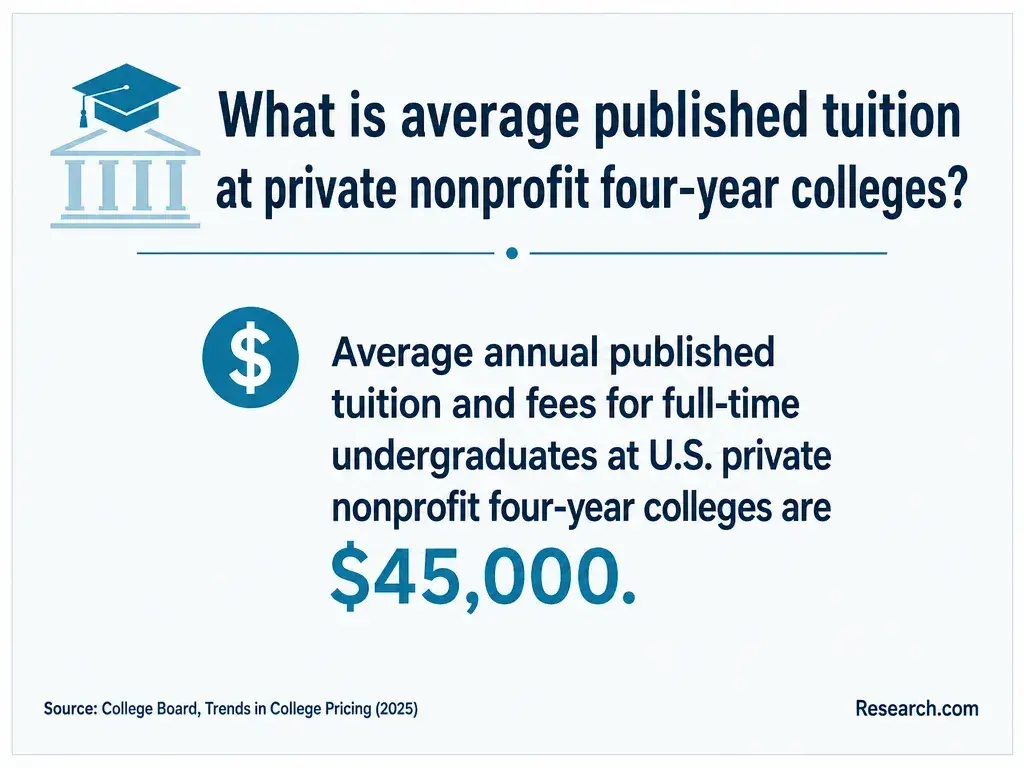
Because tuition and fees vary by school and change over time, calculate a personal total rather than relying on a headline price. Include required credits, per-credit or term charges, fees, books or software, travel, and any reduction in paid work needed for fieldwork. Then ask whether employer tuition assistance applies and what conditions govern it.
Online MPH university scholarship planning can help frame funding questions, but an advertised award is not your confirmed net price. Request a written estimate and check eligibility, renewal conditions, and when any support would be applied.
The most feasible transition often builds on your existing research experience. Clinical research operations, recruitment strategy, research program coordination, and evaluation may be adjacent moves. Epidemiologist or analyst roles can require stronger study-design and quantitative evidence; community program roles may require experience with partners outside the clinical trial setting.
Use job descriptions to separate titles from tasks. A coordinator who can document an approved evaluation, reproducible analysis, or community-facing project offers more relevant evidence than someone relying on the degree name alone. Advanced research leadership and senior management generally require substantial experience beyond a master's.
A doctorate should therefore be considered against a specific future responsibility, not treated as an automatic next credential. Public health doctorate eligibility comparisons may help you identify programs to investigate later, but admission and career readiness are separate questions.
There is no reliable single salary for a trial coordinator who earns a public health degree. Pay depends on the occupation, employer, location, responsibility, and prior experience. The US Bureau of Labor Statistics Occupational Outlook Handbook reports occupation-wide wages and employment projections for roles such as epidemiologist; those figures are not starting salaries or outcomes for graduates of a particular MPH program.
For a useful comparison, identify the jobs you could plausibly obtain now and the jobs the proposed training would make you competitive for. Compare current postings' duties and pay ranges with the degree's total cost and any earnings you would forgo. MPH career pay comparisons provide context, but occupation-specific information and your local market should drive the decision.
What certifications and credentials advance public health careers?
Match a credential to the work. Clinical research certifications may document qualifying trial experience and examination-based competence, subject to the certifier's rules. The Certified in Public Health (CPH) credential has its own eligibility routes; Certified Health Education Specialist (CHES) and Master Certified Health Education Specialist (MCHES) credentials address health education and have separate requirements. An MPH does not automatically award any of them or confer clinical licensure.
Before paying for an examination, review the credentialing body's current eligibility criteria and several target job postings. If employers seek demonstrated analysis or evaluation rather than certification, a supervised project may be the better investment. Likewise, a doctorate is a substantial degree commitment, not an advanced certificate; compare online public health doctoral tuition and duration only if doctoral-level practice or research training serves a defined goal.
Other Things You Should Know About Public Health
Only with the required employer, program, and data-owner permissions. Ask about confidentiality, data-use rules, and whether institutional review is needed before accessing or presenting records. Public or appropriately approved data may be a more feasible option.
It can be relevant, especially when your duties involve recruitment, access, prevention, or population-level questions. Describe your actual responsibilities; each program and employer decides how that experience fits its criteria.
Not necessarily. First examine target postings and seek a project or responsibility that tests your interest. If you can move toward the target role through supervised experience, that may clarify whether graduate study is worth the cost.
Describe your methods, decisions, and responsibilities without identifying participants or disclosing restricted protocols or results. Use a permitted, redacted work sample or an independent project when you need portfolio evidence.
- Navigating the challenges of clinical trial professionals... - PMC https://pmc.ncbi.nlm.nih.gov/articles/PMC11181308/
- Master of Public Health (MPH) | Johns Hopkins https://publichealth.jhu.edu/academics/mph
- Which MPH Program is Right For Me? | Health Systems and Population Health https://hspop.uw.edu/cophpmph/which-mph-program-is-right-for-me/
- What Is a Clinical Research Coordinator? - Kent State Online https://onlinedegrees.kent.edu/college-of-public-health/community/what-is-a-clinical-research-coordinator
- MS in Biomedical Sciences: Clinical Research Management | UNT Health Fort Worth https://www.unthealth.edu/college-of-biomedical-and-translational-sciences/degree-programs/ms-in-clinical-research-management.html
- Turning Research into Practice by Earning an MPH | Online MPH and MHA Degrees From George Washington University https://onlinepublichealth.gwu.edu/resources/turning-research-into-practice-by-earning-an-mph/
- In-Demand Entry-Level Roles (and What They Do) | Duke Clinical and Translational Science Institute https://ctsi.duke.edu/career-development/education-and-workforce-development/entry-level-clinical-research-careers/demand
- Answering 8 Common Questions About Grad School Requirements | UMass Global https://www.umassglobal.edu/blog-news/answering-8-common-questions-grad-school-requirements
- MPH vs MS vs MHA: Which Public Health Master's Degree Is Right for You? | Tulane WSPH https://sph.tulane.edu/mph-vs-ms-vs-mha
- Clinical Research Coordinator: Career Overview | SPH | Boston University https://www.bu.edu/sph/blog/clinical-research-coordinator/