2027 MPH vs MS in Health Education for Community Program Work

Co-Founder and Chief Data Scientist
If you want to design, run, or evaluate community health programs, the distinction between an MPH and an MS in Health Education matters more than the degree names suggest. The MPH generally emphasizes population-health practice; an MS may offer deeper health education research or evaluation training. But actual courses and field opportunities vary by school.
This comparison is for prospective students and community organization professionals deciding whether either degree will strengthen their work. It shows what to inspect in a curriculum, what costs and credentials to check, and when experience or targeted training may be the better investment.
Key Things You Should Know
- For broad community program planning, partnerships, and implementation, an MPH with relevant fieldwork is often the stronger fit. Choose an MS when its actual curriculum offers the research or evaluation depth your target role needs.
- Compare supervised project access and required courses before comparing degree titles: neither an MPH nor an MS automatically qualifies you for a specific job or professional certification.
- Calculate the full cost from required credits, fees, and fieldwork obligations. A less expensive targeted course or supervised project may be enough if you already have the degree and experience your employer requires.
What is the difference between an MPH and an MS in Health Education?
An MPH is a professional public health degree oriented toward preventing health problems across populations and putting evidence into practice. An MS in Health Education is a school-specific degree that may emphasize health behavior, educational interventions, and research methods. "MS" does not, by itself, promise a thesis or a particular level of quantitative training.
The comparison below describes common orientations, not requirements shared by every program. Use it to identify what the published curriculum must confirm.
| Decision factor | MPH with a community health or health education focus | MS in Health Education |
| Primary orientation | Population-health practice across community and public health settings | Health education specialization; practice-versus-research emphasis varies |
| Likely breadth | Public health methods, systems, policy, and program practice | Health behavior, instructional design, and potentially deeper research methods |
| Experience to verify | Applied practice placement and integrative project | Internship, research project, thesis, or other culminating work, as specified by the school |
Degree labels also conceal differences among concentrations. When comparing specialization choices in public health graduate study, focus on required courses and projects rather than assuming every health education track teaches the same skills.
Which degree better prepares you for community health program work?
If the role involves building partnerships, assessing community priorities, coordinating services, managing a grant-funded program, and reporting results, an MPH with substantial community-based practice is usually the more direct match.
If you expect to develop educational interventions, study behavior change, or lead rigorous evaluation, an MS may be better but only if its methods training and project opportunities match those tasks.
For a nonprofit employee, an especially valuable program may allow an approved project at the current organization. Do not assume your existing job qualifies: ask the academic coordinator whether the site, supervision, learning objectives, and deliverables meet program rules.
Also ask whether the organization can provide appropriate data access and community-partner input. A placement that consists mainly of observation offers less evidence of readiness than one in which you produce a usable, ethically developed planning or evaluation tool.
If you already manage programs and mainly need one missing skill, such as building a logic model or interpreting evaluation data, a course, mentorship, or supervised project may be more efficient than another degree. If you have not yet completed a bachelor's degree, review online public health undergraduate education options before planning graduate study.
What careers can you pursue with an MPH or MS in Health Education?
Graduates may pursue health education specialist, community program coordinator, outreach manager, program evaluator, or public health project roles in nonprofits, health departments, and health systems.
The best fit depends on the work demonstrated through prior employment and supervised projects, not just the credential. A community health worker role, for example, may offer direct outreach experience without requiring a master's degree; an evaluation lead role may require substantial methods experience beyond one graduate course.
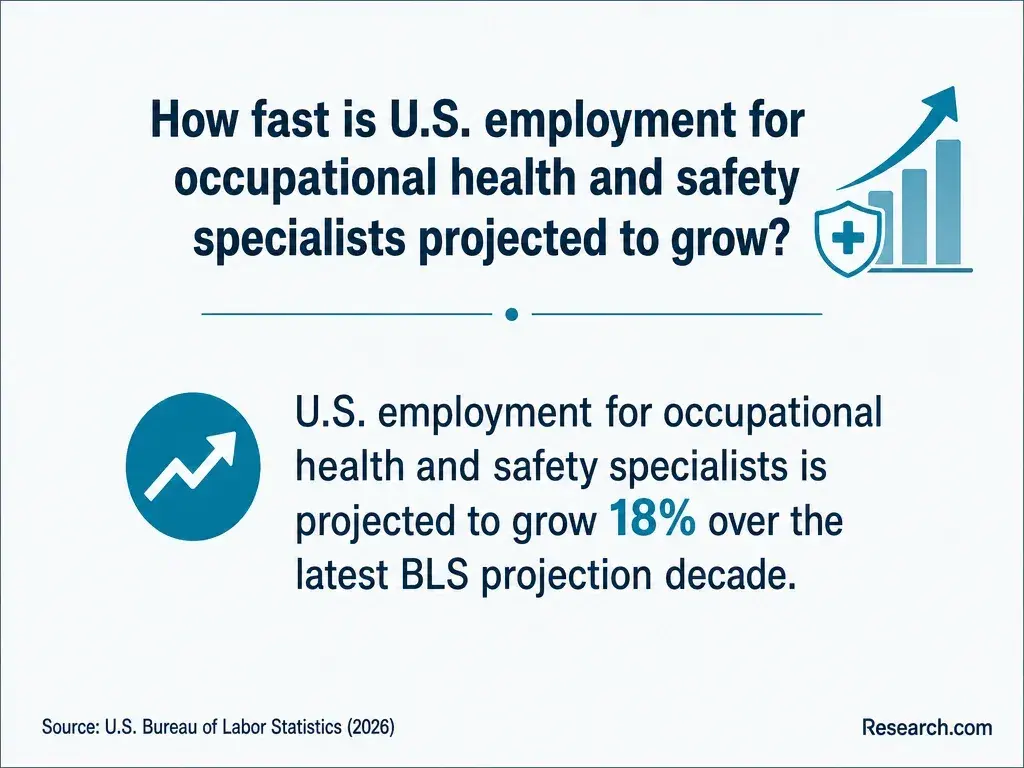
The US Bureau of Labor Statistics describes health education specialists as professionals who develop programs to help people improve their well-being. Its occupation-wide wage and employment projections are useful context, but they are not salary or hiring predictions for MPH or MS graduates.
Use the duties and qualifications in local job postings alongside public health graduate salaries by career; separate entry-level coordination jobs from positions requiring management or advanced research experience.
Neither degree confers clinical licensure. Before enrolling, collect several postings for your target role and note whether employers ask for community engagement, budget management, health communication, qualitative inquiry, or statistical analysis. Those repeated requirements provide a more useful curriculum checklist than a broad job title.
An MPH typically combines public health foundations, such as epidemiology, data interpretation, policy, and social and behavioral sciences, with practice-oriented planning and evaluation.
An MS in Health Education may devote more space to behavior theory, educational design, measurement, and research methods. The difference is meaningful only when you compare required courses, not attractive electives that may be unavailable when you enroll.
For community program work, look for a sequence that teaches you to assess a community-defined need, develop an intervention with partners, specify feasible measures, interpret results, and communicate limitations.
Check whether a thesis investigates a question useful to your intended role or whether an applied project better demonstrates implementation skills. Also verify who supervises the work and whether community partners help shape it.
If you eventually want to lead independent research or practice-focused organizational change, compare the expectations for comparing DrPH and PhD program goals. A master's thesis can help test your interest in research, but you do not need a doctorate simply to run or improve a community program.
Both routes generally require a bachelor's degree, but each school sets its own standards for grades, prerequisites, essays, recommendations, tests, and relevant experience. An undergraduate major outside public health does not automatically rule you out.
Community organizing, teaching, clinical work, social science, and nonprofit operations can all provide relevant preparation; a methods-heavy MS may place greater weight on statistics or prior research.
Before applying, compare each program's published prerequisites with your transcript. Ask admissions staff whether a missing course can be completed before enrollment, whether an introductory course is available, and how your work or volunteer experience should be documented.
Applicants concerned about their record can use guidance on low-GPA eligibility for public health graduate programs to prepare an explanation, while relying on each school for its actual policy.
Many full-time master's programs are planned around roughly two academic years, but the reliable estimate is the school's course-by-course plan for your enrollment pace.
Required credits, course rotation, placement hours, and thesis or project approvals can extend completion. Part-time and online study may spread coursework over more terms rather than reduce the work.
Ask for a sample schedule showing when required courses run and when fieldwork can begin. If you are working at a community organization, check whether partner meetings, group projects, or site activities occur during your paid work hours.
Applicants still finishing a bachelor's degree should calculate that time separately. Comparing accelerated public health undergraduate schedules can help, but a faster course format does not automatically shorten the later master's program.
There is no dependable MPH-versus-MS price rule. Compare each school's charge per credit or term, required credits, mandatory fees, and any difference between online and campus tuition.
Then add likely travel, placement expenses, and earnings you would forgo by changing work hours. An unpaid community placement can make a lower-tuition program more expensive for a working student.
Request a written cost estimate for your intended pace and ask whether employer tuition assistance applies to the exact degree. When comparing tuition with public health graduate outcomes, treat advertised earnings as occupational context, not a personal return-on-investment forecast. The financially sound choice may be the program that lets you retain your job and complete a relevant approved project or no new degree at all.
They can be effective for community program work when they provide substantive feedback, accessible faculty supervision, collaboration with partners, and an approved opportunity to apply skills.
Delivery mode alone says little about the quality of a placement or thesis. Online students should confirm who finds the site, whether remote projects qualify, and how supervisors assess work.
Check live-session times, group-work expectations, required campus visits, and the availability of local partners before accepting an offer. A program described as flexible may still require daytime fieldwork.
If you are comparing online MPH admission options for varied backgrounds, evaluate the same applied-learning obligations you would for a campus program; easier entry is not evidence that the schedule or training fits your role.
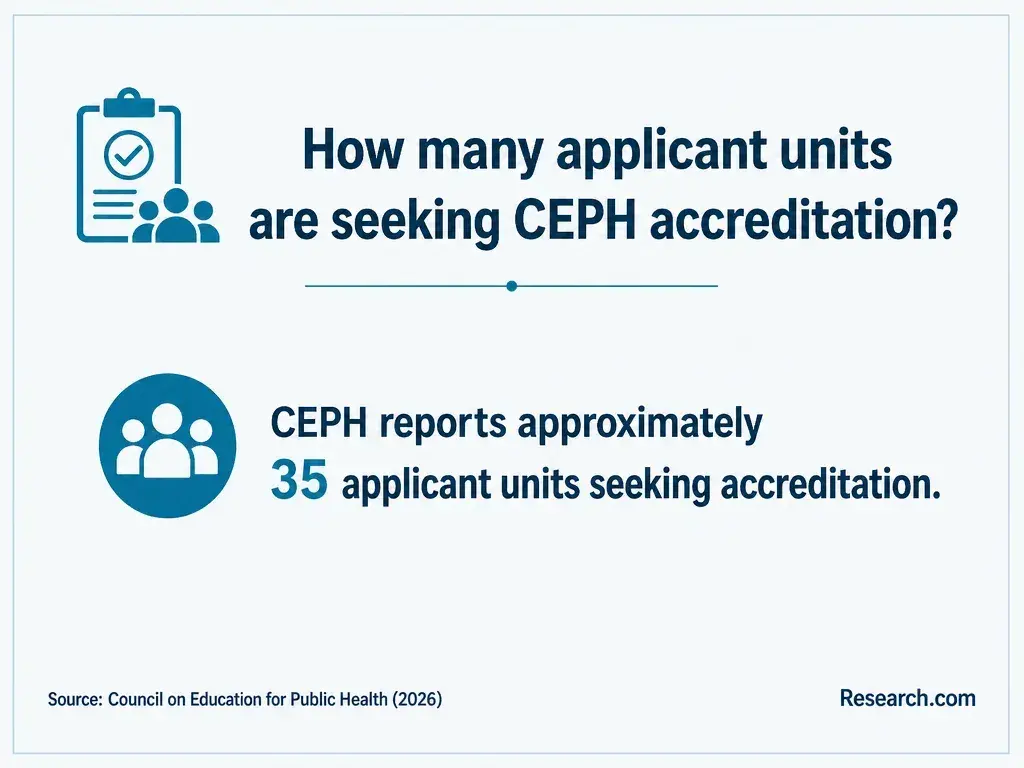
First confirm that the university holds recognized institutional accreditation. Then check the Council on Education for Public Health (CEPH) listing for the exact school, unit, or program and degree you are considering.
A university's institutional status does not establish that its MPH or MS in Health Education is within CEPH's accredited scope. A program may also use a degree name or departmental home that makes its status less obvious, so ask the school to identify the applicable listing.
CEPH scope matters when an employer, certification pathway, or future school specifies an accredited public health degree. It does not replace inspection of the curriculum or fieldwork. This check also applies when comparing budget-friendly online public health degrees: verify the exact credential before treating a lower price as a like-for-like alternative.
Do community health professionals need CHES, MCHES, or other certification?
Not necessarily. The Certified Health Education Specialist (CHES) and Master Certified Health Education Specialist (MCHES) credentials are separate from a master's degree.
Eligibility, examination, experience, and renewal rules are set by the National Commission for Health Education Credentialing, not by an MPH or MS program. MCHES is an advanced credential; do not assume graduation makes you eligible for it.
Check target job postings before paying for a credential or degree. If an employer values CHES, ask the certifying organization whether your specific coursework meets its current eligibility route; the letters "MPH" or "MS" are not enough to establish that. If certification plus existing experience meets your goal, compare its full cost with that of a degree.
Specialized research ambitions may call for a different academic and funding plan altogether, including a review of comparing financial aid for epidemiology doctorates, rather than treating a health education credential as a substitute for research training.
Other Things You Should Know About Public Health Programs
Usually you can describe your responsibilities and share work you are authorized to disclose. Remove confidential information, obtain required organizational permission, and explain your individual contribution rather than presenting team results as solely yours.
Local partner relationships can be valuable, particularly if you need a placement or hope to work nearby. Ask which organizations currently host students and whether placements are available, rather than assuming a school's location provides access.
Look for training in language access and working with qualified interpreters. Do not present an English-only educational resource as accessible without checking how intended participants will use it.
Ask what decision the partner needs to make, which information it can responsibly collect, and what deliverable it can use. A feasible report shaped by the partner's priorities is often more useful than an elaborate analysis the organization cannot maintain.
- Postgraduate Employment Outcomes of Undergraduate and Graduate Public Health Students: A Scoping Review | nih.gov https://pmc.ncbi.nlm.nih.gov/articles/PMC8579388/
- Practicum and Capstone: COPHP MPH | Health Systems and Population Health https://hspop.uw.edu/cophpmph/program-experience/practicum-capstone/
- MPH or MS in Health Education and Promotion | Walden University https://www.waldenu.edu/programs/health/resource/mph-or-ms-in-health-education-and-promotion-what-degree-is-right-for-you
- Public Health Accreditation and Competencies | Arcadia University https://www.arcadia.edu/majors-and-programs/public-health-mph/accreditation-competencies/
- Online Master's Degree in Public Health (MPH) | Purdue Global https://www.purdueglobal.edu/degree-programs/health-sciences/online-master-degree-public-health/
- Accreditation | Department of Public Health | ECU https://public-health.ecu.edu/accreditation/
- Online MPH Tuition and Financial Aid | USC https://keck.online.usc.edu/mph/admissions/tuition-financial-aid/
- Section 2. MPH Practicum - Master of Public Health Practicum Manual - Academic Guides at Walden University https://academicguides.waldenu.edu/masters-public-health-practicum-manual/practicum-overview
- Differences Between MPH and MS Degrees | Yale School of Public Health https://ysph.yale.edu/school-of-public-health/graduate-programs/mph-degree-and-ms-degree/
- MPH Practicum - Master of Public Health https://keck.usc.edu/mph-program/mph-practicum/