2027 A Migrant Worker Outreach Program Monitoring Framework: A Graduate Public Health Portfolio Project

Co-Founder and Chief Data Scientist
A migrant worker outreach team may know how many events it held without knowing whether workers received useful information or reached a service after referral. A graduate public health portfolio project can turn that gap into a practical monitoring framework - without claiming to evaluate a program the student has not studied. This guide is for students and early-career practitioners who need a feasible, ethical deliverable. It explains what the framework should contain, how to scope it with a community partner, and which educational and career paths make sense for the work.
Key Things You Should Know
- A useful framework connects outreach activities to worker-relevant measures of reach, referrals, and follow-up; event counts alone cannot show whether care was obtained.
- Specify each indicator's denominator, collection interval, responsible person, and privacy rule before designing a dashboard or reporting form.
- An MPH with evaluation and community-engagement experience is a strong graduate route, but a degree is not required to draft a supervised monitoring tool.
What is a migrant worker outreach program monitoring framework?
It is a documented plan for routinely checking whether an outreach program is operating as intended and reaching the workers it aims to serve. For example, a program might offer multilingual information, workplace-safety education, or referrals to clinics and social services. Monitoring tracks implementation over time; a separate evaluation might investigate why outcomes changed or whether the program contributed to that change.
The intended users are the outreach team, its community partners, and the people responsible for improving services. A portfolio-ready proposed framework should contain the following connected parts:
- Purpose and boundaries: the program decision it supports, participating sites, reporting period, and activities included.
- Logic model: resources and outreach activities linked to plausible immediate results, such as workers receiving information they can use.
- Indicator dictionary: a definition, numerator and denominator where applicable, collection method, reporting interval, and limitations for every measure.
- Responsibilities and safeguards: who records, checks, stores, reviews, and may share information, with a plan for correcting errors.
- Use plan: when staff and community representatives review patterns and decide whether to change outreach hours, language access, or referral arrangements.
Keep measures distinct: "contacts made" may include repeat visits, while "people reached" requires a defensible way to identify unique contacts. "Referrals offered" is not "referrals completed"; the latter may be unavailable unless a partner can lawfully and safely confirm follow-up. Students finding online MPH programs that fit your profile should ask whether coursework and supervision allow them to make these distinctions, not simply whether a program offers an evaluation elective.
Why is monitoring important for migrant worker health programs?
Outreach can be affected by seasonal work, changing locations, transportation, language access, and workers' understandable concerns about how information will be used. Routine monitoring can reveal whether services are available when and where workers can use them. It cannot, by itself, establish that outreach improved health or explain why a worker did not complete a referral.
The framework should avoid making immigration status a routine data field simply because it might seem analytically interesting. Collect only information needed for an agreed program decision, explain its use, and consider whether recording it could discourage participation or create risk. If a team cannot safely measure referral completion, it can monitor a narrower measure - such as whether referral information was provided - and state the limitation plainly.
Program monitoring is also different from doctoral epidemiologic research. A student considering reducing epidemiology doctorate costs through assistance should first decide whether their goal requires a research degree; building this practice tool generally does not.
What public health degree best prepares students for program monitoring?
For a graduate student whose goal is to design and use a community program monitoring tool, a practice-oriented MPH with evaluation coursework and a supervised community project is usually the closest fit. The relevant test is access to methods instruction, partner feedback, and an appropriate applied assignment - not the concentration's name.
These routes differ in what they prepare a student to do. Compare the actual curriculum and project requirements before choosing one.
| Route | Best fit for this goal | Important limitation |
| MPH | Designing indicators and using findings with outreach teams | Evaluation depth and field opportunities vary |
| Research-oriented MS | Developing deeper analytic or study-design skills | May offer less community implementation experience |
| Targeted course or certificate | Adding monitoring skills to an existing community-health role | May not provide supervised partner work |
| Undergraduate public health study | Building foundational skills before graduate work | Does not substitute for graduate-level methods training |
A community organization professional with a supervisor and an actual reporting need may get more immediate value from a targeted course than another degree. Someone still building foundational skills can compare lower-tuition undergraduate public health pathways before assuming graduate study is the necessary next step.
Look for a sequence that combines program planning, evaluation methods, epidemiology or biostatistics, qualitative inquiry, community engagement, and data ethics. Planning helps define what outreach is meant to accomplish; methods courses help students select interpretable measures; community-engagement work tests whether those measures answer questions partners actually have.
For this project, the strongest academic preparation includes practice writing an indicator dictionary, identifying missing data, distinguishing repeated contacts from unique people, and explaining why a measure cannot support a causal claim. Advanced modeling is less urgent than sound definitions and responsible interpretation. Students seeking a more technical path can examine balancing employment with a biostatistics master's, while checking whether that path also offers the community-facing practice this deliverable requires.
Either format can support the project if a faculty supervisor approves the scope and a partner agrees to participate. An online student might develop a template through scheduled remote meetings and use synthetic examples; an on-campus student might work with a nearby outreach team. Neither format grants access to worker records, and an existing job does not automatically satisfy a practicum requirement.
A feasible sequence keeps permissions ahead of data collection:
- Confirm the assignment, learning objectives, supervisor, deadline, and whether a real partner is required.
- Ask the partner which reporting decisions need support and what information it permits the student to use.
- Draft the logic model and a small set of indicators; review language, denominator definitions, burden, and potential harms with appropriate staff and community representatives.
- Seek required institutional review, site permission, and data-use approval before accessing or collecting restricted information.
- Test the form with fictional records, revise it with feedback, and submit a version that distinguishes proposed procedures from implemented ones.
Before publishing portfolio work, remove names, contact details, small identifiable groups, and unapproved partner materials. Document definitions and revisions so another reviewer can understand the tool. Students comparing distance learning options for public health undergraduates can use the same feasibility test: verify supervision and project access rather than assuming online delivery includes a placement.
Graduate programs generally review prior academic work and application materials, but prerequisites, experience expectations, tests, and required application systems vary by school and degree. An applicant from community organizing, social science, healthcare, or another field should check the specific program's statistics preparation, degree eligibility, and applied-project rules rather than assume a public health bachelor's degree is required.
For this portfolio goal, ask admissions and faculty whether students may work with an external partner, whether the program helps arrange supervision, and whether a proposed monitoring tool can satisfy the relevant course or culminating requirement. If grades are a concern, guidance on explaining a low GPA in public health graduate admissions can help an applicant prepare context; only the institution can decide eligibility or grant an exception.
Time and cost depend on required credits, enrollment pace, tuition rules, and whether the student must arrange fieldwork. A shorter course or certificate may be sufficient for someone already doing supervised outreach work; a full MPH offers broader preparation but requires a larger commitment. An online program can still involve live meetings, partner calls during working hours, or travel to a field site.
Compare published tuition and mandatory fees against the credits you actually need, then account for software, travel, unpaid project time, and any costs of extending enrollment. Do not treat an advertised per-credit rate as a total program price. Master of Public Health affordability comparisons can help create a shortlist, but request a personalized cost and course plan from each school before committing.
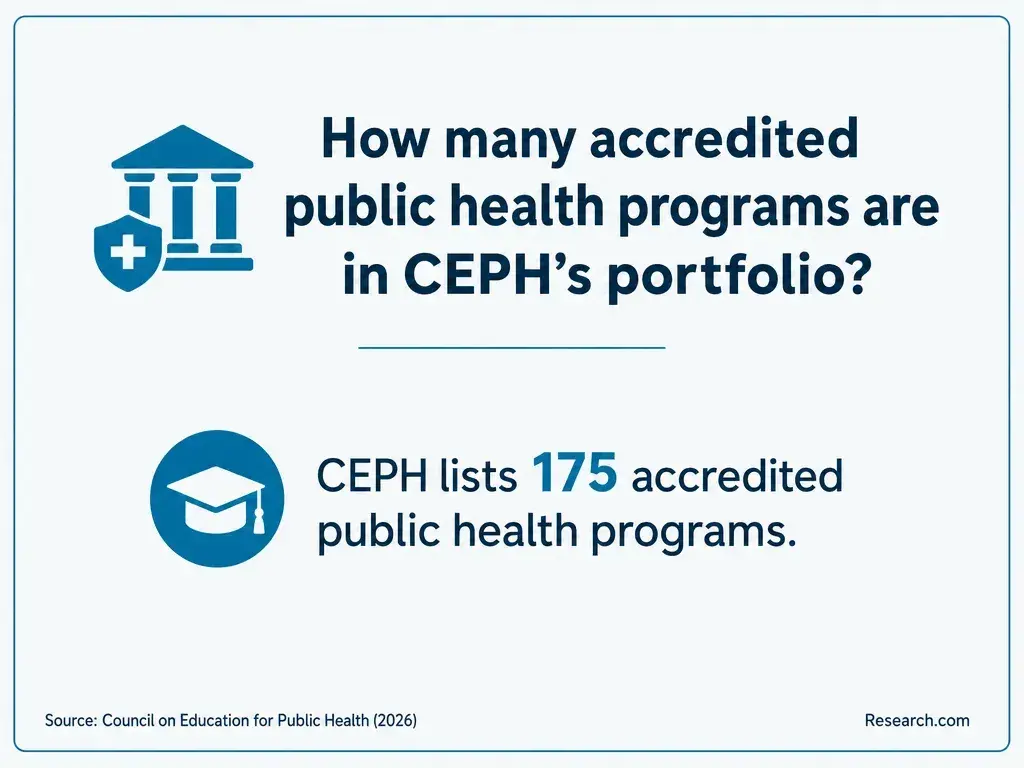
Check the institution's recognized institutional accreditation first. Then, if public health-specific accreditation matters to your goal, verify the Council on Education for Public Health (CEPH) listing for the exact school, unit, or program and confirm that the degree you plan to enter is within its scope. Institutional accreditation alone does not establish CEPH coverage, and a related course does not create an accredited concentration.
Students reviewing CEPH-accredited MPH degree options online should also confirm current project, fieldwork, and delivery requirements with the program. Accreditation is a quality checkpoint, not proof that a particular partner placement or monitoring assignment will be approved.
The deliverable can demonstrate readiness for tasks in outreach coordination, community health, program assistance, and evaluation support: defining measures, documenting data limits, reporting clearly, and responding to partner priorities. A prospective employer should be able to see what the student designed, which choices a supervisor reviewed, and what remains untested.
Community health workers and program assistants may collect information and support referrals; evaluation analysts usually need stronger data and methods experience. Program management ordinarily requires additional operational responsibility. A portfolio tool alone does not establish competence to direct research or manage a program. Career changers comparing flexible public health master's entry routes should weigh the degree against supervised work and the specific skills requested in target job postings.
What salaries and job outlook apply to public health monitoring careers?
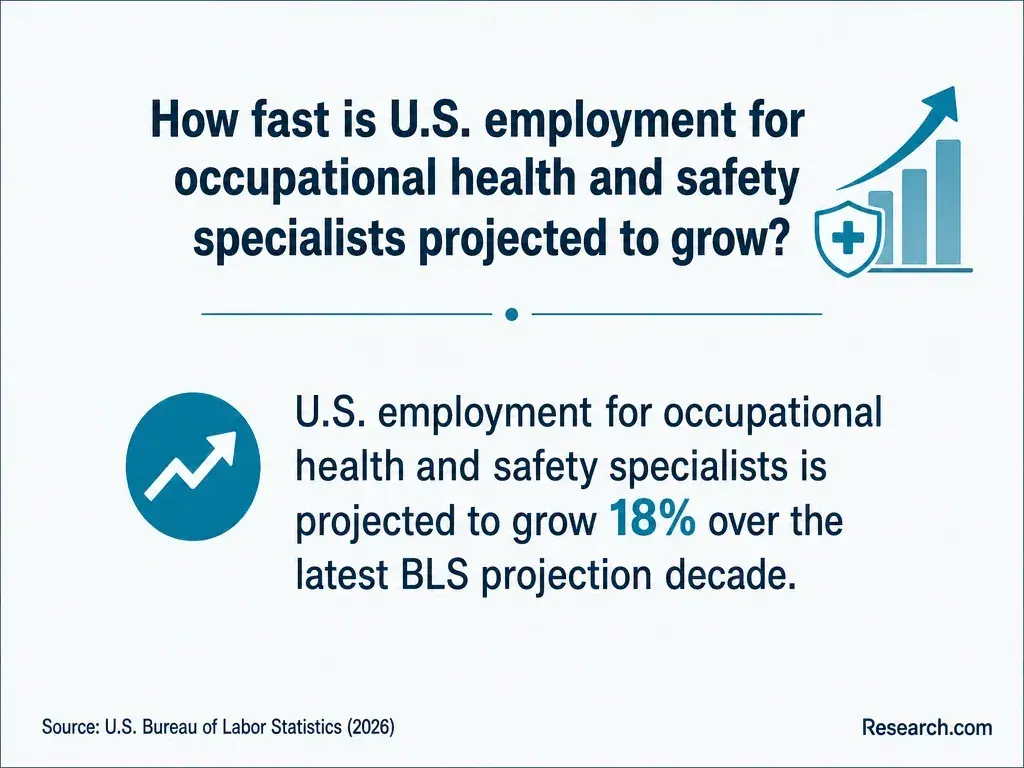
"Program monitoring" is a set of duties, not a single occupation with one published wage. Relevant US Bureau of Labor Statistics categories include community health workers and health education specialists, but their responsibilities and typical entry requirements differ. More technical evaluation positions may be classified differently again. An occupation-wide median or employment projection should not be presented as the expected outcome of this portfolio or an MPH.
For a useful comparison, match job postings to the work you want to perform, then check the Bureau of Labor Statistics Occupational Outlook Handbook for that occupation's latest wage reference year, projection period, and role definition. Location, employer funding, and prior experience matter alongside education. Guidance on understanding salary variation after an MPH can provide context, but compare actual openings before estimating a personal return on education.
Other Things You Should Know About Public Health
Not automatically. Ask what decision the classification would support and whether a directly stated language preference would answer it with less risk. Any demographic field needs a clear purpose, appropriate permission, and a safe reporting plan.
Label the first consistent reporting period as a starting point, not evidence of improvement. Document changes in sites, staffing, and collection methods before comparing later periods.
Yes, if the assignment permits it and the records are clearly labeled fictional. A demonstration can show how a form or summary would work without implying that real workers participated.
Seek review from the partner's outreach staff and, when feasible and appropriately arranged, people with relevant community and language expertise. Translation alone does not establish that a question is understandable, useful, or safe to ask.
- Summary of the HIPAA Security Rule | hhs.gov https://www.hhs.gov/hipaa/for-professionals/security/laws-regulations/index.html
- CDC Approach to Program Evaluation https://www.cdc.gov/evaluation/php/about/index.html
- Quality indicators for the referral process from primary... - PMC https://pmc.ncbi.nlm.nih.gov/articles/PMC5209847/
- Using Performance Monitoring to Improve Community Health | nih.gov https://www.ncbi.nlm.nih.gov/books/NBK233369/
- Evaluation Planning Brief: Developing a Logic Model | nnlm.gov https://lor.nnlm.gov/op/op.Download_Share.php
- Protecting Personal Information: A Guide for Business | Federal Trade Commission https://www.ftc.gov/business-guidance/resources/protecting-personal-information-guide-business
- Outreach Tools | dol.gov https://www.dol.gov/general/migrantworker/tools
- Migrant and Seasonal Farmworker Outreach Program - EDD | California Employment Development Department https://edd.ca.gov/en/jobs_and_training/Migrant_and_Seasonal_Farm_Worker_Outreach_Program/
- Chapter 7 - Privacy and Confidentiality https://www.uscis.gov/policy-manual/volume-1-part-a-chapter-7
- Section 1. Developing a Logic Model or Theory of Change | ku.edu https://ctb.ku.edu/en/table-of-contents/overview/models-for-community-health-and-development/logic-model-development/main