2027 Choosing Public Health BS Coursework for Community-Based Research Teams

Co-Founder and Chief Data Scientist
A public health BS can prepare you to contribute to community-based research, but the degree title alone does not show whether you will learn to work with partners, handle data responsibly, or evaluate a program. For students aiming to join a nonprofit, health department, or university research team, course sequence and supervised experience matter more than a long list of electives. This guide shows how to prioritize coursework, assess research opportunities, and check whether a program's time and cost fit the work you want to do.
Key Things You Should Know
- Prioritize a sequence of introductory statistics, epidemiology, research methods, and program evaluation; a single survey course rarely provides enough practice for research-team tasks.
- Look for supervised work with a community partner where you can demonstrate recruitment support, data collection, analysis, or reporting - not just complete classroom assignments.
- Expect a bachelor's degree to prepare you chiefly for supervised entry-level responsibilities. Research design leadership and specialist analytic roles may require substantial experience or graduate training.
What Is a Public Health BS Degree for Community-Based Research?
A public health Bachelor of Science is an undergraduate degree in population health. For community-based research, its value is the combination of public health concepts, quantitative and qualitative methods, and practice with organizations serving a defined population. "Community-based" describes research shaped by a community's priorities and context; it does not mean that students or researchers can speak for a community without its participation.
A BS is not a standalone research credential. One program may require extensive statistics and fieldwork, while another offers those subjects only as electives. Compare the actual degree plan and applied opportunities, including those described in resources on public health bachelor's degree planning online, rather than assuming every BS develops the same skills.
Which Public Health BS Courses Prepare Students for Community Research?
Choose courses as a sequence: learn what to measure, how to collect information, how to analyze it, and how to explain its limitations to a partner. Course names vary, so use syllabi and prerequisites - not titles alone - to judge depth.
The following course combinations are especially useful when they include hands-on assignments:
- Statistics followed by epidemiology: Practice describing populations, selecting denominators, interpreting uncertainty, and distinguishing association from causation.
- Research methods with qualitative methods: Learn sampling, survey and interview design, observation, consent, and how researcher assumptions can affect interpretation.
- Community health or social determinants with health communication: Examine structural context and practice presenting findings in language a partner can use.
- Program planning followed by evaluation: Connect a program's goals to feasible measures, data sources, and decisions.
- Ethics or public health law with an applied project: Learn when privacy rules, data-use permission, community agreements, and institutional review need attention.
If electives are limited, favor a methods course with a substantial project over a second broad survey course. Students who later want to direct studies or conduct advanced analysis can investigate graduate preparation, including online MPH programs by tuition affordability; a future graduate option should not replace the undergraduate practice they can obtain now.
How Do You Choose an Accredited Public Health BS Program?
First confirm that the institution holds recognized institutional accreditation. Then check whether the specific public health degree is included in the scope of Council on Education for Public Health (CEPH) accreditation, if CEPH recognition matters to your plans. Accreditation of a university, school, or different degree does not establish that the BS itself is covered. The program and accreditor should be able to clarify the current scope.
For research preparation, ask to see the required course sequence, recent syllabi, and rules for internships or capstones. Find out who arranges placements, whether faculty supervise research work, and whether students can complete projects with local organizations. Graduate accreditation comparisons, such as accreditation-focused online MPH comparisons, concern a different degree level; they cannot verify a bachelor's program's status or fieldwork access.
Entry-level team members may help maintain a recruitment log, administer an approved survey, organize interview notes, check data quality, or prepare a plain-language summary. They need reliable documentation and respectful communication as much as software familiarity. A useful student portfolio might contain a de-identified data dictionary, an evaluation plan, or a sample report built from public or appropriately authorized data.
The distinction is between performing a task under supervision and deciding independently that a study is ethical, representative, or valid. Before using partner data, clarify who owns it, who may access it, what may be shared, and whether institutional review or other approval is required. Students interested in eventually leading original research should plan for deeper methods training and research experience; public health PhD program cost comparisons are relevant only if that longer-term route fits their goals.
Neither format is inherently better. A campus program may make it easier to join a faculty team or attend local partner meetings. An online program may let a student work with an organization near home. In either format, the deciding factor is whether supervised, substantive research work is available and feasible on the student's schedule.
Before enrolling, ask whether methods courses include live meetings, whether group projects require fixed hours, and whether an internship or capstone can be completed locally. Confirm who approves a remote site and supervises its work. An online doctorate has different supervision and research expectations; an online public health doctorate selection guide should not be used to infer how a BS handles placements.
Requirements depend on whether you are applying to the university as a first-year or transfer student and whether entry to the public health major is separate. A school may ask for general education coursework, a minimum standing, or prerequisites before you can take upper-division methods courses. Ask admissions and the department for the requirements that apply to your intended entry term.
Transfer students should obtain an official degree audit showing not only which credits were accepted, but which satisfy statistics, general education, major, and residency requirements. An accepted statistics course may still need a departmental equivalency review. Doctoral admissions comparisons - including online public health doctorates by admissions accessibility - address later-stage study and are not a guide to undergraduate entry requirements.
A full-time bachelor's pathway is commonly planned around four academic years, but prerequisites, course availability, transfer evaluation, and fieldwork timing can change an individual completion date. A part-time plan may be more workable alongside employment, though it can extend the period during which tuition and fees are due.
Compare schools using a written estimate of remaining required credits, tuition and mandatory fees, books or software, travel to partner sites, and any income lost to unpaid fieldwork. Request a term-by-term plan before assuming transferred credits will shorten the degree. An online public health degree tuition guide can help frame the comparison, but your school's current charges and approved degree audit determine your likely cost.
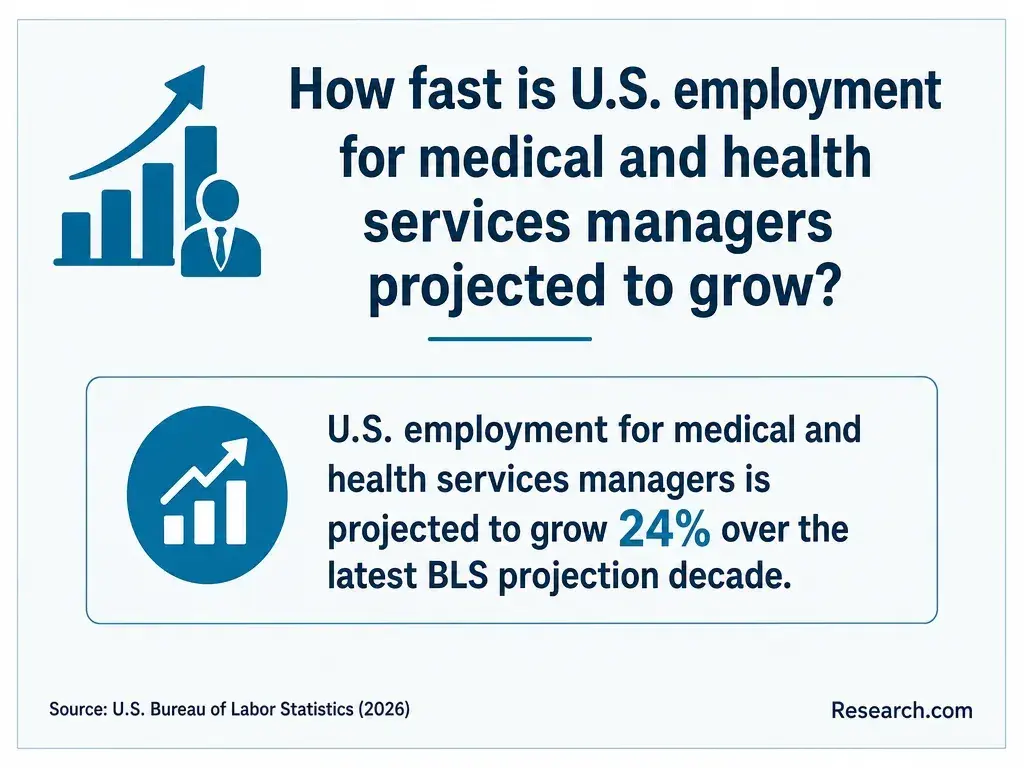
Relevant entry-level openings may include research assistant, program assistant, community outreach coordinator, or evaluation assistant. Titles are inconsistent: one research assistant may conduct approved interviews, while another primarily schedules participants and maintains records. Read the duties and qualifications, then seek a supervised project that lets you show evidence of the work an employer needs.
A BS alone generally does not prepare someone to serve as a principal investigator, independent epidemiologist, or research director. Experience may support advancement; some specialist roles call for graduate study. If leadership is a distant goal, resources on affordable public health doctorates and earning potential belong in a later career decision - not in the calculation of whether a bachelor's program will help you get your first team role.
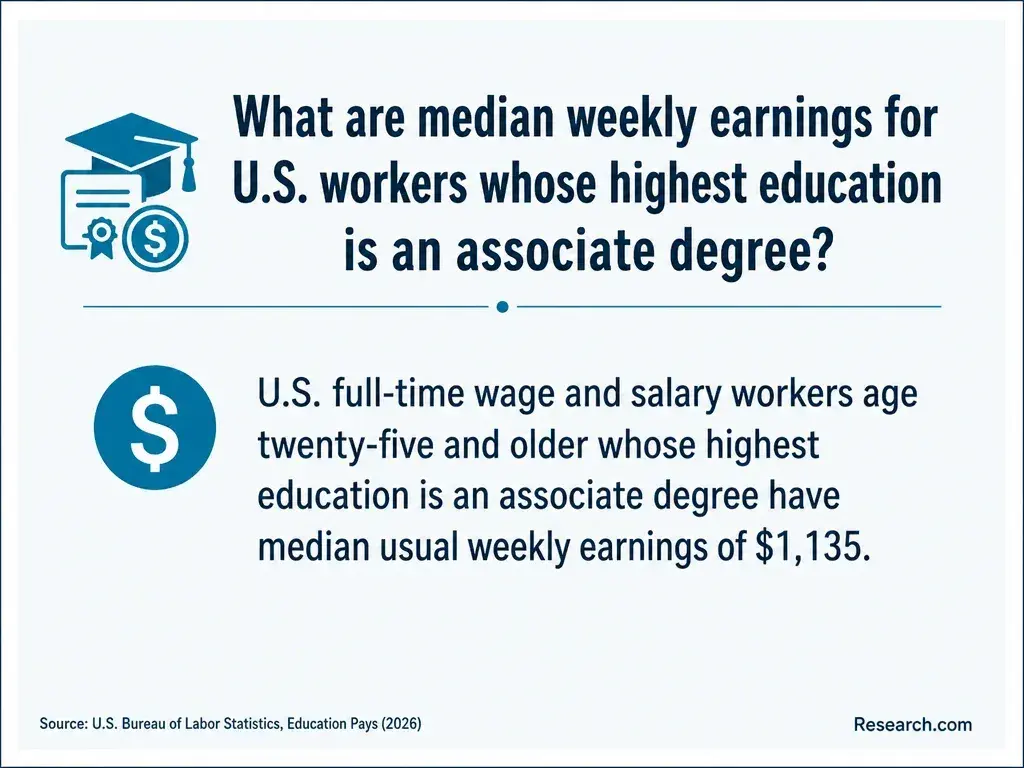
There is no single salary for public health BS graduates. Pay depends on the occupation, employer, location, responsibilities, and prior experience. A community-facing outreach position and a data-intensive research position may have different pay even when both accept bachelor's applicants. Occupational medians published by the U.S. Bureau of Labor Statistics describe workers across experience levels; they are not starting salaries or outcomes for a particular degree.
For a useful comparison, identify actual openings you could qualify for, record their posted pay ranges and required skills, and weigh those against your expected education cost. Guides to efficient public health degree pathways and earnings can prompt questions about return on investment, but they cannot predict your first offer or the value of a particular internship.
Do Public Health BS Graduates Need Licenses or Certifications?
General research-assistant and program-support work does not carry a universal public health license. A specific employer may require training in human-subjects protections, privacy, data security, or a particular collection procedure before assigning tasks. Clinical services and some other regulated duties have separate requirements that a public health BS does not satisfy by itself.
Professional certifications also have distinct eligibility rules; coursework alone should not be treated as certification. Check the certifying organization and the job posting before paying for an exam or an additional degree. If a later role genuinely calls for an MPH, evaluate its full cost and funding terms using information such as reducing MPH tuition with institutional awards, rather than treating graduate study as an automatic next step.
Other Things You Should Know About Public Health
Usually, if you created the work and have permission to share it. Remove confidential information and identify a proposed plan or classroom exercise as such; do not present it as an implemented community study.
Build basic literacy in both. Then choose additional depth based on the tasks you hope to perform and the courses you can take in sequence.
It can demonstrate relevant experience if you performed documented research or evaluation tasks with appropriate supervision. General volunteering remains valuable, but describe its actual duties accurately.
Ask what tasks an undergraduate can perform, who will supervise them, what training is required, and whether any work product can be shared in a portfolio.
- Human Subjects Protections in Community-Engaged Research | nih.gov https://pmc.ncbi.nlm.nih.gov/articles/PMC2946318/
- Social Determinants of Health | NCHHSTP Health Equity https://www.cdc.gov/health-disparities-hiv-std-tb-hepatitis/about/social-determinants-of-health.html
- Comparing Interview and Focus Group Data Collected... - NCBI https://www.ncbi.nlm.nih.gov/books/NBK588708/
- ICJIA | A Guide to Conducting Focus Groups https://icjia.illinois.gov/researchhub/articles/a-guide-to-conducting-focus-groups/
- Human Research Protection Training | hhs.gov https://www.hhs.gov/ohrp/education-and-outreach/human-research-protection-training/index.html
- The Value of Community-Engaged Collaborative Research Courses | Swearer Center for Public Service | Brown University https://swearer.brown.edu/news/2023-11-02/community-engaged-research-courses
- QUAL-WORKS | Rollins Health Education Institute | Emory University https://sph.emory.edu/degrees-programs/professional-development/rollins-health-education-institute/qual-works
- Guide to Introductory Biostatistics Course Sequences | jhu.edu https://publichealth.jhu.edu/departments/biostatistics/programs/guide-to-introductory-biostatistics-course-sequences
- Section 6. Conducting Focus Groups - Community Tool Box https://ctb.ku.edu/en/table-of-contents/assessment/assessing-community-needs-and-resources/conduct-focus-groups/main
- Human Subjects Protection and Community-Engaged Research | umn.edu https://engagement.umn.edu/initiatives/human-subjects-protection