2027 Public Health PhD Research: Choosing an Implementation Framework Without Forcing the Findings

Co-Founder and Chief Data Scientist
An implementation framework can sharpen a public health dissertation - or make unexpected findings difficult to see. The choice matters before data collection because it affects whom you interview, what you measure, and which explanations you can defend.
This guide is for prospective and current PhD researchers studying how evidence-based interventions are put into practice. It explains how to match a framework to a research question, use it without treating its categories as predetermined answers, and assess whether a doctoral program can support the work.
Key Things You Should Know
- Choose by purpose: use a determinant framework to investigate barriers and facilitators, a process framework to study implementation stages, or an evaluation framework to assess outcomes.
- Preserve an open path for findings outside the framework: record uncategorized observations, revisit definitions, and report contradictions rather than forcing a fit.
- A credible PhD plan also needs feasible measures, appropriate data permissions, relevant supervision, and funding - not merely a well-known framework name.
What is implementation science in public health PhD research?
Implementation science studies how evidence-informed interventions become routine, equitable, and sustainable in real settings. In public health, the intervention might be a vaccination outreach strategy or a referral process across community clinics. A PhD study might ask why organizations adopt that strategy, why delivery differs across sites, or whether intended populations can access it.
An implementation framework organizes concepts relevant to those questions. It is not a finding, a substitute for a study design, or proof that an intervention works. A determinant framework identifies possible influences, such as staffing or organizational priorities; a process framework describes stages of change; an evaluation framework specifies dimensions to assess. Researchers sometimes combine these purposes, but each addition should answer a distinct question.
For readers deciding between doctoral research and earlier training, comparing public health master's career directions can clarify whether the immediate need is applied evaluation skill or preparation to produce original research. A PhD is most relevant when the goal requires a sustained research question, defensible methods, and scholarly supervision.
How do you choose an implementation framework for your research question?
Start with the decision your study must inform, not the framework most often cited in your department. For example, a study of why clinics differ in adopting a referral process needs concepts about organizational and external influences. A study of who receives the referral needs a clear reach measure and an eligible-population denominator. Those are related questions, but they do not call for identical frameworks or data.
Use this sequence to make the choice explicit in a proposal:
- Write the research question in plain language, naming the intervention, setting, population, and stage of implementation.
- Identify the framework's job: explain determinants, describe a process, assess implementation or population outcomes, or connect more than one of these purposes.
- Check whether its concepts fit the setting and can be investigated with data you can realistically obtain.
- Compare a plausible alternative and document what your chosen framework clarifies - and what it may miss.
- Ask a supervisor and, where appropriate, community or practice partners whether the proposed concepts reflect their setting without replacing their priorities.
Choose the smallest defensible combination of frameworks. Combining a determinant framework with an outcome taxonomy can be useful; stacking several overlapping determinant frameworks may produce a long interview guide without a clearer analysis. If you need foundational public health methods before this decision, CEPH-accredited MPH degree options online provide one route to compare, though a targeted course or supervised research experience may be more direct.
How can researchers avoid forcing findings into an implementation framework?
Use the framework as a provisional guide to inquiry, not a requirement that every interview statement or observation fit a named construct. In qualitative work, a defensible approach may combine deductive codes drawn from the framework with inductive codes developed from the data. Define each code, record ambiguous cases, and retain material that does not fit. In quantitative work, do not rename an available variable as a framework construct unless its definition and measurement support that interpretation.
Build safeguards into the analysis plan before seeing results. Pilot the interview guide for leading questions; invite participants to describe unanticipated influences; keep analytic memos explaining coding changes; and examine cases that challenge the emerging account. Report constructs with little evidence as carefully as prominent ones. If an unexpected issue - such as a partner organization's informal referral practice - matters more than a predicted barrier, explain its significance rather than hiding it in a broad "other" category.
Methods preparation helps researchers exercise that judgment. Public health master's admission requirement alternatives may be useful if a prospective researcher needs a route into further study, but flexible entry requirements do not replace training in qualitative interpretation, measurement, or research ethics.
The options below serve different purposes. Their names are less important than whether they help answer the proposed question with available evidence.
| Framework or approach | Primary use | Important limitation |
| Consolidated Framework for Implementation Research (CFIR) | Organizes potential determinants across the innovation, setting, people, and implementation process. | Its constructs do not themselves establish which factors caused an outcome. |
| RE-AIM | Assesses reach, effectiveness, adoption, implementation, and maintenance. | Each dimension needs a suitable definition and denominator; studying only adoption does not assess population reach. |
| Exploration, Preparation, Implementation, Sustainment (EPIS) | Examines implementation across phases and organizational and external contexts. | Phase boundaries may be less tidy in settings where activities overlap or restart. |
| Theoretical Domains Framework (TDF) | Organizes influences on individual behavior, including capability, beliefs, and social influences. | It may not adequately capture organizational or policy conditions on its own. |
| Proctor implementation outcomes | Distinguishes outcomes such as acceptability, adoption, feasibility, fidelity, and sustainability. | It is an outcomes taxonomy, not a complete account of why implementation succeeds or fails. |
Some studies also use PRISM to examine contextual factors alongside RE-AIM outcomes. Before selecting any version, read its original or updated definitions and examine how researchers have operationalized it in comparable settings. A researcher still building the necessary methods background can compare public health graduate programs with accessible entry, but admissions accessibility says nothing by itself about depth of implementation-science training.
A framework should change observable choices in the protocol. Suppose, hypothetically, that clinics are introducing a community referral process. CFIR could inform interviews with staff and partners about workflow, resources, and external conditions. RE-AIM could guide separate questions about which eligible residents receive referrals and which eligible clinics adopt the process. Neither approach supplies the answers in advance.
Specify the unit of analysis and timing for each measure. Clinic adoption might mean a clinic has begun using an approved referral workflow; reach might mean the share of eligible residents who receive an offer during a defined period. Counting clinics as the denominator for resident reach would answer the wrong question. Likewise, a favorable staff interview cannot establish effectiveness for residents.
Choose sampling that can reveal variation, such as clinics with different resources, and state how missing records or uneven documentation could bias comparisons. Check data-use permission, confidentiality protections, partner expectations, and whether institutional review is needed before collecting or accessing information; do not infer review status from the framework. If the immediate goal is to learn measurement and evaluation rather than conduct a dissertation, lower-cost Master of Public Health study online is one option to weigh against individual methods courses and supervised project work.
Requirements vary by university and department. Applicants generally need to document prior academic work, explain a research direction, and show readiness for the methods their proposed work demands. A relevant master's degree, research experience, quantitative or qualitative coursework, writing sample, recommendations, or faculty alignment may matter, but none should be treated as a universal requirement without checking the specific program. Test policies and whether a prospective advisor must agree to supervise an applicant also vary.
For implementation-science research, a persuasive application connects a public health problem to a researchable question, an appropriate method, and plausible access to settings or data. Experience working in a health department or community organization can identify important questions; it does not automatically demonstrate readiness to design interviews, assess measurement validity, or manage research ethics. Applicants from other disciplines should map their existing research and analytical skills against the program's stated prerequisites.
If you are still completing undergraduate preparation, public health bachelor's pacing and course length may affect when you can build that foundation, but accelerated courses are not a substitute for sustained research experience. Ask admissions staff which qualifications are required, which are merely competitive, and whether prospective supervisors have capacity for the proposed topic.
The relevant distinction is not simply where coursework appears on a screen. A dissertation involving community organizations may require in-person relationship building and site visits under either format. An online program may also require live seminars, residencies, scheduled meetings, or local data collection; a campus program may offer remote research activity while expecting regular on-site participation.
Compare access to implementation-science supervisors, methods courses, research groups, community partners, and data - not just course delivery. Ask how students receive feedback on proposals and coding decisions, whether research or teaching assistantships require campus presence, and how the program handles a supervisor's departure. The online public health PhD and DrPH comparisons can help frame format questions, provided you verify that a listed doctorate is the research-focused degree you want rather than a practice-focused DrPH.
First verify institutional accreditation and the exact degree being offered. Then check the Council on Education for Public Health (CEPH) listing for the accredited school, unit, or program and the scope that applies to the degree. Do not assume a university's accredited MPH means its PhD is covered by the same accreditation decision. Accreditation is a quality-assurance consideration, not proof of a particular advisor's expertise or access to a dissertation site.
For this research topic, compare identifiable faculty interests, recent methods teaching, dissertation supervision arrangements, partner relationships, and policies governing proposal approval, research access, and progress. Ask how many faculty could supervise the work if your preferred advisor became unavailable, and obtain written details of funding and residency expectations. Lists of accessible online public health doctoral pathways may help generate programs to investigate, but "accessible" does not establish research fit, admission eligibility, or accreditation scope.
Completion time depends on coursework, qualifying examinations, proposal approval, recruitment or data access, analysis, and dissertation review. Implementation studies can face additional delays when partner agreements, staffing, or service delivery change. Ask each program for its published time-to-degree information and what period that figure covers rather than treating an advertised minimum as a completion forecast.
Compare a written, term-by-term funding offer with the full expected commitment: tuition and mandatory fees, stipend, health coverage, summer support, research or teaching duties, travel, data collection, and any charges after guaranteed funding ends. Distinguish guaranteed support from renewal contingent on satisfactory progress, assistantship availability, or a grant. For employed applicants, employer tuition support for epidemiology doctorates offers related questions to raise with an employer; verify eligibility, reimbursement limits, and work-hour expectations before relying on such support for any PhD.
What careers, salaries, and job outlook follow a public health PhD?
A research-focused PhD can support applications for faculty, research scientist, evaluation, and advanced public health research roles. The work may involve study design, grants, partnerships, data analysis, and communicating evidence to decision-makers. A dissertation on implementation does not by itself qualify someone for every leadership position, clinical role, or epidemiologist job; employers assess methods expertise and relevant experience.
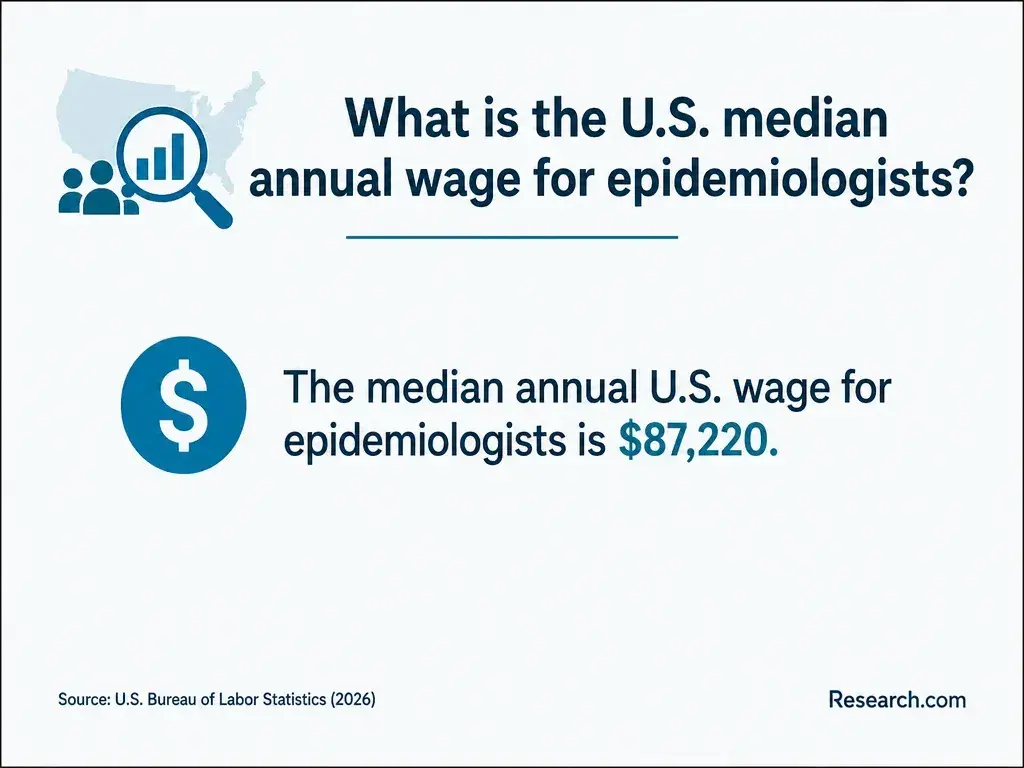
There is no single reliable "public health PhD salary." US Bureau of Labor Statistics wage and outlook figures describe defined occupations, not earnings or placement outcomes for graduates of a particular degree. Compare the occupation that matches your intended duties, then examine job postings for required experience, location, and research skills. If your goal is to improve programs within your current organization rather than lead original research, employer-supported methods training or a practice-oriented doctorate may be a better investment. A public health doctorate career value guide can help structure that comparison, but weigh any salary discussion against the specific job you seek and the funding you would give up to study.
Other Things You Should Know About Public Health
No universal rule requires one. Check your program's proposal standards and explain how your concepts, measures, and analysis answer the question, whether or not you adopt a named framework.
Yes, if you document the changes, preserve the intended meaning where you claim to measure an established construct, and distinguish local concepts from the framework's original definitions.
Identify the version used in your approved protocol. Discuss any later revision with your supervisor and committee before changing measures or coding rules, and document differences if you use both versions.
Often they can review appropriately aggregated themes or carefully protected excerpts. Follow consent terms, data agreements, and institutional guidance before sharing material, especially when a role or quotation could identify someone.
- Making sense of implementation theories, models and... - PMC https://pmc.ncbi.nlm.nih.gov/articles/PMC4406164/
- CDC Program Evaluation Framework, 2024 | MMWR https://www.cdc.gov/mmwr/volumes/73/rr/rr7306a1.htm
- Implementation Science Methodologies and Frameworks | Fogarty International Center https://www.fic.nih.gov/About/center-global-health-studies/neuroscience-implementation-toolkit/Pages/methodologies-frameworks.aspx
- Using implementation science theories and frameworks in global health | BMJ Global Health https://gh.bmj.com/content/5/4/e002269
- Step 5 - Choosing a Conceptual or Theoretical Framework https://libguides.kean.edu/c.php
- Using Framework Analysis in Applied Qualitative Research | nova.edu https://nsuworks.nova.edu/cgi/viewcontent.cgi
- A Review of Implementation Science Theories, Models and Frameworks through an Equity Lens - NIRN https://nirn.fpg.unc.edu/blog/a-review-of-implementation-science-theories-models-and-frameworks-through-an-equity-lens/