2027 MPH Applications With Volunteer Experience Only

Co-Founder and Chief Data Scientist
Volunteer work may be your only public health experience when you are ready to apply for an MPH. That does not automatically put the degree out of reach - but it matters whether a program requires paid professional experience, how you describe your responsibilities, and what skills you still need to build.
This guide is for applicants moving from college, another field, or community service into public health. It explains how to screen programs, present volunteer work credibly, and choose a route that offers a realistic path from admission to supervised practice.
Key Things You Should Know
- Volunteer-only applicants can apply to many generalist MPH programs, but they must check each program's experience rules; an executive or advanced-standing track may require professional work.
- Strong applications explain what the volunteer did, for whom, under whose supervision, and what they learned - not just how many hours they served.
- Compare the full cost and required fieldwork before enrolling. An MPH can build public health skills, but it does not replace the experience or credentials a particular job requires.
Can You Apply to MPH Programs With Volunteer Experience Only?
Yes, if the specific program does not require paid professional experience. An MPH is a practice-oriented graduate degree in population health, and applicants may bring experience from community organizations, campus projects, mutual aid, health outreach, or other unpaid settings. Admission eligibility is not the same as competitiveness: a program can accept volunteer experience while still expecting evidence that you understand public health work.
Read the requirement literally. "Relevant experience preferred" leaves room for a volunteer applicant; "professional experience required" calls for a question to admissions about what counts.
Executive MPH and accelerated tracks designed for established professionals may not fit someone whose experience is entirely unpaid. If you are screening online options, a guide to accessible admissions pathways for online MPH study can help you build a shortlist, but confirm each program's published criteria for your intended entry term.
The strongest volunteer examples show responsibility rather than proximity to a health setting. Coordinating outreach materials, recording attendance accurately, or helping a supervisor assess a program demonstrates more than simply saying you volunteered at a clinic. Do not describe clinical care, independent research, or program leadership you did not perform.
What Admission Requirements Do MPH Programs With Volunteer Applicants Have?
Requirements vary by institution and track. Programs commonly review an undergraduate degree and transcripts, a statement of purpose, recommendations, and a résumé or experience record. Some specify prerequisite courses, a minimum GPA, an entrance test, or an interview; others do not. Check the program's own instructions, including whether it uses a centralized application service and whether outstanding coursework can be completed after admission.
For a volunteer-only application, build a record an admissions reader can evaluate. The sequence below separates formal eligibility from the evidence that can strengthen your case:
- Check the degree, GPA, course, test, and experience rules for each track before paying an application fee.
- Record each volunteer organization, dates, approximate hours, supervisor, responsibilities, and a concrete output you can accurately describe.
- Ask a supervisor or instructor who knows your work whether they can discuss reliability, judgment, communication, and readiness for graduate study.
- Use your statement to connect one observed population-health problem to the skills you want to learn, while acknowledging work you have not yet done.
If your academic record is a bigger concern than your lack of paid work, consider addressing GPA concerns in an MPH application. Relevant volunteer work can add context, but it does not automatically waive a stated academic requirement.
How Can You Find an Accredited MPH Program Without Professional Experience?
Start with programs that publish admissions criteria for a standard MPH rather than assuming every track at an accredited school has the same rules. Check institutional accreditation and the Council on Education for Public Health (CEPH) listing separately. CEPH accreditation can apply to a school, an academic unit, or an individual program; verify that the MPH degree you plan to enter is within its stated scope.
Then compare the program's admissions page with its curriculum and fieldwork policies. Ask admissions, in writing, whether unpaid service satisfies any stated experience requirement. Ask the MPH program how it helps students without existing public health employers secure supervised applied practice experiences. Those answers are more useful than an unqualified claim that a program is "beginner-friendly."
Recommendation rules deserve the same close reading: some schools accept academic or volunteer supervisors, while others specify who must write a letter. If obtaining letters is your obstacle, review MPH admissions without faculty recommendations, then verify the actual policy with each school. A less restrictive letter policy does not establish that professional experience is unnecessary.
Choose a pathway for the work you want to do, not merely because it resembles the organization where you volunteered. The comparison below shows how different kinds of service can reveal useful interests while leaving different preparation gaps.
| Volunteer experience | MPH direction worth investigating | Gap to check before applying |
| Outreach, peer education, or community events | Community health, health promotion, or a generalist MPH | Program planning, evaluation, and ethical community engagement |
| Survey administration or spreadsheet support | Epidemiology or a methods-focused pathway | Statistics preparation and the depth of quantitative coursework |
| Food access, housing, or policy advocacy | Health policy or population-health practice | Policy analysis, governance, and evidence appraisal |
A concentration is a defined part of a degree only when the school formally offers it; a related elective is not the same credential. Use public health graduate concentration selection to compare directions, then examine required courses and applied opportunities at each school. If your immediate goal is a narrowly defined skill or an entry-level nonprofit role, a course, certificate, or supervised job may be a less costly first step than an MPH.
They can be, provided the schedule and fieldwork model suit your circumstances. Online delivery does not mean every course is asynchronous, and an online student may still need live group meetings, a local practice site, or an approved supervisor. For an applicant without a public health employer, the central question is who helps identify a suitable applied practice opportunity.
Ask how placements are approved, whether remote work is permitted, what hours or on-site obligations apply, and who resolves a placement that falls through. Also check whether you can sustain the course schedule alongside volunteering or paid work. If online study is necessary but cost is a constraint, investigate university-funded aid for online MPH programs; confirm eligibility, renewal terms, and the amount offered to you before relying on an advertised award.
MPH curricula generally introduce epidemiology, biostatistics, environmental health, health policy or systems, and social and behavioral approaches to health. Programs also develop skills in communication, ethics, program planning, and evaluation, though course titles and depth differ. A supervised applied experience and an integrative project may be part of the degree; check the specific curriculum and approval rules rather than assuming prior volunteering will replace them.
Match preparation to your likely starting point. An outreach volunteer may already have practice communicating with community members but need introductory statistics. A volunteer who handled data may need more grounding in community partnership and responsible interpretation. If you have not completed an undergraduate degree, an MPH is not a substitute for that admissions requirement; a public health BS program selection guide may be more relevant to your next academic decision.
Time and cost depend on the required credits, tuition structure, enrollment pace, and availability of courses and fieldwork. A shorter advertised completion time may assume full-time study, a prescribed course sequence, or a placement that is already arranged. Ask the school for a term-by-term plan based on your intended pace.
For a realistic budget, request tuition and mandatory fees for the full degree, then account for books or software, travel, any campus visits, and the possibility of reduced earnings during fieldwork. Compare what you would owe after aid, not just a program's headline tuition. A guide to finding a lower-cost online MPH program can help identify candidates for a closer cost comparison. If an MPH is not required for your target job, weigh that expense against gaining paid experience first.
Volunteer experience plus an MPH can support applications for public health roles, but the attainable level depends on your demonstrated tasks, practicum, other work history, and the employer's requirements.
Plausible early-career targets include program coordinator, health education specialist, outreach coordinator, and evaluation or research assistant. These roles can involve implementing activities, communicating with communities, maintaining program records, or supporting analysis under supervision.
Build evidence for the function you want. A prospective analyst needs credible methods and data-handling work, not just an epidemiology course title. A prospective program coordinator benefits from documented scheduling, partner communication, and reporting. Epidemiologist positions may call for stronger quantitative preparation and relevant experience; management roles generally require evidence of responsibility beyond degree completion.
If your long-term goal is advanced public health leadership, public health doctorate pathways for advanced study are a separate decision. A doctorate is not a practical substitute for the first supervised experience needed to enter the workforce.
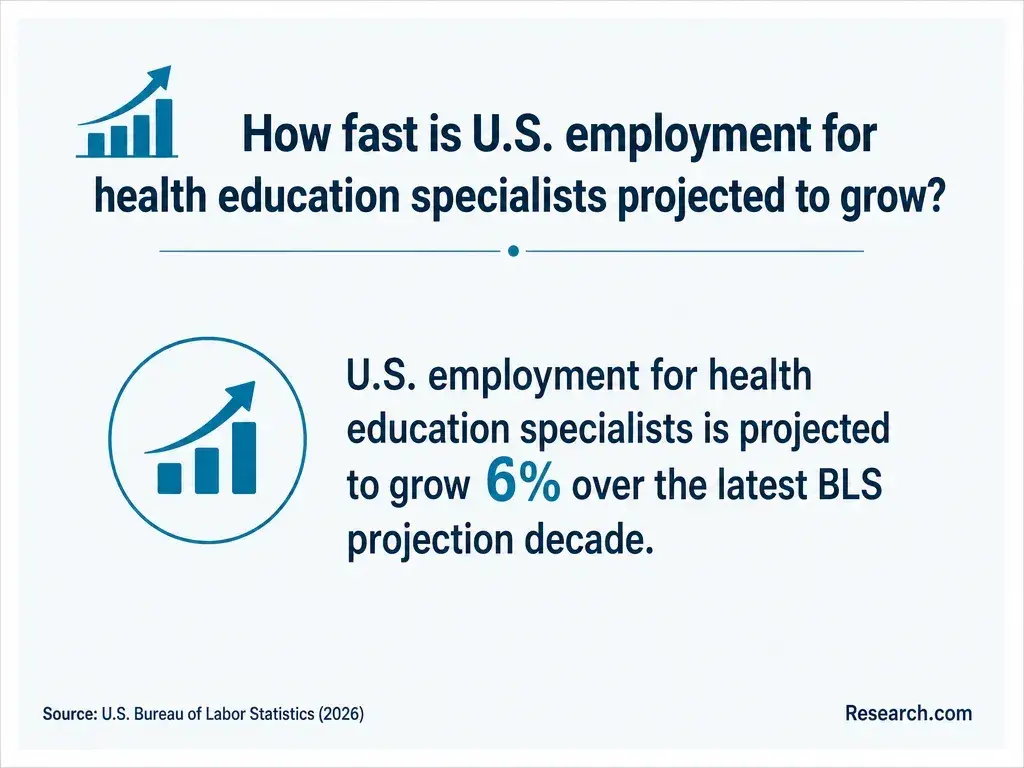
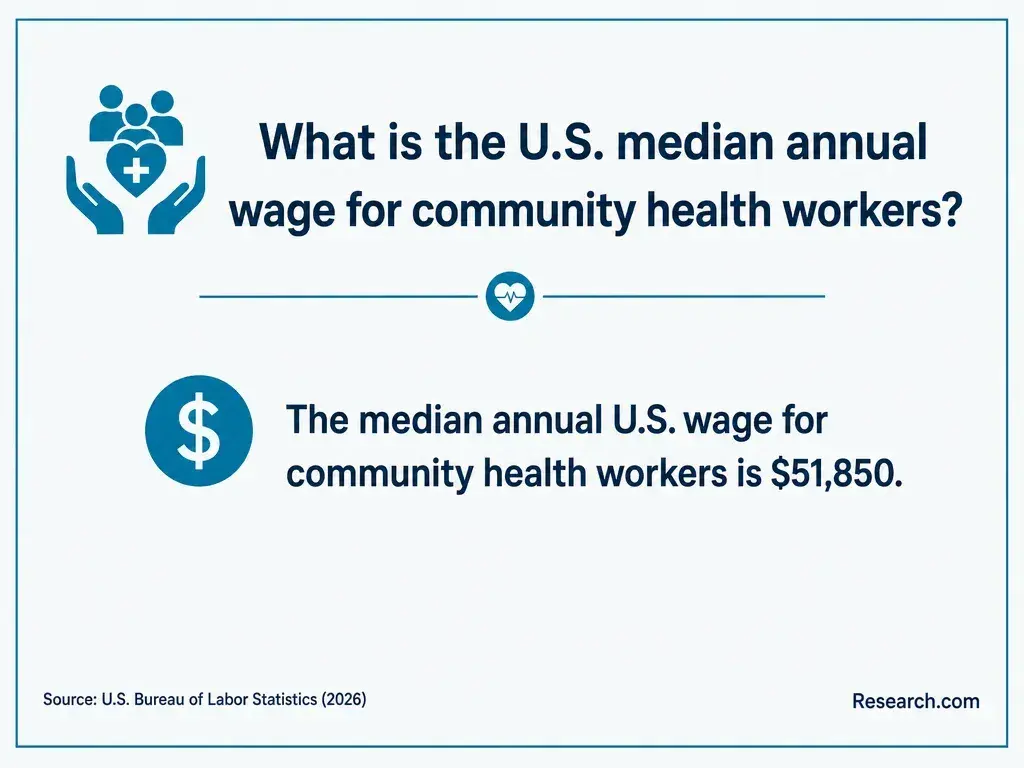
There is no single MPH salary or job-growth rate. The US Bureau of Labor Statistics wage and employment projections describe occupations, not the outcomes of everyone holding a particular degree. A health education specialist, epidemiologist, and program coordinator may have different duties, entry requirements, employers, and pay.
Before using an occupational median to assess an MPH, check whether the role matches the job you could realistically pursue and whether the figure covers experienced workers as well as new entrants.
For a volunteer-only applicant, the most useful financial comparison is often the cost of the degree against likely initial roles, not a senior position you hope to hold later. If you mainly need to test your interest or qualify for a role that does not require an MPH, compare short online public health degree options with targeted coursework and paid entry-level work.
Treat any advertised salary as a prompt to check the underlying occupation and job requirements, not as a return-on-investment promise.
Do MPH Graduates Need Licenses or Public Health Certifications?
An MPH does not itself grant a clinical license or automatically award a public health certification. Many public health program and outreach jobs do not require a general license, but an employer or state may specify a credential for a particular position. The Certified in Public Health (CPH) and health education credentials such as CHES or MCHES have their own eligibility and examination rules; check the responsible certifying organization before choosing coursework around one.
Do not use a doctorate or another degree as a stand-in for a required license. If you are considering advanced study after an MPH, comparing online doctorate admission routes in public health addresses a different question from professional credential eligibility. For any job posting, identify the exact required qualification first, then determine whether an MPH, certification, supervised experience, or a regulated professional degree is the appropriate route.
Other Things You Should Know About Public Health
Include it if it is relevant and you can describe your responsibilities accurately. Explain what you did and, if your interests have changed since then, how the experience relates to your present MPH goals.
You can still describe work you performed honestly. Keep any records you have, such as a role description or project materials you are permitted to share, and do not imply that the organization can verify details it cannot.
No. Work involving housing, food access, environmental conditions, education, or community advocacy may be relevant. Explain the population-health connection without claiming that all service activities are public health practice.
Wait if your target programs require professional experience or if paid work would clarify your career goal and reduce the need to borrow. Otherwise, compare programs that accept your background and assess whether their fieldwork and career support address your experience gap.
- Graduate Global Public Health Education - PMC https://pmc.ncbi.nlm.nih.gov/articles/PMC4776821/
- How does pre-admission community service compare with community service during medical school? - PubMed https://pubmed.ncbi.nlm.nih.gov/16197316/
- MPH Epidemiology vs Public Health Practice | Enrollment Services https://www.utmb.edu/spph/about-us/home/news/2026/03/02/mph-epidemiology-vs-public-health-practice
- Steps to Apply for an MPH or MHSA | umich.edu https://sph.umich.edu/admissions/mph-mhsa-application-checklist.html
- MPH Public Health Practice | Zuckerman College of Public Health https://publichealth.arizona.edu/programs/graduate/mph/public-health-practice
- 18 Public Health Skills Needed for Upskilling | 5 Public Administration Careers for MPA Graduates https://www.augusta.edu/online/blog/upskilling-public-health-skills
- MPH Program Skills: What You Learn and Where They Lead | NMSU Global Campus https://global.nmsu.edu/blog/healthcare/mph-program-skills-what-you-learn-and-where-they-lead/
- Which MPH Program is Right For Me? | Health Systems and Population Health https://hspop.uw.edu/cophpmph/which-mph-program-is-right-for-me/
- Public Health Internships & Pre-Professional Experience Guide https://www.publichealthonline.org/pre-professional-experience/
- Top 5 Online MPH Colleges | Careers in Public Health.net https://www.careersinpublichealth.net/resources/top-5-online-colleges-best-public-health/