2027 Evaluating an MPH Practicum in A Public Health Quality Improvement Office

Co-Founder and Chief Data Scientist
A quality improvement office can offer an MPH student meaningful work on how public health services actually operate - but access to an office is not the same as an approved practicum. The strongest placements give students a defined population-health problem, supervised responsibility, usable data, and deliverables the agency can apply. This guide is for students comparing field sites, including online learners and early-career practitioners. It explains what to verify with the MPH program and host before committing, and when a different placement would better serve your goals.
Key Things You Should Know
- Choose the placement for its approved learning objectives and hands-on work, not the office's name; the MPH program must accept the site, supervisor, and deliverables.
- Ask for a scoped project with a baseline, an appropriate measure, stakeholder input, and a usable product - not just meeting attendance or dashboard maintenance.
- Confirm data permissions, weekly availability, and any travel or unpaid-work costs before accepting; host approval alone does not authorize access to restricted records.
What Is an MPH Practicum in a Public Health Quality Improvement Office?
An MPH practicum - often called an applied practice experience - is supervised work through which a student demonstrates public health competencies. In a health department's quality improvement (QI) office, that work may involve examining how a service is delivered, identifying a process problem, testing a feasible change, or helping staff assess whether a change is working. QI focuses on improving a defined process in its operating context; it is not automatically a research study or proof of a population-level effect.
A promising placement connects office operations to a public health purpose: for example, making a referral process more reliable or improving the timeliness of a community service. Students still exploring degree levels can consult an online bachelor's public health education guide, but undergraduate fieldwork should not be assumed to satisfy an MPH practicum requirement.
What Does a Quality Improvement Office Practicum Require?
The MPH program sets academic requirements; the host determines which work and supervision it can offer. Before accepting, obtain written confirmation of the site approval process, required hours or credits, competency selections, supervisor qualifications, evaluation schedule, and acceptable final products. A host's willingness to take a student does not replace school approval, and an existing job does not automatically qualify.
The work plan should give the student a bounded responsibility and regular feedback. Establish who can approve process changes, who can release data, whether meetings or site visits are mandatory, and what happens if an agency priority changes. If you are still completing prerequisite study, alternative entry routes to a public health master's are a separate admissions question; they do not waive fieldwork rules.
How Does CEPH Accreditation Shape MPH Practicum Experiences?
For an MPH covered by Council on Education for Public Health (CEPH) accreditation, the applied practice experience must provide opportunities to apply competencies and produce assessable evidence of that work. The school translates CEPH criteria into its own placement, supervision, product, and assessment procedures. Check the accredited school or program's scope and the requirements applying to your degree and entry term; institutional accreditation alone does not establish CEPH coverage.
Ask the practicum coordinator which competencies your proposed QI tasks can demonstrate and how products will be assessed. A completed dashboard, for example, may show data communication skills but not community engagement unless the work actually included and documented that engagement. Doctoral applied projects follow different academic rules; readers planning doctoral study in public health should not treat an MPH placement as their model.
A well-scoped placement can build skills in process mapping, selecting meaningful measures, assessing data quality, interpreting results, facilitating staff feedback, and communicating recommendations. Public health judgment matters as much as the technical work: a faster service is not necessarily better if the change makes access harder for people with limited transportation, language access, or time.
Match the project to your starting point and target role. An early-career student might document a workflow and explain its limitations; someone with analytical experience might examine variation in service timeliness. Neither should claim advanced evaluation expertise from one supervised project. Intensive online public health bachelor's classes can provide earlier academic preparation, but the placement must demonstrate the competencies required by the MPH itself.
The best project is small enough to finish within the placement yet useful enough for staff to review or adopt. The examples below are possibilities, not claims about what a particular office will offer. Availability depends on the agency's priorities, data permissions, and the student's skills.
| Possible project | Useful student product | Important limitation |
| Review a referral workflow | Process map and recommendations brief | Staff perspectives may not represent service users |
| Assess service timeliness | Measure definitions, analysis, and accessible summary | Incomplete dates can distort the measure |
| Support a change test | Test plan, monitoring measures, and lessons learned | A short test cannot establish lasting impact |
Whatever the format, define the population served, the process being examined, the intended decision-maker, and what evidence can realistically be collected. Keep patient or client information out of presentations and portfolios unless disclosure is expressly authorized. If choosing among academic pathways before selecting a project, graduate public health degree and concentration options can clarify whether practice improvement matches your intended training.
An online MPH may allow a student to arrange an approved placement near home or with a geographically distant office, but online coursework does not make fieldwork asynchronous. Supervisor meetings, agency working hours, secure-system access, and occasional on-site activities can determine whether a placement is feasible - especially for students balancing work and caregiving.
Ask the program who finds and approves sites, whether remote supervision is permitted, how agreements are signed, and whether a proposed remote project provides enough interaction and responsibility. Then ask the host which tasks require its network, equipment, or physical presence. Budget for any required travel before treating a remote placement as the cheaper choice; university-funded aid for online MPH programs may help with degree costs, but award terms and coverage must be verified separately.
Admission to an MPH and approval for its practicum are separate decisions. Programs commonly review prior academic work, a statement of purpose, and other application materials, but prerequisites, tests, experience expectations, and application systems vary. A background in healthcare, government, business, or another field may be relevant to QI work; an unrelated undergraduate major does not automatically rule someone out.
Before applying, check both admissions criteria and when students become eligible to start fieldwork. If grades are a concern, guidance on building an MPH application with weaker grades can help you present relevant preparation, but only the admitting program can assess eligibility or grant an exception. Do not secure a host placement on the assumption that admission, prerequisite clearance, and practicum approval are the same step.
There is no single practicum duration or price across MPH programs. The school's required hours or credits, academic calendar, site onboarding, and project scope determine the schedule. A placement can also take longer than its logged work hours suggest if data access or agency review is delayed.
Compare the full cost of each option: tuition or credits attached to fieldwork, fees, commuting or travel, equipment, and earnings you may forgo. Confirm whether the host pays students and whether your school permits paid employment to count; neither should be assumed. Affordable public health programs with faster schedules may reduce classroom time or tuition, but a compressed calendar is beneficial only if it leaves enough time for approval, supervision, and a credible QI product.
The placement can provide evidence for applications to public health program coordinator, performance improvement specialist, evaluation assistant, or health department analyst roles, depending on the actual work completed. Employers may value a clear account of the problem, your contribution, the measures used, and the limits of your conclusions more than a QI office name on a résumé.
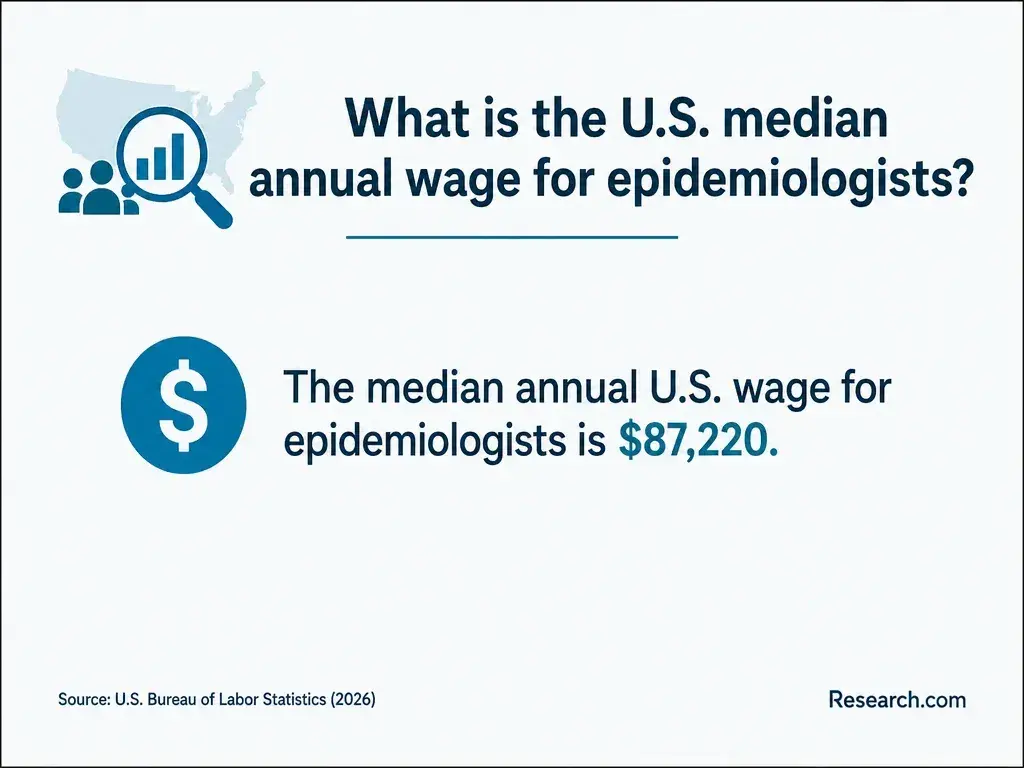
An MPH practicum does not guarantee a QI position or qualify a new graduate for management. Some roles require agency experience, specialized analysis, or responsibility for budgets and staff. When reviewing salary prospects with a Master of Public Health, compare the stated occupation and experience level with your target job rather than treating an occupation-wide wage as an expected practicum outcome.
How Should Students Evaluate an MPH Quality Improvement Practicum?
Compare prospective placements against the same questions before making a commitment. Ask the academic coordinator and site supervisor for answers in writing where approvals, schedules, or data access are involved:
- Approval: Is this site and supervisor eligible, and which competencies and products will the school assess?
- Work: What specific process problem will I address, what decisions can I influence, and what is the fallback project if priorities shift?
- Support: Who will meet with me regularly, provide feedback, and review the final product?
- Access and ethics: Which records may I use, under what permissions, and who decides whether review or additional safeguards are needed?
- Feasibility: What are the actual weekly hours, location requirements, expenses, and deadlines?
Prefer a modest, approved project with accountable supervision over an impressive-sounding assignment with no data access or defined output. If your primary goal is senior organizational leadership rather than entry-level QI practice, assess that separately; public health doctorate affordability and completion time is a different decision, not a reason to accept a weak MPH placement.
Other Things You Should Know About Public Health
Not necessarily. Ask your MPH program about site eligibility. PHAB accreditation of a health department and CEPH accreditation of an academic public health program serve different purposes.
Contact your academic coordinator promptly. Revised tasks may need new learning objectives, deliverables, or approval before they can count toward the practicum.
Not by itself. Certified in Public Health eligibility is governed by the credentialing organization's current rules; check the applicable pathway and exam requirements directly.
Do not assume you can distribute it. Confirm the host's agreement and your school's rules on ownership, confidentiality, attribution, and what version - if any - you may show in a portfolio.
- Section 4: Ways To Approach the Quality Improvement Process (Page 2 of 2) | Agency for Healthcare Research and Quality https://www.ahrq.gov/cahps/quality-improvement/improvement-guide/4-approach-qi-process/sect4part2.html
- Quality Measures: Types, Selection, and Application in Health Care Quality Improvement Projects - PMC https://pmc.ncbi.nlm.nih.gov/articles/PMC10229016/
- Quality Improvement Methods (LEAN, PDSA, SIX SIGMA) - NCBI https://www.ncbi.nlm.nih.gov/books/NBK599556/
- MPH Foundational Competencies | UW School of Public Health https://sph.washington.edu/mph-practicum/competencies
- Privacy and Confidentiality | IRB https://irb.ucdavis.edu/project-guidance/privacy-and-confidentiality/
- 4 Collaborating with the Institutional Review Board (IRB) | mit.edu https://admindatahandbook.mit.edu/book/v1.0-rc5/irb.html
- Stakeholder Analysis & Engagement - UNC School of Medicine https://www.med.unc.edu/ihqi/resource-center/stakeholder-analysis/
- Secondary Use of Existing Data | virginia.edu https://hrpp.research.virginia.edu/teams/irb-sbs/researcher-guide-irb-sbs/secondary-use-existing-data
- Performance Measurement and Management | urban.org https://www.urban.org/research/data-methods/data-analysis/quantitative-data-analysis/performance-measurement-and-management
- Chapter 5: Practicum | University of Washington https://uw.pressbooks.pub/bhssimplementationguide/chapter/chapter-5-practicum/