2027 Graduate Public Health Preparation for Public Health Implementation Research Roles

Co-Founder and Chief Data Scientist
Implementation research asks why a public health intervention succeeds in one setting but fails to take hold in another, and what can make it work in routine practice. Graduate preparation for this work must connect research methods with partnerships, program operations, and ethical data use.
This guide is for students and practitioners considering roles in health departments, community organizations, health systems, or research teams. It explains which degree paths fit different responsibilities, what experience employers can assess, and how to avoid paying for training that does not match the work you want to do.
Key Things You Should Know
- Choose by intended responsibility: an MPH can support applied program evaluation, a methods-intensive MS can strengthen research analysis, and a PhD or DrPH may fit independent research or advanced practice leadership.
- Look for evidence of three connected abilities: designing a feasible study, working with implementation partners, and interpreting both implementation outcomes and population-health outcomes.
- "Implementation researcher" is not a single federal occupation or salary category; compare actual job duties, supervision, funding, and required experience before committing to a graduate degree.
What Is Graduate Preparation for Public Health Implementation Research Roles?
Public health implementation research studies how evidence-based interventions are adopted, delivered, adapted, and sustained in real settings.
A team might examine why clinics struggle to deliver a recommended screening program, whether a revised workflow improves delivery, and how staff and patients experience the change. Measuring whether the workflow was adopted is different from measuring whether screening ultimately improved health.
Graduate preparation combines epidemiology or evaluation methods with an understanding of organizations and communities. It also includes supervised work: negotiating a useful question with partners, selecting feasible measures, documenting adaptations, and reporting limitations without overstating impact.
Someone still completing an undergraduate degree may first need statistics, research, and community-health foundations; a public health BS program selection guide can help frame that earlier decision. A second bachelor's degree is not ordinarily the default for someone who already has a relevant degree.
Which Graduate Degrees Prepare You for Public Health Implementation Research?
The right credential depends on whether you want to help conduct studies, lead applied evaluation, or direct an independent research agenda. Degree titles alone cannot establish methods depth or access to field partners; compare curricula, supervision, and graduates' actual work.
The distinctions below are starting points, not universal program requirements. Use them to identify which training structure matches the responsibilities in your target job postings:
| Path | Best fit | Potential gap to check |
| MPH | Applied evaluation, program implementation, and practice-based research collaboration | Advanced study design, statistical analysis, or protected research time |
| Research-oriented MS | Analytic or study-coordination roles requiring deeper methods training | Community partnerships and operational public health experience |
| PhD | Independent research, methods development, and scholarly leadership | Direct responsibility for implementing change in organizations |
| DrPH | Experienced practitioners leading organizational improvement and applied inquiry | Fit for a career centered on independent academic research |
A certificate, targeted methods courses, or supervised research work may be more efficient than another degree if you already hold a relevant graduate credential. For a broader comparison of public health graduate study areas and career outcomes, keep the implementation tasks - not a concentration's name - at the center of your choice.
What Skills Are Required for Public Health Implementation Research Careers?
Researchers need to ask both whether an intervention works and how it can be delivered. Essential skills include study design, qualitative interviewing, quantitative analysis, process evaluation, and clear communication with people who will use the findings.
An analyst may need stronger coding and data-management skills; a practice-based investigator may need more experience securing partner agreement and managing organizational change.
Look for work samples that show how you defined a population, selected measures, handled missing or restricted data, and distinguished an observed association from a causal effect.
A useful portfolio item might be a deidentified evaluation plan with a logic model, measures for reach and fidelity, an analysis plan, and a candid limitations section. Software proficiency matters, but naming a package is weaker evidence than explaining a defensible analysis.
Statistics or programming preparation may affect both readiness and admission, particularly for methods-heavy programs. Comparing online MPH admission requirements can help you separate a school's formal prerequisites from skills you should still build for the work itself.
Relevant coursework may cover implementation theories or frameworks, epidemiology, biostatistics, qualitative and mixed-methods research, program evaluation, and health systems.
Strong training goes beyond naming a framework: students should be able to use one to identify barriers, choose a delivery strategy, specify an outcome, and explain what the available data cannot establish.
For example, a project could track whether clinics adopt a screening workflow, whether staff deliver its essential steps, and whether eligible patients are reached. Interviews might explain variation across sites. Those measures answer different questions; none alone proves that the workflow caused a change in long-term health outcomes.
Ask whether students can join a supervised project with a real partner, receive feedback on protocols and analysis, and learn the rules governing data access and review.
A PhD applicant seeking advanced epidemiologic methods should also examine funded mentorship and research duties, not just course titles; an epidemiology doctoral tuition assistance guide offers a related lens on that financial commitment. Project permissions and human-subjects review must be determined by the responsible organizations, not assumed from a course assignment.
Neither format is inherently better. An online program can work well for a practitioner who has a suitable employer or community partner, access to approved projects, and reliable research supervision.
Campus study may make it easier to join a faculty team or attend in-person methods seminars, but proximity does not guarantee a placement or dataset.
Compare the practical obligations behind the format: live-session times, required visits, group-work schedules, local fieldwork approval, and access to mentors.
Before enrolling, ask who identifies a project site and what happens if access to a partner or dataset falls through. These questions matter especially when comparing doctoral public health study formats, where sustained supervision can be more consequential than the location of lectures.
Requirements vary by institution and degree. Master's applicants generally need an eligible prior degree and application materials specified by the program; a methods-intensive MS may place greater weight on quantitative preparation.
Doctoral applicants should expect closer scrutiny of research fit or, for a practice-focused DrPH, the scope of their professional responsibilities. Prior publications, a GRE score, and a particular undergraduate major are not universal requirements.
Build an application around evidence of readiness: a course or project demonstrating research reasoning, a clear account of your intended implementation question, and examples of collaboration with program or community partners.
Check each program's current prerequisite, recommendation, test, and deadline policies directly. If recommendations are a barrier, online public health master's programs without recommendation letters may be worth investigating, but a simpler application does not establish strong implementation-research training.
Duration and total cost depend on required credits, enrollment pace, residency or campus visits, and the scope of a practicum, thesis, applied project, or dissertation. Doctoral progression also depends on milestones and research feasibility. A published tuition rate is therefore not a reliable total-cost estimate by itself.
Compare written estimates for tuition and required fees alongside travel, fieldwork, software, reduced work hours, and any continuation charges.
Ask whether a funded position covers tuition and when that support can end. If an MPH is the appropriate path, online MPH degree options on a budget can provide candidates to investigate; calculate the cost of each candidate's actual course plan before deciding.
The financial test is whether the training fills a documented skills or eligibility gap at a sustainable cost. An employer-supported project or individual methods courses may offer better value when another full degree is not needed.
Relevant work appears under varied titles, including research coordinator, evaluation specialist, implementation specialist, epidemiologist, research scientist, and program manager.
Titles are less informative than duties: coordinating a study is not the same as independently designing one, and managing program delivery is not the same as estimating its effects.
Early-career applicants can look for supervised positions that offer protocol development, data quality checks, partner meetings, or mixed-methods evaluation.
Experienced practitioners may move into implementation-focused work by documenting changes they led and how they assessed them. Independent investigator and research-director positions commonly require a stronger record of research leadership than a degree alone provides.
When comparing an entry-level offer with graduate study, account for both wages and the cost of building experience. Investigating institutional aid pathways for public health master's students can help, but confirm award eligibility and renewal terms before treating aid as part of your plan.
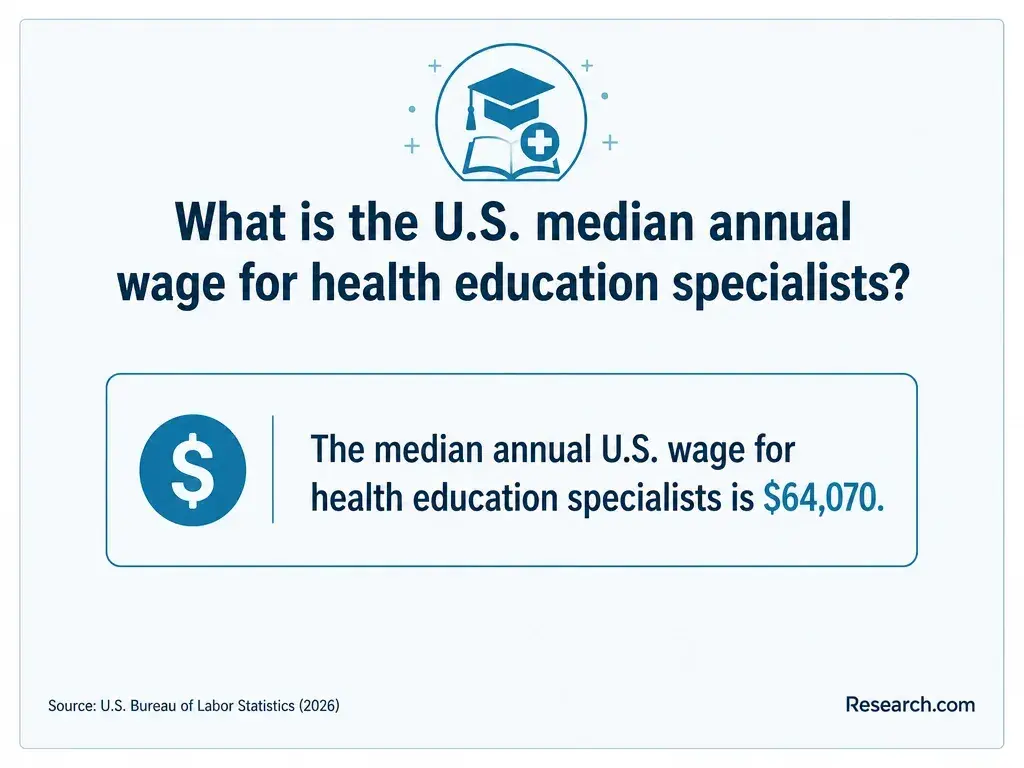
There is no single authoritative US salary or employment projection for "implementation researcher." The Bureau of Labor Statistics reports occupations such as epidemiologists and medical scientists, but those categories cover work beyond implementation research.
Their occupational medians and projections should not be presented as the pay or prospects of graduates from a particular program.
For a useful comparison, match each target posting to its actual duties, required degree, employer type, location, and experience level. Then consult the corresponding Bureau of Labor Statistics occupational profile and local job listings.
A research coordinator, a doctoral investigator, and a government program manager can face substantially different pay structures and advancement routes even when all work on implementation.
Doctoral study deserves a separate return-on-investment check because additional study can delay earnings and research appointments may depend on grant funding. Public health doctoral program cost-benefit considerations are most useful when weighed against a specific target role rather than an assumed doctoral salary premium.
Which Accreditation and Certifications Matter in Public Health Research?
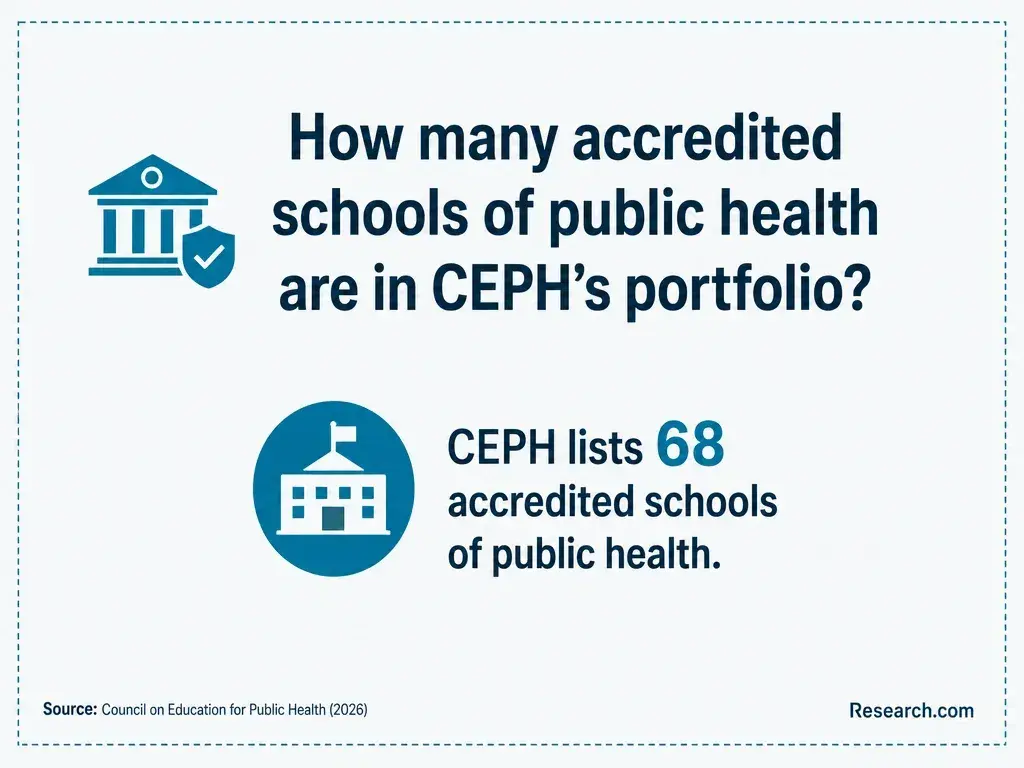
Confirm that an institution holds recognized institutional accreditation and check whether the Council on Education for Public Health accredits the specific school, unit, or program covering the degree you are considering.
Do not infer that every degree at an institution falls within the same CEPH accreditation scope. A directory of CEPH-accredited online MPH programs can help start a comparison, but verify current status and degree coverage with the accreditor and school.
Certifications such as Certified in Public Health may be relevant to some employers, but they are separate from a degree and have their own eligibility rules.
Implementation research roles generally place greater weight on appropriate methods, research ethics, and demonstrated project work than on a single general certification. Neither an MPH nor a research credential grants clinical licensure.
Other Things You Should Know About Public Health
Usually not. It is more useful to explain a practical implementation problem, the people affected, and how you would investigate barriers and outcomes. Learn the frameworks used by programs or prospective supervisors you are seriously considering.
Possibly, but publication plans do not determine whether an activity requires human-subjects review. Consult your institution's review process, the partner organization, and applicable data-use rules before collecting or reusing information.
Send a brief message connecting a specific aspect of their work to your question, methods preparation, and available time. Ask about current projects and supervision capacity rather than assuming an advisor can take on a new student.
Only with appropriate permission. Remove confidential information and avoid presenting partner data, internal documents, or results as public work unless your organization authorizes their use.
- Implementation Science Methodologies and Frameworks | Fogarty International Center https://www.fic.nih.gov/About/center-global-health-studies/neuroscience-implementation-toolkit/Pages/methodologies-frameworks.aspx
- Implementation Research in Health: A Practical Guide | who.int https://iris.who.int/server/api/core/bitstreams/08869e5c-f0e0-49d2-903e-2f85a6336d99/content
- Designs and methods for implementation research - PMC - NIH https://pmc.ncbi.nlm.nih.gov/articles/PMC7348037/
- Culturally Informed Community Engagement: Implications for Inclusive Science and Health Equity - NCBI Bookshelf https://www.ncbi.nlm.nih.gov/books/NBK592587/
- Collecting and Analyzing Qualitative Data | Field Epi Manual https://www.cdc.gov/field-epi-manual/php/chapters/qualitative-data.html
- MPH vs MS vs MHA: Which Public Health Master's Degree Is Right for You? | Tulane WSPH https://sph.tulane.edu/mph-vs-ms-vs-mha
- The benefits from culturally responsive community-based research partnerships | apa.org https://www.apa.org/research-practice/conduct-research/culturally-responsive-partnerships
- The Role of Implementation Science in Public Health | columbia.edu https://learn.publichealth.columbia.edu/blog/the-role-of-implementation-science-in-public-health
- What is the Difference Between a DrPH and a PhD? | Fairfield University https://www.fairfield.edu/news/insights/nursing-health-studies/difference-between-drph-and-phd.html
- MPH Field Placement & Capstone Project Courses | Medical College of Wisconsin https://www.mcw.edu/education/graduate-school/graduate-school-programs/public-health/mph-program/culminating-experiences