2027 Assessing a Tobacco Prevention Coalition's Decision Process: A DrPH Applied Project Planning Guide

Co-Founder and Chief Data Scientist
A tobacco prevention coalition may have good data and committed members yet still struggle to decide which activities to fund, whose input counts, or when to change course. For an experienced practitioner considering a DrPH applied project, the useful question is whether assessing that decision process would help the coalition make a specific, better-informed choice.
This guide explains how to define the project, secure an appropriate partner, examine decisions without blaming individuals, and produce an actionable deliverable. It also shows what to verify with a DrPH program before committing time, funding, or community trust.
Key Things You Should Know
- Scope the project around one coalition decision, such as selecting a priority population or allocating prevention funds, not a general judgment of whether the coalition "works."
- Use three complementary evidence streams where feasible: decision records, stakeholder perspectives, and a documented account of how evidence and community priorities entered the decision.
- Confirm the school's applied practice requirements and the partner's permissions separately. Neither enrollment nor access to a meeting grants permission to interview members or use restricted records.
What Is a DrPH Applied Project on a Tobacco Prevention Coalition?
A DrPH applied project is practice-focused doctoral work intended to address a real organizational or population-health problem. Here, the organization is a tobacco prevention coalition: a group that may bring together public health agencies, community organizations, schools, clinicians, and residents to coordinate prevention efforts. Its exact membership and authority depend on its local structure.
A manageable project asks how the coalition reaches a consequential decision and what could improve that process. For example, it might examine how members choose among youth prevention activities, cessation referrals, and policy advocacy when resources are limited.
The output could be a decision-process map, a revised priority-setting protocol, and a brief for coalition leaders. It should not presume that current decisions are defective or claim that a process change will reduce tobacco use without evidence.
Choose the degree pathway to match the work. A DrPH fits a practitioner who wants to lead an approved organizational improvement project; an MPH-level evaluation or targeted training may be sufficient if the task is narrower. Choosing among public health master's degree formats can help clarify that distinction before a practitioner commits to doctoral study.
How Does a DrPH Applied Project Assess Coalition Decision-Making?
The assessment traces a decision from the issue first raised through its final approval and implementation handoff. It examines who had authority, what evidence was available, how members and affected communities could contribute, how disagreements were handled, and whether the reasons for the choice were recorded. The unit of analysis is the decision process, not individual members' performance.
Start by naming one decision and the period in which it occurred. Then compare the coalition's written procedures with meeting agendas, minutes, relevant materials, and participants' accounts. A useful indicator might be whether proposed priorities have documented selection criteria.
Another might be whether the people expected to carry out a decision were consulted before it was finalized. Missing documentation is a finding about the available record, not proof that consultation never happened.
Process evaluation describes what occurred. A subsequent improvement phase might test a clearer agenda or priority-setting tool. Neither establishes a causal effect on smoking or vaping.
If the primary aim instead becomes estimating tobacco-related outcomes with advanced quantitative methods, online graduate biostatistics options for professionals may be more relevant preparation than a leadership-process project.
What Are the CEPH Requirements for a DrPH Applied Practice Experience?
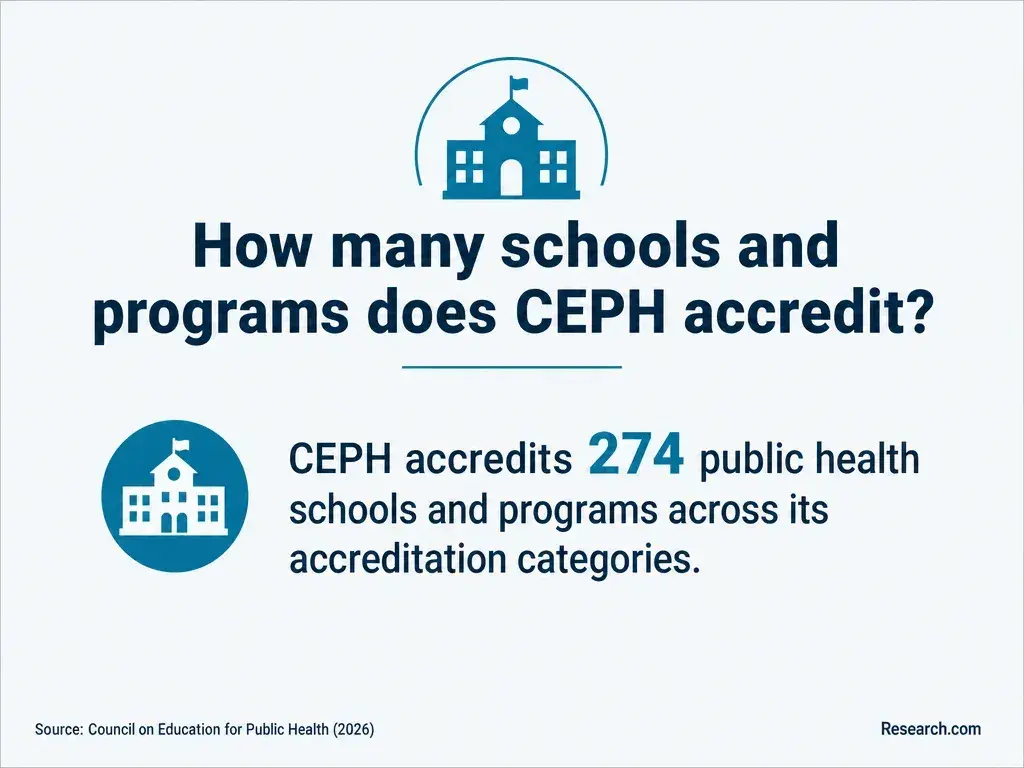
CEPH, the Council on Education for Public Health, accredits eligible public health schools and programs against published criteria. Its doctoral practice expectations are not a substitute for the specific DrPH program's current handbook, competency assessment, site agreement, or graduation rules. Ask the program to identify the applicable accreditation criteria and show exactly how its applied practice experience is assessed.
For this coalition project, obtain written answers about approved practice settings, supervision, required competency evidence, acceptable work products, and whether an existing job can serve as the project site. Also ask whether the program treats the applied practice experience and a separate culminating project as distinct requirements.
A coalition's willingness to host the student does not establish academic approval, and accreditation of an institution alone does not establish the CEPH status or scope of a particular DrPH.
Do not import rules from a different degree. Online MPH program accreditation comparisons concern master's programs; use the prospective DrPH program's own documentation to verify doctoral requirements.
Choose a coalition with an actual decision ahead, a designated contact who can authorize participation, and enough time for members to review the work. The best site is not necessarily the largest: a smaller coalition with clear governance and a usable decision record may offer a more feasible project than a well-known coalition whose records cannot be shared.
Before agreeing, establish who owns the decision, who speaks for affected communities, who supervises the student, and who can approve access to records and outreach to members. Ask whether proposed changes can fit existing grant conditions, public-agency procedures, staff capacity, and meeting schedules.
If the student already works at the site, clarify when they are acting as an employee and when they are acting as a student; employment alone does not satisfy school approval or remove power differences during interviews.
Sometimes the coalition needs more staff capacity rather than a doctoral assessment. If its immediate plan is to sponsor entry-level workforce education, public health undergraduate tuition comparisons address that separate budget choice. They should not drive selection of the DrPH project partner.
The proposal should let the coalition and faculty advisor decide whether the work is useful, authorized, and achievable. Keep the improvement purpose separate from any claim that an intervention has already succeeded. A concise proposal should cover these decisions:
- Decision and purpose: Name the coalition choice to examine, its decision-maker, and the process improvement the project could inform.
- Scope and evidence: Specify the period, records, potential participants, selection approach, and what will happen if access is limited.
- Governance and protections: Assign academic and site supervisors; state who authorizes recruitment, data use, review of findings, and release of products.
- Analysis and outputs: Define process measures, an analysis approach, limitations, a decision brief or tool, and a partner feedback point.
- Feasibility: Budget staff time, transcription or software if needed, travel, revision cycles, and deadlines around coalition meetings.
Agree on a stopping point. A decision brief and a tested draft agenda may be feasible within an applied experience; implementing a new strategy across agencies and measuring population outcomes may not be.
For students comparing broader education expenses alongside project obligations, budget and pacing choices for public health students provide context, but the proposal still needs a site-specific time and resource plan.
Use a framework because it clarifies what to observe, not because a proposal needs several named models. A logic model links coalition resources and activities to intended outputs and outcomes; it can reveal where a decision about tobacco prevention priorities occurs.
A stakeholder or power analysis identifies whose knowledge reaches that decision and who has formal authority. An implementation framework can help examine whether an agreed choice has a realistic path into routine work.
These frameworks answer different questions. If the concern is whose perspective was considered, stakeholder analysis should lead. If members agree on priorities but plans routinely stall, implementation analysis is more useful.
Pair either with explicit decision criteria, such as community priorities, evidence, feasibility, and equity, so that a recommendation can be discussed rather than merely presented.
Do not turn framework selection into an unsupported outcome study. A student whose objective is a sustained epidemiologic research program should separately examine doctoral research expectations and funding, including online epidemiology doctorate cost and funding, rather than treating a coalition process assessment as equivalent training.
Use the least burdensome combination of sources that can answer the approved question. Records can establish what was documented; interviews can explain how participants understood the choice; observation, if permitted, can show how a current decision unfolds. Seek perspectives beyond officers or agency staff when the decision affects community members who have less formal authority.
Before collecting information, obtain the school's determination about applicable ethics or institutional review requirements and the coalition's separate permission. Check consent or notice procedures, data-use conditions, secure storage, and how quotations or small-group descriptions could identify participants. Do not assume that labeling the work "quality improvement" automatically exempts it from review.
For analysis, build a chronology, code accounts against a short set of process questions, and compare claims with available records. Record disagreements instead of averaging them away; a leader's and a community member's different accounts may identify a governance issue. Report sampling gaps and avoid treating a small, purposively selected group as representative of all coalition members.
Plan interviews around participants' actual availability, not academic course calendars. Online public health bachelor's term-length comparisons describe a different educational scheduling question; even an accelerated course timetable cannot establish when coalition stakeholders are available to participate.
Either format can support a coalition project if it provides appropriate faculty supervision, timely site approval, and a workable way to review products with the partner. Online coursework does not make interviews, coalition meetings, or site visits asynchronous. Campus study does not necessarily provide a local tobacco prevention partner.
Ask each program how often students meet with faculty, whether live sessions or residencies are required, who finds and approves the site, and what happens if a partner withdraws.
Confirm whether a local workplace project is permitted and how the school handles an employee's dual role. These answers matter more than a broad "online" or "in-person" label for a working practitioner.
When comparing programs, online doctorate admission routes in public health can help frame an initial search. Judge final fit by the program's actual DrPH requirements and its ability to supervise this specific coalition project, not by perceived admission ease.
DrPH programs generally seek evidence that an applicant can lead practice-based work, but each school sets its own degree, experience, application, and progression rules. Document responsibilities, not just titles, including coalition governance, budget decisions, partner coordination, evaluation, and organizational change. Ask whether the school requires particular prior study or experience and whether your proposed site is eligible.
Compare total cost and timing using each program's published credit requirements, tuition basis, mandatory fees, expected enrollment pattern, and continuation rules. Add project travel, possible unpaid work time, and any required campus visits.
A shorter advertised course sequence may not shorten completion if site approval or a culminating project takes longer. Affordable public health doctorates by study duration can support an initial comparison, but request a program-specific cost and milestone estimate before enrolling.
If the goal is simply to help the coalition make its next decision, a supervised evaluation assignment or focused training may cost less and finish sooner than a DrPH. The doctorate is a stronger fit when the practitioner also wants sustained preparation for complex public health leadership.
Which Careers, Salaries, and Certifications Follow a DrPH in Public Health?
This project can provide evidence of skills relevant to coalition leadership, public-sector program management, nonprofit strategy, and practice-based evaluation. A useful portfolio account would describe the authorized question, methods, decision tool, and limitations without exposing confidential records or attributing private comments to members. A DrPH does not itself confer a leadership appointment, clinical license, or professional certification.
Evaluate compensation against a specific target job, employer, location, and existing experience. An occupational median is not a DrPH graduate salary, and a coalition director's pay may follow a government or nonprofit salary schedule. MPH compensation and career advancement offers context for an adjacent degree pathway, not a forecast of returns from this DrPH project.
Credentials such as CPH, CHES, or MCHES have separate eligibility and examination rules. Check the responsible certifying organization and target job posting before investing in one. The most immediate career value of the project may be a defensible example of how the practitioner helped a coalition examine authority, evidence, community input, and implementation constraints.
Other Things You Should Know About Public Health Programs
Possibly, but publication requires separate attention to partner agreements, participant permissions, confidentiality, and the school's review requirements. Permission to submit coursework is not automatically permission to publish it.
Pause new recruitment or data requests until the new authorized contact confirms the project's scope and permissions. Ask the faculty advisor whether the timeline or deliverable needs revision.
That arrangement may create pressure to participate or encourage guarded answers. Discuss independent recruitment or interviewing, voluntary participation, and reporting protections with the site and school before proceeding.
Yes, if the coalition's decision covers them and the proposal defines its terms clearly. Keep measures and recommendations tied to the products, populations, and activities actually within the coalition's authority.
- Guidelines and Resources for Tobacco Control Programs | cdc.gov https://www.cdc.gov/tobacco/php/tobacco-control-programs/guidelines-and-resources.html
- Evaluating Comprehensive State Tobacco Prevention and Control Programs Using an Outcome Indicator Framework - PMC https://pmc.ncbi.nlm.nih.gov/articles/PMC8106980/
- Principles and Best Practices for Protecting Participant Privacy | Grants & Funding https://grants.nih.gov/policy-and-compliance/policy-topics/sharing-policies/dms/privacy/best-practices
- Identifying and Analyzing Stakeholders and Their Interests | ku.edu https://ctb.ku.edu/en/table-of-contents/participation/encouraging-involvement/identify-stakeholders/main
- Decision Making | Ohioline - The Ohio State University https://ohioline.osu.edu/factsheet/CDFS-11
- DrPH Student Handbook 2026 - 2027 Academic Year | Columbia University Mailman School of Public Health https://www.publichealth.columbia.edu/file/17196/download
- Coalition Check-Up Project - Prevention Learning Portal https://plp.psu.edu/resource/coalition-check-up/
- Doctor of Public Health (DrPH) Graduate Student Handbook | Penn State College of Medicine https://med.psu.edu/education/academic-resources/drph-handbook
- Comprehensive Tobacco Control Programs | The Community Guide https://www.thecommunityguide.org/findings/tobacco-use-comprehensive-tobacco-control-programs.html