2027 Choosing Public Health BS Coursework for Food Bank Nutrition Partnerships

Co-Founder and Chief Data Scientist
A food bank nutrition partnership needs more than knowledge of healthy foods. Staff and partners must understand what households want, what distribution sites can provide, and whether a program is reaching people without adding burdens. For students considering a public health BS, that makes course selection and supervised experience especially important. This guide shows which classes build useful skills, how to judge a program's partnership opportunities, and when nutrition training or hands-on experience may be a better investment than another degree.
Key Things You Should Know
- Prioritize community nutrition, epidemiology, introductory statistics, program evaluation, and community-engaged practice over a collection of nutrition electives with no applied component.
- Ask whether the program can support an approved project with a food bank or pantry; online coursework does not eliminate fieldwork schedules, site approval, or supervision.
- A public health BS can support entry-level partnership work, but it does not qualify a graduate to practice as a registered dietitian or independently provide clinical nutrition care.
What Is a Public Health BS for Food Bank Nutrition Partnerships?
A public health Bachelor of Science (BS) applies population-health methods to problems that affect communities. For food bank nutrition partnerships, the relevant work may involve a regional food bank, local pantries, community members, growers, health departments, or health systems. A student might help plan a produce-distribution initiative, assess whether educational materials are usable, or track participation under supervision.
This is not necessarily a named concentration. Look for an actual combination of courses and approved experience rather than assuming that a degree labeled "public health" includes food security work. A public health BS program selection guide can help generate options, but the decisive evidence is each school's current catalog, course schedule, and field-placement policy.
Best fit: a student who wants to coordinate, communicate, and evaluate community nutrition programs. Someone whose goal is individualized medical nutrition therapy should investigate the separate education and supervised-practice requirements for dietetics instead.
Which Public Health BS Courses Prepare Students for Food Bank Nutrition Work?
Choose courses by the decisions a partnership must make: whose needs are being missed, what intervention is feasible, and how to assess it. Course titles vary, and an elective may not be offered every term. The comparison below shows what to look for in descriptions and assignments.
| Course area | Useful preparation | What to check |
| Community or public health nutrition | Food access, dietary patterns, nutrition communication, and the limits of education alone | Does it address affordability, transportation, choice, and food availability? |
| Epidemiology and introductory statistics | Describing populations, interpreting evidence, and checking whether apparent changes are meaningful | Will students work with data and explain limitations, not just calculate results? |
| Program planning and evaluation | Logic models, feasible indicators, implementation tracking, and feedback | Can a student produce an evaluation plan for a community partner? |
| Community health and health communication | Listening, accessible materials, and culturally responsive engagement | Are community perspectives incorporated into assignments? |
| Food systems, policy, or nonprofit management | Distribution constraints, public benefits, budgets, and interorganizational roles | Is the course available to BS students and relevant to US food assistance? |
A sensible sequence is introductory public health and statistics first, followed by nutrition and community-health courses, then planning or evaluation before an internship or capstone. Ask an adviser about prerequisites and term availability before building a schedule. If a later goal is specialist statistical work rather than partnership coordination, graduate biostatistics degree options for career advancement represent a different, more quantitative pathway; a BS statistics course is a foundation, not equivalent preparation.
How Does CEPH Accreditation Affect Public Health BS Program Quality?
The Council on Education for Public Health (CEPH) accredits public health schools and programs, while institutional accreditation applies to the institution. Neither label, by itself, proves that a particular BS has a food bank placement, a nutrition elective, or a course offered when you need it. Check CEPH's directory for the accredited school or program and confirm with the institution whether the BS is within its accredited scope.
Then examine the evidence closest to this goal: required competencies, course assignments, faculty expertise, placement approval rules, and examples of the types of community partners students can approach. Ask how a site supervisor and faculty member assess student work. Do not interpret accreditation as a guarantee of a specific internship or job.
Accreditation also should not be generalized across degree levels. If a student eventually considers research training, affordability of online public health PhD study is a separate question from whether the present BS offers the right courses and supervision.
The most useful graduate can turn a partner's practical concern into a manageable task without treating food bank clients as research subjects or assuming that nutrition information alone solves food insecurity. Classroom work should lead to evidence a supervisor can assess: a draft outreach material, an implementation plan, or a clearly documented analysis.
For example, a student could propose tracking the share of participating distribution sites that offer a specified type of nutrition resource. That is a process measure, not proof that participants' diets improved. An outcome evaluation would require a different question, appropriate data, and stronger attention to missing responses and alternative explanations.
Before using intake records or soliciting client feedback, establish who owns the data, what permission is needed, how information will be protected, and whether the school requires an ethics or research review. A partner may welcome a project without authorizing access to identifiable records. Students aiming eventually for advanced epidemiologic research should distinguish these undergraduate skills from doctoral preparation and its separate funding decisions, including epidemiology doctorate net tuition planning.
Choose the format that lets you complete both coursework and an approved community experience. Online study may reduce commuting, while campus study may make faculty meetings or local partner connections easier. Neither format guarantees a placement, flexible deadlines, or access to food bank data.
Ask each program whether classes are asynchronous, when group meetings occur, whether any campus visits are required, and who identifies and approves internship sites. For a local food bank placement, confirm weekday hours, travel, supervision, and whether an existing volunteer role can count; approval should come from the academic program before you rely on that experience for credit.
Accelerated online coursework for public health undergraduates may help some students finish classes sooner. A compressed course, however, can conflict with a partner's slower approval and project timeline. Compare the actual academic calendar with the fieldwork schedule, not just the advertised course length.
Requirements vary by institution and by entry route. First-year applicants may enter the university before declaring public health; transfer students may need prerequisites or a separate major application. Admissions eligibility, acceptance of prior credits, and application of those credits toward the BS are different decisions.
If transferring, request a degree audit showing where statistics, biology, general education, and prior public health courses apply. Ask whether remaining courses are offered in a workable sequence and whether the program has a residency-credit requirement. A course accepted as an elective may still leave a major requirement unfinished.
Do not use graduate admissions rules to judge BS eligibility. For a student contemplating a later master's degree, low-GPA eligibility for public health graduate programs is a separate question; the immediate task is to obtain the undergraduate institution's requirements and a written assessment of prior coursework.
A conventional full-time bachelor's path is commonly planned across four academic years, but the remaining time for a transfer or part-time student depends on the official degree audit and course rotation. Nutrition electives and an internship can delay completion if their prerequisites or site-approval deadlines are missed.
Compare programs using the cost to finish, not the advertised tuition rate alone. Include remaining credits, mandatory fees, books or software, travel to a partner site, and earnings affected by unpaid field hours. Ask financial-aid staff how a change in enrollment intensity or internship timing could affect your aid; do not assume an employer or partner will pay for placement time.
Low-cost public health bachelor's programs online can provide a starting comparison. Obtain school-specific estimates and a degree audit before deciding that a lower price per credit means a lower total cost.
Look for entry-level duties that match demonstrated skills: community outreach, partner coordination, nutrition-program support, volunteer coordination, or basic monitoring and reporting. Titles vary across food banks, pantries, nonprofits, and health departments, so read the duties and required qualifications rather than relying on "nutrition" in a job title.
A BS graduate might help maintain partner communications, prepare accessible materials, organize distribution-site feedback, or clean program data under supervision. Independent clinical counseling, advanced epidemiologic analysis, and organizational leadership generally require different credentials or substantial additional experience. A portfolio containing an approved, appropriately redacted planning or evaluation product can show more than a course list alone.
If the long-term goal shifts toward senior research or leadership, compare the experience required for those jobs before considering further degrees. Affordable public health doctorates by study duration address a much later decision; they are not a substitute for entry-level partnership experience.
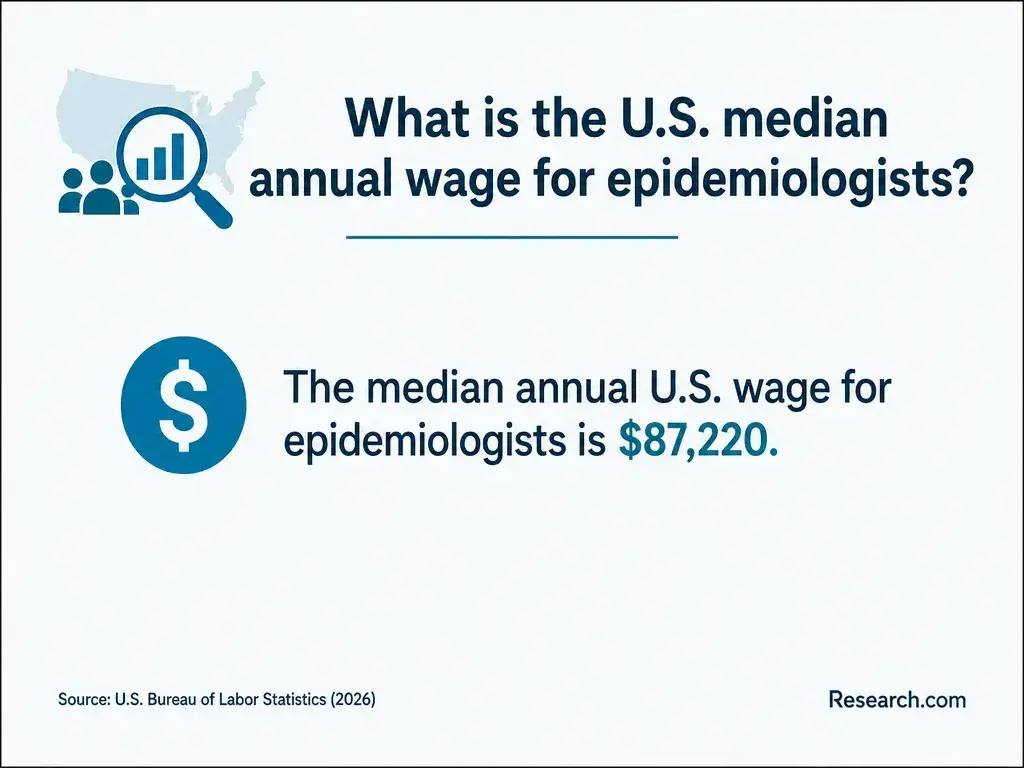
There is no single salary or employment projection for "public health BS graduates in food bank nutrition." A partnership coordinator at a nonprofit may have different duties and pay from a health education specialist or community health worker. The US Bureau of Labor Statistics reports wages and projections for defined occupations, not for graduates of a particular major or employees of food banks as a group.
For a useful comparison, match a posting's duties to the closest Bureau of Labor Statistics occupation, then check its latest Occupational Outlook Handbook wage reference year, projection period, typical entry requirements, and local openings. Compare the posted pay and benefits with your remaining education cost. An occupation-wide median is not a starting-salary offer, and a national growth projection cannot establish demand in your area.
If finishing sooner is important, compare the total cost and fieldwork feasibility of affordable public health programs with faster schedules. Speed has limited financial value if the schedule prevents you from building the supervised experience local employers request.
Which Certifications Support Food Bank Nutrition Partnership Careers?
Start with the job posting, not a credential advertisement. Food safety instruction may be useful for distribution duties, while an employer may value health education training for outreach. Verify the issuing body's eligibility rules, costs, renewal requirements, and whether the employer recognizes the credential before enrolling.
The Certified Health Education Specialist (CHES) and Certified in Public Health (CPH) credentials have distinct eligibility and examination rules; a public health BS does not award either automatically. Neither replaces the separate requirements for becoming a registered dietitian. For an entry-level partnership role, supervised experience and a strong work sample may be more immediately useful than a certification the employer does not request.
An MPH is likewise a separate degree, not a certification or a routine prerequisite for food bank work. If later advancement makes graduate study relevant, MPH programs with no recommendation letter requirement address one application constraint - not whether graduate coursework is necessary for the role you want.
Other Things You Should Know About Public Health
Check reading level, language, visual clarity, and whether the suggested foods and preparation steps are realistic for the intended setting. Ask the partner how community members can review a draft before it is used.
A student can share current information approved by the partner and refer people to qualified benefits-assistance staff. They should not promise eligibility or make a benefits determination.
Describe the tasks you actually performed, the people or teams you worked with, and any documented tools you helped create. Distinguish observation and routine service from planning, evaluation, or work you completed under supervision.
Not without checking the school's requirements and the partner's permission. Remove confidential details as directed, and confirm whether data-use, consent, or research-review requirements apply before sharing results publicly.
- Clinical-Community Partnerships to Identify Patients With Food Insecurity and Address Food Needs | cdc.gov https://www.cdc.gov/pcd/issues/2017/17_0343.htm
- Healthcare-based food assistance programmes in the United States: a scoping review and typology - PMC https://pmc.ncbi.nlm.nih.gov/articles/PMC10753472/
- Food Insecurity - Healthy People 2030 | odphp.health.gov https://odphp.health.gov/healthypeople/priority-areas/social-determinants-health/literature-summaries/food-insecurity
- The Safe and Healthy Food Pantries Project - SNAP-Ed - USDA https://snaped.fns.usda.gov/library/intervention/safe-healthy-food-pantries-project
- Read the Belmont Report | hhs.gov https://www.hhs.gov/ohrp/regulations-and-policy/belmont-report/read-the-belmont-report/index.html
- Developing the public health workforce through community-based fieldwork - PubMed https://pubmed.ncbi.nlm.nih.gov/34551685/
- BS, Public Health Science - College Park https://sph.umd.edu/undergraduate-degrees/bs-public-health-science-college-park
- Full article: Addressing community needs through a participatory food security assessment | tandfonline.com https://www.tandfonline.com/doi/full/10.1080/19320248.2021.1903643
- Best Food Safety Practices for Hunger Relief Organizations When Accepting, Sorting, and Storing Donated Foods | vt.edu https://pubs.ext.vt.edu/FST/fst-456/fst-456.html
- Public Health Practicum | Pacific University https://www.pacificu.edu/public-health/practicum