2027 Best Online Biological Sciences Degrees for Wildlife and Conservation Careers

Co-Founder and Chief Data Scientist
Securing a wildlife conservation role often hinges on specialized knowledge balanced with flexible education to accommodate fieldwork and irregular schedules. Yet, traditional degree programs frequently conflict with these demands, leaving many prospective students stranded between career advancement and accessibility. The National Center for Education Statistics recently found a 7% increase in adult enrollments in online biological sciences programs from 2023 to 2024, signaling a pronounced shift toward flexible learning formats among working professionals. This shift is reshaping how candidates prepare for conservation careers, especially as hiring managers seek relevant credentials coupled with practical adaptability. This article evaluates the best online biological sciences degrees tailored to these realities, guiding readers toward informed enrollment choices that optimize career mobility and sector relevance.
Key Things You Should Know
- Recent National Science Foundation data show online biological sciences programs emphasize ecological modeling over fieldwork, pressuring students to seek supplemental in-person experience for wildlife career viability.
- Employer surveys from 2024 report 62% of conservation agencies prioritize candidates with interdisciplinary GIS and data analytics skills, elevating curricular breadth above pure biology specialization.
- While asynchronous degrees reduce relocation costs, average total expenses for accredited online biological sciences programs remain near $40,000, delaying workforce entry and complicating midcareer pivots.
What is an online biological sciences degree for wildlife and conservation, and who is it best for?
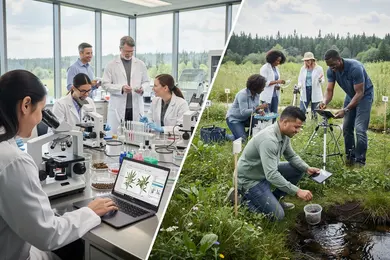
An online biological sciences degree for wildlife careers requires balancing digital coursework with proactive local field experience, a significant operational tradeoff compared to traditional campus programs. This path suits candidates who cannot disrupt employment or relocate but are prepared to independently arrange internships or field placements essential for skill development and employer appeal.
These programs target working professionals pivoting into conservation or technicians enhancing credentials without geographic constraints. Students gain exposure to ecology, animal biology, environmental management, and data analysis, yet must navigate remote lab simulations and advanced statistical tools, which can pose steep learning curves. Those already in related roles can update expertise without income loss, aligning well with workforce needs focused on data proficiency and field adaptability.
From the employer's viewpoint, combining flexible online studies with tangible local partnerships results in graduates better matching job market demands. The U.S. Bureau of Labor Statistics reported median annual wages for zoologists and wildlife biologists at $72,860, with top earners exceeding $105,000, underscoring the financial practicality of this degree for career transitions.
For professionals researching educational options, these programs represent some of the best online biological sciences programs for conservation professionals, offering a cost-effective alternative while requiring significant self-motivation and logistical effort. Prospective students can explore what can you get with an environmental science degree to gauge alignment with their goals.
How do online biological sciences programs for wildlife and conservation work compared with campus options?
Online biological sciences degrees for wildlife careers demand more than academic knowledge; they require strategic effort to secure applied learning vital for employability. Unlike campus programs, which naturally embed experiential fieldwork and supervised lab time, online options force students to independently coordinate local internships or field projects to meet employer expectations in species identification and habitat assessment.
A 5% employment growth projection from 2024 to 2034 for conservation scientists, zoologists, and wildlife biologists intensifies the necessity for candidates to prove practical skills, not just theoretical understanding. Working professionals choosing online paths must plan for seasonal travel to in-person workshops or practicums essential for accreditation and skill verification.
Challenges include managing time zone differences, locating qualified local supervisors, and accessing specialized equipment. Campus programs centralize these resources, while online students gain flexible scheduling but at the cost of immediate hands-on infrastructure. Programs offering structured internship placement or partnerships with conservation organizations can reduce friction in gaining necessary experience.
Deciding between online versus campus biological sciences conservation programs involves weighing convenience against consistent access to field and lab environments that strengthen technical proficiency. Students must self-manage experiential components critical to competitiveness in this niche, field-specific labor market. For those evaluating costs and educational value, consulting resources like the affordable data science degree rankings may offer insight into broader affordability considerations for related STEM fields.
Which accredited schools offer the best online biological sciences degrees for wildlife and conservation careers?
Employers hiring wildlife biologists consistently seek graduates who combine academic knowledge with tangible field experience and data proficiency. Online accredited biological sciences programs for wildlife conservation careers must integrate supervised fieldwork or internships to meet this expectation; otherwise, graduates often encounter significant obstacles securing competitive roles. For instance, Oregon State University's emphasis on remote labs and data analysis contrasts with Colorado State University's federally partnered field opportunities, illustrating how program design directly affects readiness.
Beyond experiential learning, accreditation by regional and wildlife-specific agencies is a critical filter for hiring managers, influencing both candidate eligibility and salary potential. The University of Florida's focus on conservation policy addresses a different niche, relevant for those targeting advocacy or government positions where understanding environmental legislation is essential.
Practical skills like GIS and remote sensing embedded in the curriculum often differentiate program outcomes, especially in online settings where students juggle flexibility with the need for rigorous hands-on training. Graduates lacking these are more likely to face a bottleneck in job placement or upward mobility, given that federal wildlife biologist median wages approach $72,860, with experienced professionals earning over $113,350.
Prospective students balancing work and study must carefully evaluate the tradeoffs among program flexibility, applied learning requirements, and long-term employability. Those exploring related fields might also consider whether is library science a good career fits their objectives, especially if conservation roles are combined with information management needs.
Deciding on the best online biological sciences degrees in the United States for conservation professionals demands scrutiny of curricular alignment with real-world agency requirements and embedded experiential learning components.
What accreditation and program quality standards should online wildlife and conservation biology degrees meet?
Employers in wildlife management prioritize candidates holding regionally accredited online biological sciences degrees for wildlife and conservation that conform to rigorous quality standards. Accreditation by recognized entities such as the Council for Higher Education Accreditation (CHEA) or the U.S. Department of Education ensures the curriculum aligns with up-to-date scientific methodologies, practical field research, and data analysis, which are indispensable for tasks like habitat evaluation and species monitoring.
Programs lacking interdisciplinary training-incorporating GIS technology, ecological modeling, and conservation policy-limit graduates' eligibility for federal or state wildlife biology roles that require hands-on expertise or validated virtual fieldwork components. For example, state wildlife agencies often require practitioners to understand licensing and permitting intricacies that accredited programs explicitly cover, enabling graduates to comply with these operational demands.
Alignment with standards from bodies such as the ABET Applied and Natural Science Accreditation Commission (ANSAC) further signals program credibility and relevance to workforce needs. This adherence impacts career trajectory and earning potential; zoologists and wildlife biologists earn an average annual salary approximately 20% above the national mean, highlighting the value of rigorous training in conservation biology.
Professionals balancing cost and quality may also consider pathways highlighted in resources like the library science degree listings to identify practical, affordable options aligned with their objectives.
What courses and specializations are typical in an online biological sciences curriculum focused on wildlife and conservation?
Online biological sciences programs with a focus on wildlife and conservation must strike a balance between theoretical frameworks and technical skillsets, particularly in geographic information systems (GIS). The robust 8.2% job growth rate and median salary of $116,580 for GIS technicians, based on Arizona State University's 2024 career data, confirms a strong labor market demand for spatial analysis expertise. Graduates who can navigate both ecological principles and GIS software position themselves advantageously in conservation roles where data-driven decisions are increasingly essential.
The curriculum's emphasis on applied fieldwork and regulatory contexts, such as the Endangered Species Act and National Environmental Policy Act, equips students for real-world interactions with policy and environmental agencies. For instance, wildlife biologists analyzing spatial data on endangered species must integrate ecological theory with technical proficiency to shape actionable conservation strategies.
Training also spans statistical methods and data collection techniques, preparing students for collaboration with government entities and nonprofits. However, many online programs still require in-person practicums, which may present logistical challenges for remote learners.
Entering careers like conservation analyst or field technician demands fluency in software such as ArcGIS or QGIS, making digital tool mastery a critical determinant of employability. Compared to traditional biology degrees, these programs typically prioritize field simulation and applied sciences but may limit exposure to broader biological theory, calling for deliberate consideration of career goals.
What are the admission requirements and application materials for online biological sciences programs?
Admission to online biological sciences programs requires more than a basic high school diploma. Most schools expect a minimum GPA of about 3.0, verified by official transcripts detailing foundational science and math courses such as biology, chemistry, and algebra or higher. Programs with a focus on wildlife or conservation often prefer applicants to have prior coursework or experience in ecology, environmental science, or zoology. This prerequisite sharpens the practical lens through which candidates assess ecological issues, a critical factor when competing for specialized roles.
Applicants should anticipate submitting a personal statement that clearly ties their past experiences-like internships or conservation work-to career objectives within biological sciences. Letters of recommendation remain important, preferably from individuals attesting to applicants' scientific capabilities or relevant field skills. Notably, many programs have shifted to test-optional admissions, reducing reliance on standardized test scores but increasing the emphasis on qualitative application elements.
Online formats impose technical requirements such as steady internet and platform proficiency. Some programs enforce in-person labs or fieldwork, posing logistical challenges that require geographic flexibility. For working professionals pivoting careers, emphasizing transferable skills and relevant job history in application materials improves acceptance odds and helps bridge gaps in formal science education.
From a labor market viewpoint, roles like climate change analysts are growing at 4.4% annually with a median salary above $80K, suggesting that aligning academic preparation with evolving ecological and sustainability challenges improves employability prospects.
How long do online biological sciences degrees take and what do they cost?
Completing an online biological sciences degree for wildlife and conservation demands careful consideration of time and experiential learning integration, especially given employer expectations for practical skills. Associate degrees typically require about two years full-time, while bachelor's programs usually span four years; however, many students extend these timelines beyond five years when balancing work and study or needing local field placements.
Costs range widely, from roughly $15,000 to over $60,000 total tuition for a bachelor's, with public universities charging $4,000 to $15,000 annually for in-state online students and private or out-of-state rates approaching $20,000. Additional expenses, such as specialized software, lab kits, and travel for mandatory fieldwork, can add $1,000 or more per year, increasing overall investment. Working professionals especially should anticipate longer completion times if part-time study or internships are required.
Employers in conservation frequently prioritize hands-on experience, making it vital to verify how online programs coordinate local internships or supervised placements. For example, a professional shifting careers while employed might utilize employer tuition assistance but must plan for extended program duration due to work-study balance and fieldwork commitments.
- Degree duration varies: 2 years (associate) to 4+ years (bachelor's), often longer for working students
- Total tuition ranges roughly $15,000-$60,000 depending on institution and residency
- Additional expenses for field labs and travel typically exceed $1,000 annually
- Local supervised fieldwork integration is critical for employability in conservation roles
The Unity Environmental University data reflect rising enrollment in online wildlife conservation programs, indicating growing demand for flexible learning but also underscoring the importance of understanding real-world tradeoffs between cost, duration, and experiential components.
What wildlife and conservation careers can you pursue with an online biological sciences degree?
Graduates holding an online biological sciences degree face a nuanced landscape where technical skills and fieldwork requirements dictate career trajectories and geographic flexibility. For example, wildlife biologists focus on species monitoring and population management through intensive data collection and analysis, often necessitating remote site access and extended field deployments. In contrast, conservation scientists primarily work on land use planning and policy within administrative or NGO contexts, offering more urban-centric roles but requiring sophisticated understanding of regulatory environments.
Advanced studies in wildlife ecology or environmental science open doors to specialist and project management positions, particularly in climate adaptation sectors where interdisciplinary cooperation is key. Employers increasingly seek candidates proficient in GIS, remote sensing, and data modeling-skills that enhance employability but demand deliberate curriculum selection and concurrent practical experience such as internships.
The practical tradeoff for many students lies between entry-level positions requiring broad field capabilities and specialized roles that necessitate higher credentials and targeted expertise. Geographic mobility, grant-dependent work cycles, and seasonal constraints also impact job stability and long-term growth. Those prioritizing stable employment may lean toward research, education, or regulatory compliance roles based in urban centers.
Prospective students should weigh these operational realities against their personal circumstances, balancing the appeal of fieldwork with market demands. This perspective aligns with Research.com data emphasizing workforce trends in biological sciences.
What salaries and job outlook can biological sciences graduates expect in wildlife and conservation fields?
Choosing wildlife and conservation roles after a biological sciences degree entails balancing salary stability against job market variability. State government positions employ roughly a third of zoologists and wildlife biologists, offering salaries between $60,000 and $75,000 with structured benefits, but competition is high and hiring timelines lengthy. Federal jobs offer starting pay near $70,000 but require navigating demanding civil service processes. Private consulting roles can peak at $80,000 but often come with contract uncertainty and income fluctuations linked to project funding cycles.
Job growth for this occupation is projected at about 5% through 2032, driven by increased environmental regulation and conservation funding. However, entry-level roles typically cap advancement without specialized skills or advanced degrees. Employers narrowly prioritize expertise in GIS, data analysis, and regulatory compliance, which can differentiate candidates in a saturated field.
The practical tradeoffs include:
- Stable but slower-growing public sector jobs with geographic clustering in biodiverse and public land-rich regions
- Higher but less predictable private sector earnings burdened by funding volatility
- Limited upward mobility for candidates lacking graduate education or technical specialization
Students and professionals eyeing a career pivot in biological sciences should critically assess where they can invest in skill development or graduate credentials to overcome bureaucratic hiring barriers and secure faster salary progression.
How do fieldwork, labs, internships, and certifications work in online wildlife and conservation programs?
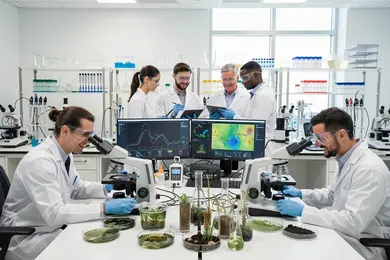
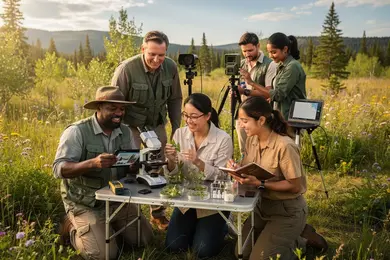
Effective online wildlife and conservation programs must integrate remote instruction with hands-on experiences to meet industry hiring standards. Practical fieldwork is rarely fully virtual; students need to coordinate in-person sessions at regional reserves or research centers to gain essential skills like animal tracking and habitat assessment under expert supervision. Virtual labs often depend on supplemental on-campus residencies or affiliate visits for tactile competencies such as specimen dissection.
Internships serve as an essential component for employability, requiring proactive placement efforts by students or help from institutional networks tied to government or nonprofit conservation bodies. These placements expose students to policy compliance, ecological data handling, and real-world research logistics. Certifications in areas like GIS mapping are commonly embedded but necessitate external exams or local workshops.
Students targeting advanced research or faculty roles in biological sciences should anticipate completing multiple internships, totaling over 500 hours, as a competitive baseline. This practical requirement aligns with workforce data forecasting a 7.3% growth in biological sciences professor positions, with median earnings around $84,620. Consequently, program design must balance virtual flexibility with field-based rigor, as insufficient hands-on exposure risks limiting graduate employment options.
Other Things You Should Know About Biological Sciences
Online biological sciences programs face inherent limits in delivering hands-on training critical for wildlife and conservation careers. Many programs compensate by requiring in-person fieldwork or lab internships, but availability and quality vary widely. Prospective students should prioritize programs with established partnerships for supervised field experiences, as theoretical knowledge alone rarely meets employer expectations for practical competency in this sector.
Yes, if the program includes an approved internship or field placement, usually 120 to 300 supervised hours, and the experience is documented by the department. Some programs require placements at zoos, wildlife agencies, or conservation nonprofits before graduation.
In 2027, students pursuing online biological sciences degrees can access financial aid like federal student loans, scholarships, and grants. Many universities also offer work-study programs and institution-specific scholarships tailored to wildlife and conservation-focused studies, which can significantly reduce educational expenses.
References
- Wildlife Biology and Conservation https://www.uoguelph.ca/programs/wildlife-biology-and-conservation/
- Exploring Careers in Conservation and Wildlife | GVI https://www.gvi.ie/blog/smb-exploring-careers-in-conservation-and-wildlife/
- Home https://www.husson.edu/online/online-degrees/bachelor-of-science-in-wildlife-biology-and-conservation
- #112: Wildlife Career Salaries: The Hidden Costs Behind Job Postings https://stephanieschuttler.com/112-wildlife-career-salaries/
- Wildlife and Conservation Science (BS) Biology Track https://www.etamu.edu/programs/wildlife-conservation-science-bs-biology/
- Habitat and Wildlife Career Outlook - NWF EcoLeaders https://www.nwfecoleaders.org/careercenter/habitat-and-wildlife
- TWS Certifications https://wildlife.org/tws-certifications/
- Research Initiatives https://www.ncwildlife.gov/wildlife-habitat/research-initiatives
- Top Conservation Internships | PAID & FREE Opportunities https://www.conservation-careers.com/top-conservation-internships/