2027 Online Biological Sciences Degrees With Medical School Prep Alignment

Co-Founder and Chief Data Scientist
Securing a degree in biological sciences that aligns directly with medical school requirements is increasingly critical as admissions committees demand demonstrable mastery of targeted prerequisites alongside rigorous preparation. Yet, traditional campus-based pathways often clash with the schedules of working professionals and nontraditional students, limiting timely progression. Recent data from the National Center for Education Statistics reveals a 15% enrollment increase in fully online STEM undergraduate programs since 2022, signaling growing demand for flexible, competency-aligned formats. This shift addresses the persistent tension between maintaining academic rigor and offering practical accessibility for diverse learners pursuing medical careers. This article examines online biological sciences degrees with medical school prep alignment and evaluates how program structures solve these challenges to optimize career readiness and application competitiveness.
Key Things You Should Know
- Online biological sciences degrees aligned with medical school prep show a 15% longer average completion time versus traditional paths, raising opportunity costs amid rising medical school matriculation competition per NIH data.
- Employers increasingly scrutinize online program rigor; studies from AACOM reveal clinicians trained exclusively online face 12% lower initial hiring rates in hospital-based research roles compared to blended-format graduates.
- Cost savings of 20-35% on tuition often offset by additional expenses for required in-person labs and externships, challenging the assumed affordability advantage for candidates targeting research-intensive medical careers.
What is an online biological sciences degree with medical school prep alignment?
Online biological sciences degrees with medical school preparation navigate a complex balance between flexibility and rigor, essential for students targeting medical careers. These programs integrate foundational courses-such as biochemistry, anatomy, physiology, and genetics-with prerequisites aligned to medical school admissions, including embedded MCAT strategies and clinical components. However, prospective students must weigh the diminished face-to-face mentorship and networking opportunities against the convenience of online delivery.
More than half of U.S. medical school applicants in the 2024-2025 cycle held a biological sciences bachelor's degree as their primary major, demonstrating the practical value of biological sciences programs aligned with medical school prerequisites. This demand incentivizes institutions to offer asynchronous coursework combined with synchronous labs or local clinical partnerships, which help satisfy accreditation standards from bodies like the AMA and LCME.
This pathway suits working professionals or career changers who must juggle responsibilities but demands proactive local planning for lab work and clinical experience. Students aiming for specialties that require strong research credentials should consider supplementing online curriculum with in-person research opportunities. Key program features to verify include premedical advising, MCAT prep resources, and institution-facilitated clinical volunteering or shadowing.
For a detailed comparison of program structures and outcomes, review rankings of the online biology degree options.
How do online biological sciences programs compare with on-campus options for pre-med students?
Online biological sciences degrees with med school preparation often fall short in delivering the clinical exposure and hands-on lab experience integral to robust pre-med training. Unlike on-campus programs, which embed structured lab access, clinical volunteering, and direct faculty mentorship into their curricula, online students must independently locate these opportunities. This dynamic challenges timely completion of core prerequisites like organic chemistry labs and shadowing hours, both critical for competitive medical school applications.
As the Association of American Medical Colleges (AAMC) reports a 24% surge in first-time applicants between 2019-2020 and 2023-2024, pre-med students must demonstrate practical competencies beyond theoretical knowledge. Admissions committees and healthcare employers increasingly prioritize measurable clinical experience, including participation in interdisciplinary teams and verified hands-on skills-areas where online biological sciences programs typically lack standardized integration.
For working professionals balancing education and employment, online degrees offer scheduling flexibility but require disciplined self-management and proactive pursuit of local clinical roles. Conversely, full-time students may find the limited interaction with peers and research projects challenging for developing nuanced critical thinking vital to medical fields. Choosing between modalities involves weighing immediate access to immersive, campus-based resources against the logistical and temporal burdens of external placement coordination.
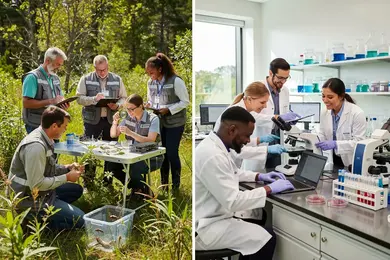
A comparative analysis of on-campus and online biological sciences programs for pre-med students underscores this tradeoff vividly. Prospective students should assess their capacity to secure regional clinical experiences beforehand and consider how rising applicant volume escalates competition. These factors significantly influence the timeline and quality of preparation.
For additional context on flexible graduate options intersecting data and science, explore online master data science pathways that may complement biological sciences training in interdisciplinary domains.
What accreditation and program quality standards should pre-med biology majors look for online?
Choosing accredited online pre-med biology programs in the United States is a pivotal decision that directly impacts medical school admission prospects and career trajectories in biological sciences. Regional accreditation ensures coursework rigor and national recognition, safeguarding that prerequisites-including labs-meet standards expected by medical schools and professional organizations like the AAMC. Without this, students risk nontransferable credits and insufficient lab experience, which remain critical despite increasing acceptance of online formats.
In-person or virtual labs with documented practical experience are essential; institutions with limited lab access often disadvantage students aiming for research-intensive specialties or clinical readiness. A 2024 AAMC study found no significant differences in early medical school performance between students completing online versus in-person prerequisites, controlling for GPA and MCAT scores, indicating program quality and student outcomes remain the decisive factors.
Prospective students should rigorously assess whether programs provide targeted advising for MCAT preparation, clinical experience integration, and recommendation letters to avoid missed opportunities and misaligned coursework. Professionals seeking flexibility must weigh it against these academic requirements to prevent costly admission delays or rejections.
This nuanced evaluation applies broadly across biological sciences degrees, which vary widely in quality and market relevance. For those considering alternative pathways related to health and human performance, reviewing a sports science degree online can provide insights into parallel fields with distinct accreditation and career implications.
What prerequisite courses and MCAT-related curriculum do these online programs usually include?
Online biological sciences degrees designed to align with medical school preparation impose a stringent sequence of prerequisite courses that mirror MCAT content requirements. Core courses in biology, chemistry, physics, and math are essential, alongside psychology and sociology to cover behavioral sciences, reflecting deeper shifts in MCAT-focused curriculum and coursework in online biological sciences programs. This alignment ensures students build targeted knowledge for medical school while balancing the challenge of acquiring hands-on lab experience through virtual means or local partnerships.
Students pursuing these degrees often face the practical tradeoff of navigating lab scheduling and course sequencing within a flexible, fully online environment. Upper-division classes in genetics, microbiology, and molecular biology refine critical scientific reasoning but require deliberate planning to avoid delays in meeting medical school prerequisites and MCAT registration timelines.
From a cost-efficiency standpoint, public online programs charge between $150-$275 per credit hour compared to $400-$600+ on campus, presenting potential savings exceeding $20,000 over a 120-credit degree. For working professionals, this cost advantage combined with flexible scheduling supports managing debt and integrating MCAT-focused prerequisites without prolonging the timeline.
Strategic course selection including the masters in library science and a laser focus on prerequisite courses for online biological sciences degrees with medical school preparation can determine how effectively students progress toward licensure and admission competitiveness.
What are the typical admission requirements for online biological sciences degrees with pre-med tracks?
Admission to online biological sciences degrees with pre-med tracks hinges on demonstrated mastery of core science and math subjects critical to medical school prerequisites. Candidates typically must provide official transcripts evidencing a minimum 3.0 GPA and completion of foundational courses including biology, general and organic chemistry, physics, and often calculus or statistics. While some programs maintain SAT or ACT requirements, many have adopted test-optional policies that place greater emphasis on academic preparation and relevant experience.
Successful applicants usually present evidence of laboratory skills, scientific reasoning, and familiarity with biomedical vocabulary-qualities valued by both admissions committees and future medical employers. Personal statements outlining healthcare-related activities such as research, volunteering, or shadowing add context to academic records, while letters of recommendation from science instructors or healthcare supervisors help validate an applicant's readiness.
For students with prior college coursework, full disclosure of transcripts ensures admissions officers can assess cumulative academic performance. Importantly, the hybrid nature of pre-med lab components demands candidates capable of managing online learning alongside in-person or virtual intensive lab sessions, a balance that affects program completion feasibility.
With healthcare roles projected to grow 13% over the coming decade according to the U.S. Bureau of Labor Statistics, graduates who align their biological sciences training with rigorous medical school prerequisites are more competitive for positions in medical research, clinical practice, and healthcare innovation sectors. Practical considerations such as maintaining strong academic records and securing healthcare experience before applying are pivotal in navigating admissions and workforce outcomes.
How long do online biological sciences degrees take and what do they typically cost?
Online biological sciences degrees typically span four years full-time, but accelerated options compress completion to two or three years mainly for students with prior credits or relevant experience. Part-time paths extend to five or more years, often a necessity for working adults balancing jobs and study. Tuition varies considerably: public in-state programs average $6,000-$15,000 annually, while private institutions may charge above $20,000. Total costs can range from $24,000 to over $80,000 depending on residency, prestige, and delivery format.
More than 80% of U.S. MD schools accept online coursework for core science prerequisites if the online program is regionally accredited, widening access but requiring early verification to avoid non-transferable credits or expensive retakes. Practical tradeoffs include limited hands-on lab availability, sometimes mitigated by hybrid residencies or virtual labs at added cost. Online biology degrees rarely integrate clinical experiences, compelling students aiming for healthcare roles to plan supplemental training.
Workforce implications highlight that entry-level research or technician roles typically require a bachelor's degree but often demand certifications or graduate study for advancement. Employers increasingly acknowledge online degrees but weigh the institution's reputation and rigor. Faster, cheaper options may save time and money upfront but risk weaker credential perception in competitive fields.
- Duration: 2-5+ years depending on format and prior credits
- Cost: $24,000 to $80,000+ total depending on institution and residency
- Medical school acceptance: Conditional on accreditation and prerequisite alignment
- Workforce outcomes: Entry-level roles suitable, advanced positions often require further credentials
What medical and healthcare career pathways can an online biological sciences degree support?
A biological sciences degree aligned with medical school preparation primarily functions as a stepping stone rather than a direct pipeline to high-earning clinical roles. Physicians and surgeons, according to the Bureau of Labor Statistics 2024, earn a median annual wage exceeding $229,000, far surpassing the median biological sciences salary of roughly $89,000. This disparity enforces the reality that a bachelor's degree alone rarely secures top-tier healthcare positions without additional education or licensure.
Graduates must plan strategically for further qualifications-whether medical school, specialized certifications, or graduate degrees-to access roles like physician assistant, genetic counselor, or physical therapist. For instance, clinical research coordinators require knowledge in regulatory frameworks and biostatistics, demanding investment beyond undergraduate training to meet employer expectations in pharmaceutical and academic environments.
Healthcare management is another avenue for biological sciences graduates, contingent on supplementing scientific expertise with business or policy competencies to remain competitive against candidates with specialized management backgrounds.
Key tradeoffs to consider include the time and financial costs of prerequisite completion, clinical experience accumulation, and graduate education. Without these, most graduates will be confined to entry-level biological science roles offering limited advancement and wages compared to advanced healthcare careers.
- Medical school alignment raises earning potential but increases time and cost.
- Healthcare management requires additional non-scientific skills.
- Specialized clinical roles demand certification beyond the bachelor's.
What are the typical salaries and job outlook for graduates pursuing medical and related professions?
Graduates with online biological sciences degrees targeting medical-related roles face notable tradeoffs between salary potential, skill proficiency, and geographic flexibility. Starting salaries generally range from $70,000 to $90,000, but vary sharply by occupation-physician assistants earn around $120,000, whereas medical laboratory technologists start near $54,000. Advanced clinical roles like physicians or pharmacists command salaries well above $200,000 but require extensive additional training beyond initial online credentials.
One critical challenge stems from the increasing reliance on virtual or remote lab simulations in online programs, now used in more than 60% of STEM undergraduate labs. While this expands access, it can limit hands-on skill acquisition essential for many clinical jobs. Graduates often need supplementary in-person practicums or internships to meet employer expectations for manual lab competencies and real-world adaptability.
Employers also prioritize candidates demonstrating practical clinical exposure and technology fluency, pushing students to choose programs blending virtual instruction with opportunities for physical lab work. Geographic location further shapes outcomes; urban centers may offer higher wages but bring cost-of-living challenges and potential travel requirements for clinical placements, affecting time and finances during education.
- Median salary varies widely by role and geography
- Virtual labs increase accessibility but may reduce hands-on expertise
- Supplemental in-person experience remains critical for competitiveness
- Licensing exams and clinical placements often require travel and additional costs
These insights emphasize practical decision points for prospective students weighing the real-world value and limitations of online biological sciences pathways aligned with medical professions.
How do online biological sciences students complete labs, research, and clinical or shadowing experiences?
Completing a biological sciences degree online involves navigating significant logistical and accreditation challenges, particularly for lab, research, and clinical components. Virtual lab simulations provide foundational practice in molecular and microscopy techniques but rarely fulfill medical school or accreditation standards alone. Programs therefore rely on regional partnerships to deliver hands-on lab experiences close to students' homes, requiring active student involvement in securing placements.
Research experience for online students typically occurs through hybrid models, blending remote data analysis with local, mentor-supervised experimentation. This necessitates securing lab positions independently, posing a barrier to students without established networks. Proper documentation and mentor evaluation remain essential for validating practical competence.
Clinical shadowing is the most complex to coordinate due to HIPAA and institutional restrictions. Students often must arrange local hospital or clinic hours individually under program protocols including background checks. Failure to align these often-unpredictable steps with medical school timelines can delay applications. Data from the AAMC 2024 show that students with embedded, coordinated MCAT prep and clinical exposure outperform those relying solely on fragmented, self-directed efforts.
Prospective students should weigh the costs of time, travel, and administrative complexity against online flexibility. Employers and medical schools increasingly prioritize authentic, verifiable internship and lab experiences. The practical tradeoff between program convenience and the quality of hands-on training can directly affect competitiveness in both research and clinical career pathways.
How can students choose a reputable online biological sciences program aligned with medical school goals?
Prioritizing accreditation and alignment with medical school prerequisites is essential for online biological sciences students aiming for clinical or research careers. Regional accreditation combined with STEM-specific validation ensures that curriculum rigor meets medical school expectations. Missing core courses like chemistry or biochemistry forces costly remediation or jeopardizes admission prospects.
Graduate outcomes provide a key lens on program value: high medical school acceptance rates and alumni employment in competitive roles signal practical readiness. For instance, a full-time clinical lab worker benefits from flexible online study paired with synchronous lab sessions, maintaining skill development without job disruption. Programs relying solely on asynchronous instruction without hands-on components risk leaving students underprepared for lab-intensive medical training and healthcare work.
Cost transparency and affordability must be weighed alongside educational quality. Online bachelor's enrollments grew nearly 9% recently, with underrepresented minorities contributing about 45% of growth, expanding access but increasing the importance of return on investment. Programs offering clear fees, virtual tutoring, career support, and medical school advising mitigate financial risks and support application strength, important given medical schools' preference for well-rounded, well-prepared candidates.
Other Things You Should Know About Biological Sciences
Online biological sciences programs with medical school prep often condense rigorous content into accelerated or self-paced formats, demanding disciplined time management. The lack of fixed class times does not reduce workload; students must navigate heavy reading, complex lab simulations, and MCAT prep independently. Prospective students should assess whether they can sustain intense, self-driven study without the structured environment of campus-based courses.
Employers in healthcare research and biotech increasingly recognize online biological sciences degrees if the program is reputable and includes in-person lab requirements. Medical schools accept online degrees when accompanied by prerequisite coursework and clinical experiences completed in proper settings. However, degree origin still factors into some admissions decisions, so graduates should verify their online program's acceptance with targeted medical schools early in their application process.
The top priority is a curriculum that integrates verified clinical, lab, and research experiences, not just theoretical courses. Students must select programs with established pathways for satisfying medical school prerequisites and opportunities for clinical shadowing or internships. Accreditation matters, but functional alignment with medical school requirements and the ability to demonstrate hands-on competencies will ultimately dictate admission success.
References
- Resources for 16-18 year olds https://www.sebiology.org/careers/school-students.html
- Top 50 Health Careers - Salary & Career Growth https://www.medicaltechnologyschools.com/medical-lab-technician/top-50-healthcare-careers
- 5 reasons why a master's in biomedical science boosts your med school application How MDS program can boost med school application https://news.newmanu.edu/5-reasons-why-a-masters-in-biomedical-science-boosts-your-med-school-application/
- Careers https://www.publichealthdegrees.org/careers/
- How a Biology Degree Prepares You for Medical School - Rogers State University https://www.rsu.edu/academics/departments/biology/how-biology-degree-prepares-medical-school/
- How Biomedical Sciences Prepares You for Medical School https://www.windsor.edu/biomedical-sciences-prepares-you-for-medical-school/
- Online Bachelor's Degrees in Biology: Top Schools & Programs https://www.edumed.org/online-schools/biology-degrees/
- Medical Science https://www.unthealth.edu/college-of-biomedical-and-translational-sciences/degree-programs/ms-medical-science/ms-in-medical-science.html
- 11 High-Paying Careers With an MSMS | University of Bridgeport https://www.bridgeport.edu/news/high-paying-masters-in-medical-science-jobs/
- Best Online Pre-Med Programs: Flexible Pathways to Medical School https://www.scuhs.edu/msms-article/best-online-pre-med-programs-flexible-pathways-to-medical-school/