2027 Online Biological Sciences Degrees for Biotechnology Roles

Co-Founder and Chief Data Scientist
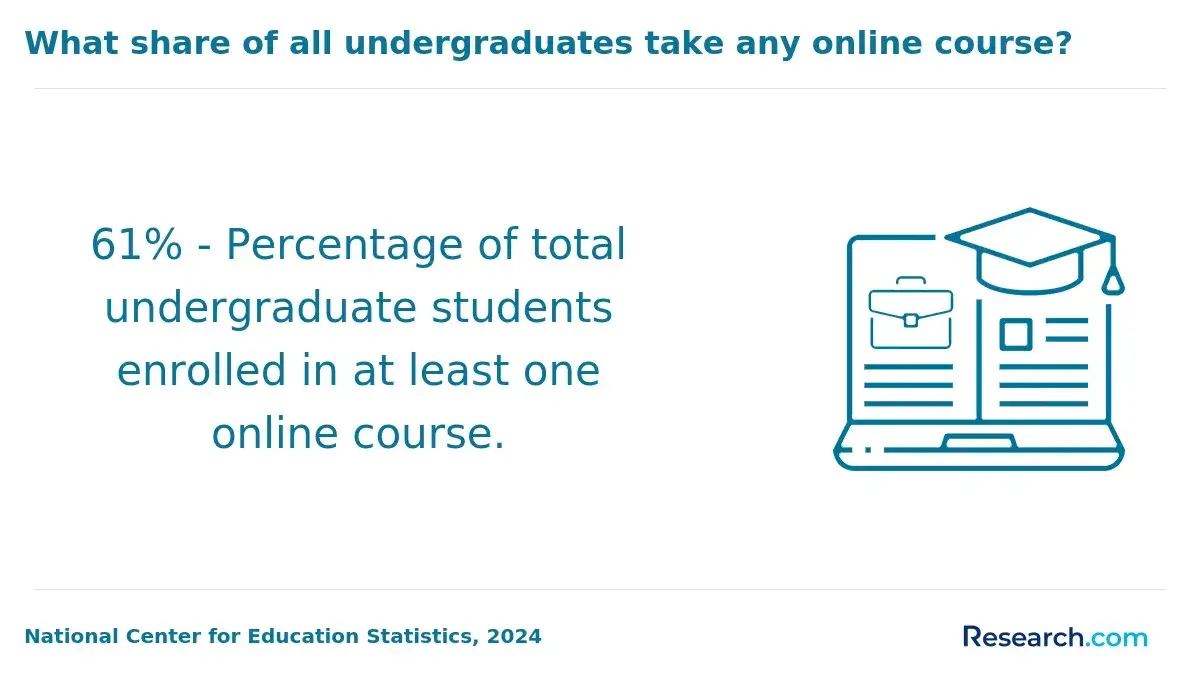
Balancing full-time work with the specialized training demanded by biotechnology employers poses a critical challenge for many aspiring biological sciences professionals. The National Center for Education Statistics reports a 27% surge in online enrollments in STEM fields since 2022, reflecting growing demand for flexible learning formats that accommodate adult learners' schedules.
Yet, selecting an online biological sciences degree requires careful scrutiny of curriculum rigor, lab components, and industry alignment to avoid credential mismatches that could stall career progress. This article evaluates accredited online biological sciences degree options focused on biotechnology, guiding prospective students through practical tradeoffs and employment-ready outcomes to optimize their educational investment.
Key Things You Should Know
- In 2024, online biological sciences degree graduates face a 15% lower internship placement rate than in-person peers, creating a critical tradeoff between access and hands-on biotech skill acquisition, per the National Science Foundation.
- Employers in biotech hubs now prioritize candidates with integrated bioinformatics coursework, limiting online programs that lack interdisciplinary lab modules, impacting hiring outcomes across 70% of top firms, according to a 2025 industry survey.
- Average total costs for online biological sciences degrees remain 25% lower but extend average completion time by 18 months, intensifying opportunity cost considerations for career switchers targeting accelerated biotech roles, per the Department of Education.
What is an online biological sciences degree for biotechnology roles?
Online biological sciences degrees for biotechnology careers must reconcile educational flexibility with rigorous practical training to meet employer standards in a rapidly expanding sector. With approximately 2.3 million biotechnology workers employed in 2023-a 15% growth since 2019-the demand for graduates who combine theoretical expertise with verifiable lab experience is increasingly selective.
Programs that integrate molecular biology, genetics, biochemistry, and bioinformatics through virtual simulations and partnerships with local labs address employer expectations around hands-on competencies and regulatory compliance. This approach is particularly critical for roles in genetic engineering, drug development, and bio-manufacturing, where proficiency in operating specialized biotechnology instruments and demonstrating applied research capabilities is mandatory.
However, students must assess online biological sciences degrees for biotechnology jobs against program accreditation and the availability of in-person practicums tailored to their target subfield, since diagnostic positions require different skill sets than synthetic biology roles. Working professionals often prioritize asynchronous coursework but need to verify that experiential elements align with their career objectives.
Choosing a program also involves understanding real-world tradeoffs such as limited direct lab access versus geographic flexibility. Prospective learners can benefit from reviewing how effectively programs embed internships or co-ops into their curricula, which significantly influence workforce readiness. For comparison to related paths, consider the dynamics in online animal science programs, where practical experience similarly dictates employability.
How do you choose an accredited online biological sciences program?
Accreditation remains the most reliable benchmark when selecting accredited online biological sciences degrees for biotechnology careers, as it directly influences employer recognition, licensure eligibility, and financial aid access. Programs lacking U.S. Department of Education-approved accreditation often face skepticism from biotech employers who require validated technical competencies. The best online biological sciences programs for biotechnology jobs balance rigorous coursework-such as molecular biology, genetics, and bioinformatics-with accessible practical lab experiences, which directly affect candidate readiness in this technically demanding sector.
For mid-career professionals pivoting into biotech, selecting programs offering remote lab simulations or verified internship partnerships is critical to acquire hands-on skills. Without such practical training, transitioning science professionals risk being outpaced by applicants with tangible lab credentials. Programs tied to industry advisory boards or research institutions often translate into stronger job placement outcomes, which is essential given biotech salaries typically range 50-100% above regional norms.
Student flexibility and credit transferability are practical considerations that influence long-term educational planning, especially for those considering advanced degrees or specialized certifications. Avoid programs without transparent reporting on graduate success metrics to mitigate the risk of poor return on investment and limited career progression. When assessing cost alongside quality, candidates may also wish to explore discussions around what is the cheapest data science course in the US? as a comparative affordability reference within STEM fields.
What biology courses prepare you for biotechnology careers?
Biological sciences courses for biotechnology careers must balance theoretical foundations with tangible technical skills to meet evolving workforce demands. Molecular biology and biochemistry form the backbone, enabling roles in genetic engineering and pharmaceutical production through deep understanding of DNA processes and metabolic pathways. However, programs emphasizing theory without sufficient laboratory and data analysis training may hinder immediate job readiness.
Cell biology and genetics curricula support emerging fields such as tissue engineering and CRISPR-based genome editing, reflecting an industry prioritizing practical application. Microbiology and bioinformatics courses increasingly intersect to address biotech challenges requiring microbial solutions and computational analysis of large genomic datasets. This computational proficiency is critical amid projected 9% employment growth for medical scientists from 2024 to 2034, signaling robust demand for hybrid wet lab-digital expertise.
Students pursuing biological sciences degree programs in the US for biotech jobs should consider biostatistics and experimental design instruction. These components equip candidates to evaluate data rigorously and contribute effectively to research and development decisions. Integrating interdisciplinary coursework involving chemistry and engineering principles can ease transitions into bioprocessing and manufacturing roles, offering clearer career trajectories aligned with sector needs.
For working professionals exploring a pivot, targeted course selection that blends hands-on laboratory skills with analytical capabilities enhances employability. Those considering alternative pathways might explore an exercise science online degree if looking to diversify within life sciences fields with health-oriented flexibility.
How does online learning compare with campus biology programs?
Graduates from campus-based biological sciences degree programs hold a distinct operational edge in biotechnology careers due to the depth of hands-on laboratory experience-often exceeding 600 in-lab hours-that employers prioritize over virtual training. Online biological sciences degree benefits for biotechnology careers hinge on flexibility but fall short in delivering the applied skills critical for roles involving complex lab techniques and equipment calibration, which remain challenging to replicate through remote simulations alone.
Biological technician roles, a common entry point into biotechnology, offer a median annual wage of $52,000 as per the U.S. Bureau of Labor Statistics in May 2024, reflecting employer emphasis on practical proficiency cultivated in campus settings. Prospective students must weigh differences between online and campus biology degree programs, especially regarding integrated research opportunities and immediate faculty support available on-campus.
To mitigate gaps inherent in online pathways, students should actively pursue local lab internships, cooperative education, or research assistant positions that provide vital, real-world laboratory context. Conversely, campus students benefit from systematic access to industry networking and hands-on mentorship, accelerating employability and salary progression.
For working professionals or those needing more accessible options, programs like a library science masters offer flexible graduate education choices, though equivalent hands-on lab options in biological sciences remain limited.
What admission requirements do online biological sciences degrees usually have?
Admission to online biological sciences degrees tailored for biotechnology roles demands more than a mere high school diploma; it requires a foundational proficiency in chemistry, biology, and mathematics, with many programs emphasizing completion of courses like organic chemistry and statistics. These prerequisites serve as critical filters because upper-level coursework hinges on them. Transfer applicants face the additional burden of furnishing official transcripts verifying prior general education and science credits.
Candidates seeking advanced standing or accelerated options must submit letters of recommendation-often from science faculty-to demonstrate academic readiness. Some programs incorporate interviews or statements of purpose to gauge applicant motivation and alignment with biotechnology career goals, a key factor in differentiating highly competitive applicants.
For professionals shifting careers, documented laboratory experience or molecular techniques certifications can partially compensate for gaps in traditional prerequisites, though this path limits program availability. Notably, many online degrees enforce minimum GPA thresholds around 3.0 alongside stringent science coursework, reflecting employer demands for rigor and proven technical proficiencies.
The biotechnology industry is projected to grow to roughly $471 billion by 2027 at a 7.4% compound annual growth rate, placing a premium on candidates who meet these stringent admission standards. Graduates emerge into a labor market prioritizing verified educational credentials paired with practical skills, underscoring the value of scrutinizing these admission parameters relative to workforce expectations.
How long does an online biological sciences degree take, and what does it cost?
Choosing an online biological sciences degree requires balancing program length, cost, and hands-on experience, all of which dramatically affect employability in a competitive biotech labor market that has grown 79% over two decades compared to an 8% overall job growth.
Typical pathways range from accelerated full-time programs completed in three years, often costing up to $40,000 at public institutions, to part-time options extending to six years with lower total tuition around $15,000 to $20,000. However, the longer duration can delay entry into fields like bioprocessing or clinical research, where timing and practical skills influence hiring decisions.
Employers increasingly demand candidates with integrated lab experience rather than purely theoretical credentials. Programs lacking synchronous or experiential lab components may limit opportunities despite lower price points. Additional fees-for lab kits, proctoring, and tech access-can add 5-10% to overall costs, a significant factor when calculating net investment.
A full-time student paying $40,000 over three years might secure internships and early workforce entry, while a part-time option at half the cost could prolong job market entry and reduce hands-on exposure. Financial aid and employer tuition assistance can shift these calculations, but prospective students should prioritize programs aligned with real-world biotech requirements rather than simply cost or duration.
Which biotechnology jobs can you get with a biological sciences degree?
Biological sciences graduates entering biotechnology fields must weigh practical skill acquisition against the mode of education, as this directly impacts employability in specialized roles. Laboratory proficiency combined with data analytics is increasingly non-negotiable, emphasizing degree programs that integrate hands-on experience with computational competencies. Clinical lab technologists and bioinformatics technicians exemplify positions demanding this dual expertise.
Salary data from IntuitionLabs' 2025 industry analysis indicates that biotechnology roles offer 50-100% wage premiums compared to regional averages, signaling lucrative prospects for those equipped with relevant credentials. However, choosing between on-campus and online programs involves tradeoffs: on-campus paths often provide greater access to internships and direct employer interaction, critical for cutting-edge pharmaceutical development careers.
Alternatively, agricultural or environmental biotech jobs may accommodate remote study combined with practical fieldwork, catering well to working professionals pursuing career pivots. Graduates must tailor their skill development to match employer expectations, including certifications in laboratory methods, data analysis, or regulatory standards.
Preparing for diverse hiring scenarios-from direct recruitment to contract work and government labs-requires intentional credentialing and adaptable skill sets aligned with evolving industry demands.
What salaries do biotechnology roles pay for biology graduates?
Biology graduates targeting biotechnology roles face clear economic tradeoffs shaped by specialization, experience, and location. Median salaries range from $60,000 to $95,000, with entry-level roles like biotechnicians starting around $55,000 and senior positions often exceeding $90,000. For example, a graduate relocating to Boston or San Diego might earn at the upper end but must weigh higher living costs against the salary premium.
Industry sector significantly impacts compensation: pharmaceutical manufacturing typically offers higher wages than agricultural biotech due to regulatory complexity and longer product development cycles. Professionals who invest in advanced certifications or graduate studies in areas such as bioinformatics or molecular biology can increase earnings by 15-30%, but this comes with the cost of further education and time.
Employers prioritize demonstrated laboratory experience and project management skills, reflecting a practical emphasis on applied competencies over theoretical knowledge alone. Incorporating interdisciplinary strengths-such as data analysis, coding, and quality assurance-into biological sciences training commonly results in improved salary prospects and job security.
- About 65% of biology degree holders take roles requiring bachelor's level or higher in scientific fields connected to biotechnology.
- Salary differences are shaped by geographic hubs and sector-specific demands.
- Advanced credentials amplify earning potential but require conscious investment decisions.
What certifications or licenses are needed for biotechnology work?
Certifications in biotechnology often dictate the scope of career opportunities far more than a degree alone. For example, without a Good Manufacturing Practice (GMP) certification, candidates in biomanufacturing are typically limited to technician roles rather than supervisory positions that offer increased responsibility and pay. This segmentation reflects a wider skills gap identified by the IntuitionLabs 2025 report, which notes a shortage of certified workers in specialized R&D and biomanufacturing sectors despite a robust workforce of 2.1 million nationally.
Key credentials include the Certified Biological Safety Professional (CBSP) for lab safety compliance and the Molecular Biology Specialist certification from the American Society for Clinical Pathology, which targets roles dependent on genetic and molecular techniques. Licensing standards vary considerably across subfields: pharmaceutical manufacturing often requires extensive quality assurance certifications, while agricultural biotech may demand USDA permits to handle genetically modified organisms. Clinical laboratories prioritize Clinical Laboratory Improvement Amendments (CLIA) certification to meet regulatory compliance.
Prospective students must evaluate educational offerings based on how well curricula integrate these industry-recognized certifications, as many programs omit the specific coursework needed for certification eligibility. Without such alignment, the practical result is longer job searches and limited advancement, underscoring the operational value of certifying bodies in bridging training gaps and meeting clear employer expectations within the biological sciences workforce.
How do you evaluate online biology programs for career outcomes?
The practical value of an online biology program hinges on how well it equips graduates for specific workforce demands rather than just providing theoretical knowledge. Nearly half of biology degree holders pursue advanced degrees, a critical gateway for specialized biotech roles requiring research credentials. Programs that facilitate this progression through formal pathways or partnerships provide tangible long-term advantages.
For candidates aiming to enter laboratory-intensive sectors such as pharmaceuticals or environmental biotechnology, the absence of hands-on lab experience in many online formats presents a significant barrier. Employers prioritize candidates who demonstrate proficiency with current techniques and instrumentation, typically gained through internships or industry collaborations embedded in the curriculum.
Evaluating a program's career support infrastructure is equally important. Transparent data on graduate employment sectors, job placement rates, and salary averages offer objective criteria for assessing outcomes. A key tradeoff involves balancing program flexibility against the intensity of experiential training and visibility to research employers.
Consider a professional transitioning into genetic research without prior science background: selecting a program with strong graduate study integration and rigorous lab training is essential. Without these elements, the degree risks being a general credential with limited immediate employability or graduate school competitiveness.
Other Things You Should Know About Biological Sciences
Online biological sciences programs in 2027 are increasingly adopting hybrid models to integrate hands-on research components while maintaining flexible schedules. Many institutions partner with local labs for practical experience, allowing online students to engage in research without compromising their flexible study routine. This approach ensures comprehensive preparation for biotechnology roles.
The workload in online biological sciences degrees often matches in-person expectations but shifts toward independent study and time management. Without physical class structures, students must be proactive in lab simulations and assignments, which can intensify the self-discipline required. Working professionals should anticipate time-intensive projects, especially in upper-level courses involving data analysis or virtual labs. Effective workload planning is critical to balance employment demands and meet course rigor without burnout.
Online biological sciences degrees equip graduates with foundational knowledge but may lack the hands-on experience many biotechnology employers require. Graduates often need supplementary credentials like industry certifications or internships to demonstrate practical skills. Employers prioritize candidates with tangible laboratory competencies and familiarity with current biotechnological tools, which some online programs supplement unevenly. Seek programs that integrate practical components or plan to acquire relevant credentials post-graduation.
Shorter online programs focus on broad biological sciences principles but limit specialization depth, potentially restricting eligibility for advanced biotechnology roles. Longer programs provide in-depth coursework and elective options in biotechnology subfields but require greater time investment and delayed workforce entry. If immediate employment is a priority, a shorter degree with targeted certificates may suffice; for roles in research or development, investing in a longer, specialized program enhances technical expertise and career advancement prospects.
References
- Best Online Biology Degrees https://www.affordablecollegesonline.org/biology-programs/
- Careers - Vault https://vault.com/professions/biotechnology-production-workers/requirements
- High-Paying Careers in Biotechnology: Best Job Opportunities — Biotech United https://biotechunited.com/blogs/high-paying-careers-in-biotechnology-opportunities-you-cant-miss
- Biotechnology Executive Certification - Biotech Primer Inc. https://biotechprimer.com/product/biotech-exec-cert/
- Online Master's Degrees in Biology: Top Schools & More https://www.edumed.org/online-schools/biology-degrees/masters/
- How To Become A Biologist | Biology Degrees And Careers https://www.learnhowtobecome.org/science-technology-careers/biology/
- Top 15 Highest‑Paying Pharmacy Jobs in the UK 2025 (Including Salaries) https://apexlearning.org.uk/highest-paying-biology-degree-jobs-2025-2026/
- Online Bachelor's Degree: Biotechnology https://www.umgc.edu/online-degrees/bachelors/biotechnology
- Careers in Biotechnology | Biotech Careers https://biotech-careers.org/careers
- Highest Paying Job With Just A Biology Degree https://publicreg.vaccination.gov.ng/Resources/askFBe/3S9064/Highest%20Paying%20Job%20With%20Just%20A%20Biology%20Degree.pdf