2027 Research Assistant Roles You Can Target With a Biological Sciences Degree

Co-Founder and Chief Data Scientist
Landing a research assistant position in biological sciences has become increasingly competitive as labs shift toward interdisciplinary projects demanding advanced technical skills and flexible scheduling. Meanwhile, over 60% of U. S. undergraduates now engage in some form of online or hybrid coursework, according to the National Center for Education Statistics, signaling a shift in how candidates prepare and qualify. This trend forces applicants to navigate not only evolving scientific expectations but also diverse educational formats that affect hands-on experience and networking opportunities. This article identifies targeted research assistant roles aligned with biological sciences degrees and assesses pathways that maximize employability and strategic career advancement in this complex environment.
Key Things You Should Know
- US Bureau of Labor Statistics projects 7% growth for biological technicians through 2031, yet 60% of employers prioritize post-bachelor's certifications over entry-level degrees, signaling a critical credentialing tradeoff affecting hiring outcomes.
- Federal research funding in 2024 shifted 15% toward interdisciplinary biotech roles, pressuring candidates to acquire integrated data analysis skills beyond traditional biological sciences training to maintain competitiveness.
- Median student debt for biological sciences graduates rose 14% since 2020, with accelerated certificate programs offering cost-effective pathways but often delaying workforce entry by 6-12 months, impacting short-term earnings potential.
What research assistant roles are available to graduates with a biological sciences degree?
Graduates seeking research assistant jobs for Biological Sciences graduates must navigate distinct professional environments with varying expectations. Clinical research assistant roles, anchored in a growing global trials market projected to reach $94.8 billion by 2029, offer some of the most accessible entry points and financially competitive positions.
However, succeeding here requires proficiency in electronic data capture systems and patient enrollment procedures, skills that differ substantially from laboratory bench sciences and may necessitate formal certifications such as those from the Society of Clinical Research Associates.
Entry-level research roles in Biological Sciences vary widely by sector:
- Pharmaceutical positions emphasize drug discovery workflows, requiring technical expertise in PCR, chromatography, microscopy, and regulatory compliance within FDA-registered settings.
- University labs demand adaptability to genetic sequencing or environmental fieldwork, often with part-time or contract structures that can limit income stability.
- Clinical settings prioritize data management and patient interaction experience, balancing regulatory frameworks and team coordination responsibilities.
The tradeoffs between clinical and laboratory-based roles hinge on individual preferences for patient-facing versus experimental tasks, as well as long-term career scalability within fluctuating workforce demands. Those exploring these pathways should also consider program format and credential relevance, with many candidates benefiting from combined research experience and recognized certifications.
For candidates evaluating formal education options, studying a biology bachelor degree online can offer flexible pathways to build foundational skills aligned with employer needs in this evolving landscape.
How does a biological sciences degree prepare you for research assistant work?
Employers in pharmaceutical and biotech sectors expect research assistants to have technical proficiency grounded in biological sciences knowledge, notably in lab protocols and statistical software. Research skills developed with a biological sciences degree are directly relevant to supporting high-throughput experiments, maintaining data integrity, and troubleshooting intricate protocols within tightly regulated environments.
For example, pharmaceutical R&D spending in the U.S. rose steeply to about $102 billion from $83 billion within five years, leading to increased demand for research staff capable of precise experimental design and documentation.
Employment readiness hinges on practical exposure: degree programs that balance laboratory techniques with bioinformatics or biostatistics enable graduates to enter interdisciplinary teams more effectively. Insufficient hands-on training can slow onboarding and reduce workforce flexibility. Candidates must also navigate regulatory frameworks like Good Laboratory Practices (GLP) and develop clear communication skills for reporting findings.
Students pursuing biological sciences should prioritize programs offering internships or collaborations with active labs to sharpen applied skills. Understanding how to apply biological sciences knowledge to research assistant roles extends beyond theory; it means developing adaptable competencies aligned with evolving industry standards.
Those considering further specialization might explore a master of data science online to bolster data analysis capacity, a growing asset in research environments.
What education, skills, and experience do employers expect for entry-level research assistant jobs?
Entry level research assistant qualifications in biological sciences demand more than academic credentials; practical skillsets heavily influence hiring decisions. Employers expect candidates to be proficient in key laboratory techniques such as PCR, microscopy, and spectrophotometry, coupled with the ability to navigate data collection and statistical software. For instance, lacking sterile technique experience can stall pharmaceutical research projects by compromising experiment integrity, increasing costs, and causing timeline setbacks.
Beyond technical skills, strong communication and organizational abilities are indispensable for report writing, cross-disciplinary collaboration, and managing samples and data under stringent compliance protocols like Good Laboratory Practice. The blend of these skills shapes candidates ready to meet operational demands without extensive retraining.
The volume of R&D funding-$97.8 billion with 57% dedicated to life sciences at U.S. institutions-puts a premium on candidates with relevant experience, making internships or research projects pivotal. Students evaluating biological sciences pathways should consider how embedded hands-on opportunities impact labor market entry.
Those without direct lab exposure often face a tradeoff: take extended unpaid internships or accept technician roles with limited autonomy and compensation.
Soft skills such as adaptability and time management significantly affect initial job performance, underscoring the value of mentorship during early employment. Prospective students may explore exercise science degrees online as an example of programs integrating practical components, which can ease the transition into research roles.
Meeting the skills and experience for research assistant roles involves careful navigation of educational choices that align with labor market realities and employer expectations.
Which industries and lab settings hire research assistants with a biology background?
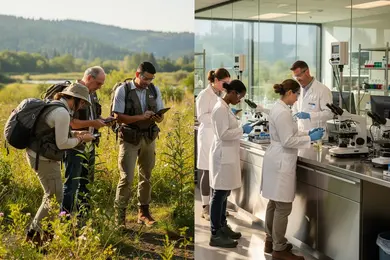
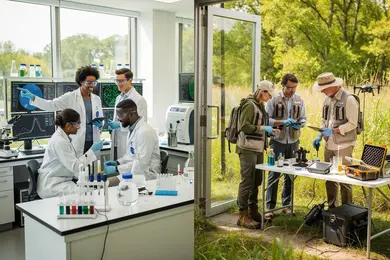
Biology research assistant positions span diverse sectors where practical skills and regulatory awareness often outweigh theoretical knowledge. For example, environmental research assistants must combine fieldwork-such as managing GIS-based data collection-with compliance to regulatory standards, reflecting increased federal investments nearing $4.9 billion in environmental R&D. This dynamic creates demand for expertise in ecosystem analysis, conservation biology, and climate assessment while contending with relatively less stable funding.
In contrast, biomedical and pharmaceutical research settings prioritize technical proficiency in aseptic techniques, clinical trial support, and drug efficacy assays under stringent FDA and Good Laboratory Practice regulations. These roles usually offer higher compensation but require adherence to rigorous protocols and longer working hours. Academic labs, although more focused on hypothesis-driven research and publication, demand strong analytical and communication skills grounded in experimental design.
Applicants analyzing research assistant positions in biological sciences labs should weigh critical tradeoffs:
- Environmental roles offer varied fieldwork but less funding security.
- Biomedical and pharmaceutical positions provide salary benefits at the cost of demanding workflows.
- Advancement often correlates with master's level proficiency, while entry-level roles emphasize technical execution.
Those exploring industries hiring biological sciences research assistants might consider targeted educational pathways aligned with these operational realities. Insights into program affordability and relevance can be found by reviewing MLIS programs, which provide a model for evaluating cost-effectiveness balanced with career outcomes in research-intensive fields.
What is the typical salary range and earning potential for biological science research assistants?
Salary outcomes for biological science research assistants reflect a complex balance between core laboratory skills and growing bioinformatics expertise. Entry-level positions in academic or government labs typically start near $40,000 annually, while roles in biotech or pharmaceutical firms often exceed $60,000 due to specialized demands. For instance, research assistants integrating genomic data analysis consistently command salaries at the upper range.
The bioinformatics market's rapid growth-from $18.2 billion to a projected $45.3 billion by 2032 at an 11.9% CAGR (Nova One Advisor)-directly expands expectations for computational proficiency alongside traditional wet-lab capabilities. Candidates who master data analysis tools and programming languages enhance their value to employers seeking quicker experimental turnaround through automation.
This creates a clear tradeoff: relying solely on wet-lab competencies risks stagnating near the lower salary threshold, while investing in bioinformatics skills substantially improves mid-career earning potential. Employers in major biotech clusters like Boston, San Francisco, and Research Triangle Park typically offer 10%-20% higher pay, reflecting concentrated industry demand and cost of living.
Prospective biological sciences students and professionals must weigh the added workload of informatics training against starting salary lifts and long-term growth. This strategic skill integration shapes competitiveness and financial outcomes more decisively than traditional biology specialization alone.
What is the job outlook and advancement pathway from research assistant to higher research roles?
The market for research assistants with a biological sciences degree remains robust but demands specialized skills aligned with infectious disease and public health research. Notably, infectious disease captures nearly 70% of the $5.1 billion global health R&D funding, setting a clear expectation for proficiency in epidemiology and molecular biology. This creates a competitive environment where assistants embedded in university labs or biotech firms gain an edge by mastering data collection protocols and contributing to publications.
However, upward mobility is frequently constrained without advanced degrees. Transitioning to roles such as research scientist or principal investigator typically requires master's or doctoral credentials, particularly for federally funded projects. Practical experience alone often confines professionals to mid-level technical roles rather than independent research leadership.
Graduates must weigh the cost-benefit of graduate education against limited salary growth at the assistant level. Alternative pathways like clinical trial coordination or regulatory affairs sometimes offer better compensation and advancement outside the traditional academic track. Career progress is accelerated by networking and mentorship, which heighten visibility in competitive grant environments.
Factors such as employing institution size also influence advancement. Larger centers tend to have structured promotion pathways, whereas smaller labs often necessitate geographic moves or sector shifts for growth.
Do you need specific certifications or clearances to work as a research assistant in biology?
Research assistant roles in biological sciences rarely mandate universal certifications; instead, credentials depend heavily on employer requirements and research context. For instance, federally funded labs or work involving sensitive pathogens demand compliance with Institutional Biosafety Committee approvals and may require security clearances. Clinical research positions typically expect certification in human subjects protection, commonly via the Collaborative Institutional Training Initiative (CITI) program.
Agricultural biological research assistants face growing expectations for pesticide applicator licenses and regulatory compliance, reflecting a market projected to more than double in value by 2031 as plant science roles expand.
Employers emphasize documented laboratory competencies such as Good Laboratory Practice (GLP) and data management, often verified through in-house training rather than formal certification. Jobs in biotech firms working with proprietary or genetically modified organisms frequently involve confidentiality agreements and internal security clearances, which can delay onboarding.
Positions tied to federal or defense projects require extensive background investigations resembling security clearances, adding months-long barriers.
Strategically acquiring targeted certifications-like CITI, GLP training, or state pesticide applicator licenses-before applying reduces onboarding delays and aligns candidates with industry demands. Such preparation is especially critical in the fast-growing agricultural biologicals sector, where regulatory complexity intensifies.
Clear communication of credential expectations during hiring stages helps graduates navigate credentialing requirements efficiently and enhances employability in research-focused biological sciences.
Should you choose an online or on-campus biological sciences program to pursue research roles?
Deciding between an online and on-campus biological sciences program hinges on the necessity of direct laboratory experience, which remains a critical factor for research assistant roles, particularly in neuroscience. On-campus programs provide essential hands-on training through supervised experiments, networking with principal investigators, and internships at federally funded facilities.
For example, many labs supported by the National Institute of Neurological Disorders and Stroke, with a budget of $2.97 billion, prioritize candidates with proven bench skills developed through in-person research.
Online programs offer convenience for working professionals or those in remote locations but often fall short in replicating immersive lab environments. Without built-in lab access, graduates may face challenges demonstrating practical competencies, a risk in highly competitive urban research centers where coordinating complex assays is fundamental.
However, professionals focusing on data analysis or literature review roles may find online pathways supplemented by local lab volunteering viable.
The choice requires balancing immediate acquisition of technical skills versus scheduling flexibility. Prospective students should verify whether online options provide partnerships with local labs or mandate self-arranged internships to ensure quantifiable, employable laboratory experience.
How can you evaluate accreditation and program quality for biology degrees leading to research jobs?
Accreditation remains a decisive factor for biology degrees aimed at research careers, particularly in regulatory and compliance roles within agencies like the FDA or EMA. Regional accreditation recognized by the U.S. Department of Education or CHEA is a baseline requirement for ensuring program quality that employers and graduate schools value.
Programs lacking affiliation with active research institutions or industry partners often leave graduates without the hands-on experience necessary to navigate complex compliance protocols. Those offering co-op or internship opportunities in clinical trials or drug safety environments tend to better position students for roles in regulatory science, a field expanding alongside a pharmacovigilance market projected to reach $17.3 billion by 2032.
Critical performance indicators include graduate employment rates specific to research roles, faculty specialization in regulatory science and bioinformatics, and certification exam pass rates for credentials like clinical research associate. Programs with outdated curricula that ignore bioinformatics or regulatory frameworks risk graduating students unprepared for compliance audits or safety data analysis.
Choosing an accredited program with demonstrable industry alignment impacts career mobility-employers demand candidates proficient in regulatory documentation and laboratory techniques. Without this foundation, graduates face challenges in competitive research environments where proficiency in computational biology and regulatory standards is increasingly non-negotiable.
What courses, labs, and undergraduate research experiences best support a research assistant career?
Effective preparation for roles as research assistants in biological sciences demands more than foundational coursework; employers prioritize hands-on expertise in techniques like PCR, electrophoresis, and microscopy. This emphasis reflects the pharmaceutical industry's $101 billion contribution to the $538 billion U.S. R&D expenditure, driving demand for technically adept candidates.
For students targeting pharmaceutical R&D, involvement in drug synthesis or clinical assay projects signals essential compliance with reproducibility and regulatory standards, whereas environmental biology roles favor experience with ecological fieldwork and statistical data validation.
Choosing practical research opportunities that foster independent problem-solving and data interpretation is critical, as is integrating bioinformatics and computational biology. These skills enable handling complex datasets and enhance adaptability across multidisciplinary teams. Neglecting these areas, or opting for only theoretical study or superficial lab rotations, diminishes employability, particularly in sectors where experimental precision underpins productivity and quality assurance.
Investing time in rigorous lab courses paired with substantial research internships yields the most tangible hiring advantage. Students must weigh the tradeoff between breadth and depth-surface-level exposure often fails to satisfy industry expectations. Securing mentorship that promotes ownership of research projects is a strategic decision that builds troubleshooting capability and demonstrates readiness for professional demands in biological sciences.
Other Things You Should Know About Biological Sciences
Choosing a general biological sciences degree provides broader foundational knowledge, which can increase adaptability across diverse research settings. However, specializing early-for example, focusing on molecular biology or ecology-boosts your attractiveness for labs seeking specific technical skills. If your goal is rapid entry into targeted research roles, prioritize specialization that matches industry demand; otherwise, a general degree offers more flexibility but may require additional training post-graduation.
Employers expect research assistants to possess strong technical skills such as lab techniques, data analysis, and familiarity with relevant software. Yet, soft skills like clear communication, attention to detail, and teamwork often differentiate candidates during hiring. In practice, undervaluing these interpersonal skills limits advancement and project contributions, so candidates must integrate both skill sets to succeed and grow in research environments.
In 2027, focusing on coursework like molecular biology, bioinformatics, or genetic engineering can enhance job prospects for research assistant roles. Engaging in research methodologies or lab techniques as elective courses or specialized tracks can also make candidates more competitive and better prepared for specialized tasks in labs.
Direct hands-on internships provide practical experience, networking opportunities, and a clearer view of workplace expectations, often outweighing additional coursework with theoretical focus. Prioritizing internships during degree programs correlates strongly with earlier employment and better job fit in research roles. Coursework remains essential but should be balanced with experiential learning to optimize employability.
References
- Clinical Research Career Ladder: Roles, Promotions, and Typical Timelines https://bayrivercolleges.ca/clinical-research-career-ladder-roles-promotions-timelines/
- Research Assistant - Biology https://www.terra.do/climate-jobs/job-board/Research-Assistant---Biology-Pi-Industries-Ltd--8208407/
- Careers in Biology https://www.aibs.org/careers/
- How to land entry level clinical research jobs without experience https://pharmaeducenter.com/blog/how-to-land-entry-level-clinical-research-jobs/
- CCRA Certification https://acrpnet.org/certification/cra-certification
- Research assistant jobs in Life sciences https://jobrxiv.org/jobs/research-assistant-jobs-life-sciences/
- Guidelines for the Evaluation https://nabt.org/Guidelines-for-the-Evaluation
- Research Assistant job profile https://talentmark.co.uk/candidate/job-profiles/research-assistant-profile/
- Research Associate Career Path in Singapore: Roles & Growth https://www.foundit.sg/career-advice/how-to-become-research-associate/
- Accreditation https://www.rsb.org.uk/accreditation.html