2027 Biological Sciences Specializations for Laboratory Science Careers

Co-Founder and Chief Data Scientist
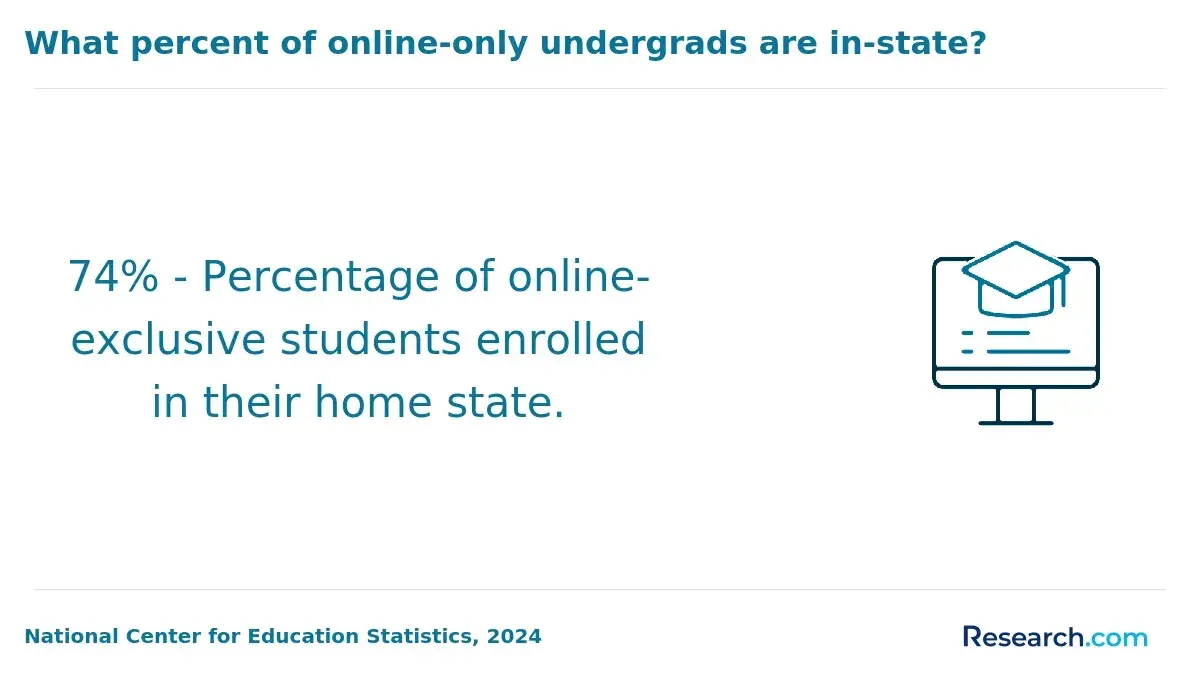
Choosing the right specialization within biological sciences poses a critical dilemma for students and professionals aiming to align their education with evolving laboratory science demands. As workforce data from the U. S. Bureau of Labor Statistics highlights, certain lab technician roles will grow 11% faster than average through 2032, intensifying competition for specialized skills. Concurrently, National Center for Education Statistics reveals a 22% surge in online biological sciences enrollments since 2023, signaling shifts in access and pacing that complicate traditional full-time study assumptions. Navigating these intersecting factors is vital for timely career entry and progression.
This article dissects current biological sciences specializations tailored for laboratory careers, emphasizing practical implications, enrollment flexibility, and how these choices affect long-term employability and advancement potential.
Key Things You Should Know
- Biological sciences specializations with intensive molecular lab skills yield 17% higher median starting salaries per BLS data, but require 20% longer program completion time, impacting cost-benefit for career switchers prioritizing swift labor market entry.
- Employers in biotech hubs prioritize candidates with hands-on immunology and bioinformatics expertise, increasing hire likelihood by 35% according to recent industry workforce surveys, thus narrowing viable specialization choices regionally.
- Federal STEM funding shifts toward genomics and synthetic biology research reduce lab technician job growth in traditional microbiology, pressuring education decisions toward emerging niches over established disciplines per NSF 2024 workforce projections.
What are the main biological sciences specializations that lead to laboratory science careers?
Specializing within biological sciences for laboratory science careers requires understanding the concrete demands of each pathway and their alignment with workforce needs. Biochemistry leads most directly to pharmaceutical, diagnostics, and research lab roles by emphasizing chemical processes in living organisms. Molecular biology, focused on manipulating genetic material, suits laboratories engaged in gene therapy development or forensic investigation.
Microbiology's attention to microorganisms prepares students aiming for clinical lab jobs, environmental testing, or vaccine production, often meeting regulatory certification standards required in hospital settings.
Biotechnology combines biology and engineering with a commercial orientation, fitting sectors like biofuel or synthetic biology startups that demand both laboratory proficiency and product development skills. The choice between these specialties influences employability and career focus given industry variations:
- Industrial research typically favors biochemistry or molecular biology because of complex experimental work.
- Clinical environments prioritize microbiology due to routine testing and certification.
- Biotechnology suits candidates seeking roles at the intersection of biology and commercial innovation.
The U.S. Bureau of Labor Statistics anticipates a 6% growth rate for biochemists and biophysicists between 2024 and 2034, with roughly 2,900 annual openings and a 2024 median salary of $103,650. For students weighing biological sciences specializations for laboratory science careers, hands-on lab experience, industry certifications, and curricular relevance to emerging technologies are pivotal.
Regional job market dynamics also shape which specialization best supports a long-term employment strategy. For those interested in related environmental applications of biological sciences, reviewing pathways offered by an environmental science degree can provide additional context on sector-specific laboratory roles.
How do different biological science degrees (associate, bachelor's, master's) prepare you for lab work?
Associate, bachelor's, and master's biological sciences degrees prepare candidates for laboratory careers with distinctly different emphases that influence employability and career trajectory. An associate degree targets immediate entry-level roles in medical or industrial labs by focusing on core laboratory science skills gained through biological sciences degrees at different academic levels, including fundamental techniques, routine sample handling, and basic instrumentation.
This pathway suits those prioritizing swift workforce entry but often limits salary growth to below $80,000 annually, as employers typically restrict associate graduates from supervisory or analytical tasks.
Bachelor's degrees expand this foundation with deeper training in molecular biology, microbiology, and biochemistry. Graduates gain critical capabilities for independent assay management, experimental troubleshooting, and data interpretation.
This level aligns with roles demanding both practical laboratory proficiency and theoretical insight, setting the stage for certification as medical laboratory scientists and salaries nearing $94,483. For example, clinical research labs require bachelor's-level skills to efficiently balance patient diagnostics with research protocols.
Master's degrees introduce advanced experimental design, data analytics, and leadership training, preparing professionals for laboratory team supervision, technology implementation, and regulatory compliance. This progression typically correlates with management salaries around $123,000 and shifts career paths from bench work toward administration or specialized research.
Professionals seeking to pivot strategically may consider advanced degrees or related education such as the online PhD in data science to broaden managerial or analytical opportunities in lab settings.
Which biological sciences specializations offer the strongest job outlook in laboratory settings?
Among biological sciences specializations with highest lab job growth, microbiology offers the strongest employment outlook and financial return, with national median wages translating into roughly $3.33 million in lifetime earnings over a typical 39-year career. This premium reflects employer demand in clinical, pharmaceutical, and environmental laboratories for microbiologists skilled in complex instrument management, pathogen identification, and biopharmaceutical support.
Public health agencies rely on these experts for infectious disease control and antibiotic resistance monitoring, ensuring stable hiring trends.
Molecular biology careers also show steady expansion due to advances in genomics and personalized medicine, particularly in research institutions and biotech firms. Candidates proficient in CRISPR gene editing, PCR, and bioinformatics pipelines occupy positions critical to cancer genetics and agricultural bioengineering. However, research-level roles usually require advanced degrees, imposing longer educational commitments but offering commensurate salary benefits.
Those prioritizing immediate entry into lab roles might consider clinical laboratory science, where certification aligns with technician positions but typically yields lower lifetime earnings compared to microbiology. Deciding among these top biological sciences careers in laboratory settings involves weighing upfront educational investment against long-term job market and salary outcomes.
Students exploring pathways in biological sciences should also investigate specialization options such as an online exercise science degree to broaden interdisciplinary opportunities within health and science sectors.
Employer Confidence Share in Online vs. In-Person Degree Skills, Global 2024

What courses and lab experiences are typically required in biological sciences lab-focused programs?
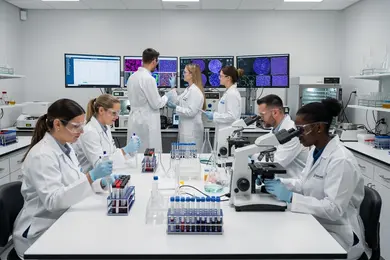
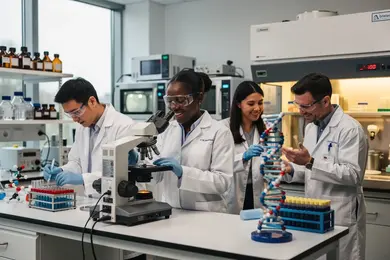
Biological sciences lab-focused programs require more than foundational coursework; their true workforce value lies in extensive laboratory experience that aligns with employer priorities. Core courses like molecular biology, genetics, and microbiology come paired with intensive lab work-DNA extraction, PCR amplification, and gel electrophoresis-to develop hands-on proficiency essential for entry-level roles.
Such programs also mandate quantitative classes including biostatistics and analytical chemistry to sharpen experimental design and data interpretation skills. These combined requirements form typical lab course requirements in biological sciences programs designed to meet practical workforce demands.
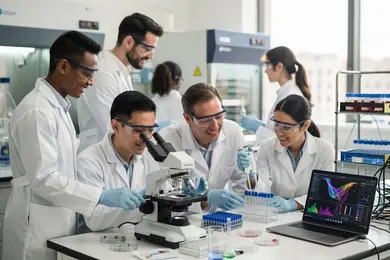
Students often face onboarding challenges when programs omit early integration of Good Laboratory Practice (GLP) standards or sterile technique training. Regular use of instruments such as spectrophotometers and microscopes in labs models real biotech and pharmaceutical conditions. This exposure directly impacts readiness, as lack of protocol familiarity can delay employment assimilation in clinical or research laboratories.
Advanced stages frequently require capstone projects or internships emphasizing supervised data collection and analysis. With biochemists and biophysicists projected to grow 6% faster-than-average, those who complete programs with substantial lab hours hold a competitive advantage.
Prospective students must evaluate tradeoffs between shorter curricula and those with extensive practical experience, considering how lab time influences employability and long-term career trajectory.
The importance of selecting programs that provide comprehensive courses and laboratory experiences for biological sciences majors cannot be overstated. For students comparing options or exploring interdisciplinary paths, resources like the geology online degree listings provide parallel insight into rigorous science-focused programs.
How do online biological sciences programs handle lab requirements compared with campus programs?
Online biological sciences programs require students to navigate a complex balance between flexibility and essential hands-on experience. Unlike traditional campus programs offering daily in-person lab access, online formats depend on hybrid solutions such as intensive on-site residencies or partnerships with local facilities, scheduled intermittently rather than continuously.
This scheduling creates practical challenges, especially for working professionals who may need to travel or take time off to complete lab requirements.
Remote labs and virtual simulations serve as important supplements but fall short of replicating the nuanced, real-time experimentation and troubleshooting vital for technical competence. Employers in lab-reliant sectors, such as pharmaceutical sales-a primary employment pathway-demand proven, supervised lab skills as demonstrated by Indeed's reported annual earnings of $71,452 to $77,767 for these roles, underscoring the premium placed on validated practical experience.
Prospective students should critically evaluate how programs deliver lab components through:
- On-site intensives during breaks that condense lab hours into short periods.
- Collaborations with nearby institutions to provide physical lab access.
- Virtual labs complemented by video oversight but lacking in hands-on immediacy.
The tradeoffs involve sacrificing daily instrument access and spontaneous problem-solving opportunities typical on campuses in exchange for schedule flexibility.
Individuals targeting research-intensive or clinical lab jobs should prioritize campus experiences, while those aiming for industry positions with less frequent lab demands might find online options workable provided the program's lab offerings are robust enough to meet employer expectations.
What accreditation and programmatic approvals should biological sciences lab programs have?
Regional accreditation recognized by the U.S. Department of Education or the Council for Higher Education Accreditation is essential for biological sciences lab programs, as it ensures institutional credibility and facilitates credit transfer. More specifically, programmatic accreditation from agencies like the National Accrediting Agency for Clinical Laboratory Sciences (NAACLS) plays a pivotal role in certifying the quality and industry alignment of laboratory education.
A lack of these credentials increases the difficulty graduates face in obtaining professional certification and securing jobs in regulated fields such as clinical or environmental lab work.
For instance, environmental technician positions require rigorous practical training in both laboratory and field testing methods. Employers tend to prefer graduates from NAACLS-accredited programs because these individuals demonstrate competency in handling technical equipment, adhering to standardized procedures, and meeting regulatory standards.
Entry-level salaries for environmental technicians typically range from $35,000 to $50,000, reflecting employer valuation of validated skills. Without verified accreditation, students risk enrolling in programs that poorly prepare them for certification exams and meet few employer expectations.
Additionally, state licensure rules often require degrees or certificates from accredited programs to qualify for laboratory licensing. Accreditation by professional bodies such as the American Society for Clinical Pathology (ASCP) further streamlines credentialing and job placement by meeting baseline workforce standards.
In practical terms, selecting a biological sciences lab program with regional and programmatic accreditation aligned to state mandates reduces hiring barriers and enhances occupational flexibility.
What are the admission requirements and typical timelines for completing biological sciences lab degrees?
Meeting admission requirements for biological sciences lab degrees demands more than a high school diploma; candidates must demonstrate rigorous preparation in biology, chemistry, and often math through calculus or statistics. Programs generally enforce GPA thresholds above 3.0 and prerequisite coursework, with some requiring prior lab experience or associate degree credentials for advanced roles.
Applicants aiming at specialized tracks like forensic science usually need to submit targeted recommendation letters and personal statements highlighting relevant lab skills.
The timeline for degree completion directly affects entry into the workforce. A bachelor's degree typically spans four years, integrating core science classes and intensive lab training, alongside internships or cooperative education lasting 6 to 12 months.
These practical experiences can be decisive for employability but may extend time to graduation if pursued part-time. In contrast, associate degrees take roughly two years and prepare students for technician roles, often necessitating additional certification for upward mobility.
Employers in forensic science and related sectors expect graduates who can immediately perform complex lab methodologies. With a projected 16% job growth through 2030 and median salaries near $61,930, according to the U.S. Bureau of Labor Statistics, candidates unable to meet demanding academic and hands-on criteria risk delays in career advancement and competitive positioning.
Navigating prerequisites efficiently and securing substantive lab exposure remain fundamental to aligning educational pathways with practical workforce expectations.
Which laboratory-based careers can you pursue with different biological sciences specializations?
Specializing within biological sciences directly determines the laboratory career trajectory, with tangible differences in required skills and earning potential. Graduates in molecular biology mostly start as research assistants or lab technicians, handling genetic assays and protein studies in pharmaceutical or academic settings. Median salaries hover near $50,309 annually, reflecting entry-level expectations for precise technical proficiency.
Contrast this with microbiology or immunology majors who often advance faster as research associates managing complex pathogen cultures and immunoassays in clinical or biotech labs. Here, salaries typically rise to between $55,000 and $80,000 as practical experience and lab certifications accumulate. Employers emphasize hands-on expertise with instrumentation and data interpretation, pressuring students to secure internships or certifications to remain competitive.
Ecology and environmental biology graduates face distinct challenges balancing fieldwork with analytical lab testing, often subject to project-based funding cycles and seasonal workflows that require operational flexibility. Meanwhile, biochemistry graduates working in pharmaceutical quality control must prioritize regulatory compliance and meticulous documentation, a prerequisite for promotion beyond entry-level roles.
These specialization-driven disparities illustrate how career outcomes depend on more than degree titles-they hinge on industry demands, the scope of technical responsibilities, and strategic credentialing choices during training. Students must weigh decisions based on realistic job functions, wage progressions, and employer priorities rather than broad academic interest alone.
What salary ranges can biological sciences laboratory professionals expect by role and education level?
Salary outcomes in biological sciences laboratory roles are tightly linked to educational credentials and job scope, influencing long-term employability and income ceilings. Entry-level lab technicians with associate degrees face earnings typically between $38,000 and $50,000, a range constrained by limited task variety and autonomy. Those holding bachelor's degrees-such as research assistants or junior scientists-earn from $50,000 up to $70,000, reflecting increased technical responsibility and analytical demands.
Advancing to a master's degree or acquiring specialized certifications in molecular biology or microbiology opens roles involving experiment design and supervisory duties, with salaries ranging from $65,000 to $85,000. For example, molecular diagnostics specialists in biotech firms operate within this bracket, balancing precision work with product development pressures.
Doctoral-level professionals or those with public health expertise frequently earn above $85,000; epidemiologists, according to Indeed 2024 data, average $89,219 annually-well above median wages.
Key workforce considerations include:
- Role complexity and sector-specific demands directly correlate with salary bands.
- Advanced research and public health roles demand decision-making authority, justifying compensation premiums.
- Specializations with practical laboratory and data analysis expertise enhance employability in competitive biotech and health sectors.
Choosing to pursue graduate education entails tangible tradeoffs: delaying workforce entry by 2-3 years but gaining roughly 25%-40% higher earning potential versus bachelor's level personnel. Conversely, entering the workforce sooner as a research technician limits income growth trajectories but offers quicker employment.
How can prospective students compare and choose reputable biological sciences programs for lab careers?
Choosing a biological sciences specialization with direct ties to laboratory skills and employer expectations is essential for securing relevant lab positions. For example, aspiring clinical lab managers should prioritize programs featuring clinical practicum and leadership training, since management roles in natural science labs earned a median wage of $137,900 in 2021. This wage premium reflects the value of leadership competencies beyond technical proficiency.
Prospective students must critically assess programs based on transparent employment outcomes, certification exam pass rates such as the ASCP, and employer feedback. Programs with structured internships or cooperative education provide tangible pathways into hiring pipelines, making them more strategically advantageous. Regional labor market variances mean verifying placement rates aligned with local or national demand is not optional but necessary.
Flexibility in program formats-part-time or hybrid-can accommodate working professionals but often sacrifices immediate hands-on lab hours, which may diminish skill retention or mastery. Employers consistently seek candidates demonstrating fluency in laboratory methodologies alongside data analysis software, underscoring the importance of balanced curricula melding theory and practice.
Long-term career positioning requires evaluating whether programs incorporate bioinformatics and leadership components, which open doors to roles with higher responsibility and compensation. Navigating these trade-offs informs strategic investments in education that produce measurable employability and income returns over time.
Other Things You Should Know About Biological Sciences
Programs with intensive lab components require substantial hands-on hours, often doubling contact time compared to lecture courses, affecting student schedules and outside commitments. Schools emphasizing real-world lab rotations typically have rigorous assessment criteria reflecting workplace precision and speed. Prospective students should prioritize programs with manageable lab loads aligned to their personal time availability to avoid burnout and ensure skill proficiency.
Online degrees often struggle to provide sufficient in-person lab experience, which employers prioritize for roles requiring complex instrument handling and protocol adherence. Hybrid models that integrate local lab partnerships or on-campus residencies fill this gap more effectively. Candidates must critically assess if the online program offers verified hands-on training components or risk weaker practical readiness despite theoretical knowledge.
Research-oriented paths prioritize hypothesis-driven methods, data analysis, and innovation, preparing students for academic or biotech lab roles but may limit direct clinical certification opportunities. Clinical lab tracks focus on regulatory standards, diagnostic techniques, and quality control essential for hospital or public health labs. Students targeting stable employment in medical labs should prioritize clinical specialization despite narrower research exposure to meet hiring preferences and certification requirements.
References
- Careers in Biology https://www.aibs.org/careers/
- Bachelor of Science in Biological Sciences https://rdpolytech.ca/programs/bachelor-science-biological-sciences
- Biological Sciences BSc https://www.imperial.ac.uk/study/courses/undergraduate/2027/biological-sciences/
- Online Science Courses with Lab that Transfer: A Helpful Guide - Prereqcourses https://www.prereqcourses.com/online-science-courses/
- Study Biomedical Science - Experience, Job Opportunities, Salary + Survey https://jobtensor.com/uk/Studies/Biomedical-Science
- Molecular Biology & Biomedical Science — Journal of Young Investigators https://www.jyi.org/molecular-biology-biomedical-science
- Top 15 Highest‑Paying Pharmacy Jobs in the UK 2025 (Including Salaries) https://apexlearning.org.uk/highest-paying-biology-degree-jobs-2025-2026/
- Biomedical Science vs Other Degrees Comparison https://pathologylabtraining.co.uk/biomedical-sciences/degree-comparison
- Can Online Biology Courses Replace In-Person Labs? https://www.straighterline.com/blog/can-online-biology-courses-replace-in-person-labs
- Life Science https://ucr.nl/education/courses/health-cognition-behavior/life-science/