2027 Biological Sciences Specializations for Quality Control Careers

Co-Founder and Chief Data Scientist
Many professionals entering quality control roles in biological sciences find themselves struggling to choose specializations that align precisely with industry demand. Employers increasingly expect candidates to demonstrate expertise in niche areas like molecular diagnostics or biostatistics, yet 45% of adult learners pursuing relevant credentials now prefer part-time or online formats, according to a 2024 National Center for Education Statistics report. This shift reflects growing tension between flexible learning needs and the hands-on competencies essential for regulatory compliance and lab accuracy. This article identifies targeted biological sciences specializations suited for quality control paths, guiding readers to make informed choices that balance accessibility with essential skill development.
Key Things You Should Know
- Regulatory compliance specialization commands 18% higher entry salaries due to stringent FDA updates effective 2025, yet requires 30% longer certification timelines, challenging accelerated career pivots in biological sciences quality control.
- Employers prioritize candidates with integrated bioinformatics and wet lab skills, creating a workforce bottleneck: 62% of job postings in 2024 demand cross-disciplinary proficiency rarely covered in singular biological sciences programs.
- Cost inflation on specialized molecular quality assurance curricula rose 12% in 2024, disproportionately impacting mid-career transitions; public institutions show 25% greater affordability but comparatively less industry collaboration for hands-on experience.
What biological sciences specializations align best with quality control careers in labs and industry?
Microbiology, molecular biology, and biochemistry stand out as the foremost biological sciences specializations for laboratory quality control, given their direct relevance to industry demands and regulatory norms. Microbiology's focus on sterility testing and contamination tracking is pivotal in pharmaceutical biologics manufacturing, where batch release hinges on rigorous quality assurance. The global market's valuation near $5.5 billion reflects sustained growth in microbiology quality control roles, highlighting durable employer demand for such expertise.
Molecular biology's role extends into pathogen genotyping and resistance marker detection, essential for biotech product validation and process verification. Meanwhile, biochemistry supports quality control by developing and validating protein assay methods requiring advanced theoretical knowledge. Employers increasingly expect candidates to balance these technical skills with fluency in regulatory compliance and quality management systems consistent with FDA, EMA, or ISO standards. This expectation influences the choice of programs, where hands-on GMP-compliant training or internships often yield stronger workforce readiness compared to purely theoretical curricula.
For those transitioning into quality control roles, acquiring certifications such as Six Sigma or Lean Quality Management can significantly enhance employability. For example, a molecular biology-trained professional moving into vaccine production must rapidly adapt to sterility assurance protocols and environmental monitoring that differ from research settings. This underscores the importance of understanding onsite testing techniques and documentation demands within the top biological sciences fields aligned with quality control careers.
Prospective students should critically assess their educational path by exploring options such as an accelerated biology degree that integrates practical quality control competencies with theoretical grounding, optimizing time to workforce entry and skill acquisition.
How do quality control roles differ across pharmaceuticals, biotech, food science, and environmental testing?
Quality control roles differ markedly between pharmaceutical and biotech industries, demanding distinct expertise due to contrasting product complexities and regulatory expectations. Pharmaceuticals prioritize rigorous compliance with Good Manufacturing Practices (GMP), emphasizing batch release testing and sterile product validation-tasks that heavily involve biostatisticians in study design and data integrity. Conversely, biotech quality control focuses on biologics requiring sophisticated techniques like flow cytometry and bioassays, increasing reliance on specialized cell biology knowledge.
In contrast, the differences in quality control methods for food science and environmental testing reflect unique operational challenges. Food science concentrates on pathogen detection and nutritional accuracy under FDA and USDA oversight, often requiring rapid responses to variable ingredient sources. Environmental testing requires adaptive methodologies to analyze air, water, and soil samples per EPA standards, with an added emphasis on legal defensibility of data due to site-specific contaminants.
These distinctions affect workforce needs and salaries, as biostatisticians with expertise in validation and regulatory compliance earned a median $104,350 in 2024, with 8% growth projected through 2034. Prospective professionals must weigh such sector-specific demands, considering that pharmaceutical and biotech paths necessitate advanced regulatory science and molecular skills, whereas food and environmental roles emphasize microbiological controls and field logistics.
For those balancing practical career transition hurdles, exploring an online data science masters can provide critical data management skills that complement quality control expertise across these sectors.
What level of biological sciences degree is needed to start a quality control career?
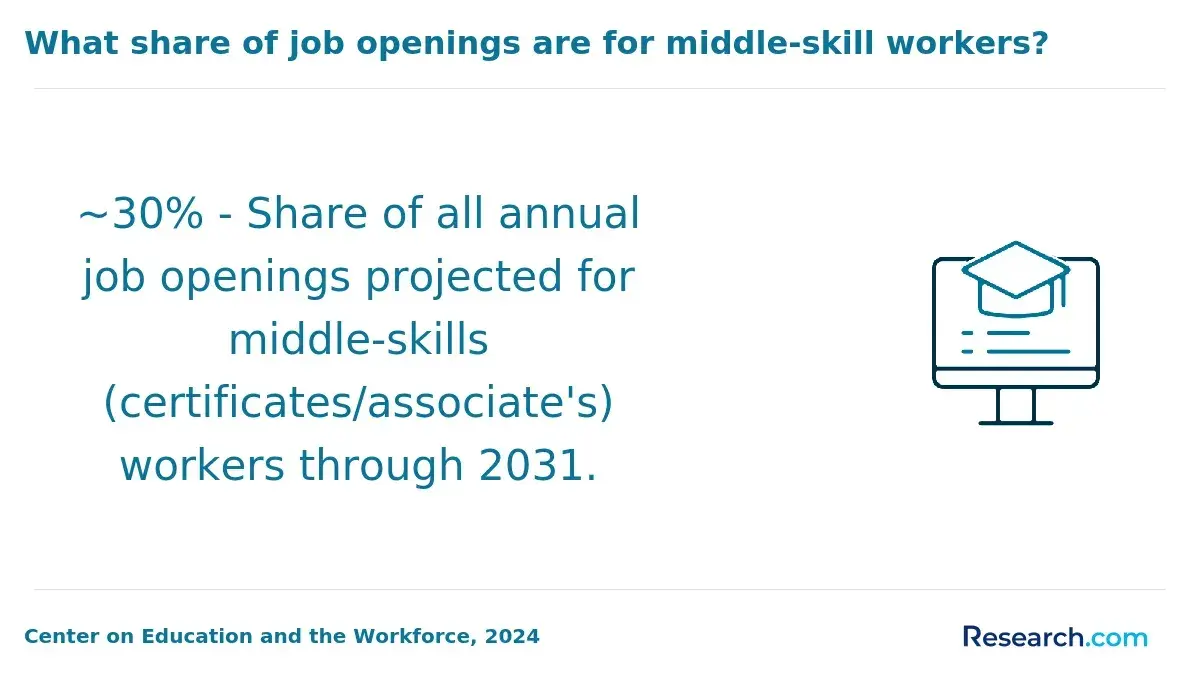
A bachelor's degree in biological sciences remains the essential credential for entry into quality control roles within regulated manufacturing environments. Employers typically require foundational knowledge in molecular biology, microbiology, biochemistry, and analytical techniques-core competencies covered in most undergraduate programs. Candidates must also demonstrate proficiency in assays such as qPCR and digital PCR, technologies critical to manufacturing quality standards valued at $6.5-7 billion with steady growth ahead. These biological sciences degree requirements for quality control jobs reflect practical market demand tied to rigorous regulatory expectations.
Advanced roles in method development, validation, or supervisory functions increasingly favor candidates with master's degrees, particularly in biologics companies where assay complexity and regulatory scrutiny heighten. However, a master's degree is not mandatory for entry-level positions but offers a competitive edge for those targeting specialized analytical responsibilities or leadership. Prospective students should note that applicants without direct QC experience must acquire hands-on lab skills, internships, or certifications in good manufacturing practices (GMP) to meet hiring standards, spotlighting the gap between theoretical learning and applied competencies.
Those with associate degrees face notable challenges transitioning into molecular QC due to limited exposure to critical testing methods. Thus, evaluating entry-level qualifications in biological sciences for quality control illustrates the tradeoff: a bachelor's degree with targeted molecular biology training is the practical minimum, especially in pharmaceutical biologics manufacturing where precision in qPCR stability testing is non-negotiable.
For individuals considering further education aligned with technical advancement or leadership, exploring options such as a masters in library science may offer complementary skills in data management and regulatory documentation, valuable in QC environments reliant on meticulous recordkeeping.
Which undergraduate biology concentrations most directly support quality control and regulatory work?
Choosing undergraduate biology concentrations for quality control careers requires prioritizing specialized skill sets tailored to regulatory compliance and manufacturing consistency over broader biological theory. Molecular biology, biochemistry, and microbiology directly address employer needs in quality control roles within pharma, biotech, and medical device sectors.
Molecular biology provides critical training in PCR, sequencing, and nucleic acid analysis-tools central to validating production processes and investigating deviations under GMP oversight. Biochemistry's focus on enzyme kinetics and metabolic pathways supports understanding biochemical stability and impurity profiles crucial for regulatory filings. Microbiology emphasizes aseptic technique, sterilization, and microbial limit testing essential for FDA-regulated biologics manufacturing.
Incorporating bioinformatics and applied statistics into these tracks responds to rising industry demand for analytics proficiency, with the life-science analytics market forecast to grow near $18-19 billion with a 9-10% CAGR through 2030. Data-driven process control and deviation analysis capabilities markedly increase employability in quality assurance roles.
Students must pursue programs offering hands-on quality assurance and regulatory documentation experience, as demonstrated audit readiness is a significant hiring differentiator. Tradeoffs include limited exposure to ecological or evolutionary biology, less relevant to quality-focused careers.
For those balancing technical competitiveness with flexible study options, exploring options like a environmental engineering online degree may provide complementary pathways to broader regulatory compliance roles in life sciences.
How do graduate biological sciences programs deepen expertise for advanced quality control positions?
Graduate programs in biological sciences fill critical skill gaps that limit advancement in quality control (QC) roles within biopharmaceutical manufacturing. Candidates moving beyond entry-level positions must master assay design, validated analytical methods, and regulatory compliance, with growing employer emphasis on independently troubleshooting complex cell- and protein-based products. Given the market's $20-22 billion valuation and projected 10-11% annual growth through 2030, practical expertise in Good Manufacturing Practice (GMP) and real-time release testing is increasingly non-negotiable.
For example, someone skilled in advanced bioassay development and chromatography can transition from routine batch testing to leading initiatives that shorten production cycles and reduce costs. Programs integrating cellular biology, bioinformatics, and process engineering better equip graduates to manage variability in upstream/downstream bioprocesses and apply robust control strategies. Without this, professionals risk falling short of employer expectations for technological adaptability and regulatory agency readiness.
Students should prioritize curricula offering hands-on experience in instrument qualification, validation, and FDA-compliant settings-elements often lacking but essential for bridging academic credentials to real-world QC responsibilities. The ability to navigate evolving manufacturing technologies like single-use bioreactors and continuous systems often separates supervisory candidates from technician roles.
Ultimately, the practical value of graduate biological sciences education lies in its capacity to elevate analytical precision, regulatory literacy, and process understanding, directly influencing employability and compensation within an expanding industry landscape.
What core courses and lab skills should a biological sciences major gain for quality control jobs?
Success in quality control (QC) roles within biological sciences hinges on a precise blend of scientific expertise and regulatory knowledge. A candidate's grasp of biochemistry, microbiology, molecular biology, and analytical chemistry forms the technical backbone necessary to identify production irregularities and enforce quality standards. For example, pharmaceutical QC analysts frequently rely on high-performance liquid chromatography (HPLC) to confirm compound purity, demanding strict calibration and compliance with regulatory protocols.
Laboratory proficiency must extend beyond theory to include Good Laboratory Practice (GLP), aseptic techniques, PCR, chromatography methods (HPLC, GC), and electronic lab notebook management to support regulatory documentation. Mastery of Laboratory Information Management Systems (LIMS) further ensures audit readiness amid mounting GxP requirements, which buyers of quality control talent now prioritize heavily.
The growing global regulatory affairs outsourcing market, projected to reach about $8-9 billion with an 11-12% CAGR through 2030, signals heightened demand for QC professionals who can navigate compliance in practical settings. Programs embedding case studies of regulatory audits and cross-functional QC workflows offer candidates exposure to the real operational tradeoffs between maintaining strict quality and meeting production timelines.
Students weighing biological sciences pathways must recognize that employers increasingly expect validated experimental designs paired with regulatory savvy, not just technical knowledge. Without this dual emphasis, graduates risk underqualification for positions that require rigorous data interpretation, robust documentation, and adaptive problem-solving.
How do online biological sciences programs for quality control compare with campus-based options?
Online biological sciences programs for quality control offer flexibility but lack the immersive, hands-on laboratory experience that campus-based programs provide-an important factor in meeting employer expectations. Environmental testing laboratories, where precision and adherence to protocols are mandatory, emphasize practical skills that are challenging to fully develop in an online setting. Given the environmental testing market's projected 7-8% annual growth and valuation near $12-13 billion, employers prioritize candidates with demonstrated live lab proficiency.
For example, a professional transitioning into environmental quality control without direct supervised lab exposure may face extended onboarding or need additional certification to meet regulatory lab competency. Online programs often struggle to replicate real-time training in compliance testing for water, soil, and air samples, delaying critical skill acquisition.
That said, online formats remain valuable for experienced practitioners pursuing regulatory updates or refresher training without geographic limits. Candidates should consider hybrid offerings featuring mandatory lab residencies or local practicum affiliations to bridge experience gaps. Employers generally see campus graduates as more job-ready at entry level, while online graduates advance more gradually, dependent on securing hands-on experience externally.
Decision-makers must weigh time-to-competency tradeoffs and local workforce expectations carefully. Aligning program selection with applied quality control components is essential for meeting evolving industry requirements in biological sciences.
What accreditation and program quality indicators matter for biology degrees leading to quality control?
Accreditation is a key determinant of a biology degree's practical value in quality control roles, especially within regulated environments like pharmaceuticals and food safety. Without recognized accreditation-such as from the Higher Learning Commission or WASC-graduates often face skepticism regarding curriculum rigor and preparedness for employer standards.
Employers demand candidates with validated experience in Good Laboratory Practice (GLP), ISO 17025-aligned methods, and compliance frameworks embedded in their training. Degrees that incorporate hands-on laboratory work, internships, and exposure to quality assurance protocols offer measurable hiring advantages over purely theoretical programs. For example, microbiology analysts focusing solely on pathogen detection without data integrity or audit readiness skills may struggle to meet industry workflow demands.
The food safety testing market, valued between $28 billion and $30 billion with steady growth projections, intensifies the need for such practical expertise. When selecting a program, students should prioritize:
- Regional accreditation confirming academic standards
- Curriculum including GLP and ISO-compliant lab practice
- Structured internships or co-op placements within regulated industries
- Faculty with direct industry or regulatory experience
- Training on modern QC instrumentation and software tools
Reality dictates that the depth of applied quality control training directly influences early employability and long-term career stability, reducing the costly need for extensive on-the-job retraining in a tightly regulated sector.
What are typical entry-level salaries and long-term earnings for biological quality control specialists?
Entry-level salaries for biological quality control specialists range from $45,000 to $60,000 annually, primarily influenced by the technical scope of their roles and industry sector. Positions dealing with complex in-vitro diagnostics (IVD) products are generally compensated on the higher end due to the specialized expertise required. This distinction significantly impacts early career trajectories, making specific experience or certifications in IVD a strategic advantage for faster wage growth.
Advancement beyond entry level depends heavily on employer type and geography. For example, specialists in large metropolitan biotech hubs who hold bachelor's degrees or advanced certifications often move into supervisory or senior analyst roles, with salaries between $70,000 and $95,000 after 5-10 years. This contrasts with smaller firms or academic labs, where progression tends to be slower and less lucrative. Candidates must weigh these factors carefully when selecting initial job placements to avoid stagnant earnings.
The expanding IVD quality-control market, valued near $1.6 billion and growing at roughly 5-6% annually, increases demand for professionals with direct industry experience. Without this, wage stagnation or the need for additional training is common. Given this, prioritizing education or certification programs aligned with IVD quality assurance protocols enhances employability and supports sustainable salary increases.
- Entry salaries: $45,000-$60,000, higher with IVD focus
- Mid-career: $70,000-$95,000 in biotech hubs or supervisory roles
- Market growth: 5-6% annually through 2030
Which certifications, licenses, or professional organizations support careers in biological quality control?
Certification and professional memberships significantly shape career prospects in biological quality control by providing verifiable expertise often required by employers. For instance, holding credentials such as the American Society for Clinical Pathology's Certified Biological Scientist or ASQ's Certified Quality Auditor demonstrates a command of Good Laboratory Practices and regulatory compliance, aligning with FDA and EPA standards common in pharmaceutical and biotech QC roles.
Licensing, although rarer, plays a strategic role in clinical or diagnostic settings where a Clinical Laboratory Scientist (CLS) license is often a prerequisite. Conversely, food safety technicians benefit from HACCP certification, evidencing proficiency in risk management essential to agricultural biotech and regulatory inspections.
Membership in organizations such as the Society for Quality Assurance or the International Society for Pharmaceutical Engineering offers more than networking-it grants access to ongoing industry updates and evolving regulatory frameworks critical to maintaining relevancy amid scientific innovation.
Pragmatically, entry-level biological technicians without certifications may face underemployment despite academic qualifications, illustrated by median earnings of $52,000 and a competitive labor market with approximately 9,100 openings annually. Employers prioritize candidates demonstrating both certification and compliance experience to ensure adherence to stringent quality protocols.
Prospective candidates should weigh the time and financial costs of certification against its clear role in accelerating job placement and promotion opportunities, as absence of these qualifications often restricts advancement to transient or lower-tier positions within biological sciences quality control.
Other Things You Should Know About Biological Sciences
In 2027, students will face challenges such as time management difficulties, as lab-intensive courses require significant hours. Balancing this with quality control career preparation, including internships and practical skills development, will demand effective prioritization and scheduling to meet academic and professional goals.
Quality control roles increasingly value interdisciplinary expertise that combines biology with chemistry, data analysis, and regulatory knowledge. Programs focusing narrowly on pure biology may leave graduates underprepared for industry demands such as handling chemical assays or interpreting compliance data. Candidates should prioritize specializations or electives that broaden their technical toolkit beyond biology fundamentals, as this improves adaptability and employability. Employers expect quality control professionals to function across departments, so interdisciplinary depth accelerates career growth and flexibility.
Choosing a research-oriented specialization often emphasizes theoretical knowledge and experimental design but may underprepare students for compliance-driven quality control roles focused on standardization and documentation. Applied specializations, by contrast, focus on industry regulations, process validation, and practical troubleshooting skills crucial to quality assurance tasks. For those targeting quality control, selecting an applied track leads to faster entry and higher relevance in industry positions, while research tracks may require supplementary training for practical quality workflows.
Program reputation alone does not guarantee quality control career success without embedded practical experience. Employers emphasize hands-on skill demonstration and familiarity with industry-standard protocols, which internships provide. Students should prioritize programs offering structured internships or cooperative education partnerships with quality control employers, even if those programs are less prestigious. This tradeoff results in stronger job readiness and networking advantages that outweigh brand recognition in biology education for quality control roles.
References
- View of The importance of Internal Quality Controls in medical laboratories to ensure high quality results https://jbpml.org.br/manuscript/index.php/jbpml/article/view/98/8
- Careers and stakeholders | Molecular Biology of the Cell | Università degli Studi di Milano Statale https://mbc.cdl.unimi.it/en/programme/careers-and-stakeholders
- Quality Systems and Improvement Management Bachelor of Science https://www.cambridgecollege.edu/academics/degrees-certificates/bachelors-degrees/quality-systems-improvement-management
- 22 Biology Major Jobs: What to Do with a Biology Degree | USAHS https://www.usa.edu/blog/careers-for-biology-majors/
- Quality Control Analyst: Salary & Career Guide | Proclinical | Proclinical Recruitment Blogs https://www.proclinical.com/blogs/2025-8/quality-control-analyst-job-profile
- Online Degree vs. Traditional: Choosing the Right Path https://beal.edu/online-degree-vs-traditional/
- QCS Staffing https://www.qcsstaffing.com/resources/top-certifications-for-life-sciences-professionals-in-2026
- LIFE Science Graduate programs https://careers.merckgroup.com/global/en/life-science-graduate-programs
- Careers in Biological Sciences: Opportunities, Skills, and the Future of Work https://www.hyperec.com/blog/careers-in-biological-sciences-opportunities-skills-and-the-future-of-work/
- Accreditation and the University Quality Management System https://www.biologie.uni-wuerzburg.de/en/about-the-faculty/quality-management/accreditation-and-the-university-quality-management-system/