2027 Choosing a Public Health PhD for Environmental Justice Research

Co-Founder and Chief Data Scientist
An environmental justice research career depends less on a doctorate's label than on the questions you can investigate, the communities you can work with responsibly, and the support available to finish a dissertation. For prospective public health PhD applicants, that makes faculty fit, research access, and funding more consequential than a broad program description.
This guide explains how to compare those factors alongside accreditation, coursework, format, cost, and career outcomes - and when a different degree or research job may be the better next step.
Key Things You Should Know
- Prioritize an available advisor, feasible exposure and health data, accountable community partnerships, and documented funding over an "environmental justice" label.
- Check both institution-level accreditation and the exact scope of any Council on Education for Public Health (CEPH) accreditation; neither establishes that a particular faculty member can supervise your project.
- Compare the full funding offer - not tuition alone - and verify research duties, summer support, renewal rules, and dissertation-stage costs before accepting.
What is an environmental justice public health PhD?
An environmental justice public health PhD trains researchers to study how environmental exposures, public decisions, and unequal resources shape population health. A dissertation might examine whether a pollution-control policy changes exposure across neighborhoods, or how residents' knowledge can improve exposure assessment. The work requires careful definitions of exposure and health outcomes, credible comparisons, and attention to who controls data and benefits from the findings.
"Environmental justice" may describe a research area rather than an officially named degree or concentration. Relevant advisors can sit in environmental health, epidemiology, health policy, or population health programs. A PhD is designed for original research; a practice-focused DrPH is generally a better match for someone whose principal goal is leading organizational change rather than developing a scholarly research program. Broader public health doctorate pathways for advanced study can help clarify that distinction, but the decisive evidence is each program's dissertation model and available supervision.
What careers can an environmental justice public health PhD prepare you for?
A PhD can prepare you to design studies, lead analyses, seek research funding, publish findings, and teach. Potential employers include universities, government agencies, research institutes, and community-partnered organizations. A doctorate does not by itself secure an independent-investigator position: employers also assess publications, methods, grant experience, partnership history, and the ability to explain findings without overstating causation.
The table separates common destinations by the work they emphasize. Use it to decide what evidence you would need to build during doctoral study.
| Career direction | Typical emphasis | Preparation to look for |
| Academic researcher | Original studies, publications, teaching, and grant proposals | Consistent mentorship, publishable projects, and teaching opportunities |
| Government research scientist | Exposure or population-health evidence for public decisions | Policy-relevant analysis, reproducible methods, and clear communication |
| Community-partnered research lead | Study design and interpretation with organizations affected by environmental decisions | Shared-governance experience and realistic partnership commitments |
Doctoral training is not essential for every environmental justice job. Someone seeking an initial program or data role may find a bachelor's degree plus supervised experience more appropriate; public health undergraduate program affordability is a more relevant consideration at that stage than PhD prestige. For established researchers, the sharper question is whether the doctorate opens responsibilities they cannot reasonably reach through their existing qualifications and work.
How do you choose an accredited environmental health PhD program?
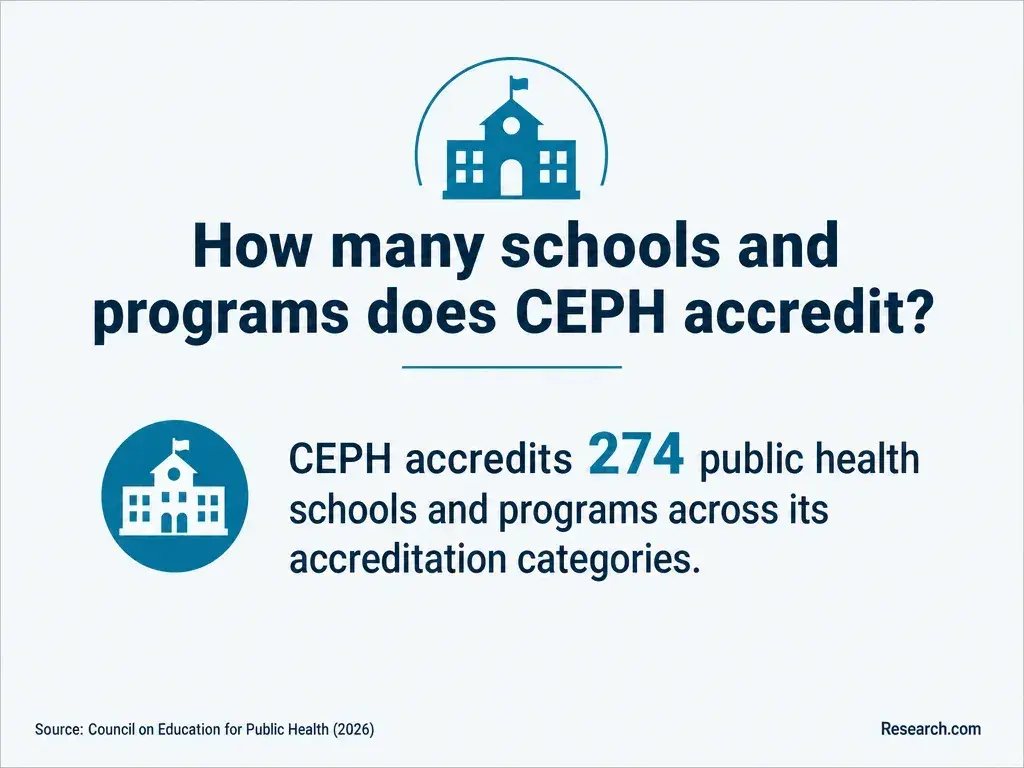
Start by confirming that the university has recognized institution-level accreditation. Then check the Council on Education for Public Health's directory for the exact accredited school, unit, or program and whether the degree you would enter is within its scope. Do not assume a university's public health accreditation covers every environmental science or interdisciplinary doctorate it awards. Accreditation is an important quality check, but it is not a substitute for evaluating the research group.
Shortlist programs around a specific question - for example, the health effects of unequal heat exposure - rather than a general commitment to equity. Review potential advisors' recent work, current projects, methodological expertise, and stated student-advising capacity. Ask whether a second faculty member could support the work if a grant ends or an advisor leaves. Published projects demonstrate scholarly interest, not guaranteed admission, supervision, funding, or access to their data.
For community-engaged research, examine whether partners help shape questions, interpretation, and dissemination rather than serving only as recruitment sites. Ask who owns or governs data, what permissions are needed, and whether the proposed dissertation can proceed if restricted data or field access is delayed. Programs with grant-supported epidemiology doctoral pathways may offer relevant research work, but applicants should still confirm the grant's remaining term, their duties, and whether support continues if their dissertation takes a different direction.
Useful training connects environmental exposure science with epidemiology, biostatistics, causal reasoning, and the social and policy processes that distribute risk. Depending on the dissertation, students may need spatial analysis, environmental monitoring, qualitative interviewing, policy evaluation, or mixed methods. A course title alone does not show that a student will receive advanced practice, access to equipment, or supervision in a method.
Look for a workable sequence: foundational methods, specialized work tied to the research question, and supervised application before the dissertation depends on the technique. For example, a study using neighborhood-level exposure estimates needs attention to measurement error and the limits of drawing conclusions about individuals from area-level data. A community interview study needs appropriate recruitment, consent, reflexivity, and a plan for interpreting accounts without treating participants as interchangeable.
If your goal is chiefly stronger statistical analysis rather than independent environmental justice scholarship, flexible routes to a biostatistics master's degree may be a more focused alternative. For a PhD, ask to see how methods courses, lab or partnership work, and dissertation milestones reinforce one another - not simply whether electives appear in a catalog.
Requirements vary by university and department. Applicants commonly submit academic records, a statement of research interests, recommendations, and evidence of quantitative or other relevant preparation. Some programs specify prior degrees or courses; others assess equivalent preparation. Check the current program's rules for tests, credential evaluation, deadlines, and whether contacting a prospective advisor is required or encouraged.
Competitiveness is different from eligibility. An applicant from environmental science might demonstrate exposure expertise but need deeper epidemiology; a community organizer might bring strong partnership experience but need more statistical preparation. Neither background is disqualifying on its own. Strong evidence of readiness includes a well-defined question, thoughtful discussion of feasible data, and an example of research or evaluation work whose limitations you understand. Publications and an MPH are not universal prerequisites.
If grades obscure later improvement, explain the preparation you have since completed and ask whether the doctoral committee will consider it. Guidance on academic recovery before applying to an MPH can inform a lower-risk preparation route, but MPH admissions policies do not establish PhD eligibility. Before applying, confirm that at least one appropriate mentor may take students and that your proposed methods are supported by the program.
There is no reliable single completion time for an environmental justice PhD. The sequence usually includes coursework, qualifying or comprehensive milestones, dissertation proposal approval, research, writing, and defense. Prior degrees, required teaching or research work, data access, and the design of community partnerships can all change the timeline. The program's published completion data, with its cohort definition and period, is more useful than an advertised minimum.
Environmental justice projects may require time for partner agreements, monitoring seasons, data-use permissions, or institutional review. These steps can improve the study, but they can also create delays that coursework-only timelines miss. Ask when funding ends relative to the program's actual dissertation-stage completion patterns, and what happens if an approved project must change.
Before committing, map the required milestones against likely fieldwork and any employment or caregiving obligations. Comparing public health doctorate pathways for advanced study is useful only if you also confirm each program's actual pace, attendance rules, and dissertation requirements.
If your immediate aim is to contribute to a community project rather than lead independent research, a supervised research position, methods training, or an MPH may be more direct. An applicant who is not yet ready to seek research mentors need not treat the PhD as the next automatic credential; even practical matters such as online MPH admissions and recommendation exemptions belong to a separate, practice-oriented decision.
The relevant price is your net financial commitment across the expected research period, not the posted tuition alone. A funding letter may combine a tuition waiver, stipend, health insurance support, and paid teaching or research work, with different terms for each. Offers can also leave gaps for summer enrollment, university fees, travel, field equipment, continuation registration, or a final dissertation term.
Compare offers in writing using the same categories. This prevents a seemingly generous first-year award from hiding later costs.
- Guaranteed support: Identify the covered terms, waiver scope, stipend conditions, and renewal standards.
- Work obligations: Confirm expected teaching or research hours and whether assigned work advances your dissertation.
- Research expenses: Ask who pays for community meetings, travel, monitoring, software, and required data access.
- Unfunded periods: Check summer coverage, leave policies, and fees after standard funding expires.
Opportunity cost matters too, particularly if you would leave paid employment. public health doctorate expenses and salary prospects provide a broader comparison, but an individual offer letter and realistic completion plan should control your calculation. Do not assume an assistantship, external grant, or tuition waiver will renew without checking its conditions.
Online delivery can accommodate some coursework and meetings, but it does not make a research doctorate location-independent. Exposure sampling, laboratory training, community meetings, teaching assignments, and access to restricted data may require travel or in-person presence. Live seminars and advisor meetings can also constrain an employed student's schedule.
Evaluate the format against your proposed dissertation, not the convenience of attending lectures remotely. Ask which activities require campus visits, who helps establish a suitable local research partnership, how remote students access methods training, and whether an advisor has experience supervising similar work at a distance. Confirm that community partners want the proposed arrangement; geographic convenience for the student is not a partnership plan.
If you primarily need applied public health training while remaining employed, a funded or award-supported master's route may be more workable than a remote PhD with weak research access. Information on reducing MPH tuition with institutional awards can help assess that alternative, provided you compare its practice-oriented outcomes with your actual research goal.
There is no single defensible salary figure for environmental justice PhD graduates. Compensation depends on the job, employer, location, experience, and whether the position is a training appointment, government role, or established research post. A doctoral degree may support eligibility for particular research responsibilities, but it does not establish a starting salary.
For a realistic comparison, identify the occupations and job postings you would pursue, then consult the corresponding U.S. Bureau of Labor Statistics occupational wage information and the employer's posted range. An epidemiologist's occupation-wide median, for example, describes workers in that occupation - not environmental justice PhD graduates or new hires specifically. Compare likely earnings with the years of support, foregone wages, and career options available without the doctorate. The MPH salary and career earnings outlook offers context for a different degree pathway, not a prediction of the pay difference a PhD will produce.
What certifications or licenses do environmental justice researchers need?
Most public health research positions do not have a universal environmental justice license. Requirements attach to particular tasks and employers instead: laboratory work, professional engineering, clinical activities, or regulated environmental assessment may call for separate qualifications or authorized personnel. A public health PhD does not grant those licenses.
Credentials such as Certified in Public Health (CPH) may be relevant to some positions, but eligibility is set by the certifying organization and does not follow automatically from a degree title or a university's accreditation. Applicants comparing CEPH-accredited distance learning MPH options should check the credential's current eligibility rules and the exact accreditation scope rather than assuming every related course or degree qualifies.
For research roles, a reproducible analysis, sound ethics practice, and credible partnership experience may matter more than an optional certification. Read target job descriptions and verify any stated credential or state licensing requirement with the responsible authority before paying for additional training.
Other Things You Should Know About Public Health
Yes. Research fit may be stronger in an environmental health, epidemiology, or policy PhD with appropriate advisors than in a program using the label but lacking the methods your question needs.
Bring a focused question and plausible approach, not a claim that the project is already approved. Be ready to revise it around mentor expertise, community priorities, permissions, and feasible data.
Only if the organization permits the proposed use and the necessary institutional, privacy, and data-use reviews are completed. Employment or volunteer access alone does not authorize dissertation research or publication.
Ask about meeting frequency, feedback, authorship discussions, student responsibilities, and support when a project stalls. With permission, speak to current students about how those expectations work in practice.
- Funding for Graduate Students | NSF https://www.nsf.gov/funding/graduate-students
- Environmental Justice in Your Community | US EPA https://19january2021snapshot.epa.gov/environmentaljustice/environmental-justice-your-community_.html
- Methods in Public Health Environmental Justice Research | nih.gov https://pmc.ncbi.nlm.nih.gov/articles/PMC10504232/
- Environmental and Occupational Epidemiology | Harvard T.H. Chan School of Public Health https://hsph.harvard.edu/department/epidemiology/environmental-and-occupational-epidemiology/
- Doctor of Philosophy in Public Health (PhD) | Rutgers School of Public Health https://sph.rutgers.edu/academics/degree-programs/doctor-philosophy-public-health-phd
- Environmental Health, PhD in Public Health | ufl.edu https://phhp.ufl.edu/academics/phd-and-professional-programs/public-health-phd/phd-public-health-environmental-health/
- Environmental Epidemiology | Johns Hopkins https://publichealth.jhu.edu/departments/environmental-health-and-engineering/research-and-practice/research-areas/environmental-epidemiology
- What Happens After Going ABD? Finish Your Dissertation | Alverno College https://edd.alverno.edu/articles/abd-dissertation-completion-guide/
- Procedures | Office of Graduate Education https://oge.mit.edu/graduate-admissions/applications/procedures/
- Community-Engaged Environmental Data Science Training | Columbia University Mailman School of Public Health https://www.publichealth.columbia.edu/academics/non-degree-special-programs/professional-non-degree-programs/skills-health-research-professionals-sharp-training/trainings/community-engaged-environmental-data-science